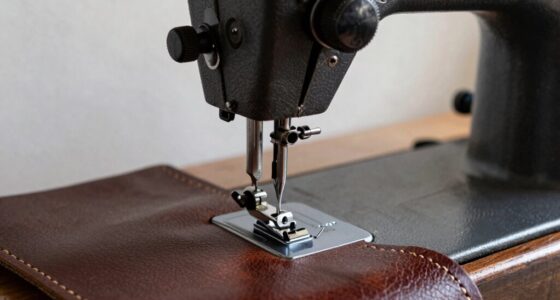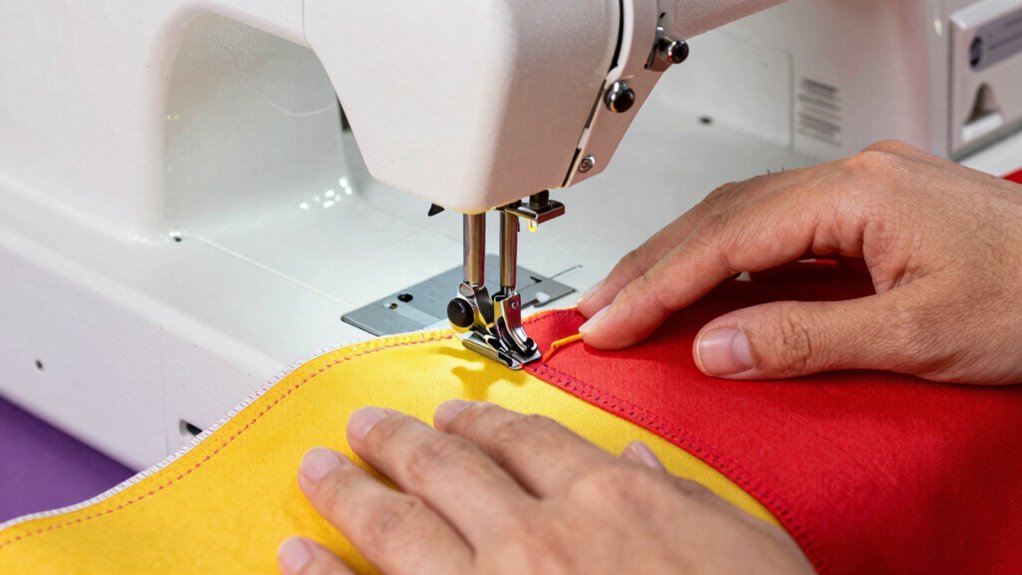

Sergers and coverstitch machines improve your fabric finishes by creating clean, durable seams and hems that look professional. Sergers trim excess fabric while sealing edges with stretchy overlock stitches, perfect for knit or heavier fabrics. Coverstitch machines produce neat, stretchable hems and decorative topstitching, giving garments a polished look. Using these tools, you can achieve store-quality finishes quickly and efficiently. Keep exploring to discover how mastering these machines can elevate your sewing projects even further.

Get furniture and decor delivered free — and shop member deals
- Fast, free delivery on millions of items
- Access to Prime Big Deal Days deals on October 6–7
- Prime Video, Amazon Music and more included
Key Takeaways
- They produce clean, professional-looking seams and hems that enhance overall fabric finish quality.
- Sergers trim excess fabric, resulting in neat, durable, and minimally bulky edges.
- Coverstitch machines offer stretchable, decorative stitches ideal for knit fabric hems.
- Both machines significantly reduce finishing time, increasing efficiency and consistency.
- They enable the creation of store-bought quality garments and décor finishes at home.
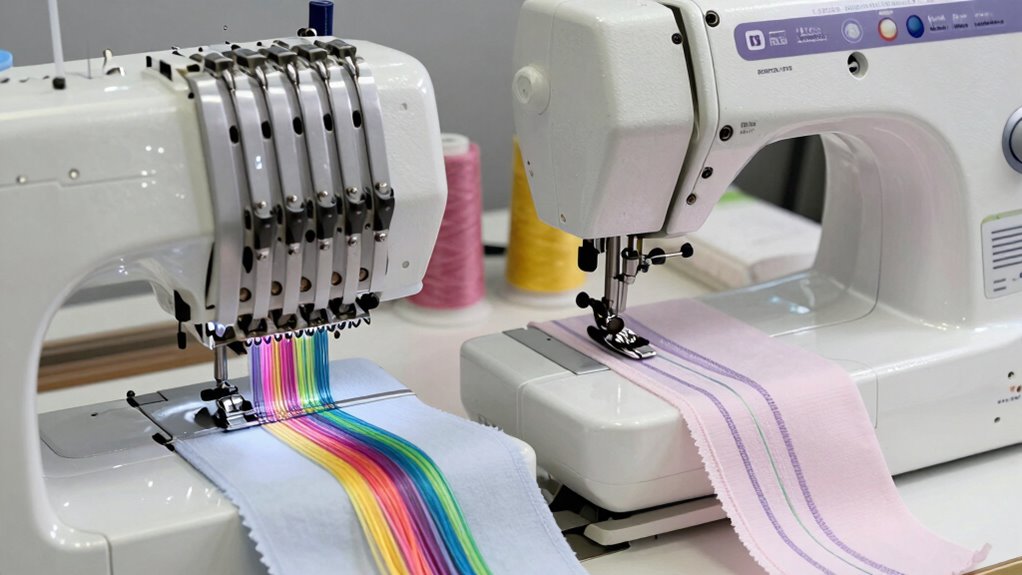
When it comes to achieving professional fabric finishes, sergers and coverstitch machines are essential tools that streamline the sewing process and enhance the quality of your final product. These machines are designed to deliver clean, durable seams and hems that elevate your projects beyond basic sewing. With their specialized functions, they allow you to finish raw edges and create stretchable seams, which are vital for garments made from knit fabrics or those requiring flexibility. Using these machines effectively depends on good sewing machine maintenance, which ensures smooth operation and prevents issues like thread jams or uneven stitches. Regularly cleaning, oiling, and checking tension settings keep your machines running at peak performance, helping you achieve consistent, professional results. Proper fabric selection techniques become more important when working with sergers and coverstitch machines because not all fabrics perform equally with these tools. Knowing which fabrics to use will optimize your finishing techniques. For example, lightweight or stretchy fabrics benefit from the stretch stitches produced by coverstitch machines, while heavier fabrics like denim or canvas require the durability of a serger’s overlock stitch. Choosing the right fabric also reduces the risk of puckering or skipped stitches, which can undermine the quality of your finish. When selecting fabrics, consider their weight, fiber content, and stretchability to determine which machine and stitch type will give you the best results. Proper fabric selection techniques help you avoid frustration and ensure your finished project looks professional. Using a serger or coverstitch machine significantly reduces the time you spend finishing edges, allowing you to complete projects faster and with more precision. Sergers excel in creating secure, stretchy seams and neatly trimming excess fabric, which results in a clean look with minimal bulk. Coverstitch machines, on the other hand, are ideal for hemming and decorative topstitching, providing a professional-looking finish that mimics store-bought garments. Their ability to produce multiple rows of stitches simultaneously means your hems stay flat and durable, even after repeated washing. These machines also give you the flexibility to experiment with different stitch patterns and techniques, expanding your creative options. Incorporating the right maintenance routines and fabric selection techniques into your sewing practice will maximize the benefits of using sergers and coverstitch machines. Understanding machine functions can help you troubleshoot common issues and improve your overall sewing experience. Additionally, learning how to adjust tension correctly is crucial for achieving smooth stitches and preventing thread breaks. Proper tension settings can also impact the appearance of stitches, which is key to professional results. Recognizing how thread quality influences stitch consistency can help you select the best threads for your projects, leading to fewer problems during sewing. You’ll find that your finishes are not only faster but also stronger and more aesthetically pleasing. These tools help bridge the gap between hobbyist sewing and professional-quality craftsmanship, making your projects stand out with clean, polished edges and resilient seams. Whether you’re working on apparel, home décor, or accessories, mastering these machines transforms your sewing process and elevates your finished products to a new level of excellence.
serger sewing machine for beginners
As an affiliate, we earn on qualifying purchases.
As an affiliate, we earn on qualifying purchases.
Frequently Asked Questions
Can Sergers and Coverstitch Machines Handle Delicate Fabrics?
Yes, sergers and coverstitch machines can handle delicate fabrics like silk, chiffon, or lace. They use specialized stitch techniques that minimize fabric stress, preventing damage or puckering. When working with delicate fabric types, you should adjust the tension and stitch length to guarantee smooth, professional finishes. Properly set up, these machines provide clean seams and hems without compromising the fabric’s delicate nature.
What Maintenance Is Required for Long-Term Machine Performance?
Think of your serger or coverstitch machine as a garden needing regular care. You should follow a strict lubrication schedule to keep its parts moving smoothly, much like watering plants. Needle replacement is like pruning; it prevents issues and guarantees perfect stitches. Regular cleaning and checking tension also help maintain performance. By tending to your machine consistently, you’ll enjoy flawless finishes and extend its lifespan.
Are These Machines Suitable for Home Use or Professional Sewing Shops?
These machines are suitable for both home use and professional sewing shops, thanks to their versatility across various fabric types. Home sewists appreciate their ease of use for tasks like hemming and finishing, while professionals rely on their durability and efficiency for large projects. Their ability to handle different fabrics makes them adaptable, whether you’re working on delicate silks or heavy denim, enhancing your sewing experience regardless of skill level.
How Do I Troubleshoot Common Threading Issues?
When troubleshooting threading issues, start by checking your thread tension; uneven tension can cause skipped stitches or bunching. Next, make sure your needles are properly aligned—misaligned needles can jam or create poor stitches. Re-thread both upper and lower loops carefully, making sure the threads follow the correct path. Regularly inspect and replace needles if bent or dull. Adjusting these settings typically resolves most common threading problems on sergers and coverstitch machines.
Can They Be Used for Decorative Stitching Purposes?
Yes, sergers and coverstitch machines can be used for decorative stitching purposes. You can incorporate decorative techniques and embellishment options to enhance your projects, like adding decorative seams, hems, or topstitching. These machines offer versatile stitch options that can elevate your fabric finishes, making your garments or crafts stand out. Experiment with different stitches and thread colors to create unique, eye-catching details that add personality and style to your work.
Conclusion
With sergers and coverstitch machines, you have the power to elevate your fabric finishes effortlessly. These tools streamline your sewing process, giving your projects a professional look and durability that lasts. Isn’t it worth investing in equipment that transforms your craft and boosts your confidence? When you choose to master these machines, you open the door to endless creative possibilities, making every stitch count and every finish truly exceptional.
Fall Picks
fall essentials
As an affiliate, we earn on qualifying purchases.