To prevent mildew on outdoor textiles, keep fabrics dry, well-ventilated, and in shaded areas. Regularly clean and inspect your fabrics for damage or mold spots, and use water-repellent or mildew-resistant treatments when possible. Proper drying after rain or cleaning is key, so hang fabrics in breezy, sunny spots or use fans and dehumidifiers indoors. Storing fabrics correctly during off-seasons also helps. Continue exploring for more tips on keeping your outdoor textiles mildew-free.
Key Takeaways
- Choose mildew-resistant fabrics and apply protective treatments like water-repellent sprays during manufacturing or maintenance.
- Position textiles in shaded, well-ventilated areas to reduce moisture buildup and discourage mold growth.
- Regularly clean fabrics with gentle methods, removing dirt and mildew stains promptly to prevent spread and fiber damage.
- Ensure thorough drying using fans, sunlight, and dehumidifiers before storing textiles to inhibit mildew formation.
- Conduct routine inspections and store outdoor textiles in breathable, dry conditions during off-seasons to prolong lifespan.
mildew resistant outdoor fabric spray
As an affiliate, we earn on qualifying purchases.
As an affiliate, we earn on qualifying purchases.
Understanding Mildew and How It Affects Outdoor Fabrics
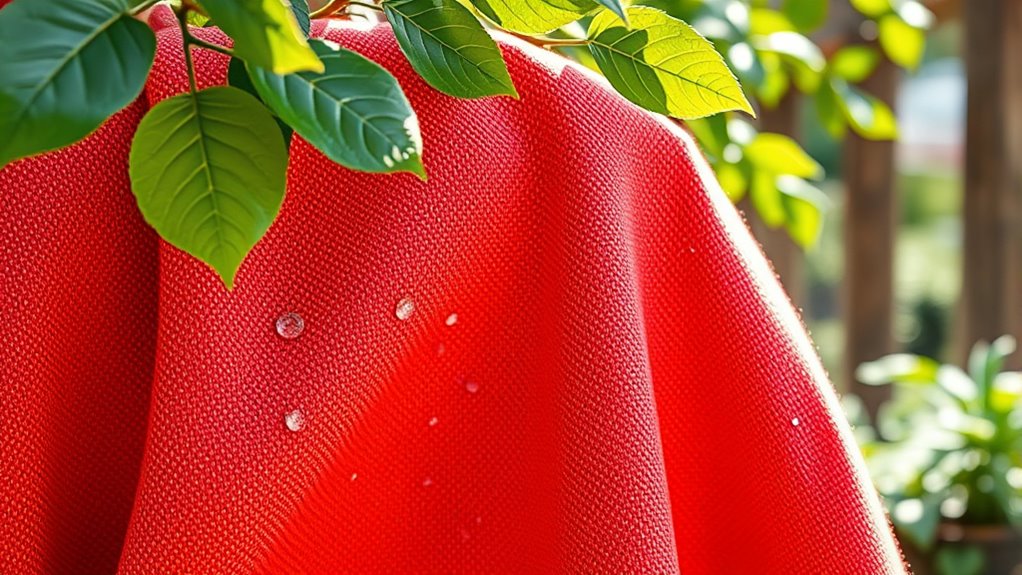
Mildew is a common problem for outdoor fabrics because it thrives in damp, shaded environments. When moisture lingers on your outdoor textiles, mildew growth can quickly develop, leading to unsightly stains and unpleasant odors. Over time, this persistent moisture causes fabric deterioration, weakening fibers and reducing the lifespan of your furniture. Mildew feeds on organic materials in the fabric, breaking down the fibers and making the fabric more fragile. If you ignore early signs of mildew, it can spread rapidly, making cleaning more difficult and costly. Understanding how mildew affects outdoor fabrics helps you take proactive steps to prevent its growth, ensuring your textiles stay durable, vibrant, and fresh longer. Regular maintenance is key to avoiding extensive damage caused by mildew. Additionally, choosing appropriate outdoor textiles can help minimize the risk of mildew development.
Choosing Mildew-Resistant Outdoor Textiles
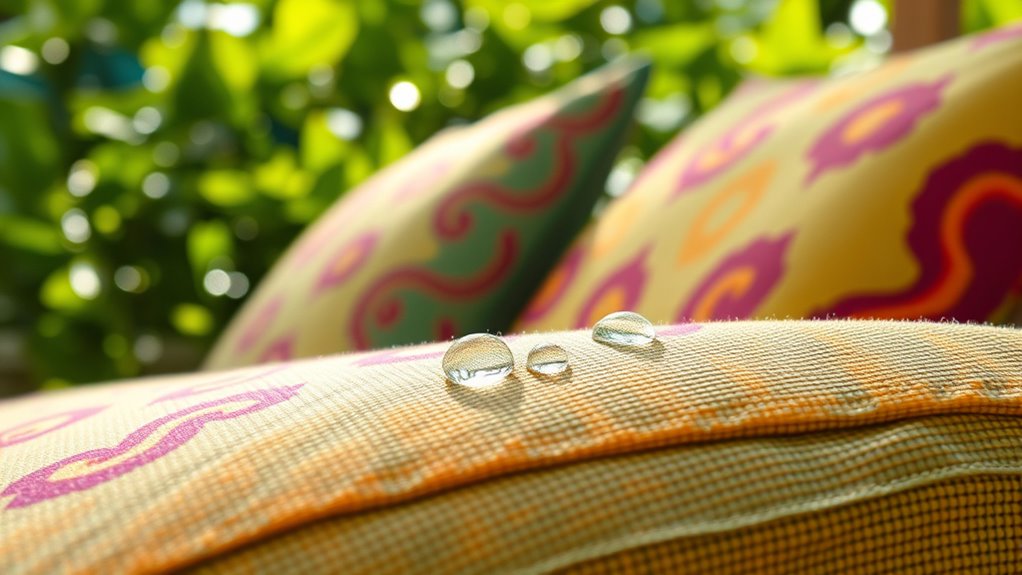
When selecting outdoor textiles, material type plays a vital role in resisting mildew. Look for fabrics with UV protection, as they often hold up better against mold and sun damage. Additionally, choosing textiles with proper treatments can greatly boost their mildew resistance and longevity.
Material Types Matter
Choosing the right outdoor textile is essential if you want to prevent mildew issues. The material type affects how well your textiles resist mold growth. Look for fabrics with a smooth texture, which dries faster and discourages moisture buildup. Consider dye stability, as vibrant colors that resist fading won’t trap moisture or develop mold spots over time. Synthetic fabrics like acrylic or polyester often have tighter weaves, making them less prone to mold. Natural fibers such as cotton or linen may absorb moisture more easily, increasing mildew risk. Think about fabric texture and dye stability together—smooth, colorfast textiles are your best bet. These choices help keep your outdoor spaces clean, fresh, and mildew-free longer. Additionally, choosing textiles with a high contrast ratio can improve visible quality and reduce the likelihood of mold hiding in shadows or dark areas.
UV Resistance Benefits
Have you considered how UV resistance can enhance the durability of your outdoor textiles? When textiles have built-in UV resistance, they’re better equipped to withstand prolonged sun exposure without fading or deteriorating. This protection helps maintain the fabric’s color vibrancy and structural integrity over time. UV-resistant fabrics resist weakening caused by ultraviolet rays, which can cause fibers to become brittle and prone to tears. As a result, your outdoor textiles stay looking fresh longer and require fewer replacements. Choosing fabrics with UV resistance ensures your investment lasts through seasons of sun and weather. Not only does this improve the lifespan of your outdoor textiles, but it also preserves their appearance and functionality, making them a smart, long-term choice for outdoor spaces.
Proper Fabric Treatments
Building on the benefits of UV resistance, selecting outdoor textiles treated to resist mildew can considerably extend their lifespan and keep your outdoor space looking fresh. Proper fabric treatments involve choosing fabrics with mildew-resistant finishes during fabric dyeing or outdoor fabric weaving. These treatments help prevent mold growth and maintain color vibrancy. When shopping, look for textiles that specify mildew resistance. Visualize a fabric with a tight weave that blocks moisture infiltration, or imagine a vivid outdoor fabric weaving with embedded antimicrobial agents. Imagine textiles with a smooth, water-repellent finish or those woven with mildew-resistant fibers. These treatments ensure your outdoor cushions and furniture stay clean longer, saving you time and effort. Incorporating fabric durability features can further enhance the longevity of your outdoor textiles. Proper fabric treatments are a smart investment in preserving your outdoor decor’s beauty and durability.
Proper Installation and Placement of Outdoor Fabrics
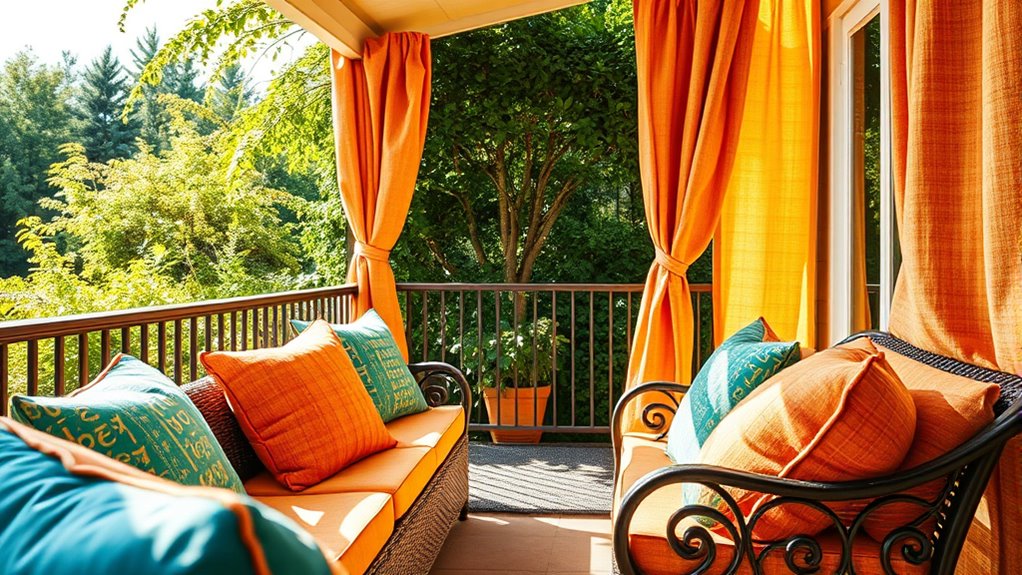
To guarantee your outdoor textiles perform their best and last longer, proper installation and placement are vital. Choose a shaded area to protect fabric colorfastness and enhance outdoor fabric durability. Make certain fabrics are taut but not overstretched, preventing sagging or stress points. Proper airflow is essential—avoid tight folds that trap moisture and promote mildew. Use sturdy, weather-resistant hardware for secure attachment. Keep fabrics away from direct contact with damp surfaces, and consider slight elevation for drainage. Good ventilation further reduces the risk of mildew formation.Effective airflow management is crucial for preventing moisture buildup. Here’s a quick guide:
| Placement Tip | Why It Matters | Key Considerations |
|---|---|---|
| Shade placement | Prevents fading and mildew | Avoid direct sun exposure |
| Elevation from ground | Ensures drainage | Use risers or pads |
| Taut installation | Maintains fabric integrity | Prevents sagging |
| Proper hardware | Secures fabric well | Use weather-resistant materials |
Regular Cleaning and Maintenance Routines

Maintaining outdoor textiles requires a regular washing schedule to keep them looking their best. You should also inspect your fabrics frequently for any signs of damage or wear. Addressing issues early helps extend the life of your outdoor textiles and keeps them in top condition.
Consistent Washing Schedule
Establishing a consistent washing schedule is essential for keeping outdoor textiles looking their best and extending their lifespan. Regular cleaning maintains fabric durability and prevents dirt buildup that can trap moisture, leading to mildew. By sticking to a routine cleaning frequency, you ensure your textiles stay fresh and resistant to wear. Imagine fabrics that resist fading after every wash, vibrant cushions that look brand new, and outdoor curtains that maintain their crispness. To achieve this, consider these routine actions:
- Rinsing off dust and pollen after each use
- Washing at least once every few months
- Spot cleaning spills immediately
- Using gentle detergents suited for outdoor fabrics
- Incorporating proper cleaning techniques helps prevent fiber damage and prolongs the life of your textiles.
A steady schedule keeps mildew at bay and preserves the integrity of your outdoor textiles.
Inspect for Damage
Regularly inspecting your outdoor textiles for damage is a crucial part of their maintenance routine. Performing fabric inspection helps you catch issues early, preventing further deterioration. During damage assessment, look for tears, fraying, fading, or loose stitching. Pay close attention to seams and edges, as these areas are most vulnerable. If you notice any signs of damage, address them promptly to maintain your textiles’ integrity and appearance. Small tears can often be repaired with fabric patches or sewing, while fading may be minimized with proper cleaning or protective treatments. Regular inspections keep your outdoor textiles in top condition, extending their lifespan and reducing the risk of mold or mildew infiltration. Making damage assessment a routine ensures your outdoor fabrics stay durable and looking their best. Additionally, understanding mildew prevention methods can help you protect your textiles from mold growth and prolong their usability.
Effective Drying Techniques to Prevent Moisture Accumulation
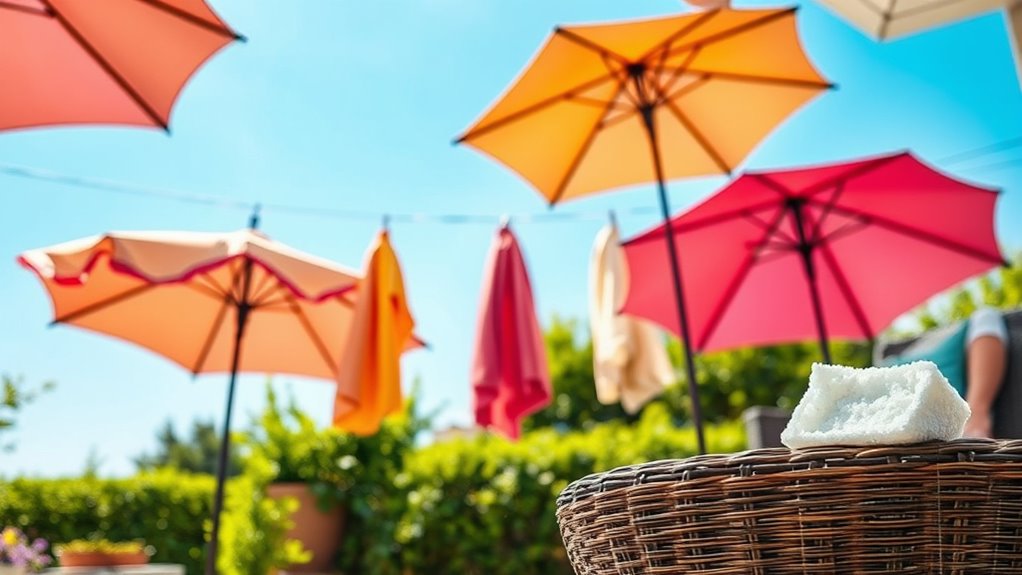
To prevent moisture from lingering on outdoor textiles, it’s essential to use effective drying techniques that promote quick and thorough evaporation. Proper air circulation is key—hang fabrics in a breezy area or use fans to keep air moving around them. Utilizing a dehumidifier indoors can also help reduce humidity levels, speeding up the drying process and preventing mold growth.
Imagine:
- Gently shaking out fabrics to loosen excess water
- Spreading textiles flat in a sunny spot
- Using a fan to circulate fresh air
- Placing a dehumidifier nearby to draw moisture out of the air
These methods work together to ensure your outdoor textiles dry quickly and evenly, reducing moisture buildup and safeguarding against mildew.
Using Appropriate Protective Sprays and Treatments
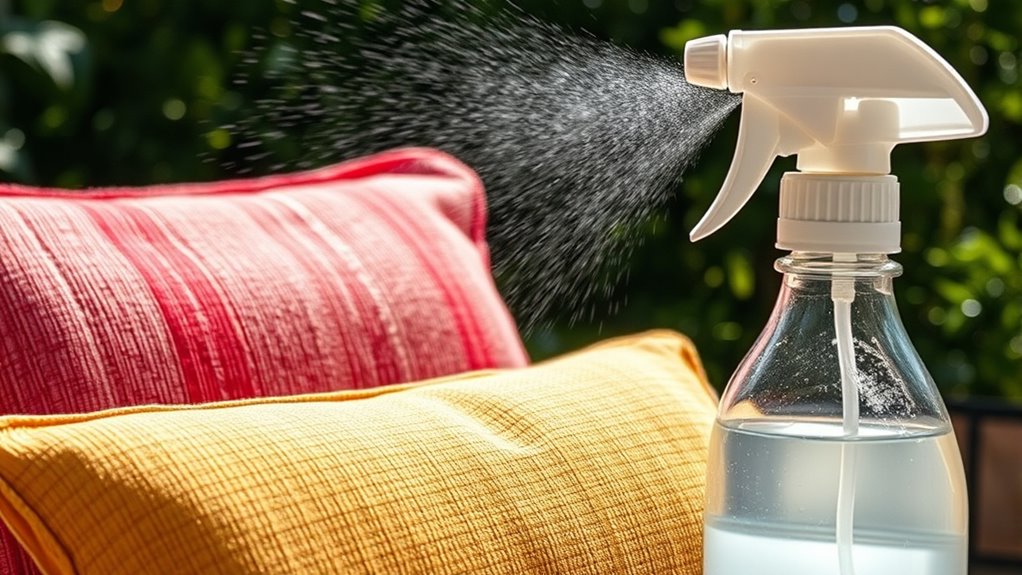
Applying the right protective sprays and treatments can considerably extend the lifespan of your outdoor textiles. Protective sprays create a barrier that repels water, dirt, and mildew spores, reducing the risk of mold growth. Choose high-quality protective sprays designed specifically for outdoor fabrics to guarantee durability and effectiveness. Mildew treatments are essential for targeting existing mold and preventing it from spreading. Apply these treatments evenly to all surfaces, following the manufacturer’s instructions. Regular use of protective sprays and mildew treatments helps maintain fabric integrity and keeps your outdoor textiles looking fresh. Remember, consistent application is key to long-term mildew prevention. By proactively treating your textiles, you’ll save time and money on cleaning and replacements, ensuring your outdoor spaces stay vibrant and mildew-free.
Addressing Stains and Mildew Spots Promptly

Promptly addressing stains and mildew spots on your outdoor textiles is essential to prevent permanent damage and maintain their appearance. When you notice a stain or mildew, acting quickly can save you time and effort later. Focus on effective stain removal techniques that target the specific problem. For mildew, consider using a mild bleach solution or specialized outdoor fabric cleaner. For stains, gently blot the area—avoiding fabric dyeing issues—then treat with an appropriate stain remover. Additionally, ensuring proper ventilation and sunlight exposure can help prevent future mildew growth. Visualize a sunlit patio with a vibrant fabric cover, now with a stubborn mildew spot. Remember, timely action keeps your textiles looking fresh and vibrant, preventing discoloration or fabric weakening. Quick responses preserve the integrity and longevity of your outdoor textiles, ensuring they remain inviting season after season.
Storage Tips for Off-Season and Extended Non-Use Periods

When preparing your outdoor textiles for off-season storage, taking proper precautions helps prevent damage and extends their lifespan. Start by cleaning and thoroughly drying the fabrics to remove dirt, mold, and moisture. During seasonal storage, fold the textiles carefully to avoid creases that can weaken fabric fibers. To protect against temperature fluctuations, use fabric insulation or breathable covers that allow air circulation while shielding against dust and pests. Store your textiles in a cool, dry place away from direct sunlight, which can cause fading and deterioration. Avoid plastic containers that trap moisture, promoting mildew growth. Instead, opt for breathable storage bags or bins. Properly stored textiles will remain in good condition, ready for use when the season returns. Regular inspection and mildew prevention measures are essential to ensure long-term preservation.
Long-Term Strategies for Mildew Prevention

To effectively prevent mildew from forming on your outdoor textiles over the long term, you need to implement consistent maintenance and protective measures. Regularly clean your fabrics with gentle solutions to maintain their fabric durability and prevent dirt buildup that fosters mold growth. Use breathable covers to shield your textiles from prolonged moisture exposure, helping preserve color vibrancy and reduce color fading. Ensure proper airflow around your outdoor furniture by storing cushions and covers in well-ventilated areas when not in use. Additionally, apply water-repellent treatments periodically to enhance resistance against moisture. Visualize your textiles standing strong against the elements—fabrics that stay vibrant, durable, and mildew-free with these proactive strategies. Staying attentive to these steps keeps your outdoor textiles looking fresh and extending their lifespan.
Frequently Asked Questions
Can Outdoor Textiles Be Safely Washed With Household Detergents?
Yes, you can safely wash outdoor textiles with household detergents, but make sure to choose ones that are gentle and suited for textile safety. Check the care label first, and avoid harsh chemicals that could damage the fabric or cause fading. Use mild detergents and follow the manufacturer’s instructions to preserve the quality of your outdoor textiles. This way, you effectively clean without risking any damage or mildew growth.
Are There Eco-Friendly Options for Mildew-Resistant Outdoor Fabrics?
Yes, you can choose eco-friendly options for mildew-resistant outdoor fabrics. Look for biodegradable treatments that prevent mildew without harming the environment. Natural fiber options like organic cotton, hemp, or linen are also great choices—they’re naturally breathable and resistant to mold when properly maintained. Regular cleaning and ensuring good airflow help keep outdoor textiles mildew-free, making these eco-friendly options both effective and sustainable for your outdoor space.
How Often Should Outdoor Textiles Be Inspected for Mildew?
You should inspect your outdoor textiles regularly, ideally at least once a season. Seasonal checks help you catch mildew early before it spreads or causes damage. After heavy rain or periods of high humidity, do a quick inspection to confirm no mold is forming. Regular inspection frequency keeps your fabrics clean and prolongs their lifespan, so make it a routine part of your outdoor maintenance.
What Are the Best Methods to Remove Stubborn Mildew Stains?
To remove stubborn mildew stains, start by mixing a cleaning solution with equal parts water and white vinegar or a mild detergent. Apply it directly to the stains, then scrub gently with a soft brush. For tougher stains, you can try a mixture of water and baking soda or a commercial mildew remover. Rinse thoroughly with water afterward and let the textile air dry in the sun for best results.
Do Certain Climates Require Special Mildew Prevention Measures?
Depending on your climate, you might need climate-specific treatments to prevent mildew. Humid or rainy regions pose higher regional mildew risks, so you should increase ventilation, use mildew-resistant fabrics, and apply protective sprays regularly. In dry climates, focus on keeping textiles dry and stored properly. Adjust your prevention methods based on your area’s climate to effectively combat mildew and prolong your outdoor textiles’ lifespan.
Conclusion
Now that you’re armed with all the mildew-fighting secrets, go ahead—imagine your outdoor fabrics as pristine islands, free from the villainous mold’s grasp. With proper care, you’ll turn your patio into a fortress of freshness, not a moldy swamp. So, spray, dry, store, and repeat. Because nothing says “I care” like banishing mildew to the depths of your imagination—where it belongs, never to return.