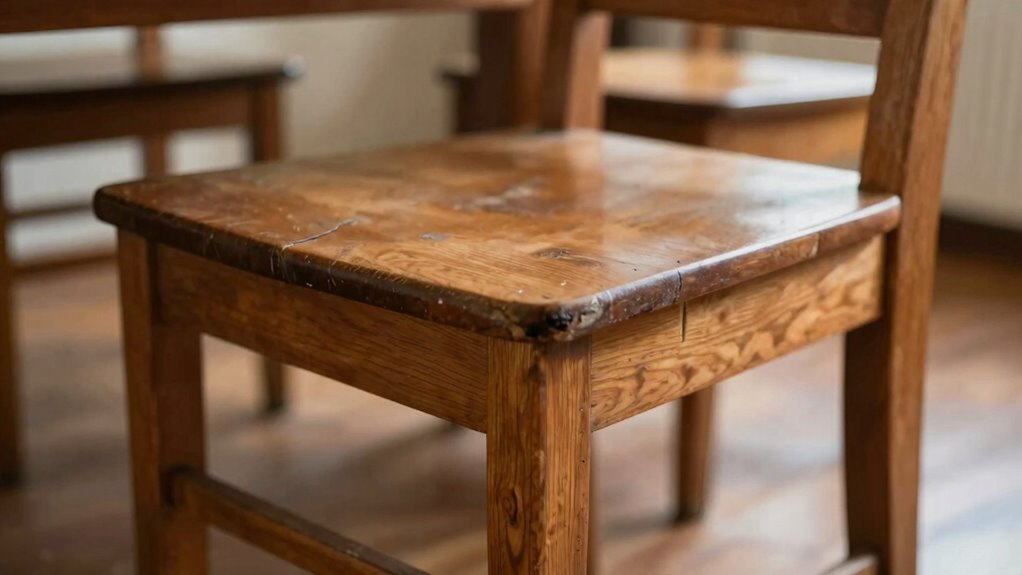

Wobbly dining chairs often happen because of loose joints, uneven floors, or damaged legs. You can check if your chair is stable by shaking the legs or inspecting for cracks and looseness. To fix them, tighten screws, add shims or felt pads, or re-glue loose joints. If these solutions don’t work, it might be time to replace or reinforce the chair. Keep exploring these tips to enjoy a more stable and secure seat.
Key Takeaways
- Loose joints or fasteners often cause instability in dining chairs.
- Warped or cracked wood can lead to uneven or wobbly legs.
- Uneven flooring or surface irregularities contribute to chair wobbling.
- Adding shims or felt pads can stabilize uneven or wobbly legs.
- Regular tightening and maintenance help prevent and fix wobbliness over time.

Pisman Table Leg Brackets Heavy Duty, Corner Braces for Wood Furniture
- Enhanced Stability: Securely fastens table legs to prevent wobbling
- Kerf Mount Design: Fits within saw cuts for stronger joints
- Complete Hardware Kit: Includes 4 brackets, screws, bolts, and nuts
As an affiliate, we earn on qualifying purchases.
As an affiliate, we earn on qualifying purchases.
What Causes Wobbly Dining Chairs and How to Spot Them
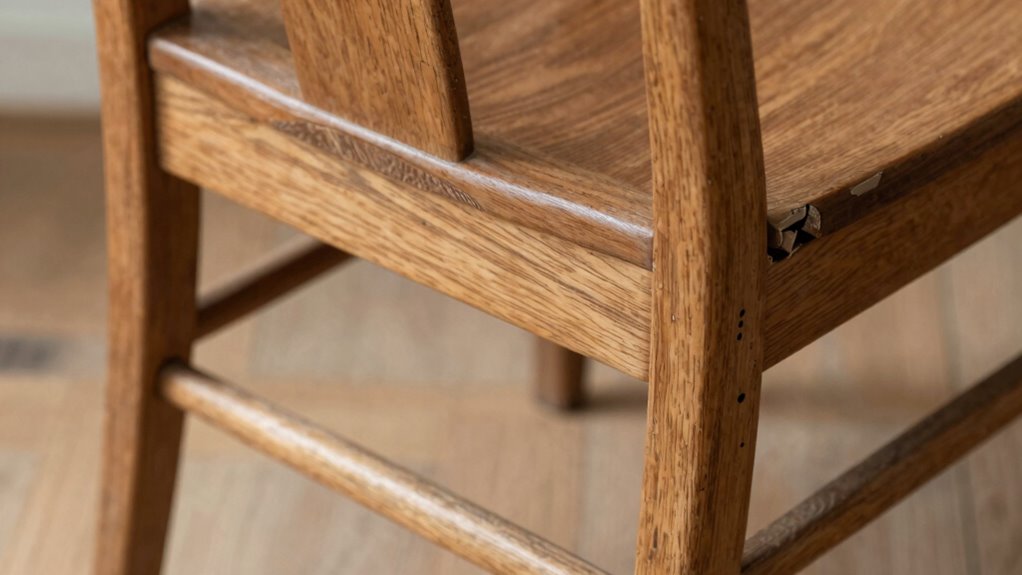
Wobbly dining chairs often result from loose joints, warped wood, or damaged legs, making them unstable and unsafe to sit on. Over time, chair leg repair becomes necessary to restore stability and guarantee safety. Common causes include heavy use, shifting weight, or accidental impacts that loosen joints or crack the wood. Warping can occur due to moisture exposure or temperature changes, leading to uneven legs. To spot these issues, check if the chair wobbles when you sit or if any leg appears uneven or cracked. Recognizing these problems early helps prevent further damage and maintains your dining room stability. Addressing loose joints or damaged legs promptly through proper chair leg repair keeps your chairs safe, sturdy, and comfortable for everyday use.
How to Check if Your Chair Legs Are Loose or Uneven
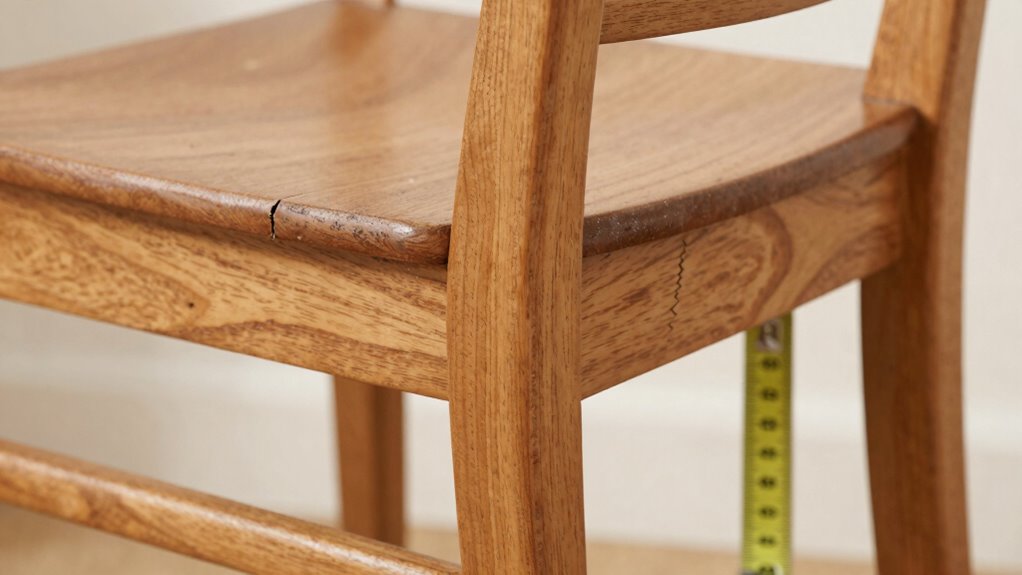
To determine if your chair legs are loose or uneven, start by inspecting each leg closely. During chair leg inspection, look for any wobbling or movement when you gently shake the legs. Perform an uneven floor check by placing the chair on a flat surface and seeing if it rocks or tilts. Here are three key steps:
Inspect each chair leg for wobbling and check the floor for unevenness to identify stability issues.
- Check for any visible cracks or looseness at the joints where the legs meet the seat.
- Sit on the chair and gently shift your weight to see if any leg shifts or feels unstable.
- Test the floor by placing the chair on a level surface, noting if it wobbles even when all legs seem secure. Additionally, understanding how projector contrast ratios impact image stability can help you create a more comfortable viewing environment. Being aware of structural stability principles can also guide you in making effective repairs and adjustments. Regular furniture inspection is essential to identify potential issues early, preventing excessive wobbling and ensuring safety. Recognizing the importance of regular maintenance can also prevent future wobbliness and prolong the life of your furniture.
Simple Ways to Fix Wobbly Dining Chairs at Home
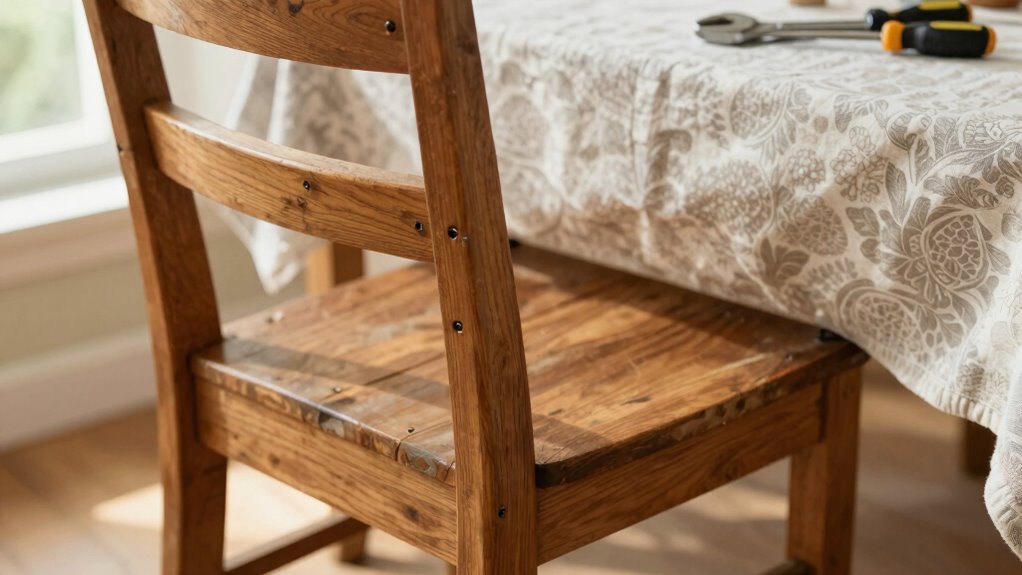
Luckily, fixing wobbly dining chairs at home is often simple and requires only basic tools. Start with furniture tightening by checking all screws and bolts on the chair legs. Tighten any loose fasteners to stabilize the structure. If a leg feels uneven or wobbly, consider chair leg repair by adding felt pads or shimming the leg with a small piece of cardboard or furniture wedge. For more stubborn wobbliness, remove the leg and re-glue the joint with wood glue, then clamp until dry. This not only stabilizes the leg but also prevents future looseness. Regular furniture tightening and minor chair leg repairs can keep your dining chairs sturdy and comfortable, extending their lifespan and enhancing safety during meals. Incorporating consistent maintenance practices can further improve the longevity of your furniture. Proper furniture repair techniques are essential for ensuring long-term stability and safety. Additionally, understanding auditory processing can help identify underlying issues that might affect furniture stability indirectly, such as vibrations or unusual noises. Recognizing furniture stability factors can help you diagnose and address wobbliness more effectively, ensuring your chairs remain secure and reliable. Gold IRA markets insights highlight the importance of trustworthy and transparent repair methods to ensure long-term stability.
When Should You Replace or Reinforce Your Wobbly Chairs?
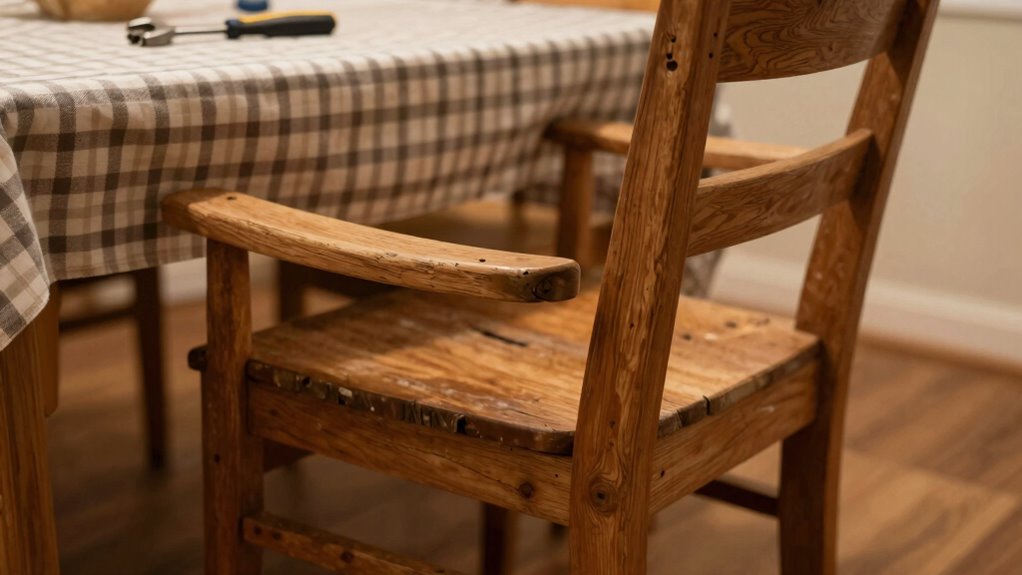
You should consider replacing or reinforcing your wobbly chairs when repairs no longer restore stability or if the damage is extensive. Over time, issues with chair material—such as cracked wood, loosened joints, or bent metal—can become irreparable. Additionally, aesthetic considerations play a role; if the chair looks worn, outdated, or mismatched with your decor, reinforcements might not be worth it. Furniture durability and lifespan practices emphasize the importance of proper maintenance, and similarly, well-maintained furniture requires less frequent replacements. Think about these signs: 1. The wobbliness persists despite tightening or minor repairs. 2. The chair material shows significant damage or deterioration. 3. The chair’s appearance no longer matches your aesthetic preferences. 4. Free Floating can compromise the safety and longevity of your furniture. At this point, replacing may be more practical, especially if the style or condition no longer aligns with your space.
Long-Term Tips to Keep Your Dining Chairs Stable
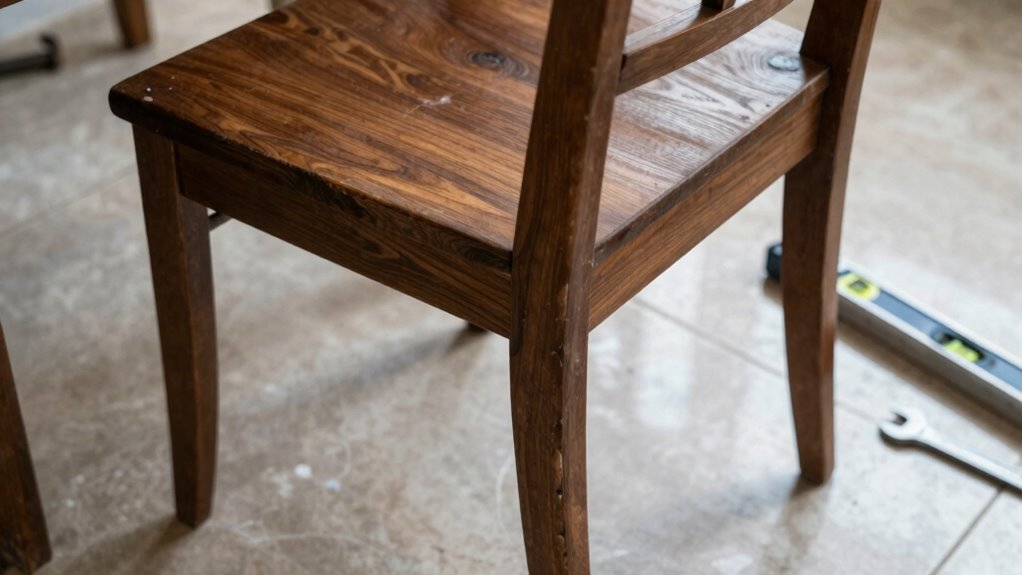
Maintaining the stability of your dining chairs over the long term requires consistent care and mindful habits. Regular chair maintenance prevents loose joints and ensures furniture stability. Check screws and bolts monthly, tightening them as needed. Clean your chairs to prevent dirt buildup that can weaken joints. Avoid dragging chairs across floors; lift them instead. Periodically inspect for cracks or wobbling and address issues early. Using furniture pads can protect legs and prevent uneven wear. Additionally, paying attention to joint integrity can help prevent sudden wobbliness. Ensuring proper filtration systems can also contribute to the overall cleanliness and longevity of your furniture environment. Proper oil maintenance and regular inspections are essential for preserving the integrity of your furniture components. Adopting preventive measures can further prolong your chairs’ stability and overall lifespan. Here’s a quick guide:
| Action | Frequency | Benefits |
|---|---|---|
| Tighten screws/bolts | Monthly | Keeps chairs stable |
| Clean and inspect | Every few weeks | Detects issues early |
| Use furniture pads | When moving furniture | Protects legs and maintains stability |
| Address damage | As needed | Extends chair lifespan |
Frequently Asked Questions
Can Weather Changes Affect the Stability of My Dining Chairs?
Yes, weather changes can affect your dining chairs’ stability. When humidity increases, wood expands, which can cause frame warping or loosened joints. Conversely, dry conditions lead to wood contraction, making joints less tight and increasing wobbliness. To maintain stability, regularly check and tighten screws, and consider applying wood treatments that help control moisture levels. This keeps your chairs sturdy despite fluctuating weather.
Are Certain Types of Flooring More Prone to Causing Wobbliness?
Back in the day, you’d never worry about wobbliness, but now, certain flooring types are more prone to it. Tile and uneven hardwood floors can cause instability, especially if your chairs aren’t compatible with the surface texture. Low-pile carpets also pose a challenge. To fix this, check your flooring compatibility and add felt pads or adjustable feet to your chairs, ensuring they stay steady no matter the surface.
How Do I Identify Hidden Damages in Chair Joints?
To identify hidden damages in chair joints, start by inspecting for joint looseness, which often causes wobbliness. Gently wiggle each joint to see if it moves excessively. Look for cracks or splits around the joints during crack detection, especially where the frame connects. Use a flashlight to spot fine hairline fractures. If you notice any looseness or cracks, tighten or repair the joints promptly to restore stability.
Is It Safe to Use DIY Methods for Repairing Wobbling Chairs?
DIY fixes can be safe if you follow proper procedures and use the right materials, but safety concerns do exist. You should carefully assess the damage before attempting repairs, ensuring you don’t compromise the chair’s stability or your safety. If you’re unsure, it’s better to consult a professional. Always wear protective gear and work in a safe environment to minimize risks when performing DIY fixes on wobbly chairs.
What Are the Signs That a Chair Needs Professional Repair?
A wobbling chair is often a sign of underlying joint damage that needs professional attention. If you notice persistent instability, creaking sounds, or cracks when sitting, it’s time to call in an expert. Remember, “A stitch in time saves nine.” Ignoring these signs can worsen the damage, making repairs more costly. Trust a professional to assess and fix the joint issues, ensuring your chair remains safe and sturdy.
Conclusion
Now that you know why your dining chairs wobble and how to fix them, you’ll enjoy your meals without worry—like a well-prepared knight in shining armor. Regularly check and tighten those legs, and your chairs will stay sturdy for ages to come. Remember, a little upkeep keeps your furniture from turning into a scene from a Shakespearean comedy. Stay proactive, and your dining experience will always be fit for a king—or a modern-day diner!