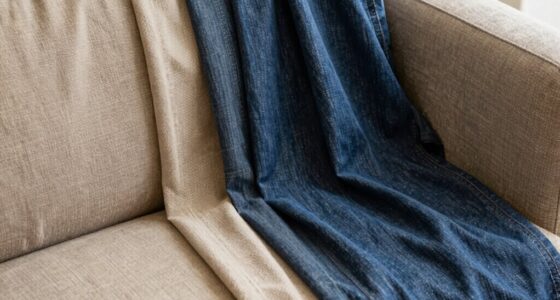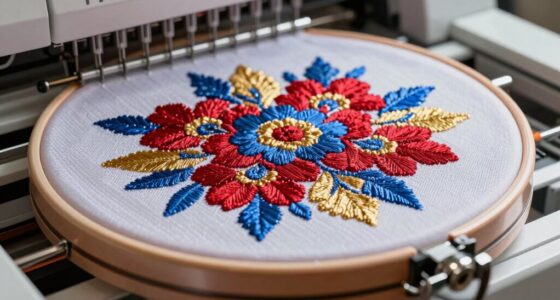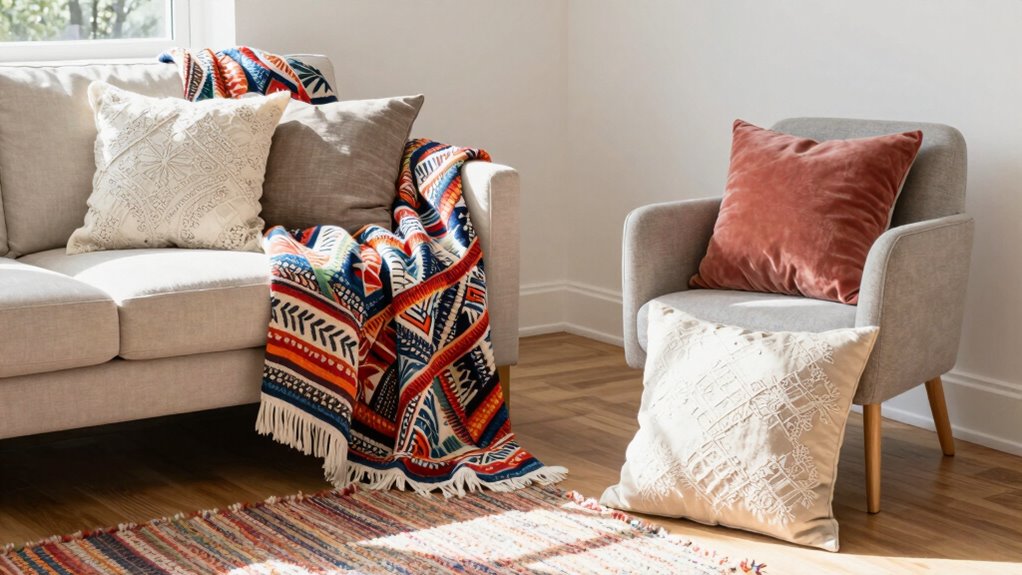

To refresh your room with textile swaps alone, start by changing your curtains to introduce new color or patterns that match your style. Swap out throw pillows and blankets for different textures or vintage motifs to add character and interest. Layering these textiles creates visual depth and harmony with your existing decor. Whether you choose bold or subtle pieces, these quick updates can transform your space instantly—keep exploring to discover even more easy decorating ideas.
Key Takeaways
- Swap out curtains, throw pillows, and blankets to instantly update your room’s look without full renovation.
- Incorporate vintage patterns like floral or geometric motifs to add character and visual interest.
- Choose textiles that complement existing colors and furniture for a cohesive, harmonious appearance.
- Layer different textiles, such as patterned throws over solid sofas, to create depth and texture.
- Use contrasting or coordinating colors strategically to add pops of color and enhance the room’s personality.
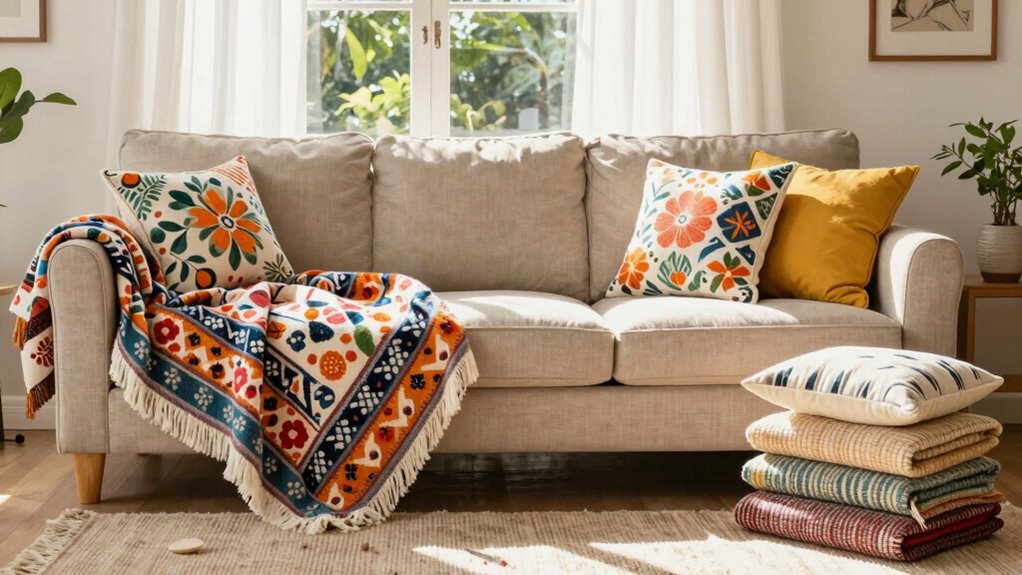
If your room feels dull or outdated, swapping out textiles is a quick and impactful way to breathe new life into the space. Changing your curtains, throw pillows, or even a cozy blanket can instantly update the look without the need for a full renovation. To make the most of this simple upgrade, focus on incorporating vintage patterns and color coordination. Vintage patterns, like florals, geometric designs, or ornate motifs, add character and a touch of nostalgia that can transform a plain room into something more interesting and inviting. When choosing these patterns, consider the overall style you want to achieve—whether you prefer a bohemian vibe, a shabby-chic feel, or a more eclectic look. Mixing vintage patterns with modern textures can create a layered, curated look that feels intentional rather than cluttered.
Color coordination plays an essential role in ensuring your new textiles harmonize with the existing elements in your room. Start by selecting a color palette that complements your walls, furniture, and accessories. If your walls are neutral, it opens up endless possibilities for bold or muted textiles. Conversely, if your room already features a lot of color, choose textiles that pick up on those shades to create a cohesive look. You can also use textiles as a way to introduce a pop of color or a subtle accent to balance the space. For example, if your room is primarily cool-toned, warm-colored textiles like deep reds or mustard yellows can create a striking contrast that energizes the room. Additionally, understanding textile patterns can help you choose pieces that enhance your decor style effectively.
Layering different textiles is another effective strategy. You might add a vintage-patterned throw blanket over a solid-colored sofa, or select patterned curtains that pick up a secondary color from your pillows. This layering adds depth and visual interest without overwhelming the space. Keep the scale of patterns in mind—large vintage patterns work well on bigger surfaces like curtains or rugs, while smaller designs are perfect for pillows and accessories. Remember, the goal is to create harmony through thoughtful color and pattern choices, making your room feel fresh and personalized.
window curtains with vintage patterns
As an affiliate, we earn on qualifying purchases.
As an affiliate, we earn on qualifying purchases.
Frequently Asked Questions
Can Textile Swaps Improve Room Acoustics?
Yes, textile swaps can improve your room’s acoustics. By adding soft textiles like curtains, rugs, or wall hangings, you enhance sound absorption, which reduces echoes and sharp noises. These textiles help trap sound waves, leading to better noise reduction and a calmer environment. Regularly swapping or updating your textiles keeps the space lively and acoustically pleasant, making it more comfortable for conversations, relaxation, or work.
How Often Should Textile Swaps Be Changed?
You should swap textiles every 6 to 12 months, but keep an eye on their condition. Textile maintenance is essential, and over time, fabrics collect dust, odors, and wear out. If your textiles look faded or feel less fresh, it’s time for a swap. Maintaining a regular schedule guarantees your space stays vibrant and inviting. Don’t wait too long — freshness depends on timely swap frequency and attentive textile upkeep.
Are Textile Swaps Suitable for All Room Types?
Textile swaps are suitable for many room types, especially if your decor style leans toward versatility and changeability. They work well in living rooms, bedrooms, and even kitchens to add color and texture. Keep in mind maintenance tips like regular washing or spot cleaning to keep them fresh. However, for rooms with high humidity or heavy use, choose durable fabrics and swap them out more frequently to maintain a clean, stylish look.
Do Textile Swaps Affect Indoor Air Quality?
Did you know that indoor textiles can trap up to 50% of airborne particles, affecting air quality? Textile swaps can actually improve indoor air quality by reducing allergens and dust mites, which settle into fabrics. When you regularly swap or wash textiles, you lower allergen levels and promote healthier air. So, yes, textile swaps positively impact indoor air quality by helping with airborne particles and allergen reduction.
Can Textile Swaps Help With Temperature Regulation?
Yes, textile swaps can help with temperature regulation. By choosing eco-friendly materials like wool or cotton, you add natural insulation, keeping your space warmer in winter and cooler in summer. Seasonal adjustments with textile swaps allow you to adapt your environment effortlessly, reducing energy use. Swapping out textiles regularly not only refreshes your room’s look but also enhances comfort by maintaining a more consistent indoor temperature.
Conclusion
By thoughtfully swapping out textiles, you subtly invite a fresh ambiance into your space without the need for a complete overhaul. These gentle updates can effortlessly elevate your room’s atmosphere, offering a delicate touch of renewal. With a little mindful effort, you create an inviting haven that feels both timeless and effortlessly stylish. Embrace these subtle changes, and let your room gently evolve into a refined sanctuary that reflects your ever-evolving taste.