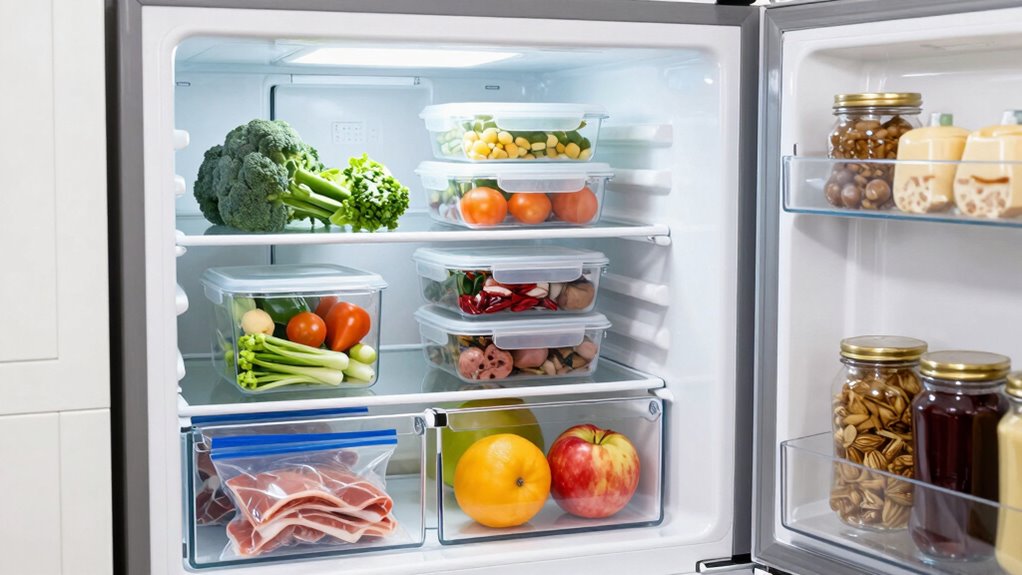

To help busy households, organize your freezer with designated zones for meats, veggies, fruits, and meals, using clear containers and labels for easy visibility. Stack similar items, place frequently used ingredients upfront, and regularly review your stock to prevent waste. Freeze individual portions for convenience and keep the area clean. Incorporating these tips will streamline meal prep and reduce clutter. Keep going to discover more ways to maximize space and efficiency.
Key Takeaways
- Designate specific zones for meats, vegetables, fruits, and ready-to-eat meals for quick access.
- Use clear, labeled containers and stack similar items to maximize space and visibility.
- Freeze individual portions and prepare meals in advance to streamline busy weekmeal prep.
- Regularly review and discard expired or freezer-burned items to reduce waste and maintain freshness.
- Maintain a clean, organized freezer with periodic reorganization to improve efficiency and prolong appliance life.
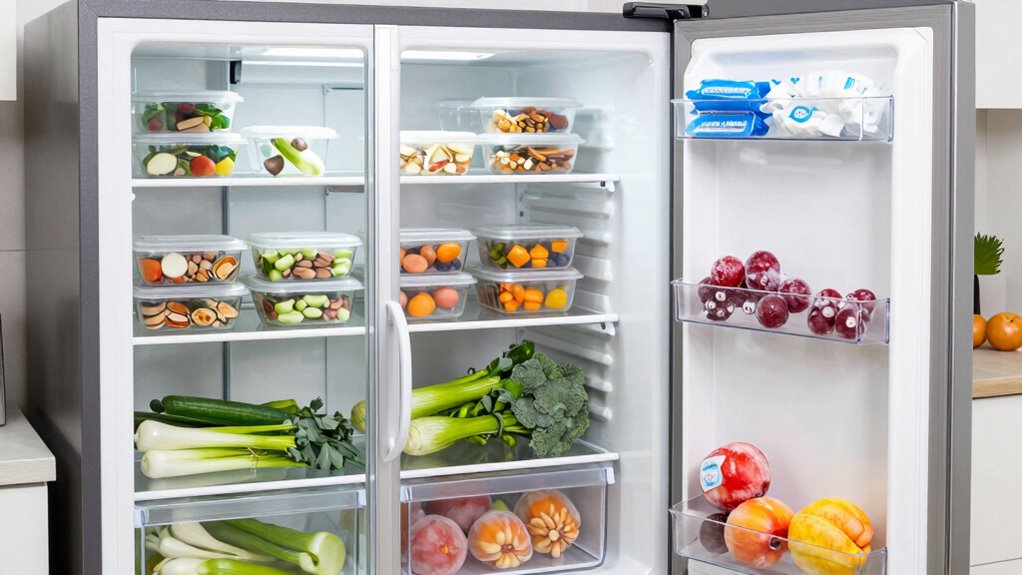
Have you ever wondered how to organize your food supply efficiently and safely? When it comes to busy households, a well-structured freezer and food storage setup can make a huge difference. The key is to streamline your meal prep process and keep everything accessible, so you spend less time searching and more time enjoying your meals. Start by creating designated zones within your freezer—think of it as a mini organization system. Assign specific areas for meats, vegetables, frozen fruits, and ready-to-eat meals. Using clear storage containers or labeled bags helps you see what’s inside at a glance, reducing the chance of forgotten items and waste. Incorporating organization tips like these guarantees your freezer remains tidy, and it makes meal prep faster and more efficient.
Organize your freezer into zones for meats, veggies, and meals to save time and reduce waste.
When setting up your freezer, consider stacking similar items together and placing frequently used ingredients at the front. This way, you can grab what you need without rummaging through the entire space. Use stackable bins or baskets to group smaller items, keeping everything neat and easy to access. Labeling everything with dates is another essential organization tip—this prevents food from lingering too long and helps you prioritize what to use first. For busy households, planning your freezer layout around your weekly menu can also save time. For example, keep ingredients for your go-to breakfasts or quick dinners close at hand. With everything in its place, meal prep becomes a breeze, and you’ll waste less food.
Additionally, understanding freezer organization can help you optimize space and improve food safety. To maximize storage space, invest in quality freezer-safe containers that prevent freezer burn and keep food fresh longer. When you prepare meals ahead of time, freeze individual portions or family-sized servings, so you can defrost only what you need. This approach saves time during busy mornings or weeknights. Regularly review your freezer contents—discard any expired or freezer-burned items. This habit keeps your freezer organized and ensures you’re always working with safe, high-quality ingredients. Being aware of food safety principles is crucial for maintaining a healthy and efficient food storage system, especially in a busy household.
A practical food storage setup also involves maintaining a clean, defrosted freezer. Periodic cleaning prevents ice buildup that can clutter your space and reduce efficiency. Keep a checklist of your organization tips and meal prep plans, so your system stays consistent. Properly maintaining your freezer can extend the lifespan of your appliances and ensure optimal performance. With a thoughtful setup, your freezer becomes an extension of your busy lifestyle—supporting quick, healthy meals without the chaos. In the end, a well-organized freezer isn’t just about storage; it’s about empowering you to manage your household’s food supply with confidence and ease.
As an affiliate, we earn on qualifying purchases.
Frequently Asked Questions
How Often Should I Defrost My Freezer?
You should defrost your freezer whenever you notice frost buildup of about a quarter-inch or more. Regular defrosting improves energy efficiency and prevents excess frost that can hinder cooling. For most households, this means defrosting every 3 to 6 months. Keeping up with this routine guarantees your freezer runs smoothly, uses less energy, and keeps your food fresh longer. Don’t wait until frost becomes a problem—stay proactive.
What’s the Best Way to Organize Frozen Foods?
Imagine your freezer as a well-organized pantry in winter, each item easy to find. Use clear containers and label everything with dates to streamline meal prep and inventory management. Group similar foods together—vegetables, meats, desserts—so you can quickly grab what you need. Rotate older items to the front, ensuring nothing gets lost or wasted, making your busy days smoother and less stressful.
How Do I Prevent Freezer Burn on Stored Foods?
To prevent freezer burn on stored foods, you should minimize ice crystal formation by using proper packaging techniques. Wrap foods tightly in moisture-proof materials like freezer-specific plastic wrap or vacuum-sealed bags, removing as much air as possible. Label and date your packages to guarantee freshness, and avoid opening the freezer frequently. These steps help maintain food quality and prevent dehydration that causes freezer burn.
What Temperature Should My Freezer Be Set At?
While some might think colder is always better, setting your freezer to 0°F guarantees food safety without sacrificing energy efficiency. This temperature halts bacterial growth effectively while preventing energy waste. You can save on electricity and keep your foods fresh longer. Properly maintaining this temperature creates a balance between protecting your health and reducing costs, making your freezer both safe and efficient—an essential combo for busy households.
How Can I Maximize Space in a Small Freezer?
To maximize space in your small freezer, use stackable storage containers and clear bins to organize your items efficiently. Dedicate sections for meal prep, storing pre-portioned meals to save time and space. Label everything clearly, so you can quickly find what you need without rummaging. Flattening bags of frozen foods also helps save space. Regularly assess and declutter to keep your freezer organized and maximize its capacity.
Conclusion
With a well-organized freezer and food storage system, you’ll find food fresher, fuss-free, and fully functional. By balancing bins, labeling loads, and batching basics, you’ll breeze through busy days with confidence. Keep clutter clear, create clever caddies, and categorize carefully. This simple setup transforms chaos into convenience, making meal management more manageable and moments more merry. Master your meals, minimize mess, and enjoy more time for what truly matters!