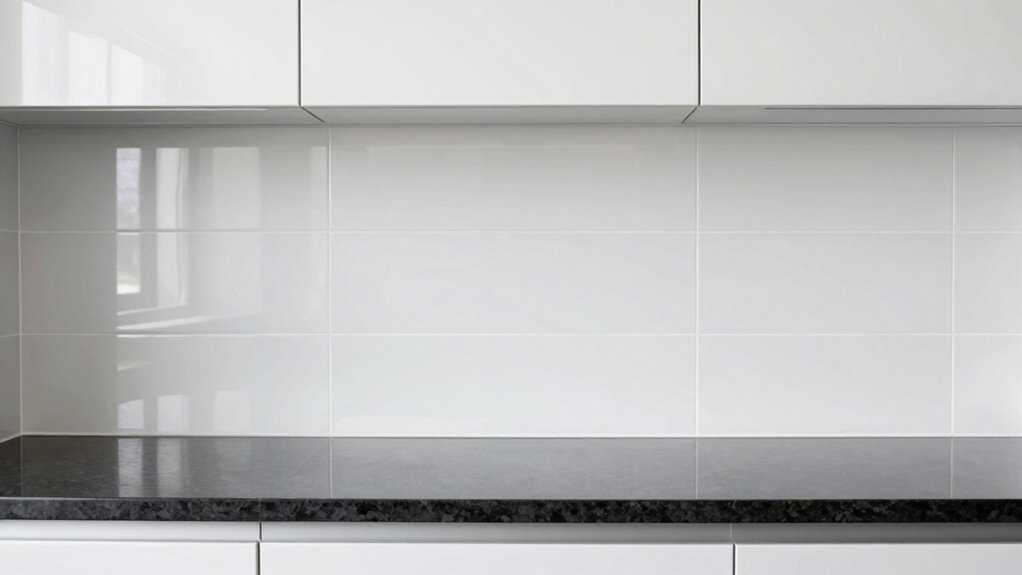

Choosing the right backsplash height can dramatically change your kitchen’s look. A shorter height, like 16-18 inches, creates a sleek, minimalist vibe that makes the space feel open and clean. Going for full-wall coverage or up to the ceiling adds grandeur and makes your kitchen a bold statement. The right height balances style and practicality while highlighting your tile choices. Keep exploring to discover how to perfectly match your backsplash height to your personal style and space.

Get furniture and decor delivered free — and shop member deals
- Fast, free delivery on millions of items
- Access to Prime Big Deal Days deals on October 6–7
- Prime Video, Amazon Music and more included
Key Takeaways
- Lower backsplash heights (16-18 inches) create a minimalist, clean, and open kitchen appearance.
- Full-wall or ceiling-height backsplashes add grandeur and make the space feel taller and more dramatic.
- Tile pattern complexity enhances visual interest, with simple patterns for smaller backsplashes and elaborate designs for larger areas.
- Material choices like glass or natural stone influence the backsplash’s impact on style and durability.
- The overall backsplash height reflects personal taste, kitchen size, and desired aesthetic, transforming the space’s look.
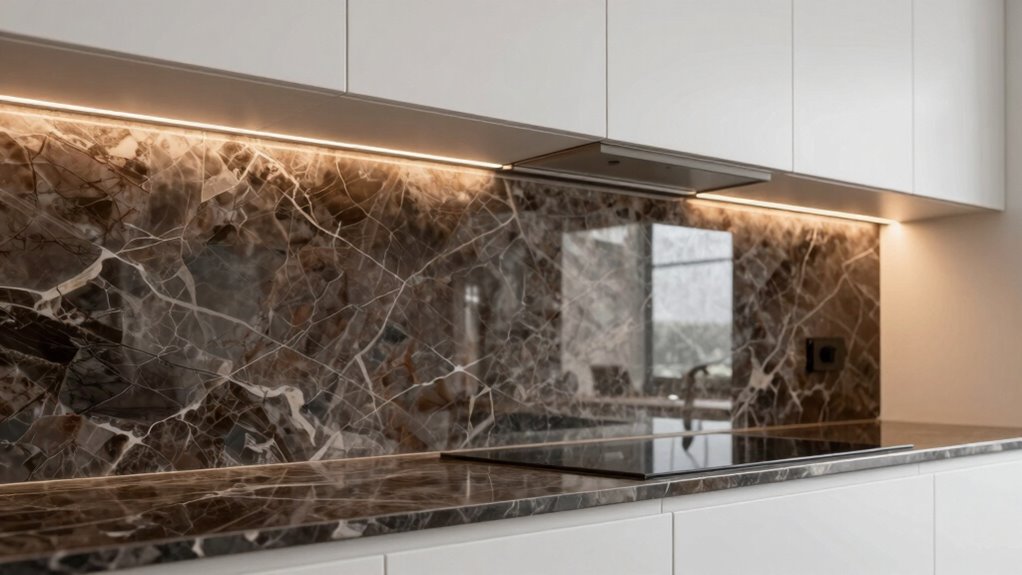
Have you ever wondered how tall your kitchen backsplash should be? The height you choose can dramatically influence your kitchen’s overall look, making it feel either more open or more intimate. When considering backsplash height, you need to think about more than just aesthetics; it’s about balancing style with practicality. Your choice involves two key factors: the tile pattern and material selection. These elements work together to create a cohesive design that reflects your personality while serving functional needs.
The tile pattern plays a vital role in defining the visual impact of your backsplash. For example, a simple, uniform tile pattern, like classic subway tiles, works well for a backsplash that extends just behind the stove or sink, usually around 16 to 18 inches high. This height maintains a clean, minimalist look and keeps the focus on your countertops. On the other hand, a more elaborate tile pattern—such as herringbone, mosaic, or decorative tiles—can be used to create a statement wall that spans from the countertop all the way up to the underside of upper cabinets or even to the ceiling. This larger coverage showcases the tile pattern and adds a sense of height and grandeur to your kitchen. When selecting the pattern, think about how it complements other design elements and how much visual interest you want to introduce. Additionally, consider tile durability and how well it will hold up over time in a busy kitchen environment. It’s also worth noting that choosing the right tile installation technique can enhance the overall appearance and longevity of your backsplash. Furthermore, considering the tile material can influence the overall durability and aesthetic appeal, especially in high-traffic areas. To ensure your design choices are both functional and stylish, it’s helpful to understand how different materials perform under daily use.
Material selection is equally important and influences how tall your backsplash should be. If you opt for materials like glass, ceramic, or natural stone, consider their durability and ease of cleaning. These materials are often forgiving when extended higher, as they can serve as a protective wall against splashes and stains. If your kitchen has a more traditional or rustic vibe, natural stone or textured tiles can add warmth and texture, making a taller backsplash feel more inviting. Conversely, if your kitchen leans toward a sleek, modern style, glass or high-gloss tiles can add a reflective quality that makes the space feel larger. When choosing material, also think about maintenance—higher backsplashes mean more surface area to clean, so pick something that’s both beautiful and practical. In addition, researching metaphysical symbolism related to colors and patterns can help you select materials that promote harmony and positive energy in your cooking space.
Ultimately, your backsplash height should reflect your personal taste, the size of your kitchen, and your lifestyle needs. Whether you go with a modest 16-inch splash behind the stove or a dramatic full-wall design, the right choices in tile pattern and material selection will transform your kitchen into a space that’s *uniquely yours*.
16 inch kitchen backsplash tiles
As an affiliate, we earn on qualifying purchases.
As an affiliate, we earn on qualifying purchases.
Frequently Asked Questions
Can a Backsplash Be Too High or Too Low for My Kitchen?
Your backsplash can be too high or too low if it disrupts the balance of your kitchen’s design. A too-high backsplash might overshadow decorative accents or make the space feel cramped, while a too-low one may leave too much wall exposed. Consider material options that complement your style, and guarantee the height enhances the overall look without overwhelming or underwhelming your space. Proper height creates harmony and highlights your decorative accents beautifully.
How Does Backsplash Height Affect Cleaning and Maintenance?
A higher backsplash can make cleaning easier by protecting more wall area from splashes and stains, but it might also make maintenance visibility trickier if dirt hides behind decorative tiles. Conversely, a lower backsplash offers simpler cleaning access and clear visibility of grime, but less wall protection. Consider your cooking habits; if you cook often, a taller backsplash might reduce cleaning effort, while a shorter one simplifies maintenance checks.
Are There Traditional or Cultural Backsplash Height Standards?
You’ll find that traditional or cultural backsplash height standards often stem from historical design and cultural influences. In Mediterranean homes, a backsplash might extend halfway up the wall, reflecting historic aesthetics. Japanese kitchens favor lower backsplashes, emphasizing minimalism. These standards mirror cultural values and practical needs, shaping your kitchen’s look and feel. By understanding these influences, you can choose a backsplash height that honors tradition while fitting your personal style.
Does Backsplash Height Influence Overall Kitchen Lighting?
Yes, backsplash height influences your kitchen’s lighting ambiance and visual balance. A taller backsplash can reflect more light, brightening the space, while a shorter one might create a cozier feel with less light reflection. Your choice affects how natural and artificial light interact, shaping the overall mood. By adjusting the height, you can enhance the kitchen’s visual harmony and lighting, making it feel more inviting and balanced.
Can Adjusting Backsplash Height Change Kitchen Ventilation Effectiveness?
Adjusting backsplash height can influence kitchen ventilation effectiveness by improving ventilation airflow near your stove. A higher backsplash reduces grease accumulation on walls, making it easier for your range hood to vent out smoke and odors efficiently. Conversely, a lower backsplash might hinder airflow and allow grease buildup, decreasing ventilation efficiency. So, choosing the right backsplash height helps maintain cleaner walls and better airflow, enhancing overall kitchen ventilation.
Conclusion
Choosing the right backsplash height is like setting the frame for a masterpiece; it defines the entire look of your kitchen. When you pick a height that complements your space and style, you’re not just making a design choice—you’re shaping your daily experience. Remember, this small detail can turn your kitchen from a simple room into a reflection of your personality. So, take your time, and let your backsplash be the finishing touch that truly sings.
Fall Picks
fall essentials
As an affiliate, we earn on qualifying purchases.