Peeling paint often results from excess moisture, poor surface prep, paint aging, or harsh weather. Moisture from leaks or high humidity weakens adhesion, while skipping cleaning or using low-quality primer causes the paint to fail. Over time, paint naturally deteriorates, and exposure to sun, wind, and temperature changes accelerates peeling. Understanding these causes helps you take effective steps to fix and prevent future issues—stay tuned to learn how you can address each problem properly.
Key Takeaways
- Excess moisture from leaks or high humidity weakens paint adhesion; fix by repairing leaks and improving ventilation.
- Poor surface preparation, such as dirt or grease, prevents proper bonding; clean and sand surfaces before repainting.
- Aging paint becomes brittle and cracks; remove peeling paint and apply fresh, high-quality primer and paint.
- Environmental exposure, like sunlight and temperature changes, accelerates deterioration; use weather-resistant paints for protection.
- Applying paint in unsuitable weather or low-quality products increases peeling risks; follow manufacturer instructions and choose durable materials.
high-quality primer for peeling paint
As an affiliate, we earn on qualifying purchases.
As an affiliate, we earn on qualifying purchases.
Excess Moisture and Water Damage
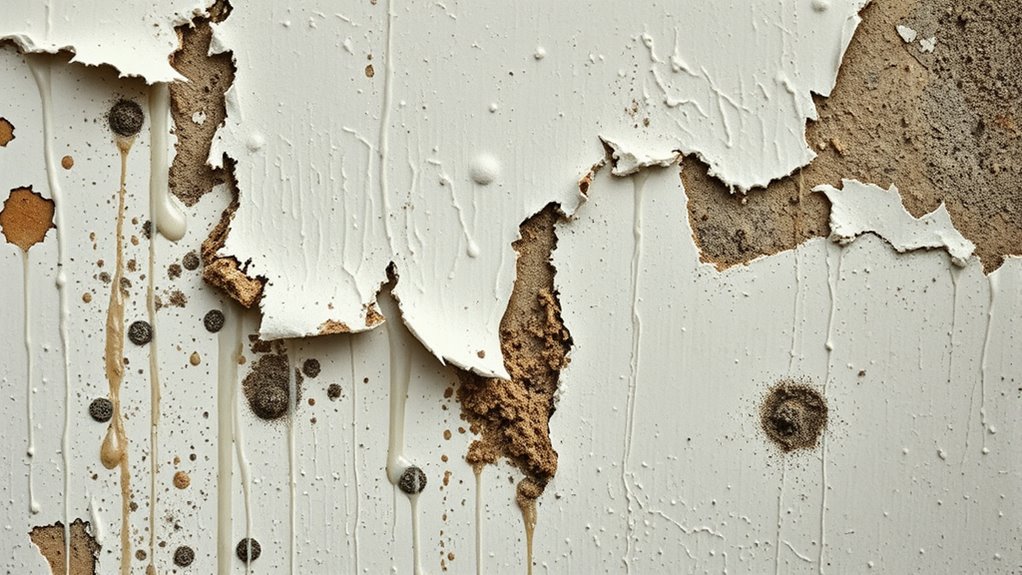
Excess moisture and water damage are common culprits behind peeling paint. High humidity issues, especially in bathrooms or kitchens, cause paint to bubble and peel as moisture gets trapped underneath. Plumbing leaks are another frequent problem; leaking pipes or fixtures introduce water directly onto walls, weakening the paint’s adhesion. When moisture seeps into the surface, it creates a damp environment that prevents paint from bonding properly. Over time, this persistent dampness causes paint to lift, crack, and peel away. To prevent this, regularly check for leaks and control indoor humidity levels using dehumidifiers or ventilation fans. Addressing water intrusion promptly keeps surfaces dry and helps your paint stay intact longer. Additionally, water parks often feature extensive water features that can contribute to high humidity levels indoors, making proper ventilation even more important in nearby buildings.
Poor Surface Preparation and Application Techniques
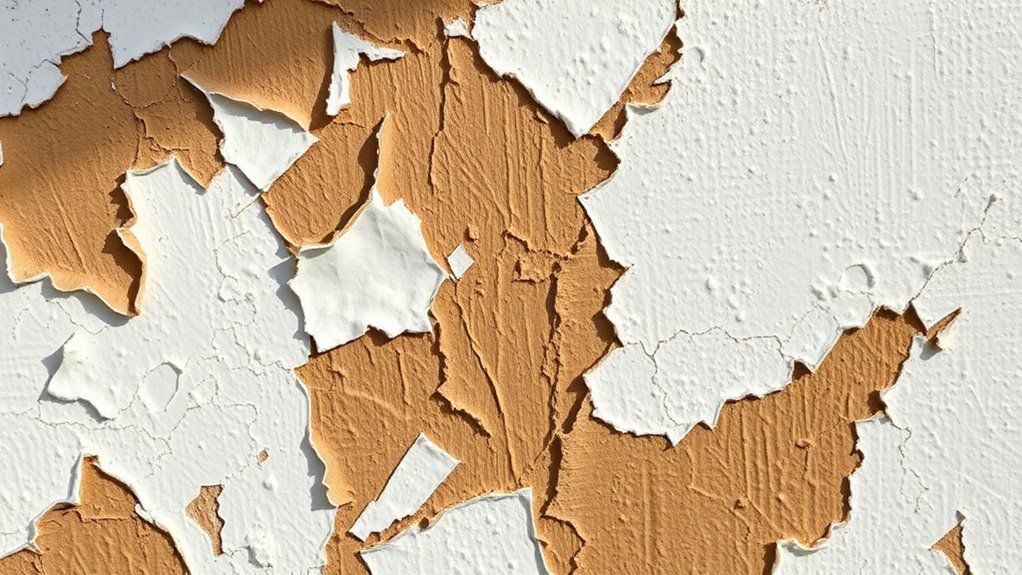
Poor surface preparation and application techniques are common causes of peeling paint because skipping proper steps weakens the paint’s adhesion to the surface. If you don’t clean and sand the area thoroughly, dirt, grease, or old paint can prevent new paint from sticking properly. Using a high-quality primer is vital, as it improves surface adhesion and creates a solid base for the topcoat. Poor primer quality or applying it unevenly can lead to areas that don’t bond well, causing peeling down the line. Additionally, rushing the process or applying paint in unsuitable weather conditions can compromise the finish. To prevent peeling, always prepare the surface properly, choose the right primer, and follow manufacturer instructions for application and drying times. Ensuring proper paint application techniques can significantly reduce the likelihood of peeling issues later on.
Age and Deterioration of Paint
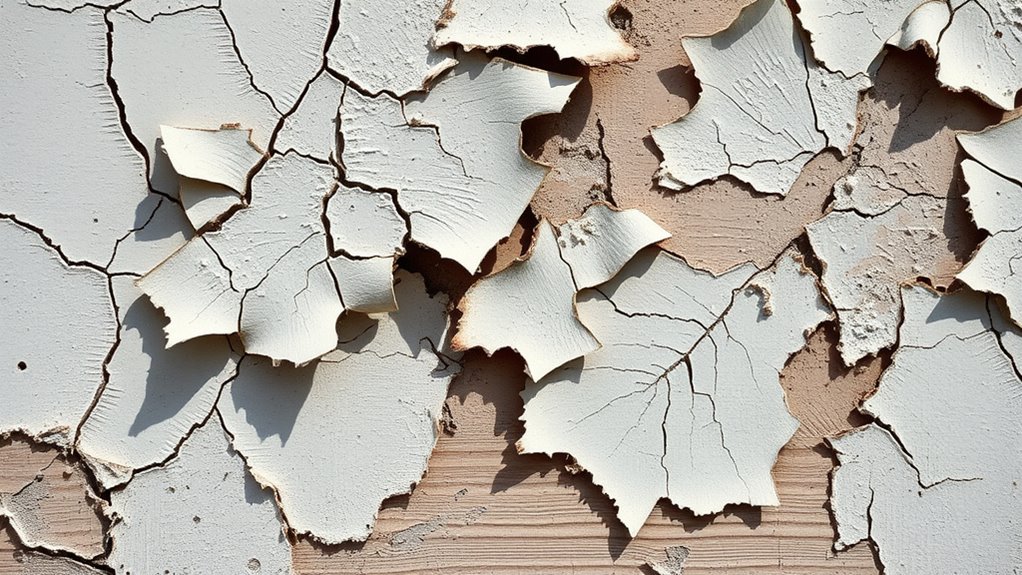
Over time, paint naturally deteriorates due to exposure to sunlight, moisture, and temperature fluctuations. As paint ages, its original formulation breaks down, leading to reduced adhesion and flexibility. This deterioration causes the paint to become brittle and more prone to cracking or peeling. You might notice color fading, which occurs as UV rays break down the pigments, diminishing the vibrancy of your walls. Over years, the protective qualities of the paint weaken, making it less resistant to environmental stressors. Even high-quality paint isn’t immune to age-related issues. Eventually, this natural wear and tear can result in peeling paint, requiring you to contemplate repainting or touch-ups to restore your surfaces. Regular maintenance can help slow this process, but aging remains a key factor behind paint failure. Proper surface preparation before painting can also extend the lifespan of your paint job and prevent premature peeling.
Exposure to Harsh Environmental Conditions
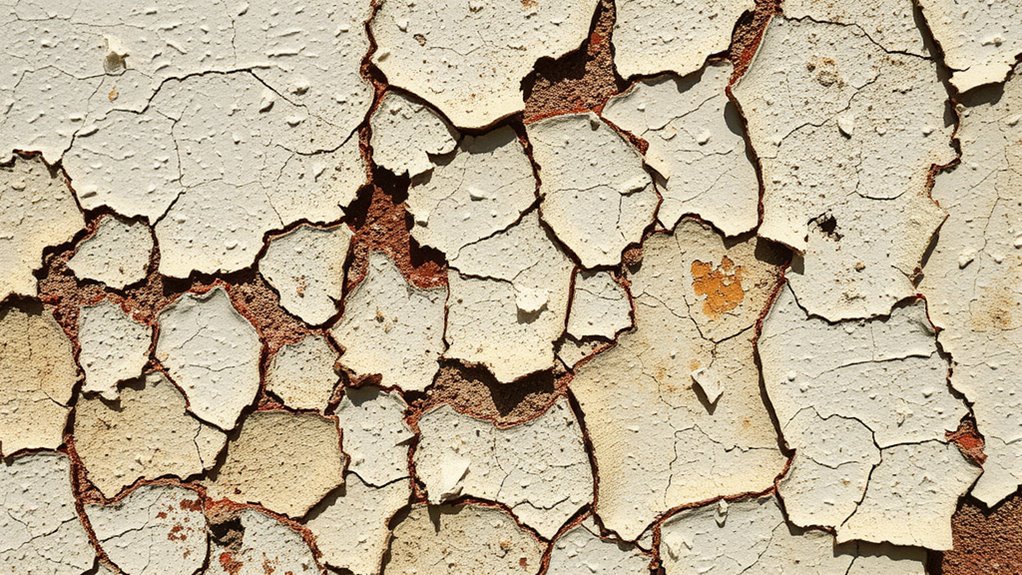
Environmental conditions play a significant role in the longevity of your paint. Exposure to harsh elements, like UV damage from sunlight, can cause paint to break down over time, leading to peeling and fading. Temperature fluctuations also strain your paint’s adhesion; intense heat causes it to expand, while cold makes it contract, creating cracks and weakening the surface. Wind, rain, and snow further accelerate deterioration by washing away protective layers or forcing moisture behind the paint. If your home is in an area with extreme weather, these factors combine to reduce paint’s lifespan quickly. To prevent peeling, consider using high-quality, weather-resistant paints and applying protective coatings that can withstand UV rays and temperature changes. Proper maintenance and regular inspections help catch issues early before they cause significant damage. Understanding environmental impact can help you choose the right materials and techniques for your specific climate.
Frequently Asked Questions
Can Peeling Paint Indicate Underlying Mold or Mildew Issues?
Yes, peeling paint can indicate underlying mold or mildew issues. If you notice peeling, it is crucial to perform mold detection to confirm. Mold and mildew thrive in damp environments, so addressing moisture problems helps with mildew prevention. By fixing leaks, improving ventilation, and cleaning affected areas with mold-resistant products, you can prevent mold growth and keep your walls healthy, avoiding further damage and potential health risks.
How Do Temperature Fluctuations Affect Paint Adhesion Over Time?
Temperature fluctuations can be like a rollercoaster for your walls, affecting paint adhesion over time. When the temperature changes, it causes thermal expansion and contraction, which stresses the paint layer. If your paint isn’t flexible enough, it can crack or peel. To prevent this, choose high-quality, flexible paint that adapts to temperature swings. This helps maintain a strong bond and keeps your walls looking fresh longer.
Are There Specific Paint Types More Resistant to Peeling?
You’ll find that high-quality paint formulations tend to be more resistant to peeling because they offer better coating durability. Look for paints designed specifically for your surface and environment, such as epoxy or acrylic variants. These options generally withstand temperature fluctuations and moisture better, ensuring longer-lasting adhesion. Choosing the right type of paint boosts your coating’s durability and reduces the likelihood of peeling over time, saving you effort and money.
What Safety Precautions Should I Take When Removing Peeling Paint?
Think of paint removal safety as your armor before battle. Always wear protective gear like gloves, goggles, and a mask to shield yourself from dust and fumes. Make certain proper ventilation in the area, and keep children and pets away. Use tools carefully, following manufacturer instructions. Taking these precautions keeps you safe from harmful chemicals and debris, turning a tricky job into a manageable task with peace of mind.
How Often Should I Repaint to Prevent Future Peeling?
You should repaint your walls every 5 to 10 years as part of your regular paint maintenance. This repainting schedule helps prevent future peeling by ensuring the paint stays bonded and protected against moisture and environmental damage. Keep an eye on signs of wear, and don’t delay repainting if you notice peeling or fading. Consistent upkeep maintains your surfaces’ appearance and extends the life of your paint job.
Conclusion
To keep your paint looking fresh, identify the root cause of peeling and take proper steps to fix it. Whether it’s moisture, poor prep, aging, or weather, addressing these issues now prevents bigger problems later. Remember, a stitch in time saves nine—tackle peeling paint early, and you’ll save yourself time and money while maintaining a beautiful finish. With care and attention, your walls can stay vibrant and intact for years to come.