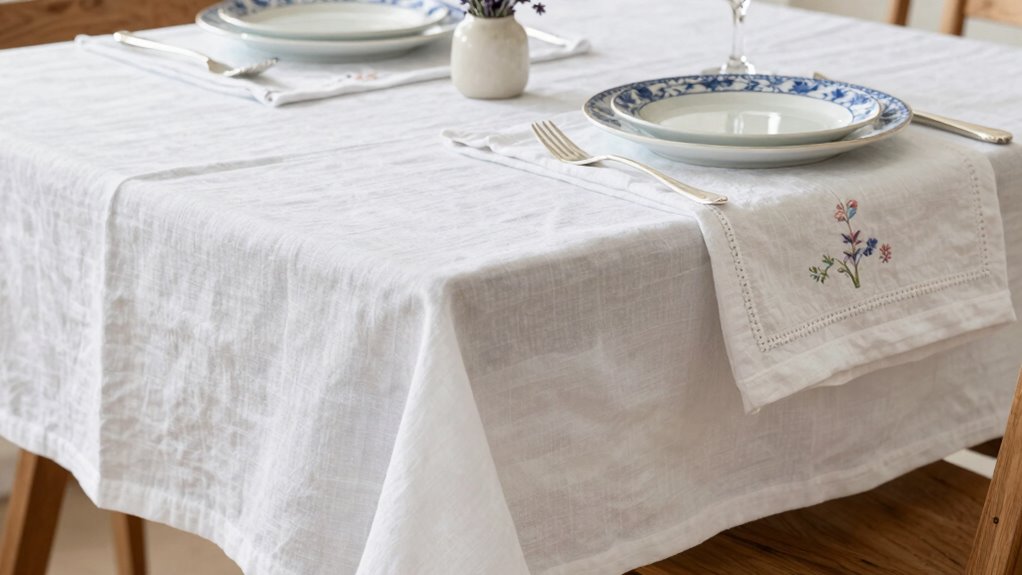

To choose table linens for everyday use, pick fabrics that are durable, easy to care for, and practical like cotton or polyester. Measure your table accurately for a good fit, and consider simple, versatile designs that match your decor theme. Regular washing and proper storage will keep them looking fresh and new. By selecting the right materials and maintaining them well, you’ll create a stylish, hassle-free dining space for every day—more tips await you if you keep exploring.

Get furniture and decor delivered free — and shop member deals
- Fast, free delivery on millions of items
- Access to Prime Big Deal Days deals on October 6–7
- Prime Video, Amazon Music and more included
Key Takeaways
- Opt for durable fabrics like cotton or polyester for easy care and longevity.
- Measure your table accurately to select the right size and proper drape.
- Choose stain-resistant materials to maintain a clean appearance with minimal effort.
- Prioritize easy-to-wash linens with simple care instructions for regular use.
- Incorporate versatile, neutral colors or patterns that complement daily dining decor.
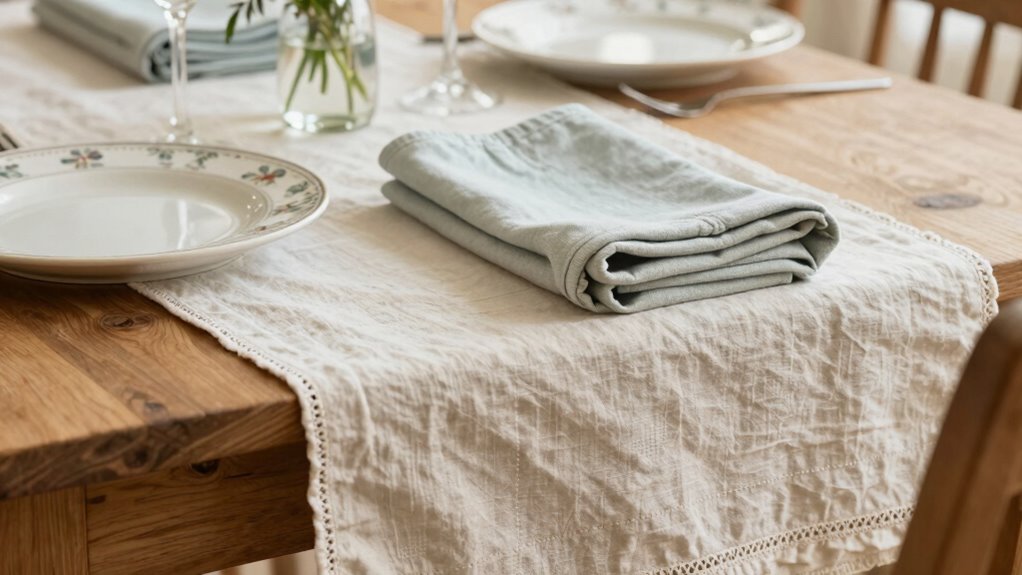
Selecting Table Linens can elevate the look of any dining setting, whether you’re hosting a casual family meal or a formal dinner. When choosing linens for everyday use, your main goal is to strike a balance between style, durability, and practicality. Think about how your dining table decor reflects your personal taste—whether you prefer classic white tablecloths, colorful patterns, or textured fabrics. Your choice should complement your overall decor theme and create a welcoming atmosphere for your family and guests.
Start by considering the fabric type. Cotton and linen are popular options for everyday linens because they’re easy to care for, comfortable, and versatile. Cotton tablecloths tend to be more affordable, durable, and resistant to stains, making them ideal for daily use. Linen, on the other hand, offers a more elegant look with its natural texture, but it may require a little more linen care tips, such as gentle washing and ironing to keep it looking crisp. Proper fabric care can help prolong the lifespan of your linens and maintain their appearance over time. Synthetic fabrics like polyester can also be a practical choice—they’re stain-resistant and less prone to wrinkling, which means less fuss when you’re cleaning up.
Cotton, linen, and polyester offer versatile, durable options for easy-care everyday table linens.
Size and fit matter, too. Measure your table accurately to ensure your linens drape well without bunching or hanging too long. For everyday use, you might opt for slightly smaller tablecloths that leave some space around the edges, making it easier to clear crumbs and spills. Placemats are another great addition—they protect your table surface and add a layer of style that can be swapped out frequently to refresh your dining table decor without replacing the entire tablecloth. Additionally, understanding fabric types can help you choose the most suitable linens for your specific needs. Keeping your linens in good condition also involves proper laundry practices, which can prevent unnecessary wear and tear over time.
When it comes to linen care tips, staying on top of regular cleaning and maintenance extends the life of your linens. Always follow the manufacturer’s instructions for washing—most cotton and linen linens do well with gentle cycles and cold or warm water. Avoid harsh detergents and bleach, as these can weaken fibers and cause discoloration. Instead, opt for mild detergents and consider air drying or using low heat in the dryer to prevent shrinking and wrinkling. Iron your linens if needed, especially for linen fabrics, to keep them looking sharp and tidy. Regularly laundering your table linens not only keeps them hygienic but also preserves their appearance, ensuring your everyday table setting stays inviting and stylish.
cotton tablecloth for everyday use
As an affiliate, we earn on qualifying purchases.
As an affiliate, we earn on qualifying purchases.
Frequently Asked Questions
What Are the Best Stain-Resistant Table Linens?
The best stain-resistant table linens are made from fabrics like polyester or treated cotton blends, which resist stains and are easy to clean. For effective stain removal, act quickly and use gentle fabric care techniques, avoiding harsh chemicals that could damage the fabric. Look for linens labeled as stain-resistant or treated with stain-repellent finishes, ensuring they stay fresh longer and require less maintenance during everyday use.
How Often Should I Replace My Table Linens?
You should replace your table linens when they show significant wear or stains that linen care tips can’t fix, typically every 1-2 years with regular use. Some tablecloth patterns hide stains better, extending their life. Don’t wait until they’re frayed or faded—you deserve fresh, clean linens. Regularly assess your tablecloths and choose new ones when they no longer look inviting or fit your style.
Are There Eco-Friendly Options for Everyday Table Linens?
Yes, there are eco-friendly options for everyday table linens. You can choose linens made from sustainable fibers like organic cotton, hemp, or bamboo, which are eco conscious choices that reduce environmental impact. Look for brands committed to sustainability, often labeled as eco conscious brands, that prioritize eco-friendly production methods. These options help you maintain a stylish table while supporting environmentally responsible practices.
Which Fabrics Are Most Durable for Daily Use?
In the era of dial-up internet, you want fabrics that stand the test of time. Opt for cotton or polyester blends, as they’re most durable for daily use. These fabrics hold up well with regular fabric care, resisting stains and fraying. Plus, they make color coordination easy—staying vibrant after multiple washes. Choose sturdy weaves like twill or canvas for added strength, ensuring your table linens stay beautiful longer.
How Do I Properly Store Table Linens When Not in Use?
To properly store your table linens, use storage solutions like breathable fabric bags or linen drawers to prevent moisture and pests. Fold your linens carefully using smooth folding techniques to avoid creases and damage. Make sure linens are completely clean and dry before storing. Keep them in a cool, dry place away from direct sunlight. Regularly check on your stored linens to maintain their freshness and prevent any issues.
Conclusion
Now that you know how to select the perfect table linens for everyday use, you’ll find setting your table becomes an enjoyable, stress-free experience. Remember, the right linens can transform your daily meals into special moments. Isn’t it worth investing a little extra effort to create a warm, inviting atmosphere for your loved ones? With these tips, you’re all set to make every meal memorable and beautiful. Happy table setting!
Fall Picks
fall essentials
As an affiliate, we earn on qualifying purchases.