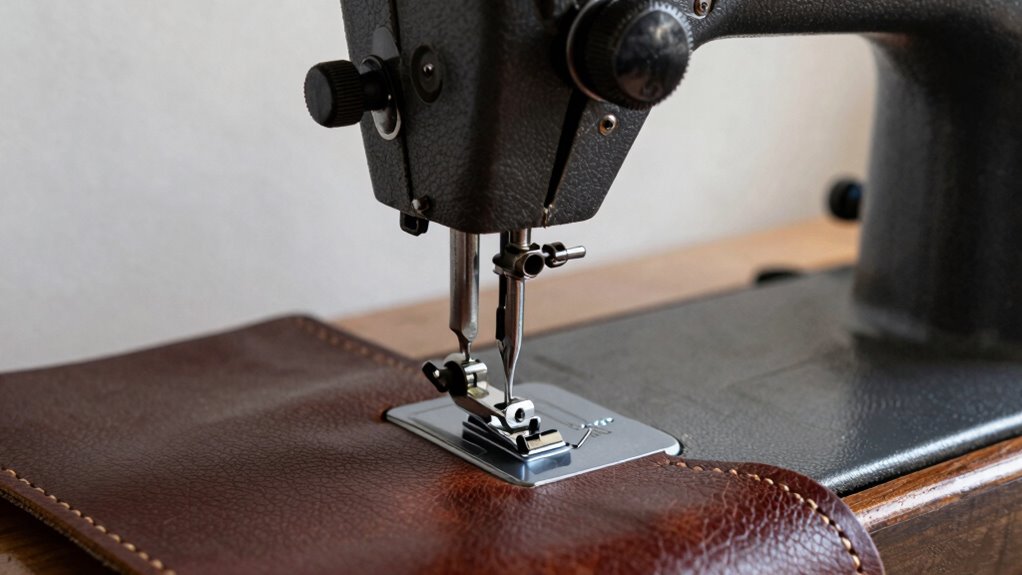
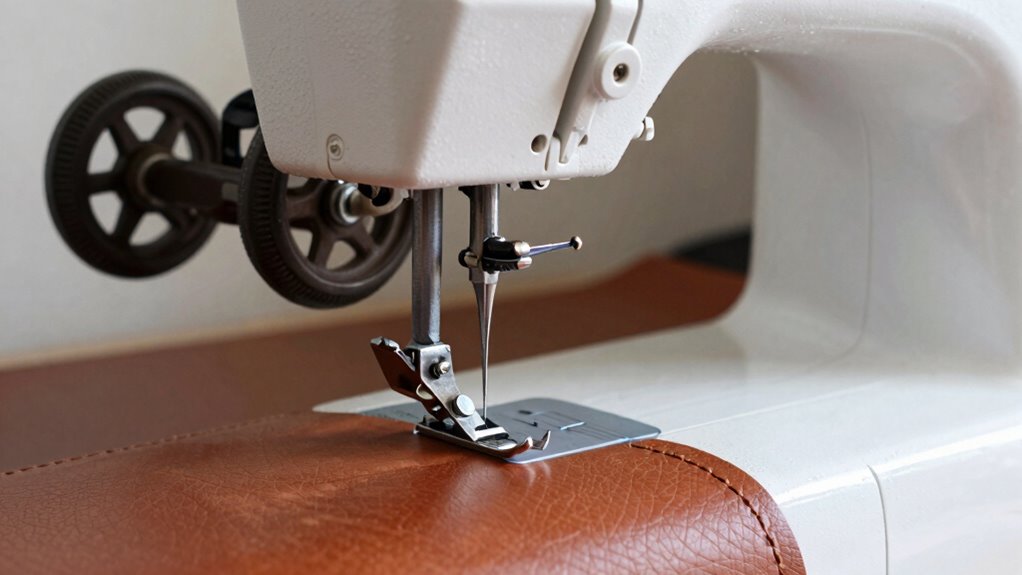
Leather-sewing equipment differs from standard machines in many ways. It’s built tougher with reinforced frames, motors, and durable components to handle thick, dense leather. These machines also use specialized needles and feed systems like walking or roller feet for even stitching and preventing slipping. They require regular maintenance to stay in top shape. With more powerful motors, they smoothly sew tough materials without overheating or stalling. Keep exploring to discover how these features truly elevate your leather projects.

Get furniture and decor delivered free with Prime
- Fast, free delivery on millions of items
- Prime Video, Amazon Music and more included
- Member-only deals all year
Key Takeaways
- Leather-sewing machines are built with reinforced frames and stronger components for increased durability under tough materials.
- They accommodate specialized needles like curved or wedge-shaped needles for smooth penetration of dense leather.
- Equipped with walking or roller foot systems to ensure even feeding of thick leather, unlike standard machines.
- They feature more powerful motors to handle the resistance of dense leather without stalling or overheating.
- Regular maintenance is essential to sustain performance and manage leather’s material resistance effectively.
When it comes to sewing leather, choosing the right equipment can make all the difference in the quality and durability of your project. Leather-sewing machines are built specifically for this tough material, offering enhanced machine durability that standard machines often lack. These specialized machines incorporate stronger frames, reinforced motors, and sturdier components to handle the thick, resistant nature of leather. Unlike regular sewing machines, which might struggle or break down under the pressure, leather-sewing machines are designed to withstand prolonged use without losing performance. This durability guarantees your projects stay consistent and reliable, saving you time and frustration.
One of the key differences is needle compatibility. Leather-sewing machines are equipped to accommodate specialized needles designed for leather, such as curved or wedge-shaped needles. These needles penetrate dense material smoothly, reducing the risk of skipped stitches or needle breakage. Standard machines generally use universal needles that aren’t optimized for thick, tough fabrics, which can result in uneven stitches or damage to the needle and machine. When you’re working with leather, using a machine that supports the right needle types is essential to achieve a clean, professional finish and to prevent damage to your equipment.
In addition to durability and needle compatibility, leather-sewing machines often feature a walking foot or roller foot system. This mechanism helps feed the thick leather evenly through the machine, preventing slipping and bunching. Standard machines typically lack this feature, making it more difficult to control the stitching process on leather, especially if it’s a heavier piece. The specialized feed system not only improves stitch quality but also reduces the workload on your machine and your hands, ensuring smoother, more precise sewing. Proper machine maintenance is also crucial for preventing issues and extending the life of your leather-sewing equipment. Regular cleaning and lubrication help keep these specialized systems functioning optimally, especially under frequent use. Understanding the material resistance of leather can help you select the appropriate settings and accessories for your machine, ensuring optimal performance. Additionally, a powerful motor is essential for managing the resistance of thick leather without stalling or overheating, which is a common challenge with less robust machines.
As an affiliate, we earn on qualifying purchases.
Frequently Asked Questions
Can Standard Sewing Machines Handle Thick Leather Materials?
Standard sewing machines typically struggle with thick leather, especially when the leather thickness exceeds their design limits. They may have trouble penetrating the material, leading to skipped stitches or machine jams. Additionally, their sewing speed might be too fast or inconsistent for heavy-duty leatherwork. For best results, you should use specialized leather-sewing equipment that can handle thicker materials smoothly and maintain steady sewing speed without damage.
What Specific Foot Attachments Are Unique to Leather-Sewing Machines?
Leather-sewing machines have unique foot attachments designed for a leather stitch, guaranteeing smooth, precise stitches. You’ll find specialized feet like the Teflon foot, roller foot, and walking foot, which offer better foot compatibility with thick or tough leather. These attachments help you manage leather’s texture and density, preventing slipping or bunching. Using the right foot ensures consistent results, making your leather projects easier and more professional-looking.
How Does Machine Durability Differ Between Leather-Sewing and Standard Models?
You’ll find leather-sewing machines are more durable than standard models because they’re built to handle thicker leather, often with stronger, reinforced parts. This durability guarantees consistent sewing precision even with heavy, dense materials. Standard machines may struggle with thicker leather, risking damage or uneven stitches. So, when working with leather, your machine’s robustness directly impacts the quality and longevity of your sewing projects.
Are Special Needles Required for Leather Sewing?
Yes, you need special needles for leather sewing. Leather needle compatibility is essential because these needles have a sharper, more sturdy point to penetrate dense material without damage. You should also adjust thread tension accordingly to prevent puckering or skipped stitches. Using the right leather needles and fine-tuning thread tension ensures smooth sewing, durability, and professional results when working with leather on your machine.
What Maintenance Differences Exist Between Leather-Sewing Equipment and Standard Machines?
You need to perform more frequent leather care to keep your leather-sewing machine in top shape. Regularly clean and oil the parts to prevent buildup and guarantee smooth operation. Unlike standard machines, you should also check and adjust machine calibration more often, especially after heavy use or sewing thick leather. Proper maintenance helps extend your machine’s lifespan, prevents thread jams, and guarantees consistent stitching quality.
Conclusion
Understanding the differences between leather-sewing equipment and standard machines helps you choose the right tool for your project. Leather-sewing machines are designed to handle thicker, tougher materials, ensuring durability and precision. Did you know that leather-sewing machines can handle up to 20% thicker material than standard sewing machines? This statistic highlights how investing in the right equipment can dramatically improve your craftsmanship and the longevity of your finished products. Choose wisely to create high-quality, lasting leather pieces.
Halloween Picks
halloween
As an affiliate, we earn on qualifying purchases.