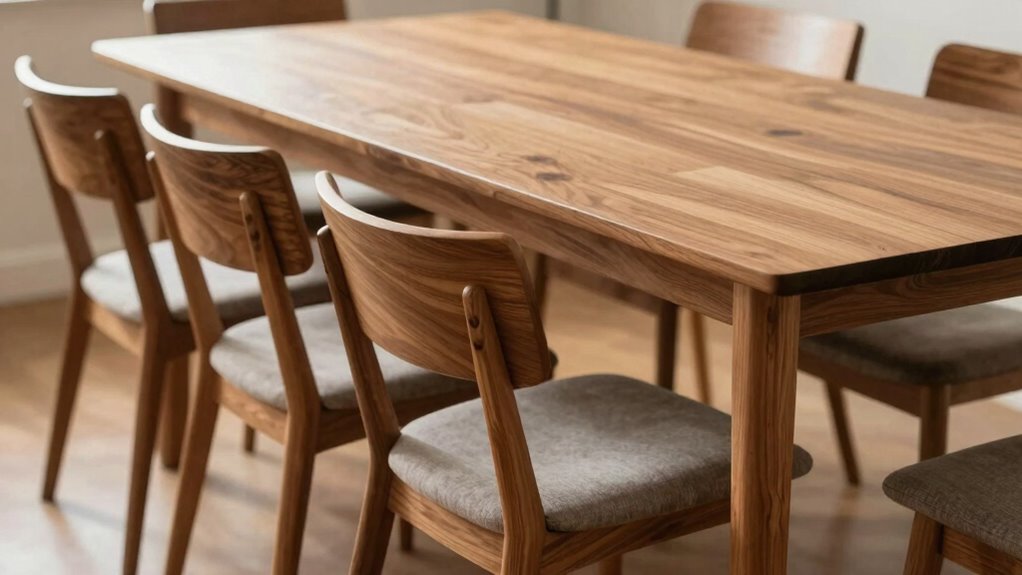

To save your elbows and keep everyone comfortable, aim for a spacing of 24 to 30 inches between your dining chairs. This range provides enough room for people to sit, stand, and move their arms naturally without feeling cramped. Adjust this space if you have bulky cushions or wider chairs, as they need extra room. Proper spacing not only enhances comfort but also creates a balanced, inviting look. Keep going to discover more tips on perfecting your dining setup.

Get furniture and decor delivered free with Prime
- Fast, free delivery on millions of items
- Prime Video, Amazon Music and more included
- Member-only deals all year
Key Takeaways
- Maintain 24 to 30 inches between chair centers for comfortable elbow room and ease of movement.
- Adjust spacing based on cushion thickness and bulk to prevent squeezing and restrictiveness.
- Ensure enough space to sit, stand, and relax without elbow bumps or feeling cramped.
- Consider cushion size and style to determine optimal spacing for comfort and aesthetic harmony.
- Balance technical measurements with personal comfort preferences for a functional, inviting dining area.
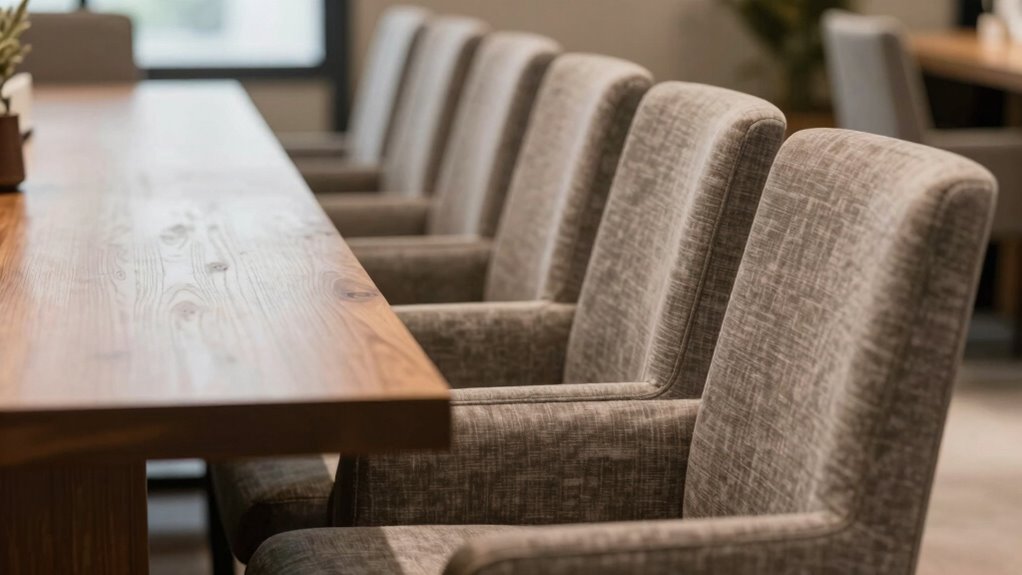
When arranging dining chairs, understanding the spacing rule can make a big difference in comfort and functionality. Proper spacing ensures everyone has enough room to sit comfortably without feeling cramped, especially when you consider cushion comfort. If your chairs have thick cushions, you’ll want to leave a little extra space to prevent them from feeling squeezed together. This extra room allows each person to relax without their elbows bumping into neighbors or the table edge. Too little space can lead to discomfort, while too much makes the table look sparse. Striking the right balance is key to creating an inviting, functional dining area. The standard rule for spacing is to allow about 24 to 30 inches between the centers of each chair. This measurement offers enough room for people to sit, stand, and move their arms naturally. When you follow this rule, you avoid crowding and ensure each guest has a comfortable cushion experience. Keep in mind that if your chairs are especially wide or have bulky cushions, you might need to increase the distance slightly. Conversely, if your chairs are narrow and lightweight, 24 inches might suffice. The goal is to give everyone enough elbow room so they aren’t constantly bumping or feeling restricted. Additionally, Proper spacing can help improve the overall flow and functionality of your dining space. Considering how color coordination impacts the visual harmony can also influence the perceived comfort of the area. Good space planning can prevent clutter and make the room feel more open and welcoming. Incorporating a thoughtful approach to furniture arrangement can enhance both the aesthetics and practicality of your dining setup. When arranging chairs, consider how the color of the cushions complements or contrasts with the table and surrounding decor. Cohesive color schemes create a more harmonious aesthetic, making the space feel more inviting. If you’re using bold or bright cushions, spacing them out appropriately prevents the area from appearing cluttered or overwhelming. Conversely, coordinating cushion colors with the table or walls can add a polished touch that elevates the overall aesthetic. Proper color coordination enhances cushion comfort by visually calming the space, making it feel more inviting and less chaotic. Ultimately, the right spacing for your dining chairs depends on both comfort and style. Keep in mind that aside from the technical measurements, your personal preferences and the overall design of your room matter just as much. Ensuring that cushions are comfortable and colors are well-coordinated will make your dining experience more enjoyable. When you pay attention to these details, your dining space will not only be functional but also a welcoming spot where everyone feels at ease—elbows included.
As an affiliate, we earn on qualifying purchases.
Frequently Asked Questions
How Do I Measure Chair Spacing for Irregularly Shaped Tables?
To measure chair spacing for irregularly shaped tables, start by carefully measuring each section, accounting for irregularities in the table’s edges. Use a flexible measuring tape to capture exact distances, then calibrate your spacing by adjusting for any uneven surfaces or curves. This spacing calibration guarantees chairs are evenly distributed around the table, providing comfortable elbow room and accommodating irregular shapes effectively. Always double-check measurements for accuracy.
Does Chair Spacing Vary With Different Table Materials?
Yes, chair spacing does vary with different table materials due to material differences. For example, glass or metal tables might require slightly more space to prevent scratching or damage, affecting seating comfort. Wooden tables often allow closer spacing without sacrificing comfort, while cushioned or upholstered tables may need extra room for ease of movement. Adjust your chair spacing accordingly to optimize comfort and protect your table’s material integrity.
Can Adjustable Chairs Affect the Optimal Spacing Rule?
Adjustable chairs can enhance your dining experience, acting like a tailor-made suit for your comfort. They allow you to fine-tune spacing, promoting ergonomic comfort and aesthetic balance at your table. With flexibility, you can create the perfect distance for elbows and posture, making mealtime more enjoyable. So, yes, adjustable chairs influence the ideal spacing rule, giving you control over both comfort and visual harmony.
What’s the Ideal Spacing for Outdoor Dining Setups?
For outdoor dining setups, aim for about 24-30 inches of space between chairs to guarantee indoor comfort and aesthetic balance. This spacing allows guests to sit comfortably without feeling crowded while maintaining an inviting look. Keep in mind that adjustable chairs can help fine-tune spacing based on your setup. By providing enough room, you create a relaxed atmosphere that encourages conversation and enjoyment, making your outdoor space both functional and visually appealing.
How Often Should I Re-Evaluate Chair Spacing in a Busy Restaurant?
You should re-evaluate chair spacing weekly during busy periods. Studies show that ideal spacing boosts customer comfort and turnover, increasing satisfaction by 20%. Regular staff training on adjusting spacing ensures your team responds quickly to crowd changes. Keep an eye on customer feedback and flow, and make adjustments as needed. Consistent re-evaluation maintains comfort, prevents discomfort, and keeps your restaurant running smoothly during peak hours.
Conclusion
Remember, following the dining chair spacing rule is like giving your elbows a gentle hug—just enough room to breathe and move comfortably. When you space your chairs correctly, mealtime becomes more enjoyable, and everyone feels at ease. So, don’t overlook this simple trick; it’s the secret to a cozy, functional dining area. After all, a well-spaced table is like a perfectly choreographed dance—smooth, harmonious, and inviting.
Halloween Picks
halloween
As an affiliate, we earn on qualifying purchases.