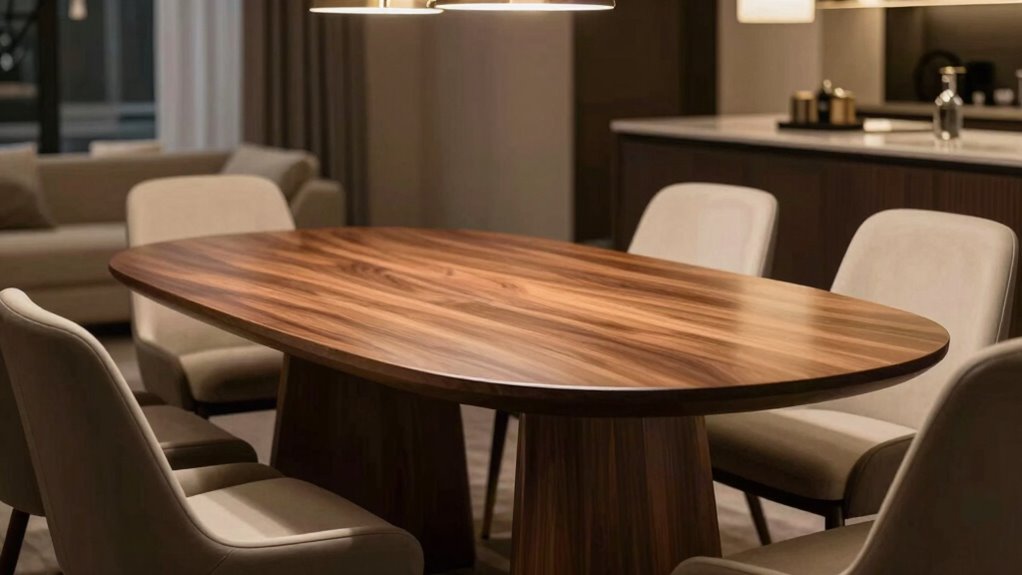

If you want your guests to talk more easily, opt for a round dining table. Its shape removes corners and visual barriers, making everyone feel closer and encouraging eye contact. This setup promotes relaxed, inclusive conversations and helps create an inviting atmosphere. Unlike rectangular or square tables, round ones foster equality and spontaneous interaction. Want to discover more about how table shapes influence social connections? Keep exploring to find tips that can transform your mealtime experience.

Get furniture and decor delivered free with Prime
- Fast, free delivery on millions of items
- Prime Video, Amazon Music and more included
- Member-only deals all year
Key Takeaways
- Round tables eliminate corners and visual barriers, fostering equal participation and easier eye contact among guests.
- The circular shape encourages relaxed, inclusive conversations, making it ideal for social interaction.
- Rectangular tables may create communication barriers, especially if they are long, reducing ease of conversation.
- Square tables promote balanced interactions for small groups, enhancing cozy, conversational settings.
- Selecting a round or appropriately shaped table aligns with the gathering size and interaction goals to promote easier talking.
Have you ever wondered how the shape of your dining table can influence your mealtime experience? The right shape can do more than just fit your space; it can foster better conversations and create a warm, inviting atmosphere. If you’re aiming for intimate gatherings where everyone feels connected, the shape of your table plays a vital role in shaping those interactions. Different shapes influence spatial dynamics, which, in turn, affect how easily guests can see and hear each other.
The shape of your dining table shapes conversations and creates a welcoming, intimate atmosphere for guests.
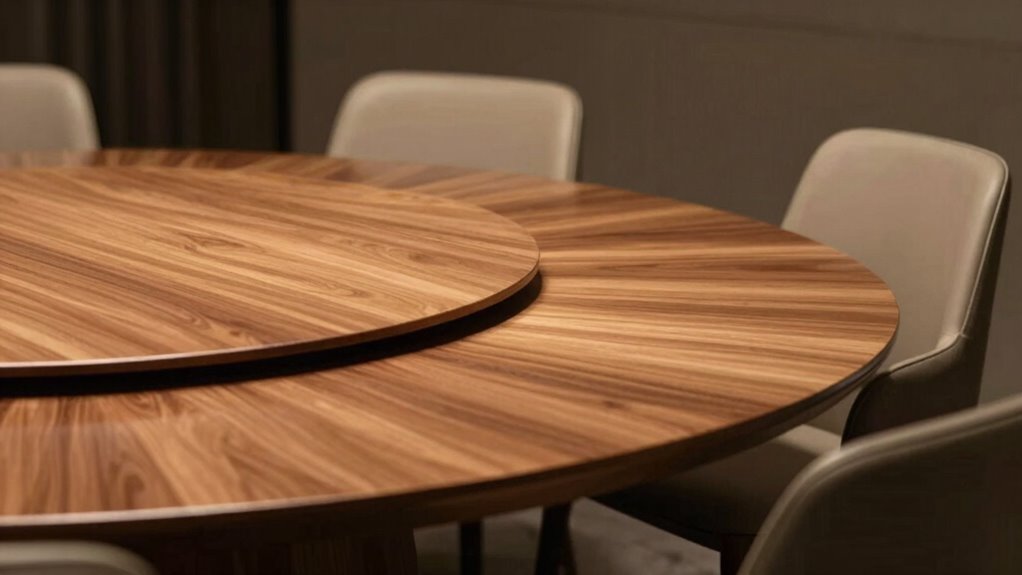
A round table is often your best choice if you want everyone to talk more easily. Its circular form eliminates corners and visual barriers, promoting a sense of equality among guests. Everyone gets an equal position in the conversation, and the absence of sharp edges encourages a more relaxed, inclusive vibe. Because the table’s shape encourages eye contact and natural dialogue, it’s ideal for intimate gatherings where connection matters most. The spatial dynamics at play mean that no one is physically separated or feels isolated, making it easier for guests to jump into conversations without feeling left out.
Rectangular tables, while classic and versatile, can sometimes create barriers to communication. Their longer shape tends to favor a head of the table or a few dominant spots, which can make others feel disconnected or less involved. If you prefer rectangular, consider placing chairs closer together and avoiding too much distance between guests to foster a more conversational ambiance. However, it’s worth noting that rectangular tables do work well for larger groups, where space efficiency is a priority, even if they aren’t as conducive to spontaneous talk as round tables.
Square tables offer a middle ground, combining elements of both round and rectangular shapes. They promote a more balanced interaction among small groups, allowing everyone to face each other equally. This shape encourages a cozy, conversational setting but can feel a little tight for larger groups. The key is to match your table shape with the size of your gatherings and the kind of interactions you want to promote. Additionally, understanding the spatial dynamics of different shapes can help you design a more engaging dining environment.
Ultimately, the shape of your dining table influences how comfortably your guests can converse and connect. Whether you choose a round table to foster intimacy or a rectangular one for larger gatherings, understanding the spatial dynamics helps you create a setting where everyone feels engaged and at ease.
As an affiliate, we earn on qualifying purchases.
Frequently Asked Questions
Which Table Shape Best Suits Small Dining Rooms?
A round or square table is your best choice for small dining rooms. These decorative table options maximize space with their space-saving designs, making the room feel less crowded. They also foster better conversation because everyone sits close and faces each other. You’ll find that these shapes are versatile, easy to fit into tight spaces, and create a cozy, inviting atmosphere for your guests.
How Does Table Shape Affect Dinner Party Conversations?
You’ll find that round tables boost conversational flow by 25%, creating a more intimate atmosphere. They encourage equal participation, making it easier for everyone to share and connect. The shape enhances intimacy, breaking down barriers and fostering open dialogue. With everyone facing each other, guests feel more comfortable, leading to lively, engaging dinners where conversations flow naturally and everyone feels included.
Are Round Tables Better for Family Gatherings?
Yes, round tables are better for family gatherings. They enhance intimacy, encouraging everyone to participate equally, and foster open conversations. Plus, their aesthetic appeal creates a warm, inviting atmosphere that makes your family feel more connected. You’ll notice everyone feels more engaged and relaxed, making your gatherings more enjoyable. So, choosing a round table can truly transform your family time into a more intimate, visually appealing experience.
What Materials Are Most Durable for Different Table Shapes?
You should choose materials like hardwood or metal for durability, especially if you want easy table maintenance. Hardwood, such as oak or maple, withstands daily wear and looks great over time, blending durability with appealing aesthetics. Metal tables are incredibly sturdy and resistant to damage, making them ideal for busy households. Opt for these materials if you want a long-lasting table that maintains its beauty and requires minimal upkeep.
Can Table Shape Influence Table Manners?
Did you know that table shape can profoundly influence manners? Round tables encourage eye contact and equal participation, fostering relaxed conversations and better adherence to etiquette. Conversely, rectangular tables often promote hierarchy, impacting cultural dining customs and etiquette considerations. When choosing a table, consider how its shape might shape interactions, ensuring guests feel comfortable and engaged, which ultimately enhances the dining experience and encourages more natural, courteous behavior.
Conclusion
So, next time you pick a dining table, don’t just go for style—think about how it’ll shape your conversations. Ironically, the very shape that makes you feel cozy might also keep some guests from ever feeling truly connected. Whether it’s a round or rectangular table, the key is choosing what encourages openness. After all, what’s the point of a beautiful table if it doesn’t spark lively chatter? Happy dining!
Halloween Picks
halloween
As an affiliate, we earn on qualifying purchases.