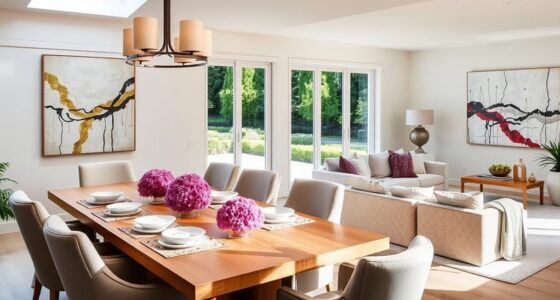

To create a polished progression from entry to living room, focus on thoughtful furniture placement, like positioning the sofa parallel to the entry and arranging chairs to guide the eye inward. Use a cohesive color palette with warm neutrals and layered lighting to set a welcoming mood. Incorporate visual cues, such as a rug or decorative art, to define the space and improve flow. Keep the layout accessible and inviting—if you want more tips, there’s plenty to explore.
Key Takeaways
- Arrange furniture to create a natural flow from entryway to the main living area without blocking pathways.
- Use a cohesive color palette extending from entry to living room for visual harmony.
- Incorporate layered lighting to enhance ambiance and unify the transition space.
- Add decorative elements like rugs and art near the entrance to define the transition zone.
- Incorporate visual cues and strategic spatial planning to guide movement and create a polished flow.
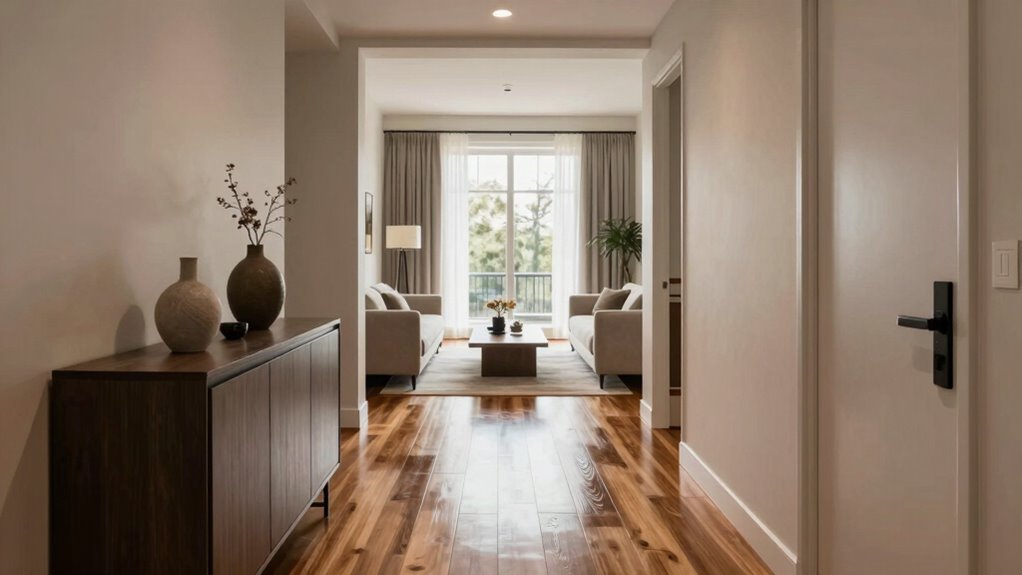
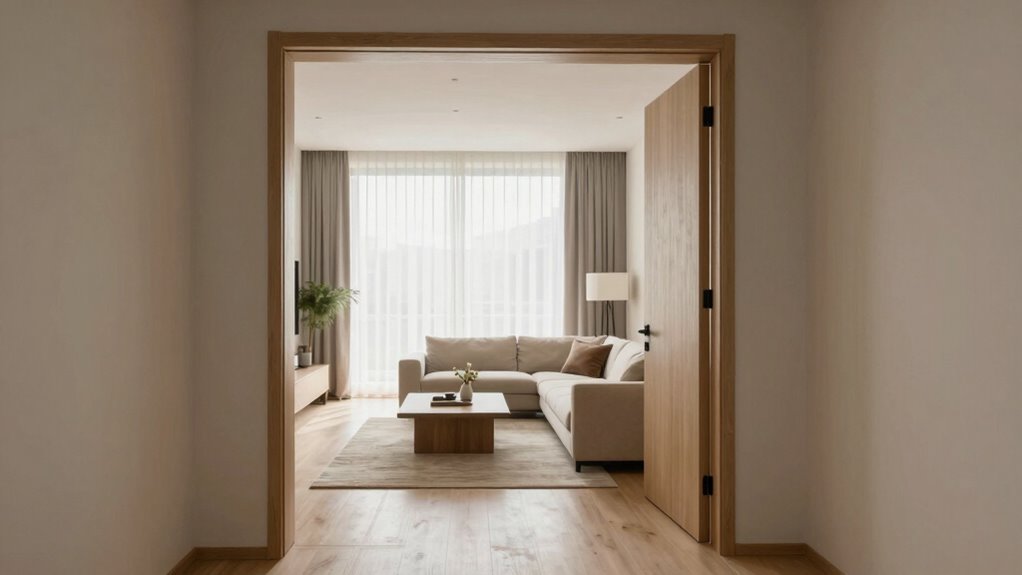
When entering your living room, the shift from the entryway to the main space can feel seamless and inviting with a simple trick. You want this transition to be smooth, making everyone feel welcomed without any awkwardness or abrupt changes. One effective way to achieve this is through thoughtful furniture placement that guides the eye naturally from the entry area into the larger room. Position your larger furniture pieces, like sofas and armchairs, in a way that creates a gentle flow rather than blocking the view or creating visual clutter. For instance, place the sofa parallel to the entry point, leaving enough space for easy movement, and arrange chairs to face inward or toward the main seating area. This setup invites movement, making the transition feel intentional and cohesive. Incorporating color coordination can also reinforce the harmony between spaces, ensuring the transition appears seamless. Color coordination plays a vital role in creating a polished look. When your entryway and living room share a harmonious color palette, the space appears unified. Consider choosing complementary or analogous colors that blend seamlessly from one area to the next. For example, if your entryway features warm neutrals, extend those tones into your furniture and decor in the living room. Throw pillows, rugs, and curtains in matching or coordinating hues reinforce the sense of flow. Avoid abrupt color changes that can disrupt the visual continuity. Instead, use subtle shifts in shade or tone to maintain interest without breaking the connection between spaces. Using lighting layering techniques can also enhance the overall ambiance, creating a more inviting environment. Lighting is another key element that enhances the transition. Use layered lighting—such as a combination of overhead fixtures, table lamps, and accent lights—to create a welcoming atmosphere. Dimmer switches allow you to adjust the ambiance, making the transition feel even more polished. When the lighting in the entryway and living room complements each other, it reinforces the feeling that these spaces are part of a unified whole. Incorporating visual cues like art or a console table near the doorway can serve as visual cues that guide guests naturally into the living area. Additionally, adding a rug at the entry point can further define the transition. Choose a runner or a small area rug that echoes the colors and textures found in the living room. This helps anchor the space and visually links the entryway to the main room, especially when combined with spatial planning to optimize flow and accessibility.
entryway to living room furniture arrangement
As an affiliate, we earn on qualifying purchases.
As an affiliate, we earn on qualifying purchases.
Frequently Asked Questions
How Long Does the Transition Trick Typically Take to Master?
You’ll likely master the change trick in a few weeks with consistent practice. It involves adjusting your entryway lighting and furniture placement to create a seamless flow into your living room. Focus on balancing lighting to highlight the space and rearranging furniture for easy navigation. Over time, you’ll develop an intuitive sense of how to make the shift smooth, polished, and welcoming, making your home feel more cohesive and inviting.
Can This Trick Work in Small or Awkwardly Shaped Entryways?
Yes, this trick can work in small or awkwardly shaped entryways. To optimize space, choose furniture and decor that fit well without cluttering the area. Use color coordination to create a seamless flow between entry and living room, making the space feel larger and more cohesive. Keep the design simple, and focus on strategic placement of key pieces to maximize functionality and style, even in tight or irregular spaces.
Are There Specific Décor Styles That Complement This Transition Technique?
You’ll find that soft, cozy decor styles like Scandinavian or Bohemian beautifully complement this movement technique, creating a welcoming vibe. Aesthetic themes emphasizing clean lines or warm textures also work well, making the shift feel seamless and intentional. These styles highlight simplicity and comfort, enhancing the overall flow. So, choose decor that reflects your personality, and let it bring harmony and charm to your entryway.
What Common Mistakes Should I Avoid When Practicing This Trick?
When practicing this trick, avoid cluttered furniture placement that blocks the flow and makes the shift awkward. Steer clear of mismatched color coordination, which can disrupt the polished look. Make sure your furniture and decor are arranged to create a smooth, inviting pathway. Keep your color palette cohesive, and don’t forget to maintain balanced proportions. These small adjustments help your transition feel seamless, polished, and welcoming.
Does This Trick Require Special Tools or Materials?
You don’t need special tools for this trick; basic DIY tools like a screwdriver, tape, or glue usually suffice. Investigating the theory shows that using readily available materials keeps costs low and makes the process more accessible. While you might consider extra items for a polished look, sticking to simple, inexpensive tools guarantees you don’t overspend. Overall, this trick is budget-friendly and straightforward, perfect for a quick, professional finish.
Conclusion
As you step through the doorway, imagine a gentle breeze guiding you into your living room oasis. The shift feels seamless, like turning a page in a well-loved book. With this trick, your entry becomes a graceful dance from the chaos outside to the calm inside. Every detail—from the soft rug underfoot to the warm glow of your lamps—welcomes you home. It’s not just a transition; it’s a polished, inviting journey into your personal sanctuary.