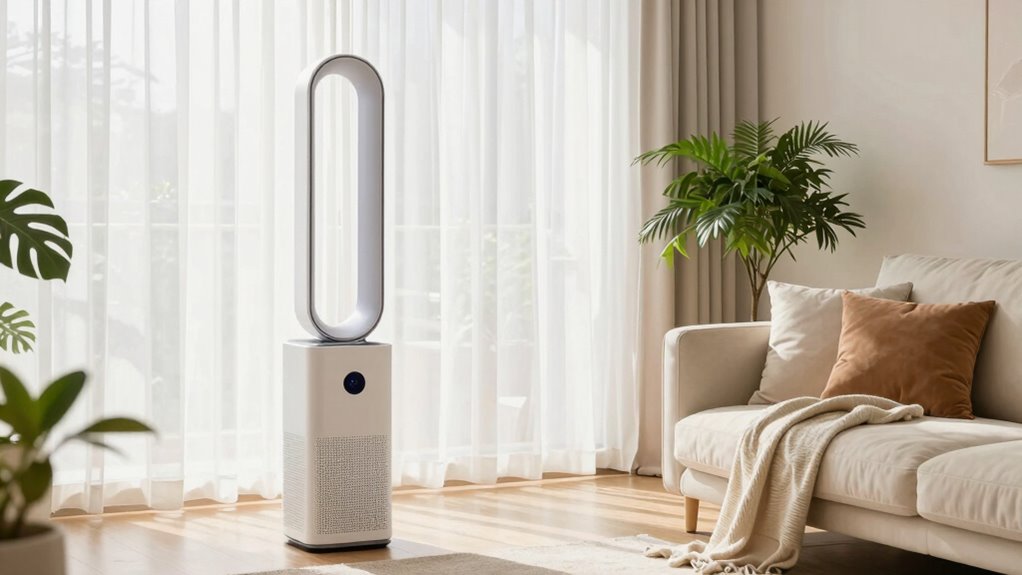

Cleaner indoor air makes your home more comfortable by reducing dust, allergens, odors, and airborne bacteria that can cause discomfort or health issues. Using air purifiers with HEPA and activated carbon filters, along with good ventilation strategies, helps keep the air fresh and healthy. This balance prevents stale air, mold, and pollutants from building up, creating a healthier, more inviting space. To discover how these methods work together to improve your daily environment, keep exploring.

Get furniture and decor delivered free — and shop member deals
- Fast, free delivery on millions of items
- Access to Prime Big Deal Days deals on October 6–7
- Prime Video, Amazon Music and more included
Key Takeaways
- Cleaner indoor air reduces allergens and irritants, alleviating respiratory issues and enhancing overall comfort.
- Improved air quality minimizes odors, creating a fresher and more inviting living environment.
- Proper ventilation prevents stale air buildup, maintaining a consistent, pleasant indoor atmosphere.
- Filtration technologies remove airborne pollutants, leading to healthier, more restful indoor spaces.
- A holistic approach to air management supports well-being and creates a more comfortable home environment.
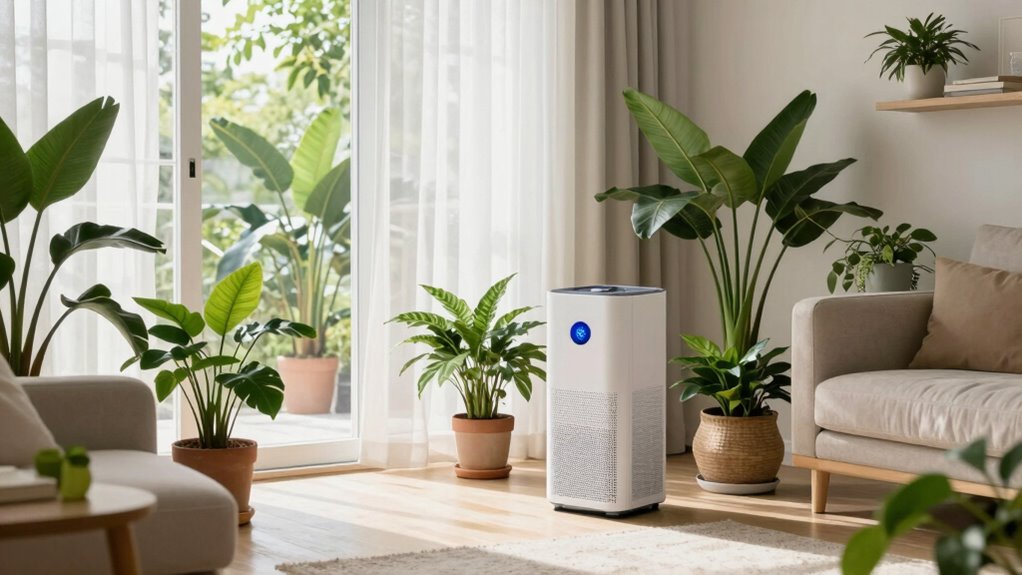
Have you ever wondered how pristine the air is inside your home or office? It’s easy to overlook, but the quality of indoor air has a direct impact on your comfort, health, and overall well-being. Thankfully, advances in air purifier technologies can help you tackle indoor pollutants effectively. Modern air purifiers use HEPA filters, activated carbon, and UV light to remove dust, allergens, bacteria, and even odors. These technologies work together to create a cleaner, healthier environment where you can breathe easier. But air purifiers alone aren’t enough; combining them with proper ventilation strategies enhances their effectiveness and guarantees fresh air circulates throughout your space.
Ventilation strategies involve the systematic exchange of indoor and outdoor air, reducing the buildup of indoor pollutants. Proper ventilation helps remove stale air, moisture, and airborne contaminants, creating a more comfortable living or working environment. You might consider opening windows when weather permits, using exhaust fans in kitchens and bathrooms, or installing mechanical ventilation systems like HRVs (Heat Recovery Ventilators) and ERVs (Energy Recovery Ventilators). These systems continuously bring in fresh air while exhausting indoor air, maintaining a balanced indoor climate. When paired with air purifiers, ventilation strategies greatly improve indoor air quality, especially in tightly sealed modern homes that tend to trap pollutants.
By integrating advanced air purifier technologies with effective ventilation strategies, you can reduce allergens, mold spores, and airborne pathogens, making your space not just cleaner but more comfortable. For example, during allergy season or when dealing with pet dander, a high-quality air purifier can filter out microscopic particles that trigger symptoms. Meanwhile, good ventilation ensures that these particles don’t accumulate over time. If you’re in a city with high pollution levels, outdoor air intake can be filtered through specialized ventilation systems to prevent contaminants from entering your home or office. Utilizing ventilation systems that incorporate filtration can further enhance your indoor air quality by removing pollutants from incoming air. Additionally, understanding indoor air quality can help you identify specific pollutants that may require targeted filtration or ventilation solutions.
Ultimately, maintaining cleaner indoor air means paying attention to both the devices that filter pollutants and the airflow management that keeps fresh air circulating. You don’t have to choose one over the other—combining air purifier technologies with smart ventilation strategies provides a holistic approach. This integration results in a space that is not only healthier but also more comfortable, free from musty odors, dust, and irritants that can compromise your daily life. When you prioritize good indoor air quality, you invest in a healthier, more inviting environment where you can truly relax and thrive.
As an affiliate, we earn on qualifying purchases.
Frequently Asked Questions
How Often Should I Replace Air Filters for Optimal Air Quality?
You should replace your air filter every 1 to 3 months, depending on its air filter lifespan and your home’s needs. Check your filter monthly, especially if you have pets, allergies, or high indoor pollution levels. Following a consistent replacement schedule guarantees ideal air quality, prevents dust buildup, and keeps your HVAC system running efficiently. Don’t wait too long, as a dirty filter can reduce airflow and compromise comfort.
Can Indoor Plants Significantly Improve Air Quality?
Indoor plants can considerably improve air quality through plant detoxification and foliage filtration. You can place leafy plants like snake plants or pothos in your home to naturally filter out toxins and airborne pollutants. These plants absorb carbon dioxide and release oxygen, enhancing overall air freshness. Regular watering and maintenance boost their effectiveness, helping you enjoy cleaner, more comfortable indoor air daily.
What Are the Common Sources of Indoor Air Pollution?
You should be aware that common sources of indoor air pollution include VOC emissions from household products like paints, cleaning supplies, and air fresheners. Household allergens such as dust mites, pet dander, mold, and pollen also contribute considerably. These pollutants can cause respiratory issues and allergies. To improve your home’s air quality, reduce the use of VOC-emitting products and keep your living space clean to minimize allergens.
Do Air Purifiers Effectively Remove All Indoor Allergens?
Air purifiers with HEPA filters can considerably reduce indoor allergens, but they don’t remove everything. Think of them as a skilled net catching most fish, yet some slip away. HEPA filters excel at allergen capture, targeting pollen, pet dander, and dust mites. However, airborne chemicals or odors might need additional filtration. While they improve air quality, they don’t eliminate all allergens, so regular cleaning remains essential.
How Does Humidity Affect Indoor Air Quality?
Humidity levels directly impact indoor air quality. When humidity is too high, it encourages mold growth and dust mites, which can worsen allergies. Humidity control helps maintain ideal levels, preventing mold and reducing airborne pollutants. Keeping humidity balanced creates a more comfortable home environment, minimizes musty odors, and supports better overall air quality. Proper humidity management is essential for a healthier, more pleasant living space.
Conclusion
Breathe easy knowing that cleaner indoor air transforms your home into a sanctuary of comfort and health. When you prioritize air quality, you’re not just improving your environment—you’re safeguarding your well-being and creating a space where every breath feels like a gentle hug. Don’t let unseen pollutants steal your peace; instead, embrace fresh, pure air and turn your house into a haven where comfort and health flourish. Your home’s air quality is the key to a happier, healthier you.
Halloween Picks
halloween
As an affiliate, we earn on qualifying purchases.