
The kitchen is shifting towards lower-energy cooking with smart appliances that communicate seamlessly and adapt to your needs. You’ll find devices like smart ovens that turn off automatically and induction cooktops that heat faster and use less power. These innovations help cut energy bills and reduce environmental impact while making cooking more efficient. By embracing this technology, you’ll enjoy a greener, smarter kitchen—and there’s much more to explore about these exciting changes.

Get furniture and decor delivered free with Prime
- Fast, free delivery on millions of items
- Prime Video, Amazon Music and more included
- Member-only deals all year
Key Takeaways
- Smart appliances communicate seamlessly to optimize energy use during cooking processes.
- Energy-efficient technologies like induction cooktops heat faster and reduce power consumption.
- Automated features, such as preheating detection and auto shut-off, minimize unnecessary energy use.
- Integration of smart systems enables real-time monitoring and adaptive cooking for energy savings.
- Sustainable design advances lower energy bills and reduce environmental impact in modern kitchens.
Have you noticed how your kitchen is transforming with new technology? It’s not just about sleek designs or faster appliances anymore; it’s about smarter, more sustainable ways to cook. The shift toward lower-energy cooking is reshaping how you approach meal prep, making your kitchen more efficient and environmentally friendly. Central to this change is smart appliance integration, which allows your devices to communicate seamlessly, optimize energy use, and offer you real-time insights. Instead of manually adjusting settings or guessing how long to cook something, you can now rely on intelligent systems that adapt based on your needs, reducing unnecessary energy consumption.
This integration isn’t just about convenience; it’s about rethinking how appliances work together to minimize waste. For example, smart ovens can detect when they’re preheated and automatically turn off when the desired temperature is reached, conserving power. Your smart refrigerator can monitor its contents and suggest recipes that use ingredients close to expiry, helping reduce food waste while lowering energy use. These appliances work as a cohesive network, streamlining your kitchen operations and ensuring that each device contributes to an energy-efficient design. This interconnectedness makes it easier for you to adopt lower-energy cooking habits without sacrificing performance or convenience. Additionally, smart appliance networks enable better management of energy consumption by coordinating device operation more intelligently.
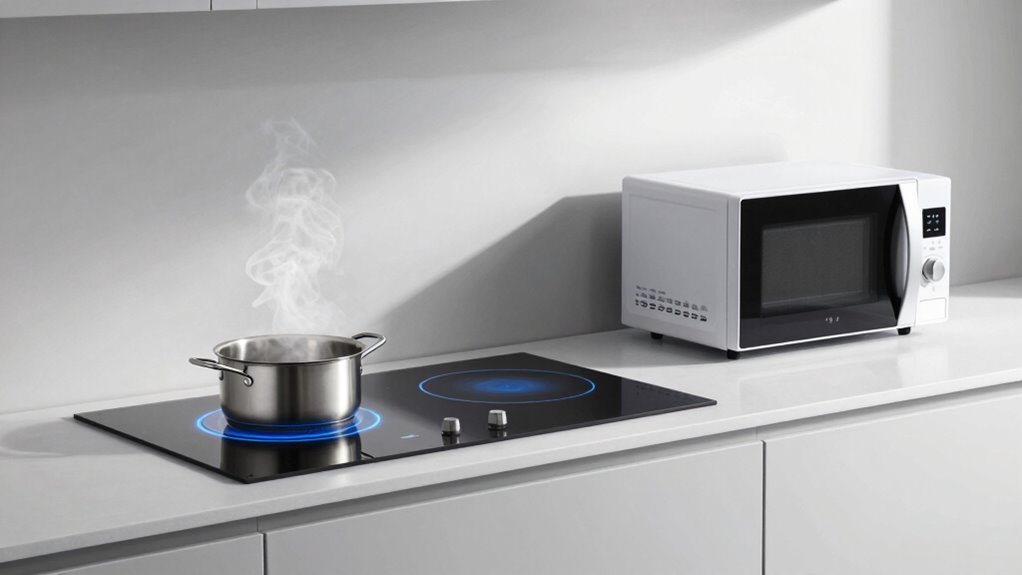
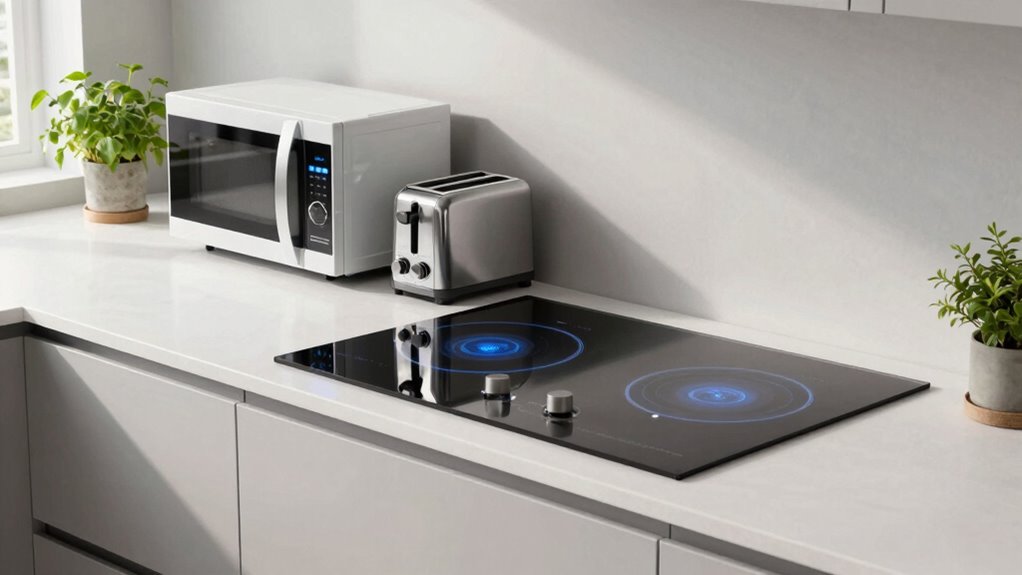
Energy-efficient design plays an essential role in this technological shift. Modern appliances are built to consume less power while maintaining high performance. Induction cooktops, for instance, heat faster and transfer energy more efficiently than traditional electric or gas stoves. They use electromagnetic fields to directly heat cookware, reducing wasted heat and lowering your energy bills. Similarly, advanced ventilation systems are designed to quickly clear smoke and odors while consuming less energy, creating a healthier kitchen environment. These innovations reflect a broader focus on sustainability, encouraging you to make choices that reduce your carbon footprint without sacrificing the quality of your cooking experience. Additionally, integrating smart appliances helps optimize overall energy consumption by coordinating device operation.
Moreover, energy-efficient design not only lowers your utility bills but also contributes to a significant reduction in greenhouse gas emissions, supporting a healthier planet. As you incorporate these advancements into your kitchen, you’ll find that lower-energy cooking isn’t just better for the planet—it also benefits your wallet and your daily routine. The technological shift in kitchen appliances is driven by ongoing innovations that prioritize both sustainability and user convenience. The adoption of sustainable appliance technology is increasingly becoming a standard in modern kitchens, guiding consumers toward environmentally responsible choices. The combination of smart appliance integration and energy-efficient design simplifies your tasks and helps you make more conscious choices. You’ll enjoy the satisfaction of preparing meals with less waste and more efficiency, all while contributing to a greener future. This ongoing technological shift is transforming your kitchen into a smarter, more sustainable space where innovative design and intelligent systems work hand-in-hand to redefine how you cook and live.
As an affiliate, we earn on qualifying purchases.
Frequently Asked Questions
How Do Low-Energy Cooking Methods Compare in Speed?
Low-energy cooking methods generally take longer than traditional techniques, impacting cooking efficiency. For example, slow cookers and sous-vide appliances often require more time to prepare meals. A quick time comparison shows that these methods might double or even triple the cooking duration. While they save energy, you’ll need to plan ahead, as they aren’t as fast as microwave or high-heat stovetop cooking.
Are There Any Health Risks With New Kitchen Appliances?
Are you worried about health concerns with new kitchen appliances? Generally, these appliances are designed with safety in mind, but it’s smart to stay informed. Most modern devices meet strict safety standards, reducing risks. However, be cautious of improper use or faulty units, which can pose appliance safety issues. Regular maintenance and following manufacturer instructions help guarantee your kitchen remains a healthy, safe environment.
What Is the Cost Difference Between Traditional and Low-Energy Devices?
You’ll find that low-energy devices often have higher initial appliance costs, but they save you money through energy savings over time. Traditional appliances typically cost less upfront, but they consume more electricity, leading to higher utility bills. Investing in energy-efficient appliances might seem costly at first, but the long-term savings on energy bills can outweigh the initial price difference, making them more economical in the long run.
How Durable Are New Low-Energy Kitchen Appliances?
Like a trusty sword in a knight’s hand, new low-energy kitchen appliances are designed for durability. You’ll find they typically have a comparable appliance lifespan to traditional devices, often lasting many years with proper care. Repair costs tend to be lower because modern materials and engineering focus on longevity. So, while they may seem delicate at first, these appliances are built to withstand daily use, ensuring your investment pays off over time.
Can These Technologies Be Integrated Into Existing Kitchens Easily?
Yes, these technologies can often be integrated into your existing kitchen, but appliance compatibility and installation challenges vary. You may need to check if your current wiring and outlets support new appliances. Some upgrades might require professional help to guarantee proper installation, especially for complex systems. Overall, with a bit of planning and possibly some adjustments, you can smoothly incorporate lower-energy cooking devices into your kitchen.
Conclusion
As you embrace these new kitchen technologies, you’re on the cusp of a greener, more efficient future. Lower-energy cooking methods aren’t just a trend—they’re a game-changer that saves money and reduces your carbon footprint. Remember, sometimes you have to think outside the box to stay ahead of the curve. So, don’t wait for change to happen—be the one who leads it, because in this game, it’s all about staying a step ahead.
Halloween Picks
halloween
As an affiliate, we earn on qualifying purchases.