

To create an effective family chore chart, start by evaluating your family’s routines, strengths, and needs to set clear, achievable goals. Choose a format—digital or paper—that suits your style and include incentives like rewards or points to motivate everyone. Assign age-appropriate tasks and establish consistent routines with regular check-ins. By reinforcing effort and adjusting chores as needed, you foster teamwork and responsibility. Keep exploring this guide to learn how to keep your chore system running smoothly.
Key Takeaways
- Assess household needs and assign age-appropriate chores to promote fairness and teamwork.
- Choose a chore chart format that fits your family’s routines, using visual tools or digital apps.
- Incorporate reward systems like stickers or privileges to motivate children and reinforce positive behavior.
- Regularly review and adjust chores to match evolving family dynamics and individual capabilities.
- Reinforce effort and resilience through praise and rewards to foster motivation and a cooperative environment.
Assessing Your Family’s Needs and Responsibilities
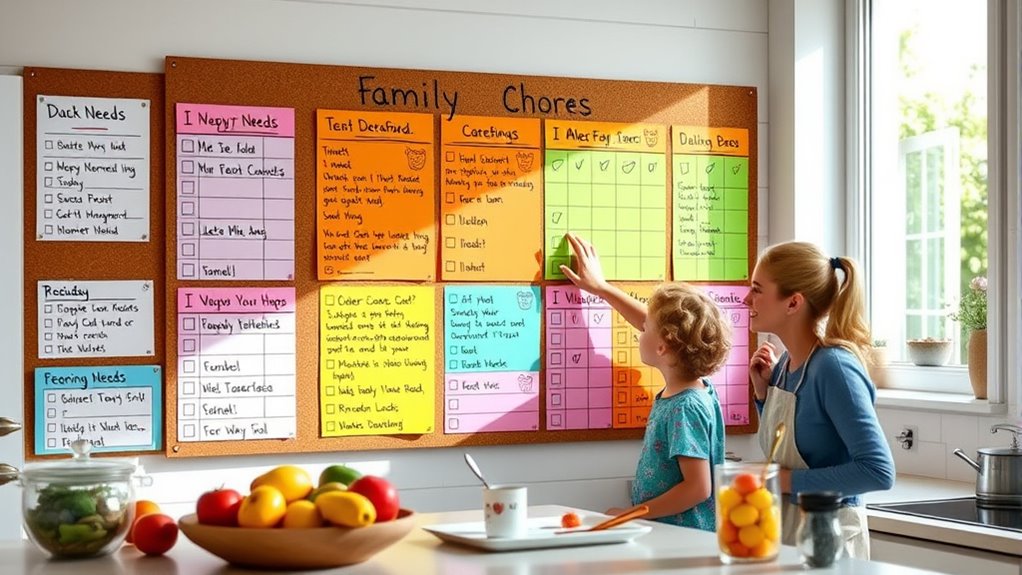
Have you ever wondered if your family’s chores truly reflect everyone’s needs and responsibilities? Gauging your household dynamics is the first step. Parent involvement plays a big role here; it sets the tone for shared responsibilities. Talk with your family to understand each person’s routines, strengths, and limitations. Consider how chores fit into daily schedules and whether tasks are fairly distributed. Are the chores aligned with age and capability? Do they promote teamwork? By evaluating these factors, you can create a balanced system that addresses everyone’s needs. Adjusting chores based on household dynamics ensures that responsibilities are fair, manageable, and promote cooperation. Additionally, understanding the role of age and capability can help tailor assignments to each family member’s abilities, making chores more effective and less burdensome. This foundation helps foster a sense of fairness and shared accountability among family members.
Choosing the Right Chore Chart Format
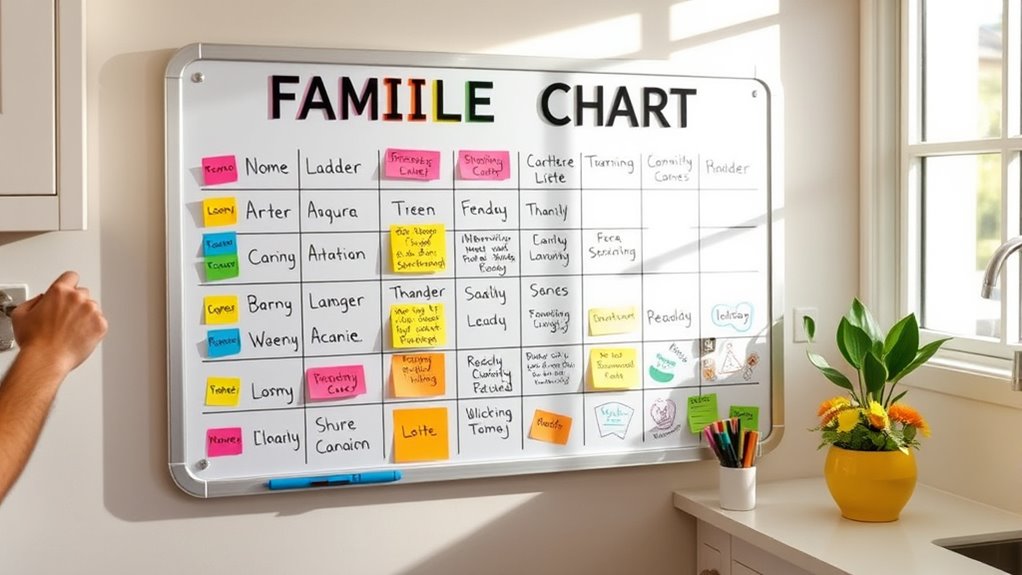
Selecting the right chore chart format is essential to guarantee your family stays organized and motivated. Your choice should match your household’s routines and preferences, so everyone stays engaged. Consider the visual design: some families prefer colorful, visually appealing charts that grab attention, while others may opt for simple, straightforward layouts. Customization options are also key—look for formats you can easily adapt as your needs change, whether that means adding new chores or adjusting responsibilities. You might choose a printable paper chart for easy updates or a digital app for real-time tracking. The goal is to find a format that’s not only functional but also encourages participation. By choosing a well-suited chore chart format, you set your family up for success and accountability.
Setting Clear Expectations and Goals

Setting clear expectations and goals is essential to guarantee everyone in your family understands their responsibilities and works toward common objectives. Use motivational strategies to encourage participation and ownership of chores. Clearly define each person’s tasks and deadlines, so there’s no confusion. Effective communication techniques, like regular family meetings or check-ins, help reinforce expectations and allow everyone to voice concerns or adjustments. Be specific about what success looks like, whether it’s completing a task on time or maintaining a certain standard. When expectations are transparent, family members feel more accountable and motivated. Setting achievable goals also builds confidence and teamwork. Incorporating sound vibrations can influence brainwave patterns to improve focus and reduce stress during chore routines. Remember, consistency in communicating and reinforcing these expectations keeps everyone aligned, making chore management smoother and more effective.
Assigning Age-Appropriate Tasks
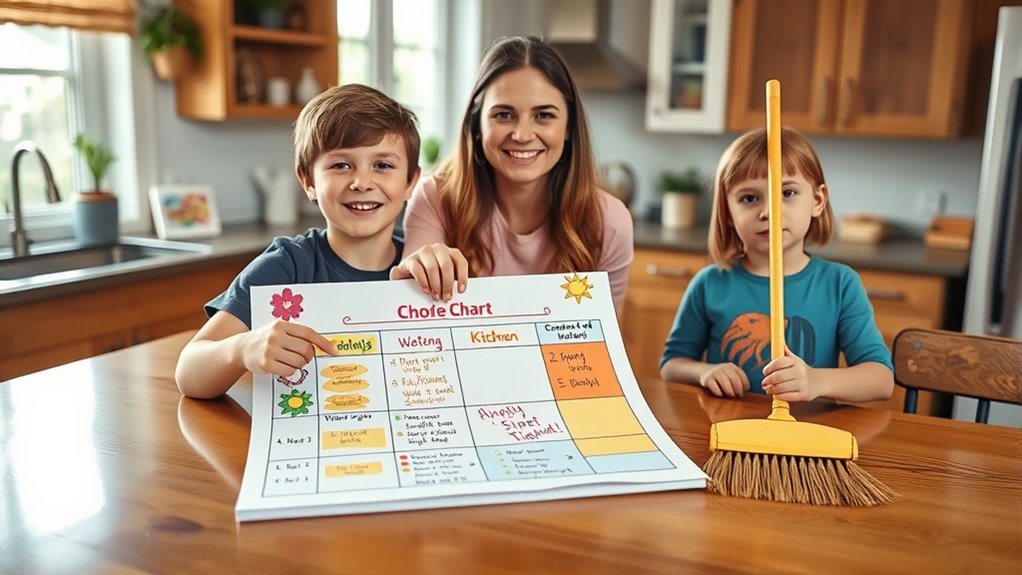
Assigning age-appropriate tasks guarantees that each family member can complete chores safely and confidently. When choosing chores, consider age considerations to ensure tasks match your child’s abilities. Younger children are just reaching developmental milestones, so simple tasks like tidying up toys or setting the table are suitable. As they grow and develop new skills, they can take on more complex responsibilities, such as sweeping or laundry. Tailoring chores to age not only fosters independence but also prevents frustration or accidents. Keep in mind that developmental milestones guide the complexity of tasks; what’s appropriate for a 5-year-old might be too challenging for a 3-year-old. Regularly reassess their abilities to ensure chores remain fair, safe, and supportive of their growth. Additionally, ensuring the tasks are age-appropriate helps prevent potential injuries and encourages a positive attitude toward responsibilities.
Incorporating Incentives and Rewards
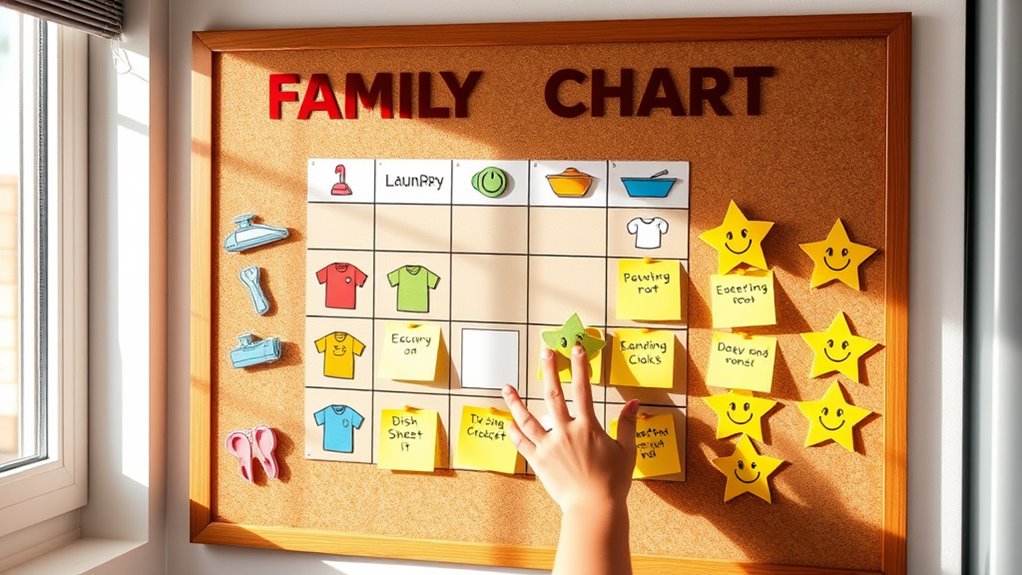
Incorporating incentives and rewards can motivate family members to complete chores consistently and with enthusiasm. Using reward systems taps into extrinsic motivation, encouraging kids to finish tasks promptly. Rewards can be simple, like stickers, or more meaningful, like extra screen time. To keep things engaging, try a points system where family members earn points for chores, redeemable for rewards. Here’s a quick example:
| Chore | Points Earned | Reward |
|---|---|---|
| Washing dishes | 10 | Stay up 30 mins |
| Vacuuming | 8 | Favorite snack |
| Taking out trash | 5 | Choose movie |
| Making bed | 3 | Extra playtime |
Reward systems motivate, reinforce habits, and make chore time feel rewarding rather than burdensome. Additionally, aligning rewards with family values can strengthen bonds and promote positive behavior.
Establishing a Consistent Routine
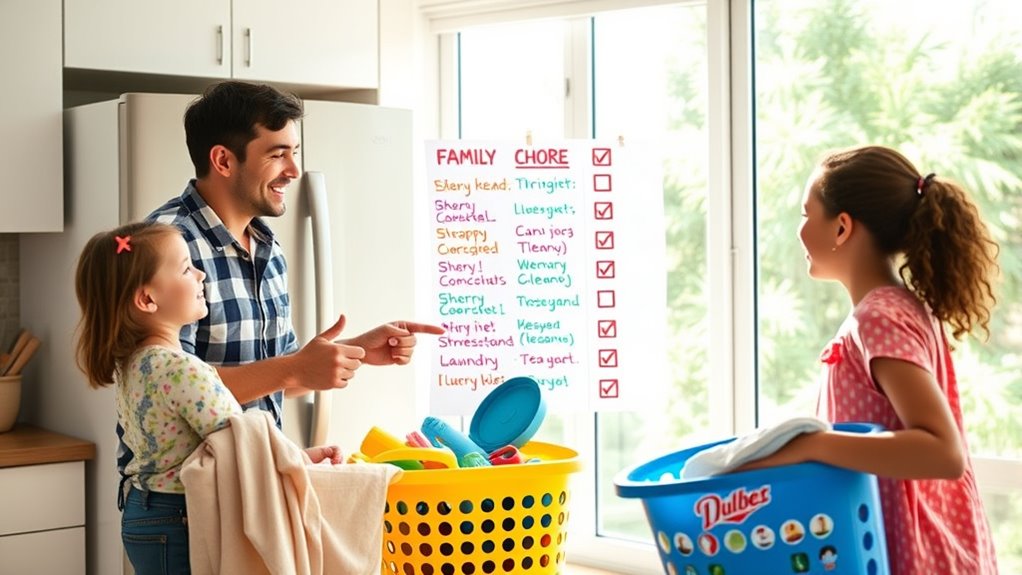
Establishing a consistent routine helps family members know what to expect and when chores should be done. When you create predictable family routines, everyone understands their daily habits and responsibilities, reducing confusion and arguments. Consistency makes chores feel automatic, turning them into part of your daily rhythm rather than a disruption. To build this routine, set specific times for chores and stick to them, even on weekends. Keep routines simple and clear so everyone knows their tasks and deadlines. Over time, these habits become second nature, making chores less of a hassle and more of a normal part of your day. By maintaining a steady schedule, you help your family develop reliable habits that foster responsibility and cooperation. Incorporating mindful decluttering strategies can also make organizing chores more effective and sustainable in the long run.
Utilizing Technology for Easier Management

Using technology can make managing family chores much simpler and more efficient. Digital scheduling tools allow you to organize chores and set deadlines, making it easy for everyone to see what needs to be done. With app integration, you can sync chore charts across devices, ensuring everyone stays updated in real time. These apps often send reminders and notifications, helping family members stay accountable without constant supervision. You can also assign tasks based on availability or skill, streamlining the process. Additionally, digital tools reduce paper clutter and provide flexible options for adjusting chores as needed. Leveraging juice detox side effects can also help in understanding the importance of balanced nutrition while managing household routines. Overall, leveraging technology helps you create a seamless, transparent system that encourages participation and keeps chores on track effortlessly.
Encouraging Accountability and Teamwork
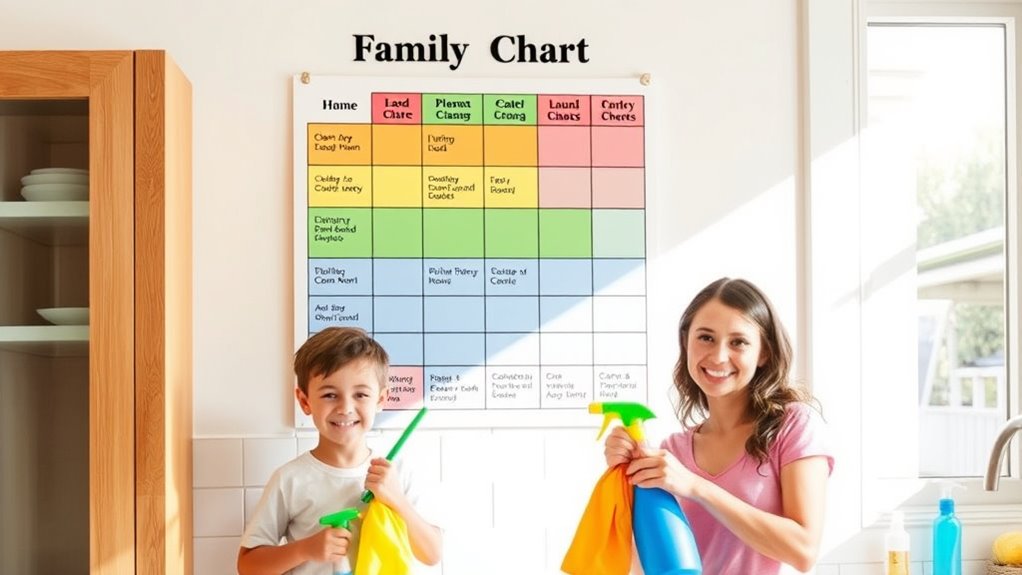
Setting clear expectations helps everyone understand their responsibilities, making accountability easier. Regular check-ins keep progress on track and encourage open communication. Recognizing effort with rewards motivates your family to work together and stay committed. Incorporating emotional expression activities can further strengthen family bonds and promote understanding.
Clear Expectations Set
Creating clear expectations is essential for fostering accountability and teamwork in your family chore chart. When everyone understands what’s expected, it reduces confusion and builds responsibility. Effective parental communication plays a key role here—for example, discussing chores openly and listening to your kids’ input. Customizing the chore chart to fit each family member’s abilities and schedules helps set realistic expectations. Be specific about tasks, deadlines, and standards, so everyone knows exactly what’s required. Clear expectations also promote fairness and consistency, encouraging kids to take ownership of their responsibilities. When chores are clearly defined, it’s easier to hold everyone accountable and work together as a team, creating a more harmonious household. Incorporating defined guidelines ensures that all family members are aware of the expectations and helps maintain a balanced chore distribution.
Regular Progress Check-ins
Regular progress check-ins are essential for maintaining accountability and fostering teamwork in your family chore routine. They give everyone a chance to reflect, share successes, and address challenges. Your involvement as a parent encourages open communication and models responsibility, making kids more committed. During these check-ins, conflicts can surface, but with proactive conflict resolution, you can turn disagreements into growth opportunities. Use the following table to track feelings and progress:
| Family Member | Feelings About Chores | Challenges Faced |
|---|---|---|
| Child A | Proud | Time management |
| Child B | Frustrated | Task complexity |
| Parent | Hopeful | Consistency |
| Sibling | Motivated | Sharing chores |
| You | Satisfied | Maintaining momentum |
Additionally, emphasizing consistent use of the chore chart can help reinforce routines and improve overall effectiveness.
Rewards for Effort
Building on your family’s progress check-ins, incorporating rewards for effort can boost motivation and strengthen teamwork. When you use reward systems that recognize effort, you encourage accountability and foster parental involvement. These rewards show that hard work matters, not just results, creating a positive cycle of motivation. Promoting a growth mindset helps children value effort and resilience as key to success.
Reviewing and Adjusting the Chore Chart Regularly

To keep your chore chart effective, you need to monitor progress regularly and see what’s working. Be open to recognizing when needs change and adjust the chart accordingly. Small, incremental updates help keep everyone motivated and on track.
Monitor Progress Consistently
Keeping track of your family’s chore chart requires consistent review to guarantee it stays effective. Regularly monitoring progress helps you identify areas where performance metrics might be slipping. Use feedback techniques like open conversations or quick check-ins to gauge how everyone feels about their tasks. This ongoing assessment allows you to make timely adjustments, ensuring chores stay fair and manageable.
Remember:
- Tracking performance metrics highlights successes and challenges
- Feedback techniques encourage honest communication
- Consistent reviews foster accountability and motivation
Recognize Changing Needs
Regularly reviewing your family’s chore chart guarantees it continues to meet everyone’s needs. Family dynamics evolve over time, and what worked initially might no longer be effective. By staying attentive, you can identify when chores need adjusting or redistributing to better fit current schedules and responsibilities. Flexibility in your chore chart helps prevent frustration and ensures everyone remains engaged. Keep open communication with your family members about their changing commitments or preferences, and be willing to modify the chart accordingly. Recognizing these shifts allows you to maintain a balanced system that adapts to new circumstances. Regular reviews keep chores relevant, promote cooperation, and help prevent burnout, making your chore system a supportive tool rather than a source of stress.
Implement Incremental Updates
Implementing incremental updates to your chore chart involves making small, consistent adjustments rather than overhauling the entire system all at once. This approach supports incremental evolution, allowing your family to adapt gradually. By focusing on gradual implementation, you can identify what works and what doesn’t without causing frustration or confusion. Regular review sessions help you fine-tune assignments, timelines, and expectations. Keep in mind:
- Small tweaks prevent overwhelm and encourage buy-in
- Frequent check-ins reveal evolving needs
- Flexibility promotes sustained engagement and accountability
These small, steady changes help your chore chart stay relevant and effective over time. Consistent, incremental updates ensure your system evolves naturally, fostering a cooperative family environment without sudden disruptions.
Frequently Asked Questions
How Can I Motivate Reluctant Children to Complete Chores?
You can motivate reluctant children by implementing reward systems that make chores feel rewarding and fun. Be actively involved by praising their efforts and offering encouragement, which boosts their confidence. Consistently connect chores to positive outcomes, like earning privileges or treats, to reinforce motivation. Remember, parental involvement is key—stay engaged, set clear expectations, and celebrate progress to help your children develop a positive attitude toward completing chores.
What Are Effective Ways to Handle Chore Disagreements?
Did you know that 78% of families find chore disagreements common? When conflicts arise, focus on family teamwork by calmly listening to each child’s perspective. Use reward systems to motivate cooperation and find solutions everyone agrees on. Address disagreements promptly, emphasizing shared goals. This approach encourages respect and accountability, making chores less stressful and more collaborative for everyone involved.
How Do I Balance Chores With School and Extracurricular Activities?
You should prioritize your chores by creating a schedule that balances school and extracurricular activities through effective time management. Break tasks into manageable chunks and set specific times for chores, so they don’t clash with your commitments. Use reward systems to motivate yourself and stay on track. This way, you maintain a healthy balance, stay productive, and avoid feeling overwhelmed while keeping up with everything important.
Are There Any Common Mistakes to Avoid With Chore Charts?
Skip the mistake of ignoring reward systems or uneven chore timing. If you don’t reward effort, motivation wilts faster than a neglected houseplant. Similarly, inconsistent chore timing confuses everyone—your kids won’t know when to do what, and chaos ensues. Avoid these pitfalls, and your chore chart will run smoother, turning chores from a dreaded task into a manageable, even fun, part of your family routine.
How Can I Introduce Chores to Very Young Children?
You can introduce chores to very young children by starting with simple, age-appropriate tasks like picking up toys or helping set the table. Use clear, easy-to-understand chore routines to build consistency, making chores feel like a fun part of daily life. Keep instructions short and positive, offering lots of praise. This way, your little ones develop responsibility without feeling overwhelmed, and chores become a natural part of their routine.
Conclusion
Creating a family chore chart is like tending a garden—you need patience, consistency, and care. By evaluating your family’s needs, setting clear expectations, and making adjustments along the way, you’ll cultivate a cooperative environment where everyone contributes. Remember, a well-designed chart isn’t just a list; it’s the foundation for teamwork and responsibility. Stay flexible, celebrate progress, and watch your family thrive like a well-watered plant reaching for the sun.