
TL;DR
Interior designers are recommending less formal pillow arrangements, using bold colors, varied patterns, unusual shapes and tactile trim to give beds more personality. The ideas are design suggestions, not a reported study or formal trend survey, and the article does not establish how widely each look is being adopted.
A design feature outlines nine ways to style bed pillows beyond the familiar matching arrangement, with interior designers recommending bold color, mixed patterns, playful shapes and textured details. The suggestions offer readers practical ways to change a bedroom’s look without replacing its larger furnishings, though the feature does not document a formal survey or measure how widely the approaches are used.

Get furniture and decor delivered free with Prime
- Fast, free delivery on millions of items
- Prime Video, Amazon Music and more included
- Member-only deals all year
The feature begins by challenging a standard arrangement of two king pillows, two standard pillows and a centered accent pillow. Instead, it treats accent pillows as decorative accessories that can introduce contrast and connect the bed to the room’s other colors and materials. Designer Betsy Wentz says mismatched pieces can feel “intentional, collected, and completely joyful.”
Among the nine ideas are using a vivid accent color in a neutral room, pairing striped pillows with a round velvet cushion, and coordinating pillows with elements such as a headboard, lamps, artwork and throws. Other suggestions include adding faux fur, combining patterns for a relaxed look, and using fringe or ruffles to give otherwise simple bedding more texture.
The remaining approaches rely on details and composition: metallic studs for a subtle edge, layered prints in a shared color family, and geometric patterns that echo a room’s architectural lines. The designers’ examples show particular rooms and materials; they are recommendations rather than rules or evidence that one arrangement suits every bedroom.
Refresh your bed with a few thoughtful changes
Interior designers suggest using color, pattern, shape and texture to make pillows feel more personal. These are ideas to try, not rules or measured trends.
Nine ways to change the look
Start with details that suit your room and the bedding you already have.
Add a vivid accent
Try a bold color in a neutral room, or use a round or ball-shaped cushion for contrast.
Mix with intention
Combine stripes, layered prints or simple geometry, keeping colors or scales connected.
Bring in tactile accents
Consider faux fur, fringe, ruffles or metallic studs to add texture or a subtle edge.
Matching is one option
The feature offers alternatives to a familiar symmetrical arrangement.
- Larger pillows at the back
- Smaller pillows in front
- A centered accent cushion
- Vary colors, patterns and shapes
- Repeat hues from the room
- Coordinate with lamps, artwork or throws
Try one change at a time
Use what you own first, then decide whether the arrangement feels balanced.
Pick one contrasting color, a different shape or a textured trim.
Arrange it with your existing bedding and furnishings.
Keep personal taste and how the pillows will be used in mind.
Small Changes, Fresh Bedroom Style
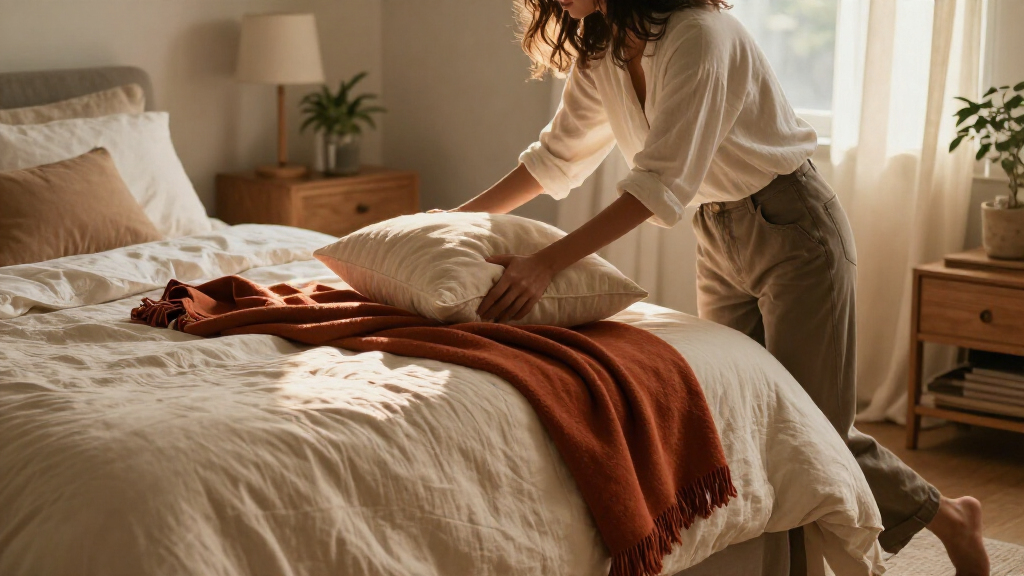
Pillows are a relatively contained way to alter a bedroom’s color, texture and visual balance. The ideas may help people refresh the most prominent surface in the room without changing a headboard, repainting walls or buying a new bed. For renters or anyone working with an existing scheme, an accent pillow can provide a smaller-scale experiment with a bolder color or pattern.
The advice also makes clear that “matching” is not the only route to a coherent arrangement. A group of unlike pillows can still feel connected when colors relate to the bedding or room, or when patterns vary in scale and direction. That distinction matters for readers who want a more relaxed or personal look but do not want the bed to appear visually chaotic.
These are aesthetic judgments from named designers, not guarantees of a particular result. Room size, existing finishes, personal taste and the comfort of the pillows all affect whether a proposed combination works in practice.
Products Worth Considering

Dyson V9 Motorbar Cordless Vacuum

Philips Hue Play HDMI Sync Box

Dyson V8 Cordless Vacuum
As an affiliate, we earn on qualifying purchases.
From Matching Sets to Mix-and-Match
The feature contrasts its suggestions with a conventional, symmetrical pillow setup: larger pillows at the back, smaller ones in front and a single accent cushion at the center. It does not say that this arrangement has disappeared. Rather, it presents alternatives for people who want a bed to play a more expressive role in the bedroom.
Several of the examples depend on a relationship between the pillows and their surroundings. Kate Anlyan describes Yves Klein blue as vivid and electric while saying it still connects with other tones in a room. Renée Gaddis recommends repeating a strong hue across items such as the headboard, throws, lamps and artwork. Nicole Johnson, meanwhile, links geometric pillow patterns to vertical wood slats and horizontal furniture lines.
The other examples emphasize touch and informality. Mialani Collard uses faux fur alongside neutral linen, while Tyson Ness mixes colors and prints to create a bed that need not look perfectly arranged after use. The feature gives no cost estimates or buying guidance, so readers would need to adapt the ideas to their budget and existing bedding.
“Mismatched pieces can feel “intentional, collected, and completely joyful.””
— Betsy Wentz, interior designer
How Widely These Looks Are Used
The feature does not identify a publication date, report a survey of designers or consumers, or provide data on how common these styling choices are. Its presentation of nine ideas should not be read as proof of a broad industry shift. It also does not offer product prices, sourcing details for every item, or testing of how different materials hold up to everyday use.
Whether a particular combination works is subjective and depends on the bedroom. A vivid accent may stand out differently against different wall colors and lighting; textured or embellished pillows may also be less practical for some sleepers. The feature offers no specific guidance on cleaning, durability or comfort.
Try One Detail at a Time
The feature does not announce a follow-up event or a next industry milestone. For readers applying the advice, a practical next step is to start with one change—such as a single contrasting color, a different pillow shape or a textured trim—and judge it against the room’s existing bedding and furnishings. A second pattern or accessory can be added if the first change feels balanced.
Designers’ recommendations leave room for personal preference rather than a fixed formula. Readers can test arrangements with pillows they already own, moving them around before buying new pieces. The broader takeaway is modest: a bed can look less conventional through a few deliberate changes, but the right mix depends on the individual room and the people using it.
Key Questions
What are the nine bed pillow styling ideas?
The feature recommends an eye-catching palette, a round or ball-shaped accent, coordinating pillows with other room elements, adding faux fur, mixing patterns and colors, using fringe, adding studs, layering expressive prints, and trying simple geometric patterns.
Do the pillows need to match?
No. The designers featured say mismatched pillows can look intentional when their colors, patterns or scale work with one another and with the rest of the room.
How can I use a bold color without overwhelming the bedroom?
The feature suggests using a strong pillow color as an accent, particularly in a neutral room, and connecting it to other tones or materials already present. It does not prescribe a specific color or number of pillows.
Are these recommendations based on a survey?
No survey or measured trend data is provided. The ideas are design suggestions attributed to interior designers, illustrated with room examples.
Which styling idea is best for a relaxed-looking bed?
Tyson Ness’s approach mixes pillow colors and patterns so the arrangement feels casual rather than precisely ordered. The feature presents this as one option, not a rule for every bedroom.
Source: housebeautiful.com