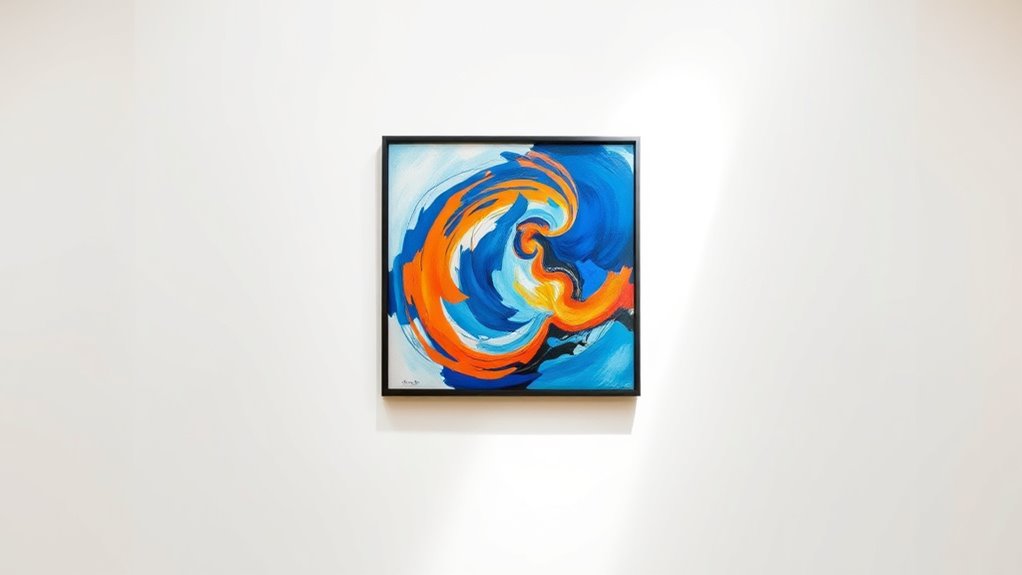

To hang art at the right height, aim for the center of the piece to be around 57-60 inches from the floor, which is most comfortable for viewing. Measure the artwork’s midpoint and mark it on the wall for accurate placement. Consider your ceiling height, furniture placement, and wall space to maintain balance. For larger or multiple pieces, consistency and proper spacing matter. Keep these tips in mind, and you’ll create a polished display that’s just right—more helpful ideas await.
Key Takeaways
- Hang artwork with the center at 57-60 inches from the floor for optimal eye-level viewing.
- Measure from the floor to the midpoint or top of the artwork for accurate placement.
- Adjust height based on ceiling height, furniture placement, and wall space to maintain visual balance.
- Use consistent spacing and alignment when hanging multiple pieces for a cohesive display.
- Consider artwork size and viewing distance to determine the appropriate height for maximum impact.

KURUI 303Pcs Picture Hanging Kit, Picture Hangers Assorted Kit with Heavy Duty Picture Hanging Hooks/Hardware Nails/Sawtooth/Wire/D Rings/Level, Metal Picture Wall Hooks for Frame Canvas Mounting
EFFORTLESS ORGANIZATION: Our 303pcs Heavy Duty Picture Hanging Kit boasts an exceptional design with categorized compartments, saving you…
As an affiliate, we earn on qualifying purchases.
As an affiliate, we earn on qualifying purchases.
Understanding Standard Eye-Level Height
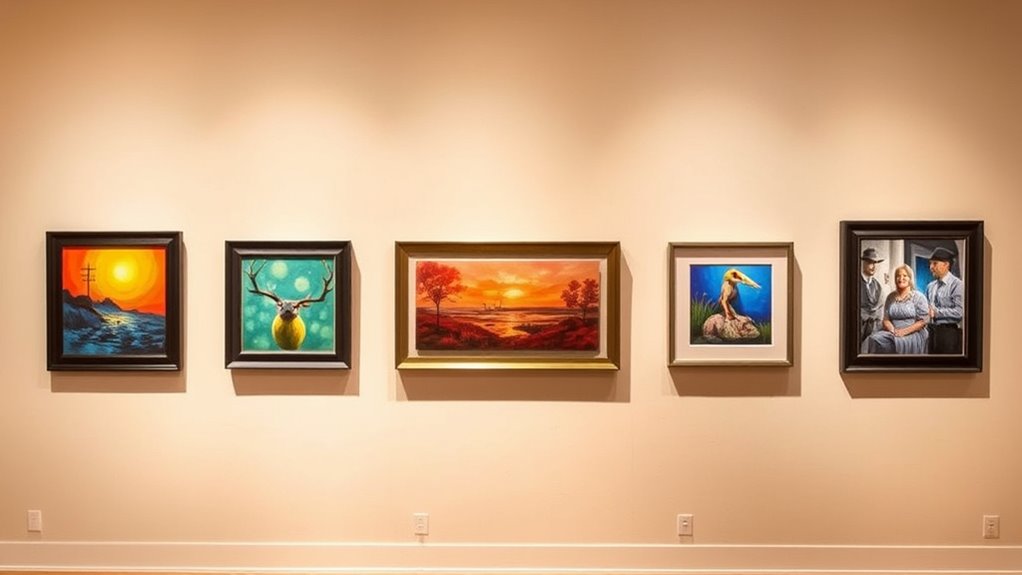
When hanging artwork, understanding the standard eye-level height can make a big difference in how it’s perceived. In an art gallery or when displaying wall decor at home, most people view art comfortably around 57 to 60 inches from the floor to the center of the piece. This height creates an engaging focal point and ensures the artwork isn’t overlooked or awkwardly placed. If you’re curating a collection, keeping this standard in mind helps achieve visual harmony. Remember, the goal is for viewers to connect with the art naturally, without straining or craning their necks. Adjust slightly based on your space or artwork size, but sticking close to this height makes your wall decor more appealing and professionally displayed.
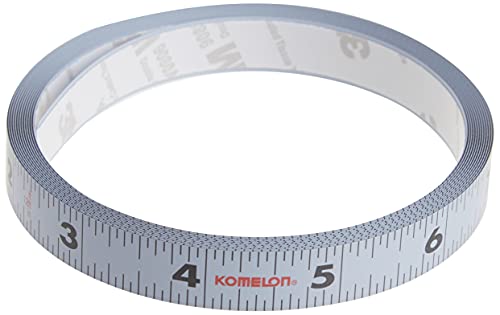
Komelon F12 12-Foot Stick and Measure Flat Tape Measure
12-Foot by 1/2-Inch Steel Blade
As an affiliate, we earn on qualifying purchases.
As an affiliate, we earn on qualifying purchases.
Measuring the Center of Your Artwork
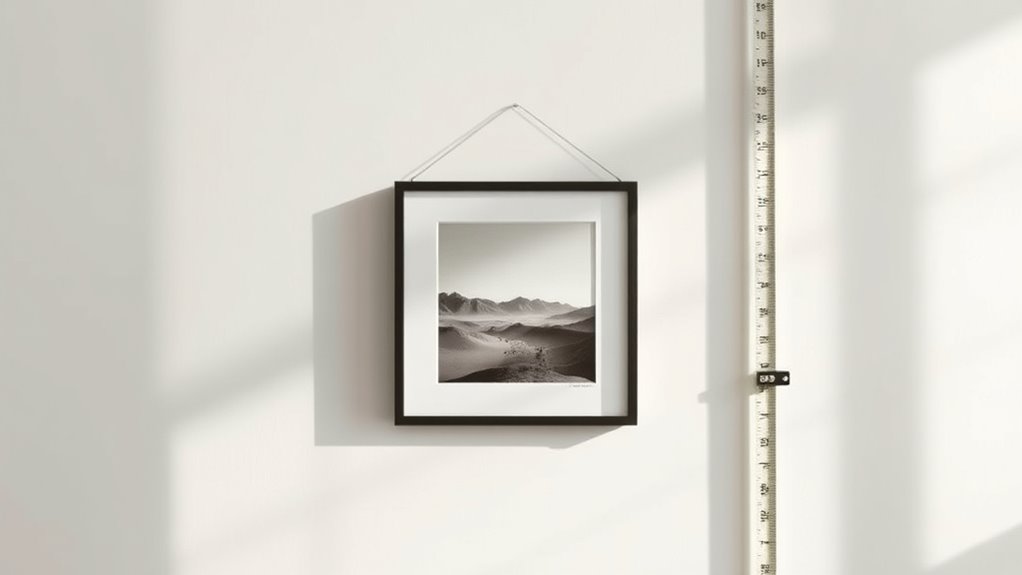
To accurately hang your artwork at the desired height, start by measuring its center point. Find the midpoint between the top and bottom edges using a tape measure or ruler. Mark this point lightly with a pencil to keep it visible during placement. Knowing the artwork’s center helps you achieve proper art placement, ensuring it aligns perfectly with your eye level or other design elements. This step is crucial for creating visual symmetry, especially when hanging multiple pieces or arranging art within a gallery wall. Once you’ve identified the center, you can determine the exact height for the hanging hardware. Correctly measuring and marking the center guarantees your art hangs straight and balanced, enhancing the overall aesthetic of your space. Additionally, understanding wall surfaces and finishes can help you select the appropriate hanging hardware for your wall type.
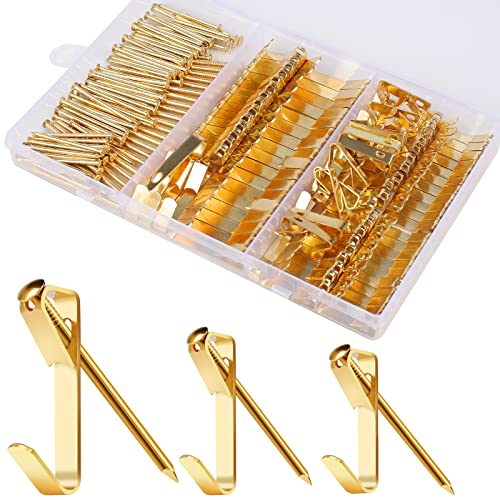
184 Pieces Picture Hanging Kit, 20lb, 30lb, and 50lb Picture Hangers, Metal Picture Hanging Hooks with Nails, on Drywall, Wooden Wall(Gold)
Great Assortment: You will receive 90 sets of picture hanging hardware, including 20 sets of 50LB hooks,50 sets…
As an affiliate, we earn on qualifying purchases.
As an affiliate, we earn on qualifying purchases.
Considering the Room’s Ceiling Height
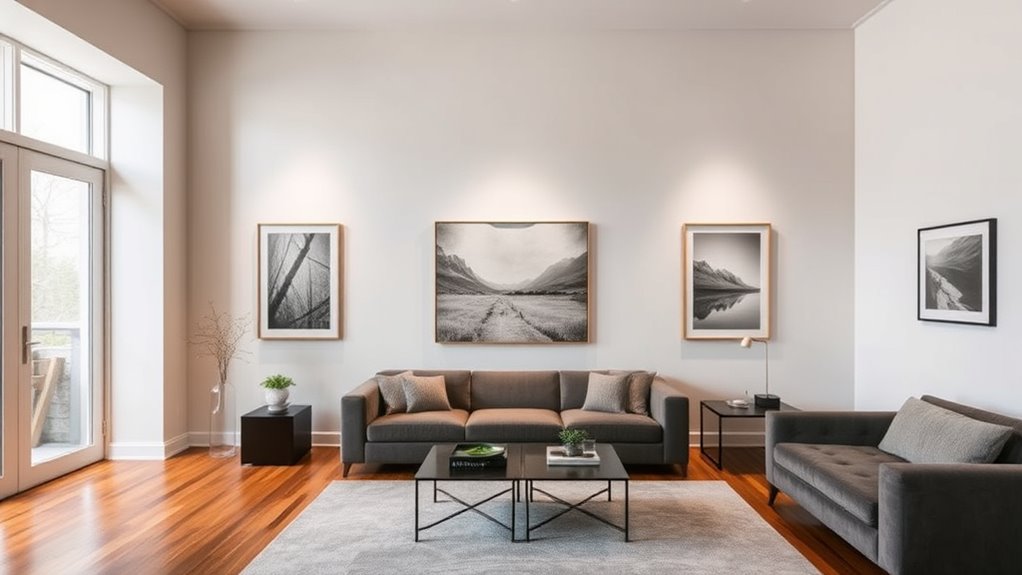
When considering your room’s ceiling height, you need to think about more than just standard eye level. If the ceiling is higher or lower than average, you might want to adjust the artwork’s placement to maintain visual balance. This way, your art will feel just right, no matter the space’s dimensions. Additionally, taking into account user privacy preferences and cookie management can help create a more personalized and comfortable browsing experience while planning your decorating project.
Standard Eye Level
Determining the ideal height for hanging art begins with understanding standard eye level, which typically considers the room’s ceiling height. This guideline helps guarantee your art placement looks natural and balanced. For most spaces, the center of the artwork should be about 57 to 60 inches from the floor, aligning with average eye height. This approach enhances wall aesthetics by creating a cohesive visual flow. Keep in mind that your room’s ceiling height can influence this standard slightly—higher ceilings may allow for slightly lower or higher placements to balance the overall look. Consistently applying this principle simplifies decision-making and ensures your art complements the space without overwhelming or underwhelming viewers. Properly hung art at this height creates an inviting, harmonious environment. Additionally, considering the vertical storage solutions in your space can help maintain a balanced and organized room that enhances the overall aesthetic.
Adjust for Ceiling Height
Since ceiling height varies from room to room, you should adjust your art placement accordingly to maintain visual balance. Taller ceilings allow you to hang art higher, while lower ceilings benefit from slightly lower placements. Consider art frame styles that complement your space; larger frames can fill high ceilings effectively. When choosing hanging hardware options, opt for sturdy hooks or cables that support your art’s weight at varied heights. Keep in mind that taller ceilings often require longer hardware to ensure stability. To avoid crowding the space, position art so that its center is at eye level, adjusted for ceiling height. This approach creates a harmonious look and prevents your art from feeling disconnected or awkward in the room.
| Ceiling Height | Recommended Art Placement |
|---|---|
| High | Hang art slightly higher, use longer hardware |
| Standard | Maintain eye-level placement, with appropriate hardware options |
| Low | Hang art slightly lower to balance proportions |
Use Visual Balance
To create a cohesive and visually appealing space, you need to contemplate how your art interacts with the room’s ceiling height. Use visual balance by choosing frame styles that complement your ceiling’s proportions—sleek and minimal for high ceilings, ornate for lower ones. Consider the color schemes of your artwork and walls; contrasting or harmonious tones can help guide the eye and maintain equilibrium. For instance, a large piece with bold colors can anchor a room with tall ceilings, while lighter, smaller artworks work better in spaces with lower ceilings. Think about grouping art pieces to create balance, whether through size, spacing, or color consistency. Additionally, paying attention to art placement ensures your artwork enhances the room’s architecture without overwhelming or underwhelming the space.

Mayes 10742 Polystyrene Level Ruler 12", Precision Measuring and Leveling Tool, Plumb and Level Vials with SAE and Center-Finding Scale, for Framing, Hanging, Made in the USA
Durable Polystyrene Construction: Made from high-impact composite polymer, this leveler tool is lightweight yet strong, ensuring durability for…
As an affiliate, we earn on qualifying purchases.
As an affiliate, we earn on qualifying purchases.
Accounting for Furniture Placement

Have you considered how your furniture placement impacts the ideal height for hanging art? When arranging pieces, think about artwork framing and how it complements your furniture. Taller furniture, like a sofa or sideboard, creates a natural baseline for art placement; typically, art should hang about 6-12 inches above. Wall textures also matter—rough or textured walls can affect how art appears and how high it should be hung, since uneven surfaces may require adjustments for visual balance. If you have a lot of furniture close to the floor, avoid hanging art too high, which can make the space feel disjointed. Instead, aim for a cohesive look that considers both furniture height and wall characteristics, ensuring your artwork enhances the overall room design.
Using the Artwork and Wall Space Proportionately

To create a balanced look, make sure your artwork complements the wall space without overwhelming it. Think about the viewing distance and how the piece will be seen from different angles. When the proportions work together, your display feels harmonious and inviting.
Balance Art and Wall
Balancing artwork with wall space is essential for creating a visually appealing display. When you consider proportion, your art will stand out without overwhelming the room. To achieve this, keep these tips in mind:
- Choose decorative framing that complements both the artwork and wall color coordination.
- Ensure the artwork’s size relates well to the wall area, avoiding small pieces on large walls or vice versa.
- Leave enough space around the art to prevent clutter and enhance its presence.
- Use consistent spacing between multiple pieces for a cohesive look.
- Consider the wall space proportion to better harmonize your artwork with the overall room design.
Consider Viewing Distance
How close or far your artwork is from viewers considerably impacts its visual impact. In an art gallery or home setting, the viewing distance determines how details are perceived and how the piece interacts with wall aesthetics. If you hang art too close, viewers may struggle to appreciate the overall composition; too far, and the artwork can feel disconnected. Aim for a balance that allows viewers to take in the entire piece comfortably, usually about 1.5 to 3 times the artwork’s width. Consider the size of the wall space; larger works need more distance to be fully appreciated, while smaller pieces benefit from being nearer. Adjusting the viewing distance ensures your art complements the wall and creates a cohesive visual experience.
Adjusting for Different Types of Art
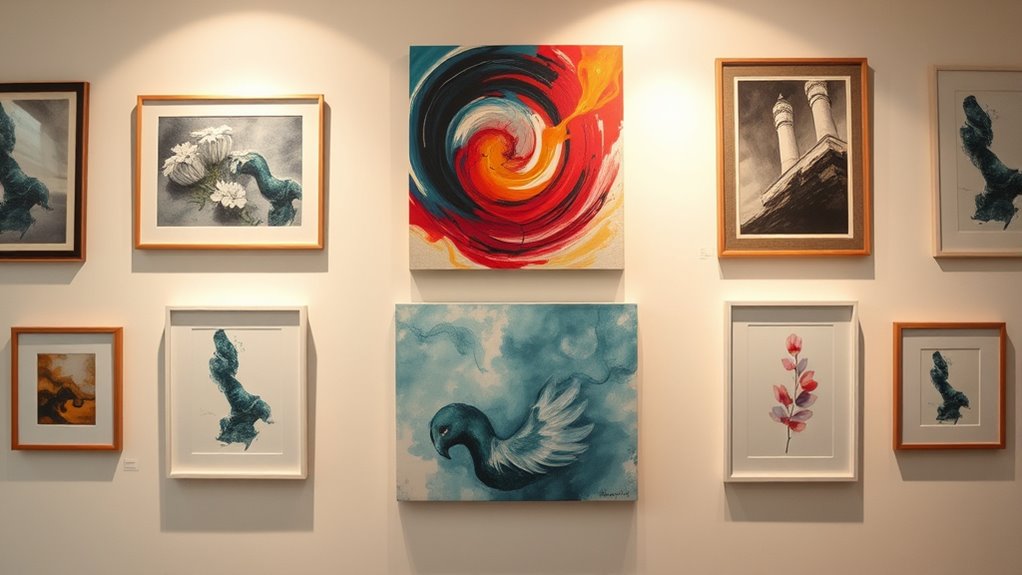
When hanging different types of art, it’s important to account for their unique characteristics to guarantee they’re displayed at the optimal height. For example, a large oil painting with a heavy frame material might need different adjustments compared to a delicate watercolor. Art style also influences placement; modern pieces often look best at eye level, while traditional works can be hung slightly higher. Here are some key points:
- Consider the frame material—heavier frames require sturdier hooks and precise height adjustments.
- Adjust for art style—contemporary art is often best at eye level, classic pieces slightly higher.
- Think about the art’s size—larger works should be positioned to dominate the space without overwhelming.
- Account for display context—vary height based on whether the art is a focal point or part of a collection.
- For optimal performance and durability, ensure that the hanging hardware matches the frame material and weight of the artwork.
Creating a Cohesive Gallery Wall

Creating a cohesive gallery wall transforms a collection of individual artworks into a unified visual statement. To achieve this, pay attention to furniture placement, ensuring pieces are balanced and complement each other within the space. Arrange your artwork in a way that creates a sense of flow, whether symmetrical or asymmetrical, but always mindful of spacing. Lighting considerations are also essential; use targeted lighting to highlight key pieces and create visual harmony. Avoid harsh shadows or uneven illumination that can distract from the overall display. Keep consistent spacing between frames and consider framing styles that complement each other. Additionally, maintaining a vibrational energy of positivity and intentionality can enhance the overall ambiance of your gallery wall. By thoughtfully coordinating furniture placement and lighting, your gallery wall will feel intentional and cohesive, making it a striking focal point in your home.
Tips for Hanging Large Pieces
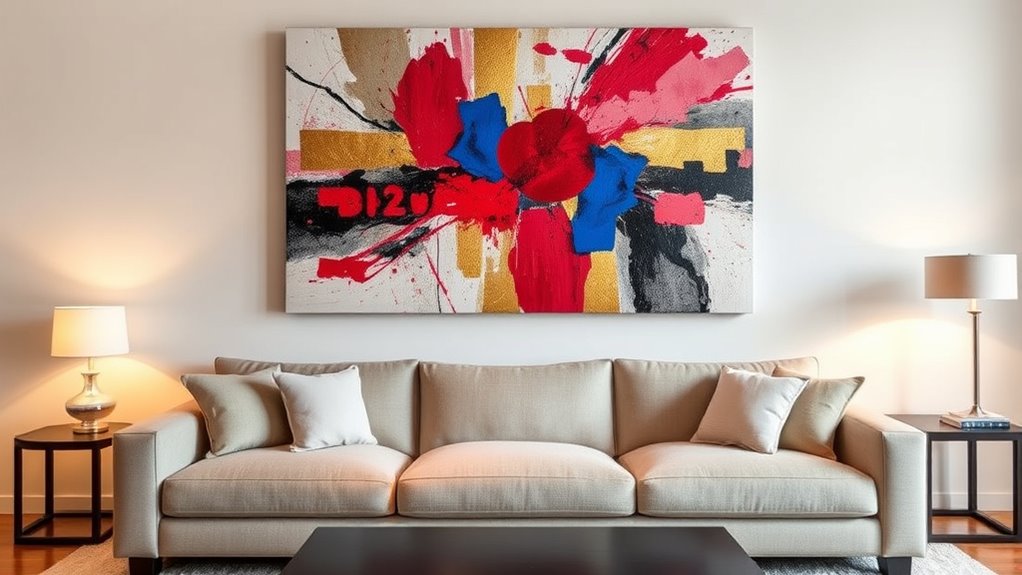
Hanging large pieces requires careful planning to guarantee they make a strong visual impact without overwhelming the space. First, choose a sturdy frame that complements the artwork and suits the room’s style. Second, consider lighting; strategic placement of lights can enhance details and prevent glare. Third, pay attention to scale—hang the piece at eye level or slightly above for maximum effect. Fourth, verify the artwork is properly centered and secured, especially if it’s heavy. Remember, lighting considerations can highlight textures and colors, while frame selection adds to the overall harmony. Additionally, understanding visual balance can help you arrange your artwork more effectively, ensuring it enhances your space without overpowering it. Properly executed, these tips ensure your large piece commands attention without overpowering your room’s balance.
Ensuring Consistency Across Multiple Pieces

To keep your gallery looking cohesive, use uniform hanging heights for all your pieces. Make sure to align them by center or top, so they feel balanced and intentional. Consistent spacing between artworks also helps create a polished, harmonious display. Paying attention to interior design basics ensures your display complements the overall space effectively.
Use Uniform Hanging Heights
When displaying multiple pieces of art, maintaining a consistent hanging height is essential for visual harmony. It creates a cohesive look that guides the viewer’s eye smoothly across your collection. To achieve this, consider these tips:
- Choose a standard eye-level height, typically around 57-60 inches from the floor.
- Use framing styles that complement each other for uniformity.
- Ensure color harmony among the pieces, so they don’t clash visually.
- Keep the top or center of each frame aligned to maintain consistency.
This approach helps your artwork form a balanced display, making the space feel curated and intentional. Uniform hanging heights emphasize the relationships between pieces, rather than distracting from individual details.
Align Center or Top
Ensuring that the centers or tops of your artwork align creates a cohesive and polished display. Consistent art placement enhances wall aesthetics and makes your collection look intentional. Decide whether you want to align by the center or top, and stick with it across all pieces. This consistency prevents a cluttered or chaotic appearance. Use the following table to visualize alignment options:
| Alignment Type | Best for | Visual Effect |
|---|---|---|
| Center | Multiple pieces, varied sizes | Balanced, harmonious |
| Top | Uniform heights, similar sizes | Neat, organized |
| Mixed | Eclectic style | Dynamic, unique |
Choosing one method ensures your wall looks intentional, not haphazard. This simple step helps create a unified art display that is pleasing to the eye.
Maintain Consistent Spacing
After deciding on your alignment, maintaining consistent spacing between your artwork pieces is key to a polished display. Proper art placement creates harmony and enhances wall aesthetics. To achieve this, consider these tips:
- Measure the space between each piece carefully to ensure uniform gaps.
- Use painter’s tape or spacers to visualize spacing during installation.
- Keep the same distance from the ceiling or other reference points for all pieces.
- Step back frequently to view the arrangement from a distance, confirming consistency.
Consistent spacing ties your wall art together, making the display look intentional and professional. It prevents cluttered or uneven arrangements, ensuring each piece complements the others. When you pay attention to art placement and spacing, your wall becomes a cohesive, eye-catching focal point.
Practical Tools for Accurate Hanging

To hang art accurately at the right height, you need the right tools. A tape measure is essential for precise measurements during your art installation. A level ensures your artwork hangs straight, preventing crooked displays. A pencil helps mark exact spots on the wall, making placement easier. When working with framing techniques, consider using a stud finder to locate wall supports, providing extra stability for heavier pieces. A ruler or digital caliper can help determine ideal frame dimensions, ensuring proper proportions. For more advanced installations, a laser level offers accuracy over larger spaces. These tools streamline the process, reduce guesswork, and help you achieve a polished, professional look when hanging your art. Proper tools make all the difference in creating a balanced, visually appealing display.
Frequently Asked Questions
How Do I Hang Art in Irregularly Shaped or Textured Walls?
When hanging art on irregularly shaped or textured walls, you should use wall mounting hardware suited for uneven surfaces, like wall anchors or toggle bolts. Position your art to complement the wall’s texture, enhancing its visual appeal. Use a level to guarantee proper alignment, and consider placing spacers behind the frame to prevent contact with uneven spots. This approach ensures your art stays secure while highlighting the unique wall texture.
What’s the Best Way to Hang Art in a Room With Uneven Lighting?
Think of uneven lighting as a dance partner that challenges your rhythm. To achieve visual balance, prioritize lighting considerations by placing art where natural or adjustable light hits best, minimizing glare and shadows. Use picture lights or spotlights to highlight your artwork evenly, and consider dimmable fixtures to control mood. This approach guarantees your art stands out beautifully, regardless of the room’s lighting quirks.
How Do I Incorporate Artwork Into a Multi-Purpose Space?
To incorporate artwork into a multi-purpose space, start by selecting pieces that reflect different functions or moods. Use gallery lighting to highlight each piece and create visual separation. You can rotate your art regularly to keep the space fresh and engaging. Position artworks at varying heights to suit different areas and purposes, making sure they complement both the room’s overall design and its diverse uses.
What Are Common Mistakes to Avoid When Hanging Art?
Like a gallery in Paris, avoid symmetry that feels too perfect, which can seem stiff. Don’t neglect frame selection; mismatched frames clash and distract. Make certain your art isn’t hung too high or low—think of the eye as your guide, not the ceiling. Keep spacing consistent to create balance. Remember, even Picasso knew that a little imperfection can make a space feel more inviting, so embrace it!
How Can I Safely Hang Heavy or Oversized Artwork Alone?
To safely hang heavy or oversized artwork alone, start by using sturdy hooks and wall anchors suited for weight. Make sure your gallery lighting highlights the piece without putting stress on the hanging mechanism. Coordinate wall color to enhance the artwork’s impact and prevent visual clutter. Use a level to keep the art straight, and consider a hanging system that allows easy adjustments, making installation safer and more precise.
Conclusion
Hanging art at the right height is like setting the perfect beat in a song—it creates harmony and balance in your space. By measuring carefully, considering your room’s unique features, and maintaining consistency, you’ll turn blank walls into visual symphonies. Trust your eye and tools, and soon, your artwork will dance gracefully at just the right level, transforming your room into a masterpiece where every piece sings in perfect tune.