
To eliminate odors at their source, start by identifying common trouble spots like dusty vents, dirty carpets, pet areas, or kitchen counters. Use targeted solutions such as mold-killing cleaners, HEPA air purifiers, or dehumidifiers to control moisture and prevent growth. Regularly clean and ventilate your space to stop odors from settling in. Continuing improves your ability to locate and tackle odor sources effectively, making your home truly fresher and cleaner.

Get furniture and decor delivered free with Prime
- Fast, free delivery on millions of items
- Prime Video, Amazon Music and more included
- Member-only deals all year
Key Takeaways
- Identify and thoroughly clean the actual odor sources, such as dirty carpets, vents, or moldy areas.
- Control humidity levels to prevent mold growth and dampness that cause persistent odors.
- Use targeted solutions like mold-killing agents or odor neutralizers directly on the source.
- Improve airflow with ventilation and air purifiers to remove odor particles from the environment.
- Regular maintenance and inspections help prevent odor buildup before it becomes noticeable.
Products Worth Considering

Levoit Eleva 300X HEPA Air Purifier for Home and Bedroom

Levoit Core 400S-P Smart Air Purifier for Large Rooms

LEVOIT Vital 200S-P Smart Air Purifier for Large Rooms
As an affiliate, we earn on qualifying purchases.
Identifying Common Odor Sources in Your Home

Many common household odors originate from everyday sources that you might overlook. One major culprit is air vent issues; dusty, clogged vents can circulate stale or musty smells throughout your home. Regularly inspecting and cleaning your air vents helps reduce these odors. Another frequent source is dirty carpets, which trap dirt, pet dander, and spills, emitting persistent smells. If your carpets haven’t been cleaned in a while, odors can seep into the fibers and linger. Identifying these simple but often overlooked sources is key to eliminating odors at their origin. Pay attention to areas with poor airflow or heavily trafficked carpets. Addressing air vent issues and deep cleaning carpets can considerably improve your home’s smell and create a fresher environment. Additionally, understanding the impact of air circulation and how it affects odor distribution can guide more effective odor control measures.
Strategies for Removing Mold and Mildew

Mold and mildew often develop in damp, poorly ventilated areas, and addressing them promptly is essential for maintaining a healthy home. Start by cleaning affected surfaces with mold-killing solutions like bleach or commercial fungicides. After cleaning, use air purifiers equipped with HEPA filters to trap mold spores and improve air quality. To prevent future growth, control humidity levels with dehumidifiers and improve ventilation. Odor neutralizers can help eliminate lingering musty smells caused by mold, but they shouldn’t replace proper cleaning. Regularly inspecting areas prone to moisture, such as bathrooms and basements, is vital. Ensuring proper home ventilation is crucial in reducing moisture buildup that fosters mold growth. By combining thorough cleaning, moisture control, and air purification, you effectively remove mold and mildew at the source and prevent odors from returning.
Managing Pet-Related Odors Effectively
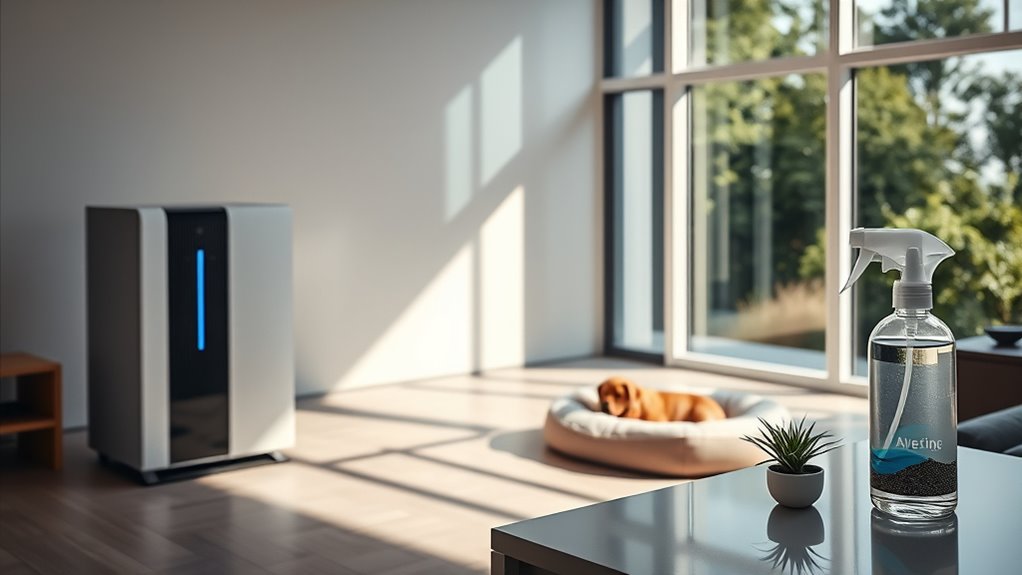
Managing pet-related odors effectively requires a proactive approach to eliminate smells at their source. Start by regularly cleaning your pet’s bedding, toys, and litter boxes. Use an air purifier equipped with a HEPA filter to capture airborne particles and reduce lingering odors. An odor neutralizer can help break down organic compounds causing smells, rather than just masking them. Consistent grooming minimizes pet dander and odor buildup. Keep ventilation high by opening windows or using exhaust fans. To evoke emotion, consider this table:
| Before | After |
|---|---|
| Lingering pet smell in rooms | Fresh, clean air, inviting space |
| Unpleasant odor from litter | Clear, odorless environment |
| Pet hair and dander buildup | Bright, allergen-free air |
| Musty odor from neglected areas | Invigorating, deodorized space |
| Frustration from stubborn smells | Peace of a fresh home |
Eliminating Cooking Smells and Food Odors

Right after cooking, open your windows or turn on the exhaust fan to ventilate the space quickly. You can also place absorbing odor agents like baking soda or activated charcoal nearby to trap lingering smells. These simple steps help keep your kitchen fresh and odor-free. Incorporating natural materials and good lighting can also enhance the overall freshness of your space creating a cozy farmhouse ambiance.
Ventilate Immediately After Cooking
After you finish cooking, open your windows or turn on your exhaust fan to immediately ventilate the kitchen. This quick action promotes air exchange, helping to remove lingering food odors and cooking smells. Proper ventilation disperses the odors before they settle into surfaces or furniture, making it less likely they’ll stick around. By actively pushing out the smell-causing particles, you prevent them from becoming embedded in your home’s air. This immediate response is vital for odor control because it stops odors at their source rather than letting them linger and spread. Remember, the faster you ventilate, the more effectively you reduce food smells and maintain a fresh, odor-free environment. Proper air exchange is your best first step in eliminating cooking odors. Patchology.ORG
Use Absorbing Odor Agents
To effectively eliminate lingering cooking and food odors, you can use absorbing odor agents that draw smell particles out of the air. Activated charcoal is highly effective because it naturally traps odors within its porous surface. Place a few bowls of activated charcoal around the kitchen or near the source of the smell to absorb odors quickly. Baking soda is another simple, affordable option; it neutralizes odors by balancing pH levels. Sprinkle baking soda on surfaces like countertops or inside the refrigerator, then leave it for a few hours before cleaning. Both activated charcoal and baking soda work without masking odors, ensuring your space smells fresher and cleaner. Regular use of these agents can markedly reduce stubborn cooking smells at their source. Additionally, understanding the material options of your odor absorbers can help optimize their effectiveness for your specific needs.
Reducing Humidity and Moisture to Prevent Odors

Reducing humidity and moisture is essential for preventing odors before they develop. To do this effectively, start with proper dehumidifier selection. Choose a unit suited to your space size and humidity levels to control excess moisture. Installing a moisture barrier is also vital, especially in basements, crawl spaces, or concrete floors. A good moisture barrier prevents dampness from seeping through floors and walls, which can cause mold and musty smells. Keep indoor humidity below 50% to discourage mold growth and musty odors. Use exhaust fans in bathrooms and kitchens to vent moisture outdoors. Regularly monitor humidity levels with a hygrometer. In addition, selecting the right keto-friendly ingredients can help maintain overall health and prevent issues related to excess moisture. By managing moisture sources proactively, you reduce the chances of odors forming at their source, creating a fresher, healthier environment.
Maintaining a Fresh Environment Through Regular Cleaning

Maintaining a fresh environment relies on regular cleaning to remove dirt, dust, and organic matter that can harbor odors. Consistent cleaning prevents these particles from building up and creating unpleasant smells. To enhance freshness, consider using air purifiers that trap airborne pollutants and reduce odors. Additionally, air fresheners can provide a temporary boost of scent, but they shouldn’t mask underlying issues. Focus on cleaning high-touch surfaces, vacuuming carpets, and washing linens frequently. Don’t forget to clean hidden areas like behind appliances and inside vents. For long-lasting freshness, combine routine cleaning with air purifiers and natural deodorizing agents. Utilizing AI-powered analysis can help identify sources of persistent odors and optimize cleaning strategies, ensuring your space smells fresh at the source rather than relying solely on air fresheners that mask odors temporarily.
Frequently Asked Questions
Can Air Purifiers Permanently Eliminate Persistent Odors?
Air purifiers can considerably reduce persistent odors, but they won’t eliminate them permanently unless combined with odor source removal. Regular air purifier maintenance, like changing filters, ensures it works effectively. To truly eliminate odors, identify and remove the source—whether it’s mold, smoke, or pet dander. Relying solely on an air purifier might mask odors temporarily, but addressing the source guarantees long-lasting freshness.
How Do Ventilation Systems Impact Odor Control Effectiveness?
Think of your ventilation system as the lungs of your home. When airflow optimization is high and ventilation maintenance is regular, it effectively clears out lingering odors, just like healthy lungs remove toxins. Poor ventilation hampers odor control, trapping smells inside. Prioritize maintaining your system and ensuring proper airflow; this keeps air fresh and odors at bay, making your space more comfortable and inviting.
Are There Natural Remedies to Neutralize Stubborn Home Smells?
Yes, you can use natural remedies for odor neutralization. Try placing bowls of baking soda or activated charcoal around your home—they absorb odors effectively. Lemon or vinegar sprays also help neutralize stubborn smells. Regularly airing out rooms and using essential oils like lavender or eucalyptus can freshen the air naturally. These methods target odors at their source, making your home smell fresher without relying on artificial air fresheners.
What Role Do Houseplants Play in Odor Absorption?
Imagine Leonardo da Vinci’s studio—your houseplant benefits extend beyond beauty, actively helping with odor absorption. Houseplants play a vital role in neutralizing stubborn smells by absorbing airborne particles and toxins. They not only enhance air quality but also reduce odors naturally. With their leafy charm, plants like pothos or snake plants serve as living filters, making your space fresher and healthier without relying on chemical sprays.
How Often Should I Replace Filters to Maintain Odor Elimination?
You should replace filters every 3 to 6 months to guarantee peak odor elimination. Regular filter maintenance is key, especially if the odor sensor calibration indicates increased odor levels. Keep an eye on sensor readings and replace filters promptly when needed. This proactive approach helps maintain fresh air quality and prevents odors from lingering. Consistent filter replacement and sensor calibration keep your space smelling clean and fresh.
Conclusion
By addressing odors right at their roots, you create a more inviting space without relying on temporary fixes. With a little attention to common sources like mold, pets, and cooking, you can keep your home feeling fresh and welcoming. Remember, a proactive approach helps maintain harmony, turning your environment into a true sanctuary. Embrace these simple steps, and enjoy a naturally pleasant atmosphere every day.