
TL;DR

Get furniture and decor delivered free with Prime
- Fast, free delivery on millions of items
- Prime Video, Amazon Music and more included
- Member-only deals all year
Ideal Home’s houseplant guide identifies spider plants, Kentia palms, calatheas, Chinese money plants, Boston ferns and polka dot plants as options for homes with cats and dogs. The report cautions that “pet-friendly” does not mean pet-proof: eating large amounts of any plant can cause stomach upset or irritation.
Ideal Home has highlighted six houseplants that its cited plant experts describe as safe for cats and dogs, including spider plants, Kentia palms and Boston ferns. The guide also warns that no plant is entirely pet-proof: even plants considered non-toxic may cause stomach upset or physical irritation if an animal eats too much.
The six plants named are the spider plant, Kentia palm, calathea, Chinese money plant, Boston fern and polka dot plant. The report presents them as ways to add indoor greenery without choosing species identified in the article as toxic to pets. It does not provide scientific testing or a full toxicology review for each plant.
Jo Lambell, founder of houseplant retailer Beards & Daisies, calls the spider plant her first pick, describing it as “very hard to kill and completely non-toxic.” She says cats may chew it, but that chewing is not harmful in the context she describes. Lambell also recommends the Kentia palm for larger spaces and says it can cope with lower light; she identifies the Boston fern as a safe choice that likes bathroom humidity.
GardeningExpress.co.uk plant expert Nick Wood names calathea, Chinese money plant and polka dot plant among the options. The guide says calatheas suit northeast- or west-facing rooms, Chinese money plants prefer bright, indirect light and soil allowed to dry slightly between waterings, and polka dot plants do best in bright, indirect light with lightly moist soil. These are care suggestions from the report, not guarantees that a plant will thrive in every home.
Choosing Greenery Around Pets
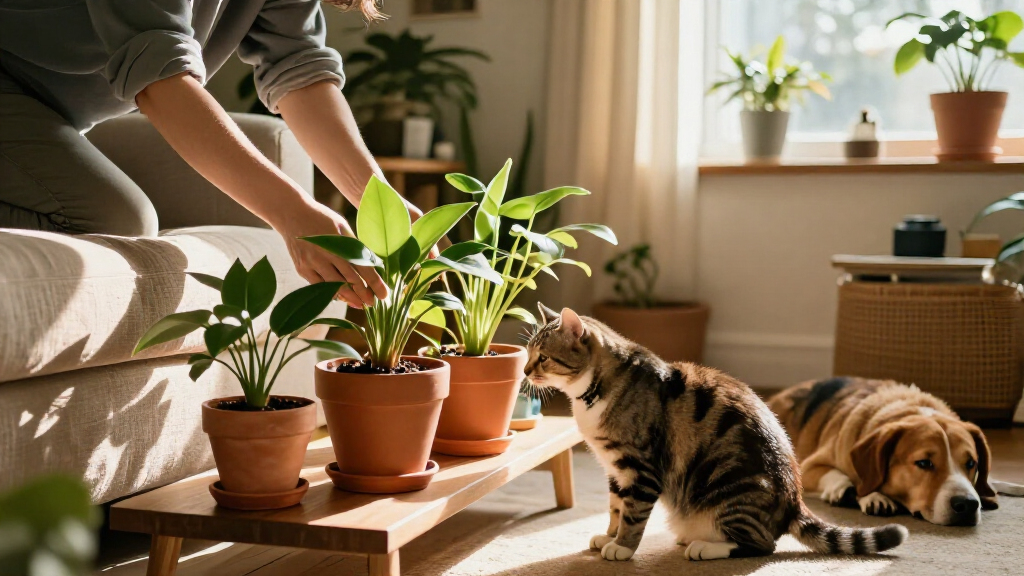
The list gives cat and dog owners a starting point for choosing houseplants while reducing the chance of bringing home a species the guide identifies as toxic. That matters because pets may chew leaves, especially when plants are within reach. The report’s central caveat is that “pet-friendly” does not mean edible or risk-free: eating a large quantity can still upset an animal’s stomach.
Owners should check a plant’s identity before buying it, since common names can cover multiple varieties, and should pay attention to their individual pet’s behavior. Moving plants to a hanging planter or using a pot grid may limit access or digging, but neither measure makes a plant completely inaccessible or replaces veterinary advice if a pet eats it and becomes unwell.
pet safe houseplants for cats and dogs
As an affiliate, we earn on qualifying purchases.
As an affiliate, we earn on qualifying purchases.
Six Plants and Their Care
The recommendations combine two considerations: whether the report’s cited experts consider a plant suitable around pets, and whether its growing needs match a particular room. The spider plant is described as easy to maintain and propagate from offshoots. Kentia palms offer long fronds and are suggested for lower-light corners, while calatheas are included for their patterned foliage.
The Chinese money plant is recognized by its round leaves and is described as preferring bright, indirect light and a slight drying period between waterings. Boston ferns are associated in the guide with humid bathrooms. Polka dot plants provide spotted foliage, with the report advising bright, indirect light, lightly moist soil and occasional pinching to encourage fuller growth. The source also mentions hanging pots and plant grids as ways to keep plants away from pets.
““Even pet-safe plants can upset a tummy if they’re eaten in bulk, so it’s worth keeping an eye on any serial chewers.””
— Jo Lambell, founder of Beards & Daisies
Limits of the Pet-Safe Label
The supplied report does not cite veterinary studies, specify quantities that might trigger symptoms, or explain how risk varies by a pet’s size, health or the exact plant variety. Its statement that the six options are pet-friendly is attributed to the named experts and should not be read as a claim that every plant is harmless in every circumstance.
The article also does not give guidance for responding to a suspected poisoning. If an animal eats a plant and shows concerning symptoms, owners should contact a veterinarian and provide the plant’s name or a photograph if available. The source’s warning is limited to the possibility of stomach upset or irritation after substantial consumption.
Check Plants Before Bringing Them Home
The report describes no upcoming announcement, test or follow-up; it is a practical plant-selection guide. For readers choosing among the six, the next step is to confirm the plant’s identity with the seller, review its care requirements and place it where a pet is less likely to chew or dig in it. Owners should monitor pets that repeatedly nibble greenery, as Lambell advises, and seek veterinary help if they are concerned after ingestion.
Key Questions
Which six houseplants does the guide recommend for homes with pets?
It lists spider plants, Kentia palms, calatheas, Chinese money plants, Boston ferns and polka dot plants as pet-friendly options, according to the experts cited by Ideal Home.
Does pet-friendly mean a plant is safe for a cat or dog to eat?
No. The report warns that eating a large amount of even a plant described as pet-safe can cause stomach upset or physical irritation. It does not give a safe amount for pets to consume.
Which plant does the report suggest for a lower-light corner?
Jo Lambell recommends the Kentia palm for a larger plant in a lower-light area, such as a hallway or living room corner. Actual results depend on the room’s conditions.
What should I do if my pet eats one of these plants?
The report does not set out treatment instructions. If your pet becomes unwell or you are concerned, contact a veterinarian and identify the plant as accurately as possible.
Source: rss
Halloween Picks
halloween
As an affiliate, we earn on qualifying purchases.