To create potting mixes that help your houseplants thrive, focus on combining materials that guarantee good drainage and moisture retention. For general plants, use a blend of compost or peat moss with perlite. For succulents, add coarse sand and pumice. If growing flowering or foliage plants, incorporate organic fertilizers like kelp meal or bone meal. Peat-free options using coconut coir are eco-friendly. Keep in mind the specific needs of your plants for best results; more tips await below.
Key Takeaways
- Use a mix of organic matter like compost or peat moss combined with coarse perlite or pumice for optimal drainage and moisture retention.
- Adjust soil pH to 6.0–7.0 using lime or sulfur, depending on plant needs, for balanced nutrient availability.
- Incorporate natural materials such as bark or wood chips to mimic natural habitats and improve soil structure.
- Choose specialized mixes like cactus soil, organic blends, or nutrient-dense formulas based on plant type and growth requirements.
- Enhance drainage with coarse sand or gravel, and select containers with drainage holes to prevent waterlogging and root rot.
Basic All-Purpose Potting Mix
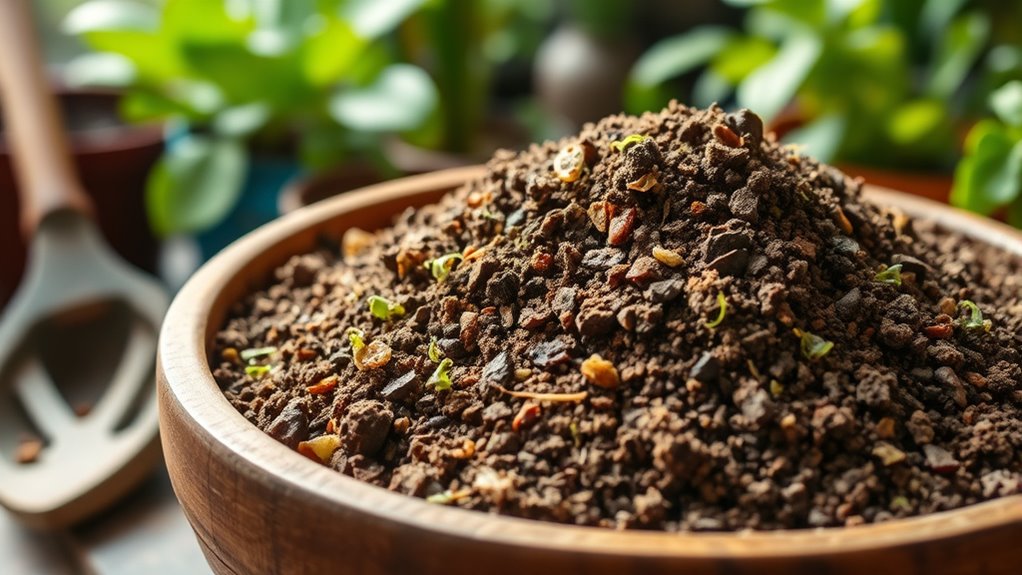
Are you wondering how to create a versatile potting mix suitable for most plants? Start with a base of high-quality compost or peat moss, combined with perlite or vermiculite for aeration. To guarantee your mix is safe and free of pests or diseases, consider soil sterilization—either by baking it in the oven or using a microwave. This step helps eliminate harmful pathogens. Next, test the pH level and adjust it if necessary; most houseplants prefer a slightly acidic to neutral pH of 6.0 to 7.0. You can add lime to raise pH or sulfur to lower it. Additionally, understanding the color accuracy of your potting mix can influence how vibrant and healthy your plants appear under different lighting conditions. This simple process results in a balanced, adaptable mix that promotes healthy root development and supports a broad range of plants.
Well-Draining Cactus and Succulent Mix

To guarantee your cacti and succulents thrive, it’s essential to use a well-draining mix that prevents water from sitting around their roots. These plants prefer soil with a neutral to slightly acidic pH, around 6.0 to 7.0, ensuring ideal nutrient availability. A cactus and succulent mix typically combines coarse sand, perlite, or pumice with a small amount of organic matter. This blend reduces water retention, allowing excess moisture to flow quickly through the soil. Avoid heavy, clay-based soils that hold too much water, risking root rot. By maintaining proper soil pH and ensuring excellent drainage, you’ll create an environment that promotes healthy growth and prevents common issues associated with overwatering. Additionally, choosing a mix with appropriate drainage properties can significantly improve plant health.
Rich Organic Mix for Foliage Plants

To create a rich organic mix for your foliage plants, start with a nutrient-rich compost base that supplies essential minerals. It’s important to incorporate organic matter like peat moss or composted manure to improve soil structure and fertility. Make sure your mix drains well to prevent waterlogging, keeping your plants healthy and thriving. Additionally, selecting the right building plans can ensure your potting setup is tailored to your needs and space.
Nutrient-Rich Compost Base
A nutrient-rich compost base provides the essential foundation for healthy foliage plants. To create this base, focus on effective composting techniques, ensuring you balance green and brown materials for ideal decomposition. Proper aeration and moisture control speed up the process and prevent odors. Before mixing, soil sterilization is vital to eliminate pathogens and weed seeds that could harm your plants. You can sterilize soil by baking it in the oven at 180°F (82°C) for 30 minutes or using other safe methods. This step guarantees a clean, disease-free environment for your plants to thrive. Additionally, implementing common goal tracking pitfalls such as neglecting progress reviews can help you stay consistent and motivated throughout your gardening journey. Once sterilized, blend the compost with organic matter to achieve a rich, fertile medium that supplies essential nutrients for lush, vigorous foliage.
Incorporate Organic Matter
Building on a nutrient-rich compost base sets the stage for healthy foliage plants, but the mix can be further enhanced by incorporating organic matter. Adding materials like composted bark, coconut coir, or aged manure improves soil structure and provides essential nutrients. This organic matter retains moisture, reducing the watering frequency needed to keep your plants healthy, while also slowly releasing nutrients that support lush foliage. Adjust your fertilizer schedule accordingly, as the organic components supplement your regular feeding routine. By enriching your potting mix with organic matter, you create a balanced environment that promotes vigorous growth and vibrant leaves. Incorporating soil amendments helps improve aeration and water retention, ensuring your houseplants thrive in their enriched, organic-rich mix. Keep an eye on moisture levels and nutrient supply to ensure your houseplants thrive in their enriched, organic-rich mix.
Ensure Proper Drainage
Ensuring proper drainage is essential when creating a rich organic mix for foliage plants, as it prevents water from pooling and causing root rot. Good drainage promotes soil aeration, allowing roots to breathe and stay healthy. To achieve this balance, combine ingredients that enhance moisture retention without sacrificing drainage. Use materials like compost and peat moss for moisture, along with coarse perlite or pumice to improve aeration and prevent compacting. Incorporating tuning materials can further optimize soil structure for thriving houseplants.
Peat-Free Mix for Environmentally Conscious Gardening
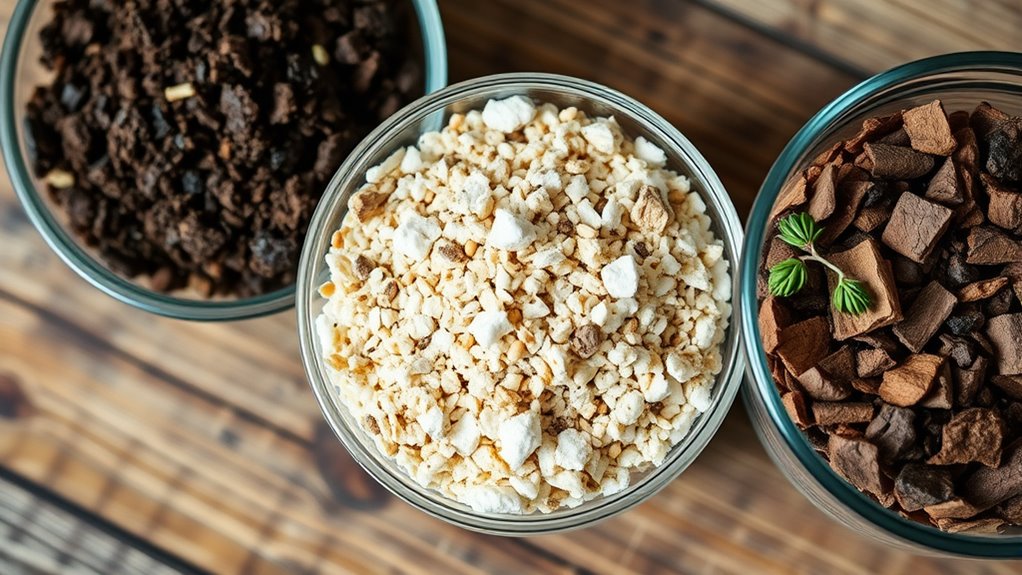
Have you considered how traditional potting mixes often rely on peat, which poses environmental concerns? Peat extraction damages wetlands and releases stored carbon. To create an eco-friendly mix, consider alternatives that avoid peat altogether. These mixes are better for the environment and reduce reliance on synthetic fertilizers and chemical pesticides. You can use:
- Coconut coir, a renewable resource that retains moisture well.
- Compost or vermicompost for natural nutrients.
- Perlite or pumice for aeration and drainage.
- Organic amendments like biochar to improve soil health.
This approach not only supports sustainable gardening but also promotes healthier plant growth without harmful chemicals. Switching to peat-free mixes helps preserve ecosystems and minimizes your garden’s carbon footprint while still providing a thriving environment for your houseplants. Infidelity trends can also highlight the importance of sustainable practices in other areas of life, including gardening.
Nutrient-Dense Mix for Flowering Houseplants
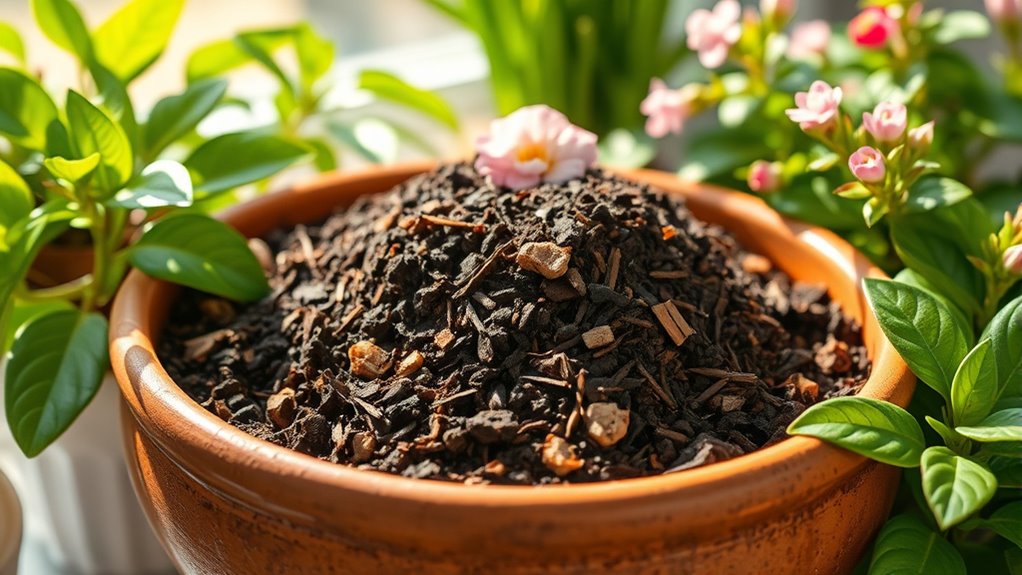
To encourage vibrant blooms and healthy growth in your flowering houseplants, choosing a nutrient-dense potting mix is essential. This mix should contain essential nutrients like nitrogen, phosphorus, and potassium, which support flowering and foliage development. Regular soil testing helps you monitor nutrient levels, ensuring your plants receive what they need when they need it. Proper fertilizer timing is vital; apply a balanced, water-soluble fertilizer every 2-3 weeks during active growth. Use the table below to understand key nutrients and their roles:
| Nutrient | Function | Best Source |
|---|---|---|
| Nitrogen | Promotes lush foliage | Fish emulsion, urea |
| Phosphorus | Encourages flowering | Bone meal, rock phosphate |
| Potassium | Supports overall plant health | Banana peels, kelp meal |
Being aware of soil health and maintaining proper nutrient levels can significantly enhance your houseplants’ flowering potential.
Quick-Drain Mix for Tropical and Moisture-Loving Plants
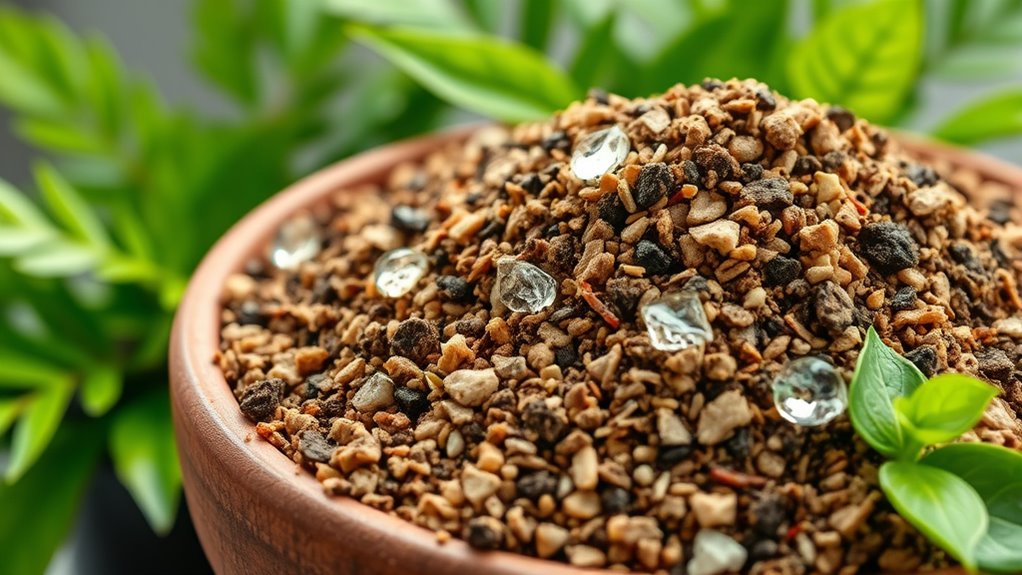
Choosing the right materials guarantees your tropical plants drain quickly and stay healthy. You can enhance drainage by adding coarse sand or perlite to your mix. Knowing which plants thrive in quick-drain soils helps you select the best pairings for your space. Additionally, incorporating ingredients like anti-aging effects from eye patches can be analogous to choosing components that improve overall plant health and resilience.
Material Selection Tips
When selecting materials for a quick-drain mix suited to tropical and moisture-loving plants, focus on ingredients that promote excellent drainage while retaining enough moisture. Your choice of container material also influences how well the roots breathe and how evenly the soil dries. Use well-draining components that won’t compact, ensuring roots stay oxygenated. Keep fertilizer compatibility in mind; choose organic or inorganic options that suit your plants’ needs. To optimize your mix, consider these tips:
- Use coarse perlite or pumice for aeration and drainage
- Incorporate coconut coir or peat moss for moisture retention
- Select containers with drainage holes to prevent waterlogging
- Match soil ingredients to your fertilizer type to avoid nutrient imbalances
- Incorporate natural materials like wood chips or bark to enhance soil structure and mimic their natural environment
These choices help maintain a balance between moisture and drainage, supporting healthy, thriving plants.
Drainage Enhancement Techniques
Enhancing drainage in your potting mix guarantees tropical and moisture-loving plants thrive without waterlogging. To improve drainage, incorporate coarse components like perlite, pumice, or coarse sand. These materials create air pockets that prevent excess water retention. Adjust your composting techniques to include organic matter that promotes healthy root growth while ensuring proper water flow. Be mindful of your watering habits—less frequent, thorough watering prevents soggy roots. Here’s a visual to help you picture the mix:
| Coarse Material | Organic Additive | Watering Habit |
|---|---|---|
| Pumice | Compost | Deep, infrequent watering |
| Perlite | Worm castings | Allow topsoil to dry out between watering |
| Coarse Sand | Coconut coir | Water only when soil feels dry |
This blend guarantees your tropical plants stay well-drained and healthy.
Ideal Plant Pairings
For tropical and moisture-loving plants to thrive in a quick-drain mix, pairing them with the right companions can make all the difference. Choosing plants with similar moisture needs guarantees they flourish together and prevents over- or underwatering. Companion planting not only boosts growth but also aids pest control by deterring common pests. When selecting plant pairs, consider their height, root structure, and watering habits to create a balanced environment. Mixing plants that support each other’s health reduces the need for chemical pest controls.
- Pair moisture-loving ferns with epiphytic orchids for shared humidity needs
- Combine calatheas with peace lilies for natural pest deterrence
- Use bromeliads alongside moisture-retentive begonias
- Groupings of moisture-loving plants can create a lush, pest-resistant microenvironment
Frequently Asked Questions
How Often Should I Repot My Houseplants With Different Mixes?
You should repot your houseplants every 1 to 2 years, depending on their growth and the mix’s quality. When repotting, consider their watering frequency and light requirements; faster-growing plants need more frequent repots. Use a fresh potting mix to guarantee proper drainage and nutrients. Keep an eye on root health and soil dryness—these clues help determine the right time to refresh your mixes, supporting healthy growth and vibrant foliage.
Can I Customize Potting Mixes for Specific Plant Species?
Yes, you can customize potting mixes for specific plant species by adjusting soil amendments to suit their needs. For example, cacti need well-draining soil, so you add sand or perlite, while ferns prefer moisture-rich mixes with organic matter. Nutrient balancing is key—you’ll want to incorporate compost or slow-release fertilizers. This tailored approach helps your plants thrive, ensuring they get the right balance of drainage, moisture, and nutrients.
What Are Signs My Plant Needs a Different Potting Mix?
Your plant’s crying out for a new mix if it shows signs like root rot or nutrient deficiency, which are like neon signs in a dark room. You might notice wilting, yellowing leaves, or slow growth. These symptoms signal that your current potting mix isn’t providing proper drainage or nutrients. When this happens, it’s time to upgrade your mix to prevent further stress and help your plant thrive.
How Do Soil Ph Levels Affect Plant Health?
Soil pH levels directly impact your plant’s health by affecting nutrient availability. If the soil is too acidic or alkaline, your plant may struggle to absorb essential nutrients, leading to poor growth. You can improve this by pH balancing your soil, adjusting soil acidity to suit your plant’s needs. Regular testing helps you maintain ideal pH levels, ensuring your houseplants stay healthy and thrive.
Are Homemade Potting Mixes as Effective as Commercial Ones?
Don’t judge a book by its cover, especially with homemade potting mixes. You can make effective blends that provide compost nutrients and improve soil aeration, rivaling commercial options. By carefully selecting ingredients like peat, compost, and perlite, you guarantee your plants get essential nutrients and proper airflow. While commercial mixes are convenient, your homemade version can be just as nourishing if you pay attention to quality and balance.
Conclusion
With the right potting mix, your houseplants will thrive like a lush, vibrant garden in full bloom. Whether you choose a well-draining cactus mix or a nutrient-rich blend for flowering plants, each recipe is designed to meet your plants’ unique needs. Think of your potting mix as the foundation of a sturdy house—when built well, it supports healthy growth and beauty. So, pick the right mix and watch your indoor garden flourish effortlessly.