HEPA filters trap tiny airborne particles like dust, pollen, and pet dander, improving allergy and asthma symptoms, but they don’t address odors or gases. Carbon filters use activated carbon to adsorb chemicals, fumes, and smells, making them ideal for eliminating odors and VOCs. To get all-encompassing air cleaning, many systems combine both. Understanding what each filter does helps you choose the right purifier—discover more ways to optimize indoor air quality as you continue exploring.

Get furniture and decor delivered free with Prime
- Fast, free delivery on millions of items
- Prime Video, Amazon Music and more included
- Member-only deals all year
Key Takeaways
- HEPA filters trap tiny airborne particles like dust, pollen, and pet dander with 99.97% efficiency.
- Carbon filters adsorb gases, odors, and VOCs by chemically binding pollutants onto activated carbon.
- HEPA filters do not remove gases or odors; carbon filters specifically target chemical fumes and smells.
- Combining HEPA and carbon filters provides comprehensive purification of particles and gaseous pollutants.
- Regular maintenance and timely filter replacements are essential for optimal performance of both filter types.
As an affiliate, we earn on qualifying purchases.
What Are Indoor Pollutants and Why Do They Matter?
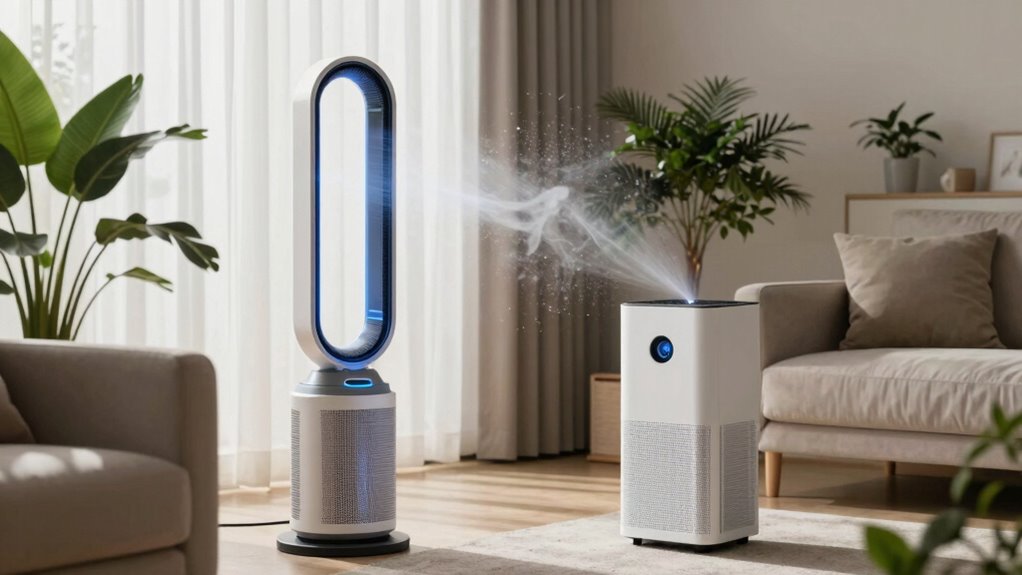
Have you ever wondered what’s lurking in the air inside your home? Indoor pollutants include indoor allergens like pet dander, dust mites, mold spores, and airborne toxins such as smoke, VOCs from cleaning products, and fumes from appliances. These particles can trigger allergies, asthma, or other respiratory issues, especially if you spend a lot of time indoors. Airborne toxins can settle in your lungs and bloodstream, affecting your overall health. Understanding what these pollutants are helps you see why clean indoor air matters so much. They might seem invisible, but they can profoundly impact your well-being. Regularly reducing indoor allergens and airborne toxins ensures a healthier environment, making it easier to breathe and stay comfortable at home. Effective filtration techniques play a crucial role in improving indoor air quality and safeguarding your health. Additionally, selecting the right air purification methods tailored to your specific needs can significantly enhance your indoor environment. Proper air filtration can remove or reduce many of these pollutants, promoting better respiratory health. Recognizing the importance of air quality management helps you choose the most effective solutions for maintaining a safe and healthy home environment. Implementing air quality monitoring devices can help you stay aware of ongoing pollutant levels, ensuring your environment remains safe and clean.
How Do HEPA Air Filters Work?

HEPA air filters are highly effective at capturing tiny airborne particles, making them a popular choice for improving indoor air quality. They work by using dense, fibrous filter media that trap particles as air passes through. When air quality degradation occurs due to dust, pollen, pet dander, or bacteria, HEPA filters remove these contaminants efficiently. Thanks to filter technology advancements, HEPA filters can capture particles as small as 0.3 microns with 99.97% efficiency. As air flows through the filter, particles collide with fibers and are trapped, preventing them from recirculating into your living space. This process helps reduce allergens and airborne pollutants, leading to cleaner, healthier indoor environments and better overall air quality.
How Do Carbon Air Filters Remove Odors and Chemicals?
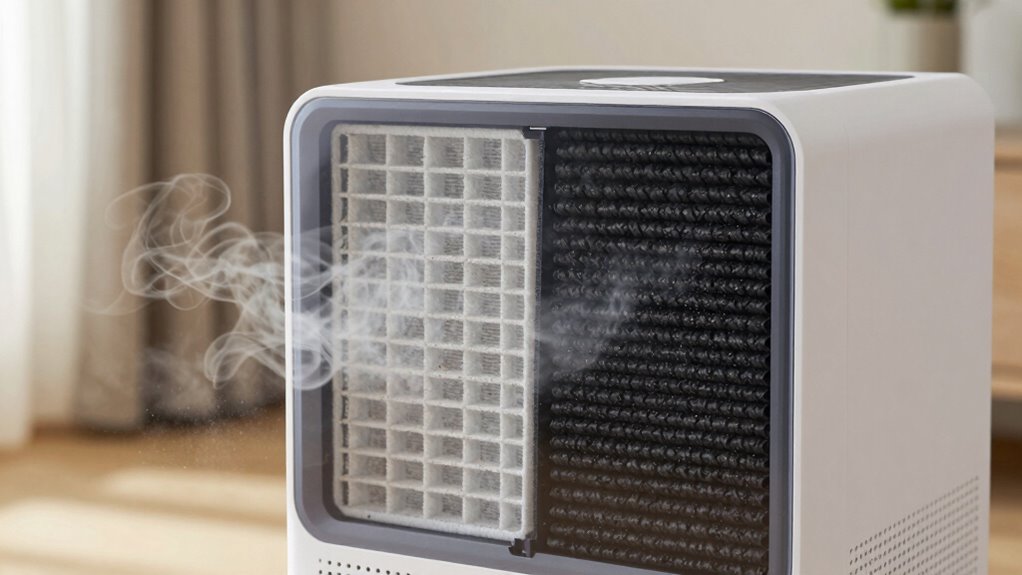
Carbon air filters remove odors and chemicals through a process called adsorption, where pollutants stick to the surface of the activated carbon. This surface has tiny pores that trap gases, odors, and volatile chemicals, effectively removing them from the air. Unlike HEPA filters, carbon filters don’t physically block particles but chemically bind with odorous compounds and chemicals. Additionally, some carbon filters can generate ozone during the adsorption process, which might be harmful in enclosed spaces. To maintain effectiveness, you need to replace your filter regularly, as saturated carbon loses its ability to adsorb pollutants. Proper filter maintenance ensures continued efficiency and safety of the filtration process. Moreover, understanding the types of contaminants that each filter targets can help you choose the most suitable option for your environment. The adsorption capacity of activated carbon diminishes over time, making timely replacements essential. Regular filter replacement prevents the release of trapped chemicals back into your environment and maintains optimal air quality. Ozone generation can be minimized with high-quality filters and proper maintenance. As market volatility can influence the effectiveness of filtration methods, staying informed about industry developments can help you make better choices. Remember, timely filter replacement guarantees your air stays fresh and safe, preventing the release of trapped chemicals back into your environment.
Comparing HEPA and Carbon Air Filters: Which Is Better for Your Needs?

Choosing the right air filter depends on your specific needs, as each type offers distinct advantages. HEPA filters excel at capturing airborne particles like dust, pollen, and allergens, improving overall air quality. Carbon filters, on the other hand, specialize in removing odors and chemicals, making your environment fresher. Consider your main concerns to decide which filter suits you best. Regular filter maintenance and understanding your household’s unique air quality issues can ensure you select the most effective solution. Additionally, knowing how each filter interacts with air purification systems can help in optimizing their performance and longevity. Incorporating energetic alignment principles, such as maintaining a positive environment, can amplify the benefits of your chosen filter. Being aware of the filtration efficiency of each type will help you make a more informed decision tailored to your air quality needs.
Which Indoor Pollutants Do HEPA and Carbon Filters Remove Best?
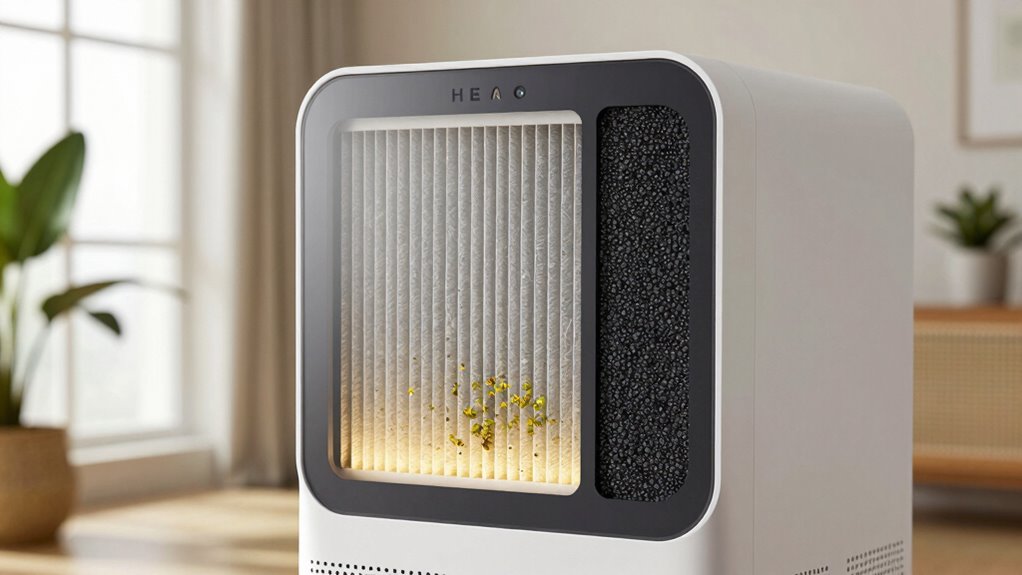
Indoor pollutants vary widely, and selecting the right filter depends on which contaminants you’re most concerned about removing. HEPA filters excel at capturing airborne allergens like pollen, pet dander, and dust mites, making them ideal if allergy relief is your goal. They trap particles as small as 0.3 microns, effectively reducing airborne allergens. Carbon filters, on the other hand, are best for VOC removal, absorbing volatile organic compounds emitted from paints, cleaning products, and furniture. They also help eliminate odors and chemical fumes. While HEPA filters focus on particle removal, carbon filters target gaseous pollutants. For extensive air purification, combining both types can address a broad spectrum of indoor pollutants, ensuring cleaner, healthier indoor air. Additionally, understanding air filtration methods can help you choose the most effective setup for your environment.
Pros and Cons of HEPA Filters for Home and Office Use

HEPA filters offer substantial advantages for home and office environments by effectively capturing airborne allergens, dust, and other tiny particles that can cause allergies or respiratory issues. They improve air quality by removing particles as small as 0.3 microns, ensuring high filter efficiency. They are particularly effective at reducing airborne particles, which can significantly benefit allergy sufferers. Additionally, HEPA filters help in reducing microbial contaminants, contributing to a healthier indoor environment. However, they can be bulky and may require more frequent replacement, which can increase maintenance costs. HEPA filters don’t address odors or chemical pollutants, so they’re less versatile if those are your primary concerns. Additionally, while they excel at trapping particles, they don’t eliminate gases or volatile organic compounds. Filter efficiency is a critical factor to consider when choosing an air purifier. It’s also important to recognize that HEPA filters are most effective when used in combination with other filtration methods for comprehensive air purification. Overall, HEPA filters enhance air quality considerably but may need to be complemented with other filtration methods for thorough indoor air purification.
When Do You Need a Carbon Filter : and When Is a HEPA Filter Enough?

While HEPA filters do a great job of capturing tiny airborne particles, they don’t handle odors or chemical pollutants well. If you’re dealing with persistent smells or off-gassing, a carbon filter becomes essential for effective odor elimination through carbon filtration. Use a HEPA filter alone when your primary concern is airborne allergens like dust, pollen, or pet dander. Understanding the effectiveness of different filters can help you make better choices for your air quality needs. Additionally, selecting the right type of filter depends on your specific indoor air quality concerns, making it important to assess your environment carefully. To optimize your indoor air quality, consider filter maintenance and replacement schedules to ensure ongoing performance. Regularly inspecting and replacing filters based on manufacturer recommendations can also extend their effectiveness and improve overall air quality. Being aware of the filter lifespan can help you plan replacements proactively and maintain optimal air purification.
Should You Use a Dual-Filter Air Purifier?

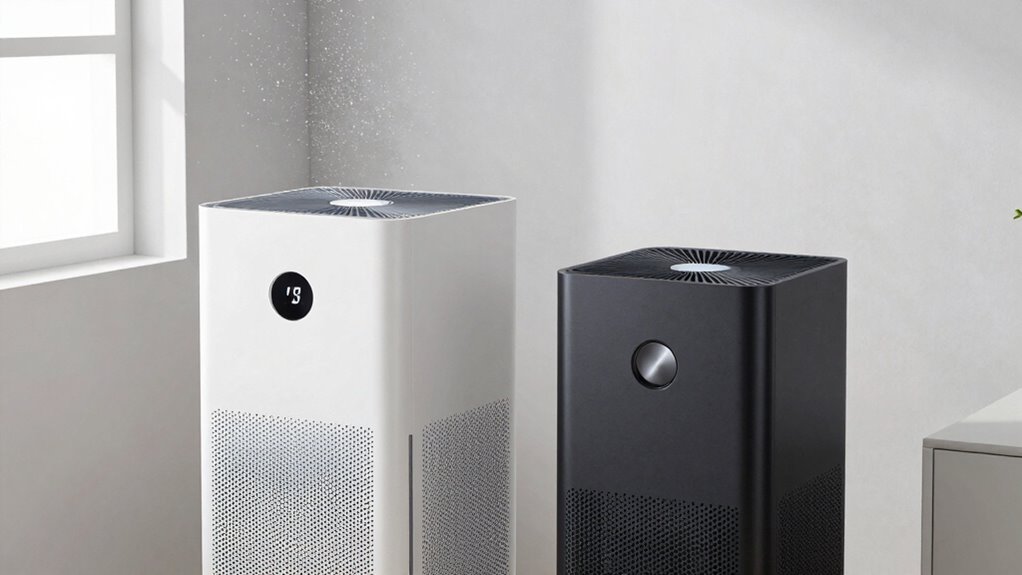
Using a dual-filter air purifier can provide a more all-encompassing approach to improving your indoor air quality, especially if you face multiple air issues at once. Dual filter systems use combined filtration methods, typically incorporating both a HEPA filter and an activated carbon filter, to target different types of pollutants. This setup effectively captures airborne particles like dust, pollen, and pet dander, while also removing odors, gases, and VOCs. If your home struggles with a mix of allergies, odors, and chemical fumes, a dual-filter system is a smart choice. It streamlines your air purification, saving you the hassle of using multiple devices. Overall, dual filters deliver comprehensive clean air, making your indoor environment healthier and more comfortable. Additionally, regular maintenance and filter replacement are essential to ensure optimal performance and appliance longevity. Incorporating a dual-filter system can also help address airborne chemicals that may be present in indoor environments, especially in homes with recent renovations or chemical use.
How to Choose the Right Air Filter for Your Home : Key Factors to Consider
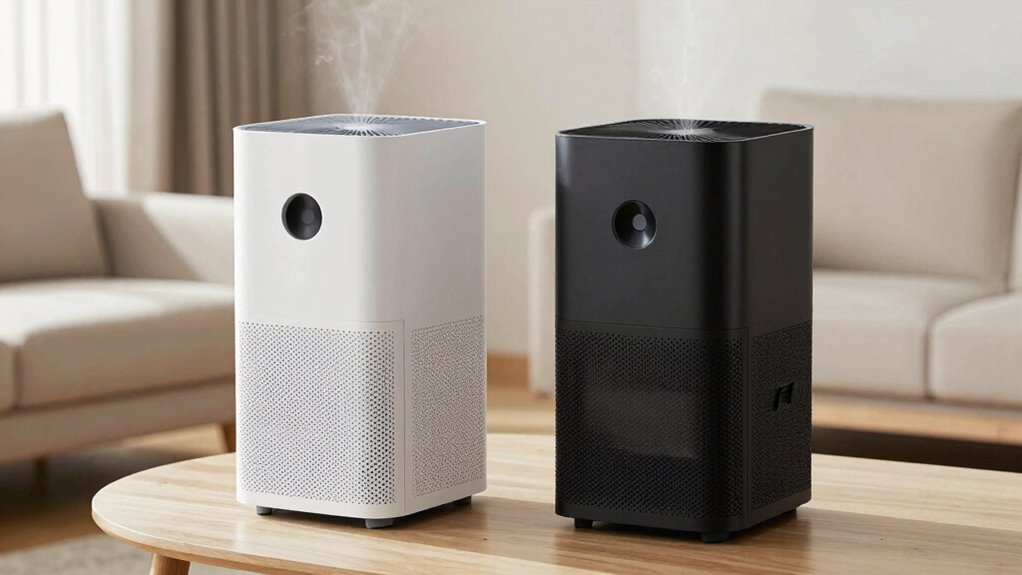
Choosing the right air filter for your home involves considering several key factors to guarantee you get the best air quality. First, assess your specific needs—if you’re sensitive to allergens, a HEPA filter with high filter efficiency is essential. For odors and chemicals, look for activated carbon filters. Consider your home’s air quality; if pollution levels are high, opt for a combination filter that targets a range of contaminants. Filter efficiency determines how well it captures particles, so check the MERV rating—higher ratings mean better filtration but may restrict airflow. Also, evaluate the size and compatibility of the filter with your purifier. Selecting the right filter ensures your air stays clean and fresh, improving overall air quality in your home.
Tips for Maintaining Your Air Purifier and Extending Filter Life
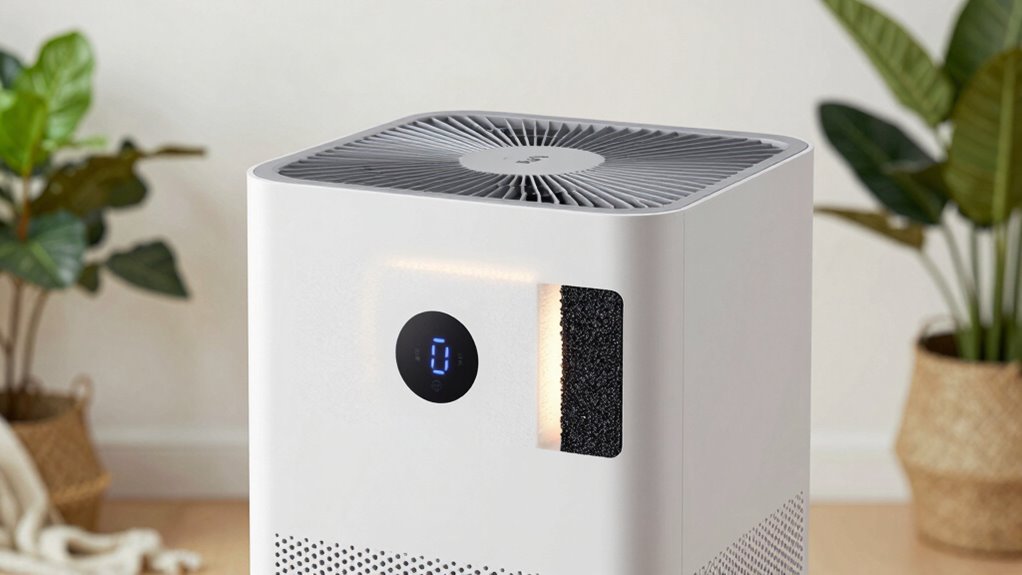
Maintaining your air purifier and extending the life of its filters can save you money and guarantee consistent air quality. Regularly check the filters to see if they need replacement—clogged filters reduce efficiency and can compromise air quality. Follow the manufacturer’s recommended schedule for filter replacement, as this ensures peak performance. Clean the exterior and pre-filters if applicable, to prevent dust buildup that can hinder airflow. Keep the air purifier in a well-ventilated area away from obstructions. Avoid running the device continuously without filters; this can damage the unit. Proper maintenance helps maintain clean, healthy air and prolongs the lifespan of your air purifier. Prioritize timely filter replacement to keep your air quality high and your device functioning efficiently.
Frequently Asked Questions
Can HEPA and Carbon Filters Be Used Together Effectively?
Yes, you can use HEPA and carbon filters together effectively. They have excellent filter compatibility, providing dual filtration benefits. HEPA filters trap airborne particles like dust and allergens, while carbon filters absorb odors and gases. Combining them enhances your air purifier’s overall performance, ensuring cleaner, fresher air. Just make sure your device is designed to handle dual filters, and you’ll enjoy thorough purification for a healthier environment.
How Often Should I Replace HEPA and Carbon Filters?
You should replace your HEPA filter every 12 to 18 months and your carbon filter every 3 to 6 months, depending on usage and air quality. Check your filter’s lifespan and follow the replacement guidelines provided by the manufacturer. Regular replacements guarantee peak performance, improve air quality, and prevent buildup of pollutants. Keep an eye on signs like decreased airflow or persistent odors to know when it’s time for new filters.
Do HEPA and Carbon Filters Produce Any Harmful Byproducts?
You might wonder if HEPA and carbon filters produce harmful byproducts. Generally, these filters are safe and don’t emit dangerous substances during operation. However, some lower-quality carbon filters can release trace chemicals if not made properly, raising filter safety and byproduct concerns. To minimize risks, choose reputable brands, replace filters as recommended, and ensure proper maintenance. This way, your air purifier keeps your air clean without introducing harmful byproducts.
Which Filter Type Is More Energy-Efficient for Continuous Use?
You’ll find that HEPA filters are generally more energy-efficient for continuous use because they have lower energy consumption and longer filter lifespan. Carbon filters tend to use more power due to their need for higher airflow to effectively absorb odors and chemicals, which can increase energy costs over time. If you want a filter that balances efficiency and longevity, HEPA is usually the better choice for regular, ongoing air purification.
Are There Specific Pollutants That Require Both HEPA and Carbon Filters Simultaneously?
Think of your air purifier as a dynamic duo fighting an invisible war. Some pollutants, like VOCs and certain odors, need both filters—HEPA for allergen filtration and carbon for VOC removal—to fully conquer indoor air enemies. If you’re sensitive or dealing with strong smells, using both filters together guarantees you’re protected from airborne allergens and harmful chemicals, creating a cleaner, fresher environment for you to breathe easy.
Conclusion
Now that you understand how HEPA and carbon filters work, imagine the air in your home as a flowing river, cleansing itself with each breath. Choosing the right filter is like selecting the perfect dam to guide this flow, trapping pollutants or absorbing odors. Keep your purifier maintained, and let fresh, pure air fill your space, turning every breath into a invigorating breeze. Your home’s air quality is in your hands—breathe easy and enjoy the clarity.
Halloween Picks
halloween
As an affiliate, we earn on qualifying purchases.