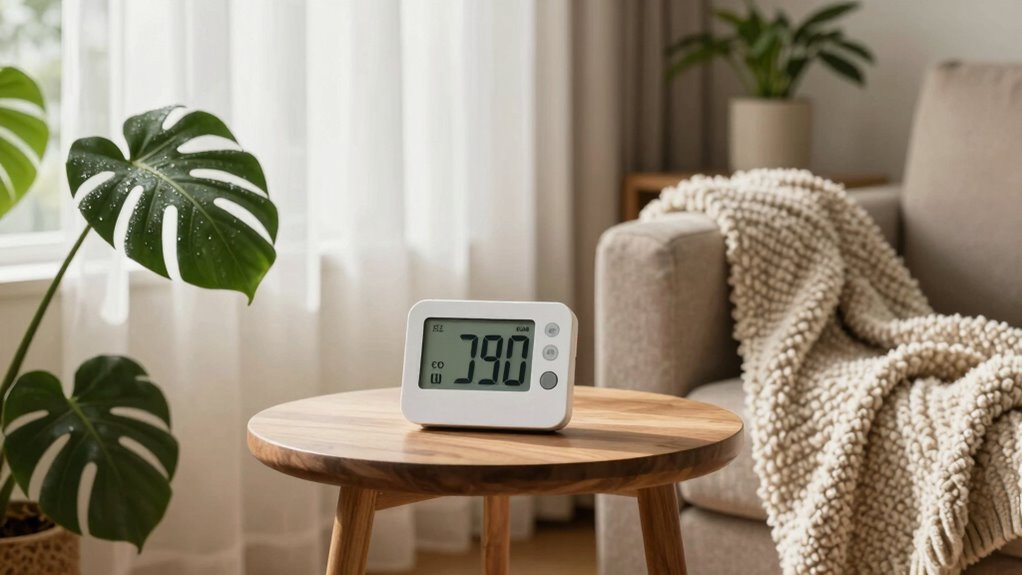

To help your home feel comfortable all year long, keep the indoor humidity between 30% and 50%. This range improves air quality, reduces allergens, and supports HVAC efficiency. Too much humidity can cause mold, mildew, and higher energy bills, while too little leads to dry skin and respiratory issues. Maintaining this balance keeps your environment safe and cozy, so stay tuned to learn easy ways to control your home’s humidity effectively.

Get furniture and decor delivered free with Prime
- Fast, free delivery on millions of items
- Prime Video, Amazon Music and more included
- Member-only deals all year
Key Takeaways
- Maintaining indoor humidity between 30% and 50% enhances comfort and air quality year-round.
- Proper humidity levels reduce dust, mold, and airborne pollutants, improving overall living conditions.
- Keeping humidity within the ideal range supports HVAC efficiency and lowers energy costs.
- Adjusting humidity with dehumidifiers or humidifiers prevents mold, mildew, and structural damage.
- Consistently balanced humidity minimizes respiratory issues and allergy symptoms throughout the year.
Maintaining the right humidity level is essential for creating a comfortable and healthy home environment. When humidity is properly regulated, you not only improve indoor air quality but also enhance your home’s energy efficiency. Proper humidity levels help reduce airborne pollutants, dust mites, and mold growth, making the air safer to breathe. If your home is too dry, you might notice dry skin, irritated eyes, or respiratory discomfort. Conversely, overly humid conditions can lead to mold and mildew, which worsen indoor air quality and pose health risks. Striking the right balance ensures that your living space remains comfortable and safe year-round.
Maintaining proper humidity improves air quality, boosts energy efficiency, and keeps your home comfortable year-round.
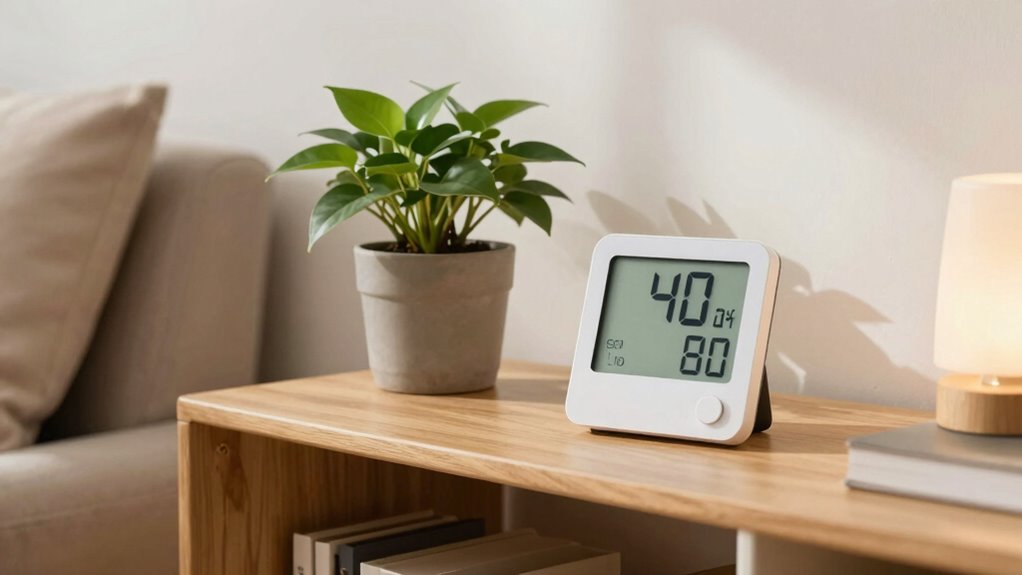
The ideal humidity range for most homes falls between 30% and 50%. Within this range, you’ll find a noticeable difference in how your home feels and how your HVAC system performs. When humidity levels are too high, your heating and cooling systems work harder, which can lead to increased energy consumption. This not only raises your utility bills but also strains your equipment, potentially shortening its lifespan. On the other hand, maintaining proper humidity levels can significantly improve indoor air quality, reducing respiratory irritations and allergy symptoms. Monitoring and adjusting humidity levels is simple when you use a hygrometer. If you discover your home is too humid, running a dehumidifier can quickly bring moisture down to a comfortable range. Conversely, if the air feels dry, especially during winter months, adding a humidifier can restore moisture without overdoing it. These devices help you maintain a consistent indoor environment, which is key to improving indoor air quality. When air isn’t too dry, you’ll breathe easier, and your home will feel more comfortable. Plus, controlling humidity helps prevent the growth of mold, which can cause allergic reactions and other health issues. Proper indoor humidity also helps maintain the integrity of your home’s structure by preventing issues like wood warping and cracking.
digital hygrometer for indoor humidity
As an affiliate, we earn on qualifying purchases.
As an affiliate, we earn on qualifying purchases.
Frequently Asked Questions
How Does Humidity Affect Indoor Air Quality?
Humidity directly impacts indoor air quality by influencing airborne pollutants and indoor mold growth. When humidity levels are too high, it creates a perfect environment for mold and dust mites, worsening respiratory issues. Conversely, low humidity can cause dry air, increasing airborne pollutants and irritation. Maintaining ideal humidity helps control indoor mold and airborne pollutants, ensuring healthier, more comfortable indoor air that’s easier to breathe year-round.
Can Outdoor Humidity Levels Influence Indoor Comfort?
Yes, outdoor humidity levels influence your indoor comfort, especially with seasonal variations and changes in outdoor climate. When outdoor humidity is high, it can make your home feel damp and sticky, while low outdoor humidity can lead to dryness and discomfort inside. You might need to adjust your home’s humidity control systems accordingly to maintain a consistent, comfortable environment regardless of outside conditions.
What Are Signs of Too High or Low Indoor Humidity?
Ever wondered if your home’s humidity is off? Signs of too high humidity include mold, musty odors, and condensation on windows. Too low? You might notice dry skin, static shocks, or peeling paint. Many humidity myths make it tricky to pinpoint issues, but understanding moisture sources like leaks or inadequate ventilation helps. Keeping humidity balanced prevents discomfort and damage, ensuring your home feels just right year-round.
How Often Should I Measure My Home’s Humidity?
You should measure your home’s humidity levels weekly using humidity sensors. Regular checks help you monitor moisture levels and prevent issues like mold or dryness. If readings fall outside the ideal range of 30-50%, adjust your humidifier or dehumidifier accordingly. Consistent monitoring guarantees your home stays comfortable year-round, maintaining excellent moisture levels for health and comfort. Keep a routine to catch potential problems early.
Can Humidity Control Reduce Allergy Symptoms Indoors?
Yes, controlling indoor humidity can considerably reduce allergy symptoms. When you maintain your humidifier properly, it prevents mold and dust mites that thrive in damp environments. Dehumidifier benefits include lowering excessive moisture, which helps keep allergens at bay. Regular humidifier maintenance ensures your system works efficiently, boosting comfort and allergy relief. Keeping humidity in the ideal range minimizes irritants, making your home a healthier, happier haven year-round.
Conclusion
Maintaining the right humidity levels can make your home feel more comfortable all year round. Aim for that sweet spot between 30% and 50%, and you’ll notice a difference in comfort and air quality. Remember, “a stitch in time saves nine”—addressing humidity issues early saves you from bigger problems later. Keep an eye on your home’s humidity, and you’ll enjoy a cozy, healthy living space no matter the season.
Halloween Picks
halloween
As an affiliate, we earn on qualifying purchases.