
TL;DR

Get furniture and decor delivered free with Prime
- Fast, free delivery on millions of items
- Prime Video, Amazon Music and more included
- Member-only deals all year
A House Beautiful report says real-estate and design professionals are seeing renewed buyer interest in vintage home details, including original wood floors, stained glass, exposed brick and decorative exterior features. The trend is based on expert observations, not a quantified survey, and buyers are still seeking modern conveniences and functional layouts.
Real-estate and design professionals are seeing renewed interest in homes with vintage craftsmanship—from original hardwood floors and stained glass to arches and exposed brick—according to a House Beautiful report. The experts describe a shift in buyer preferences, while stressing that many buyers still want modern technology and practical layouts alongside older details.
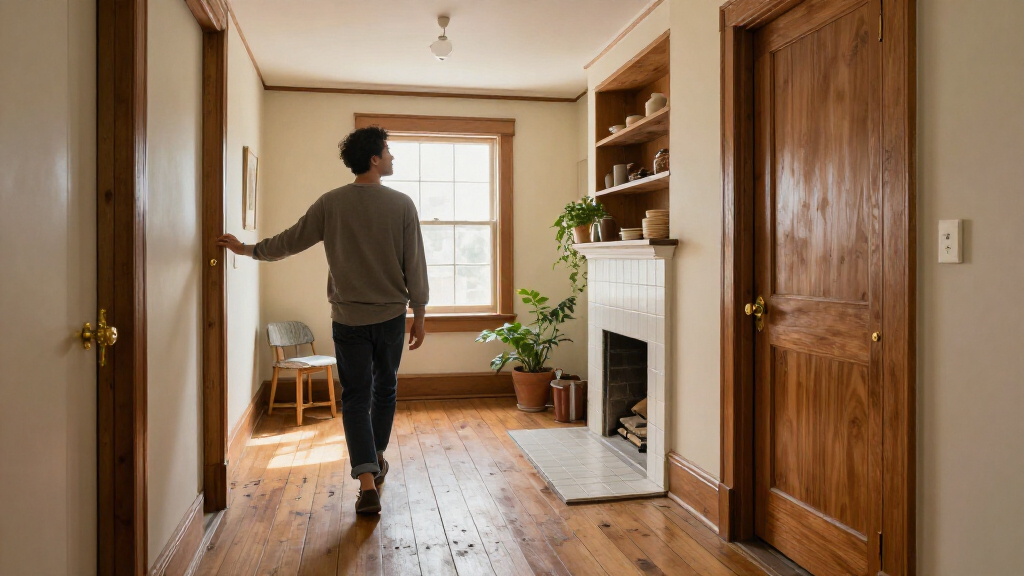
Peter Michael, founder of Piere Michel Brokerage, told House Beautiful that buyers are responding to homes that feel lived in and show evidence of original workmanship. He cited arches, exposed-brick fireplaces, high ceilings, vintage light fixtures and original wood floors as details that can give a home a sense of history and place. His comments reflect his professional experience; the article does not provide survey figures measuring how widespread the preference is.
The interest is not limited to historic properties. Jackie Mosher, cofounder and chief operating officer of home-design company Dzinly, said she is seeing new homes use decorative eaves and exposed rafters, details associated with early Craftsman homes. She also described stucco appearing in cooler regions, including the Midwest and Northeast, although she noted that installation can require additional care in areas with temperature fluctuations.
Both experts described an approach that combines old and new rather than reproducing a period home exactly. Mosher said designers are blending nostalgic elements with modern forms. Michael said buyers also want smart thermostats and stainless-steel appliances, as well as open layouts. He identified popcorn ceilings and small, separated kitchens as features some buyers are moving away from. The report offers expert observations, not a ranking of the most popular features or evidence that every homebuyer wants them.
Vintage Details Meet Modern Buyer Needs
The reported interest matters to buyers and sellers because it frames character features as part of how some people judge a home’s appeal, not merely as decorative extras. Original floors, stained glass or a carved banister may help a property feel distinct from newer, standardized construction. For sellers, the experts’ comments suggest that preserving genuine details could be appealing to buyers who value craftsmanship—but the report does not establish that these features raise sale prices or shorten time on market.
For buyers, the message is less about choosing between an old house and a new one than balancing architectural character with everyday function. Historic details can coexist with updated kitchens, current appliances and home technology. The experts also point to design choices in new construction, where traditional exterior elements can lend depth without requiring a replica of an older style.
That distinction is useful in a market where individual preferences, budgets and local conditions vary. A detail that feels authentic to one buyer may require repairs or maintenance, and a design trend does not guarantee a return on renovation costs. The article offers aesthetic guidance, not a financial or property-inspection assessment.
Products Worth Considering

Philips Hue Festavia 65-Foot Smart String Lights, 250 Color-Changing LEDs

Philips Hue White and Color Ambiance Smart Light Starter Kit with Bridge and 4 A19 Bulbs

Samsung 75-Inch M80H Series Mini LED 4K Smart TV (2026)
As an affiliate, we earn on qualifying purchases.
From Historic Homes to New Builds
The House Beautiful report describes its trend as a return to interest in texture, depth and visible workmanship after years when sleek new construction and minimalist façades were prominent. It says some buyers are drawn to homes that appear to carry a sense of history, including older buildings with features that are difficult to reproduce convincingly.
At the same time, the report’s sources do not describe a simple return to period interiors. Michael said buyers are seeking open layouts and modern conveniences, while Mosher described traditional details being adapted for contemporary houses. She said restrained choices—such as nature-based colors and contrasting exterior trim—can help a home feel enduring without relying too heavily on a passing trend.
The report does not name a specific region-wide or national buyer study, nor does it give a date range or sample size for the professionals’ observations. Its central development is therefore a qualitative account of what these experts say they are seeing, not a measured change across the entire housing market.
“Original craftsmanship is what this new wave of buyers is really looking for.”
— Peter Michael, founder of Piere Michel Brokerage
How Broad Is the Buyer Shift?
The report does not establish how many buyers share these preferences, whether interest has increased by a measurable amount, or whether the trend applies equally across regions and price ranges. It cites comments from two industry professionals but provides no survey, sales data or comparison with earlier years. It is also unclear whether buyers will pay more for these features or whether they are simply more likely to notice them when choosing a home.
Specific details can carry different costs and upkeep requirements. Mosher noted that stucco installation in regions with temperature fluctuations can take more effort, but the report does not provide broader cost estimates or guidance for evaluating the condition of vintage materials. Buyers should assess a property’s actual condition rather than assume that an old feature is sound or valuable because it is fashionable.
What Buyers and Sellers Can Watch
The source report does not announce a policy, market forecast or scheduled follow-up. Its observations may be useful as a reference for people comparing homes or planning design work, but the next test will be whether buyer interest appears in local listings, sales data and renovation choices. The article supplies no figures that answer that question.
Buyers can use the listed features to identify the kinds of character they value, then weigh them against layout, maintenance and the cost of updates. Sellers considering changes should distinguish between preserving an existing detail and adding a period-inspired feature; the report does not show that either choice guarantees a higher price. Future market data or a broader buyer survey would be needed to establish how widespread the preference is and whether it has measurable effects.
Key Questions
Which vintage home features did the experts mention?
They cited original hardwood floors, high ceilings, stained glass, exposed brick, arches and vintage light fixtures. Mosher also mentioned decorative eaves and exposed rafters in new homes.
Does the report show that all homebuyers want vintage features?
No. The headline is broader than the evidence presented. The story reports observations from two professionals and does not include a representative survey or figures showing how many buyers share these preferences.
Are buyers choosing vintage homes instead of modern homes?
The experts describe a mix rather than an either-or choice. Michael said buyers may want older character alongside modern technology and open layouts; Mosher described vintage-inspired details in contemporary construction.
Does adding vintage detail increase a home’s value?
The report does not provide sales or renovation data showing that vintage features raise property values. Their effect may depend on the home, local market, condition and buyer.
Source: housebeautiful.com