To hang art at the right height every time, aim for the center of your artwork to be around 57-60 inches from the floor, which matches standard eye level for most viewers. Measure carefully, mark the wall, and use a level to keep everything straight. Adjust based on your room’s ceiling height, furniture, and wall color. Keep these tips in mind, and you’ll create a polished display—keep going for more expert advice.
Key Takeaways
- Hang artwork with the center at 57-60 inches from the floor, aligning with standard eye level.
- Measure full frame dimensions, not just the image, to determine accurate placement.
- Consider room function and furniture height when adjusting the hanging height for visual harmony.
- Use level guidelines and tape measures for precise and crooked-free installation.
- Arrange artwork to create balanced spacing, focal points, and visual flow within the room.

Laser Level Line Tool, Multipurpose Laser Level Kit Standard Cross Line Laser leveler Beam Tool with Metric Rulers 8ft/2.5M for Picture Hanging cabinets Tile Walls by AikTryee.
【MULTIFUNCTION LASER LEVEL】Laser level tool cool gadgets for men Works For Indoor Designed for any situation where accurate…
As an affiliate, we earn on qualifying purchases.
As an affiliate, we earn on qualifying purchases.
Understanding Standard Art Hanging Heights
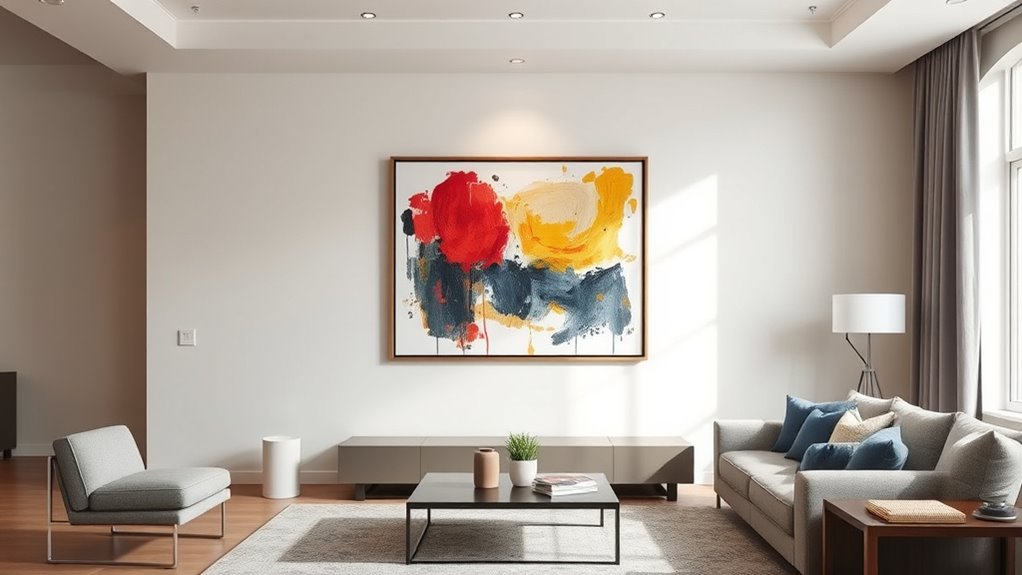
When it comes to hanging art, understanding standard heights can make a big difference in achieving a balanced and visually appealing display. In art galleries, artwork is typically hung so that the center is around 57 to 60 inches from the floor, aligning with the average eye level. This standard applies to many framing styles, ensuring consistency and harmony across multiple pieces. Whether you’re working with a large statement piece or a collection of smaller artworks, adhering to these heights helps create a cohesive look. Keep in mind that the type of frame and the overall wall space can influence the ideal hanging height. Additionally, considering Interior Design Basics such as mood boards and narratives can help in planning a gallery wall that feels intentional and cohesive. By following these guidelines, you’ll set a foundation for art that looks intentional and professional.
EZlifego Double Sided Tape Heavy Duty(Extra Large 16.5FT), Nano Adhesive Mounting Tape Wall Decor,Sticky Picture Hanging Adhesive Strips Poster Tape
【Multifunctional EZlifego Nano-tech Tape】- By using the most advanced nano-technology, made of the latest acrylic gel material, our…
As an affiliate, we earn on qualifying purchases.
As an affiliate, we earn on qualifying purchases.
Considering the Eye Level for Optimal Viewing
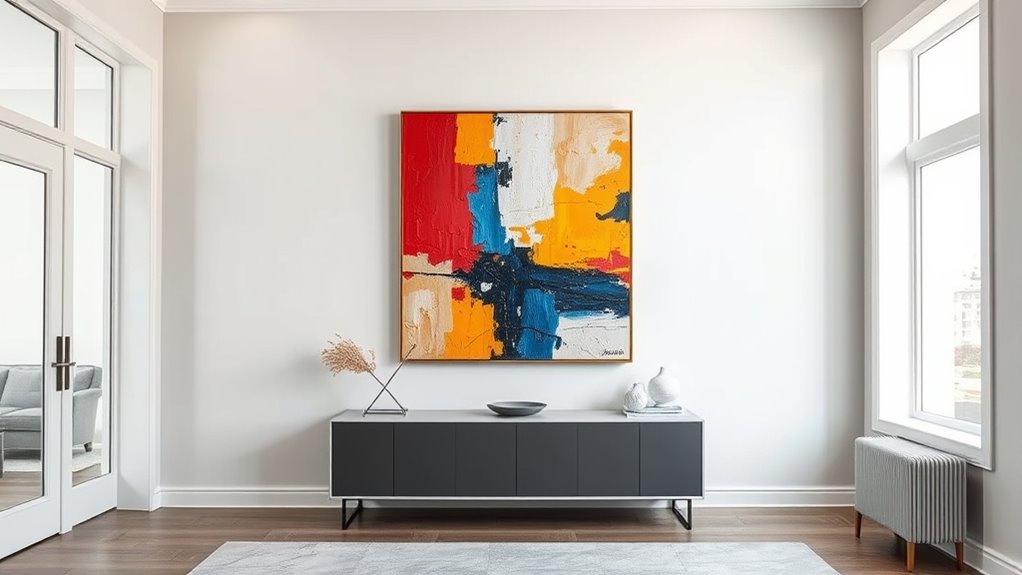
You should position your art so it’s at eye level for comfortable viewing. Keep in mind that the ideal height can vary depending on the room’s function, like a cozy living room or a busy kitchen. Adjusting for these factors guarantees your artwork looks its best and invites the right attention. Additionally, considering the effects of lighting can further enhance the visual impact of your art.
Ideal Eye Height
To guarantee your artwork is displayed at the most appealing height, it’s essential to take into account the average eye level. In a gallery display or art museum, the standard is typically around 57 to 60 inches from the floor to the center of the artwork. This height ensures viewers can comfortably appreciate the piece without tilting their heads or straining their necks. When hanging art in your home, aim for a similar eye level, especially in spaces where people stand and observe. Keep in mind that the ideal eye height may vary depending on ceiling height and furniture placement, but sticking close to this standard creates a balanced and engaging viewing experience. Consistency across your display will help your art look professional and inviting, and considering visual harmony can enhance the overall aesthetic.
Room Function Impact
The function of a room considerably influences the ideal height for hanging artwork, as different spaces are designed for specific activities and interactions. In a living room or gallery, you want your art at eye level for comfortable viewing, aligning with your decor style. In contrast, a dining area might feature artwork hung slightly higher to complement the table and accommodate lighting considerations like overhead fixtures. For bedrooms, lower placements can create intimacy, while in workspaces, artwork should be positioned to avoid glare from task lighting. Consider how natural and artificial light affect the artwork’s visibility—adjusting height can reduce shadows or reflections. Ultimately, understanding the room’s purpose helps you choose the right height, ensuring your art enhances the space naturally and comfortably. Additionally, self watering plant pots can be incorporated into interior decor to add greenery at various heights, enhancing the overall aesthetic and ambiance.

Go Hang It! Pro, All-in-One Picture Hanging Kit – Picture Leveling and Hanging Tool – Hang Sawtooth/Wire Hangers – Wall Hanging Kit and Level Tool – Hardware Case with 85-Piece Hanging Essentials
Easy Picture Hanging with Precision : Hang your saw-tooth or wire picture frames effortlessly without the hassle of…
As an affiliate, we earn on qualifying purchases.
As an affiliate, we earn on qualifying purchases.
Measuring and Marking Your Wall Before Hanging
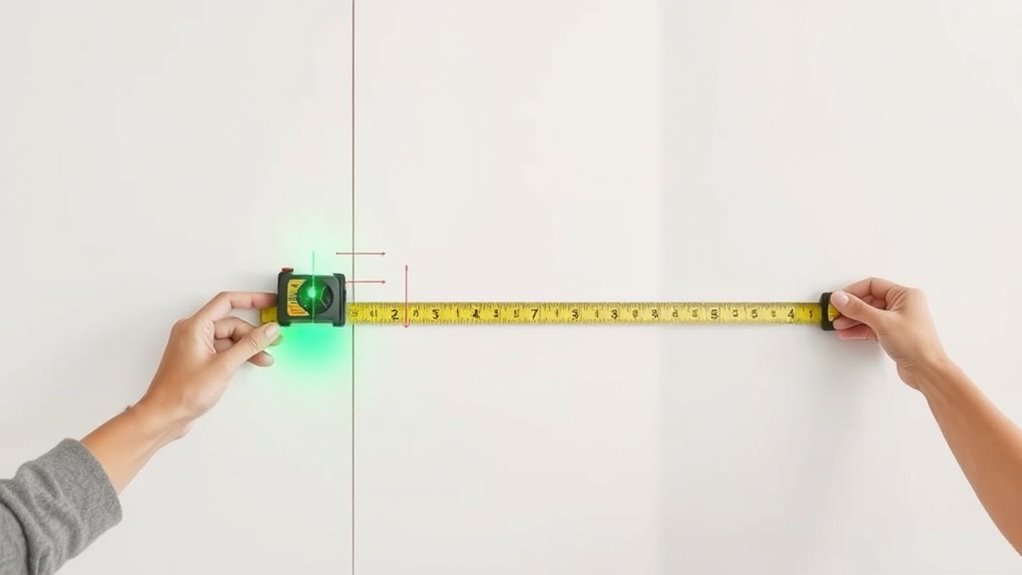
Before hanging your artwork, it is essential to measure and mark the wall accurately. Start by identifying the ideal eye level, usually around 57–60 inches from the floor. Use a pencil and a tape measure to mark the midpoint of your piece, considering gallery symmetry for balanced display. If your wall has a bold wall color contrast, plan your marks to make certain the art stands out without overwhelming the space. Use a level to draw light, straight guidelines where the top or center of your artwork will hang. This prevents crooked placements and guarantees your piece aligns perfectly with other decor. Proper measurement and marking set the foundation for a polished look, making sure your art complements your room’s design and visual harmony. Additionally, understanding color contrast can help you choose the best placement to enhance your artwork’s visibility and impact.

KURUI 303Pcs Picture Hanging Kit, Picture Hangers Assorted Kit with Heavy Duty Picture Hanging Hooks/Hardware Nails/Sawtooth/Wire/D Rings/Level, Metal Picture Wall Hooks for Frame Canvas Mounting
EFFORTLESS ORGANIZATION: Our 303pcs Heavy Duty Picture Hanging Kit boasts an exceptional design with categorized compartments, saving you…
As an affiliate, we earn on qualifying purchases.
As an affiliate, we earn on qualifying purchases.
Accounting for Frame Size and Artwork Dimensions
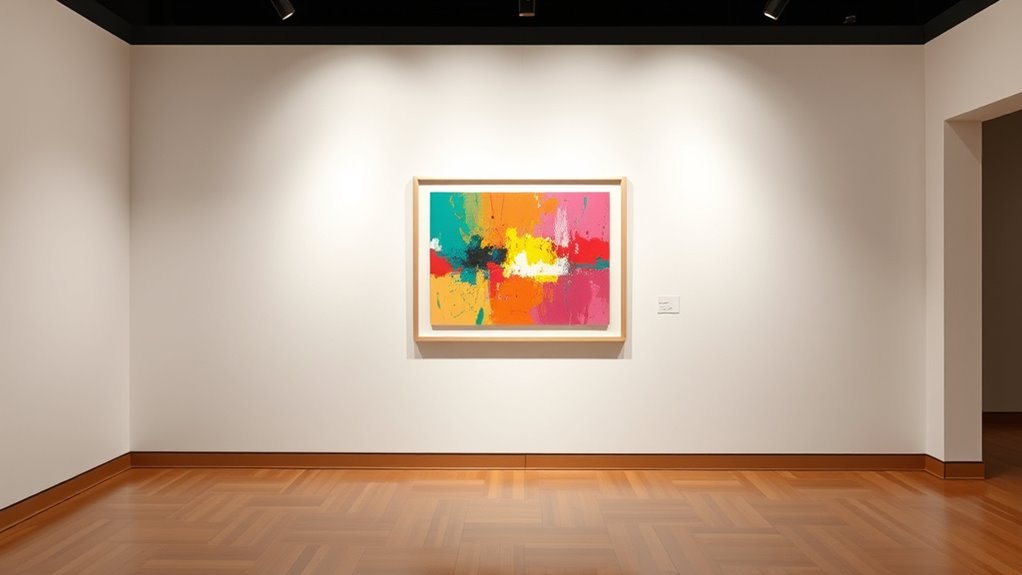
After marking where the artwork will hang, it’s important to account for the size of the frame and the artwork’s dimensions. Proper art framing enhances your piece and influences its placement, so consider the frame’s width and style when planning. When measuring, include the entire piece, not just the image inside the frame, to guarantee accurate positioning. Artwork sizing affects the visual balance on your wall, so visualize how the finished piece will look relative to surrounding elements. If the frame is thick or ornate, it might add height or width, shifting your initial mark. Always double-check measurements, accounting for the full dimensions, to avoid surprises once you hang the artwork. This careful attention ensures your art is displayed at the optimal height and creates a harmonious display. Additionally, understanding how cheating can impact relationships might help you appreciate the importance of trust and honesty in shared spaces.
Adjusting for Different Wall Heights and Room Sizes
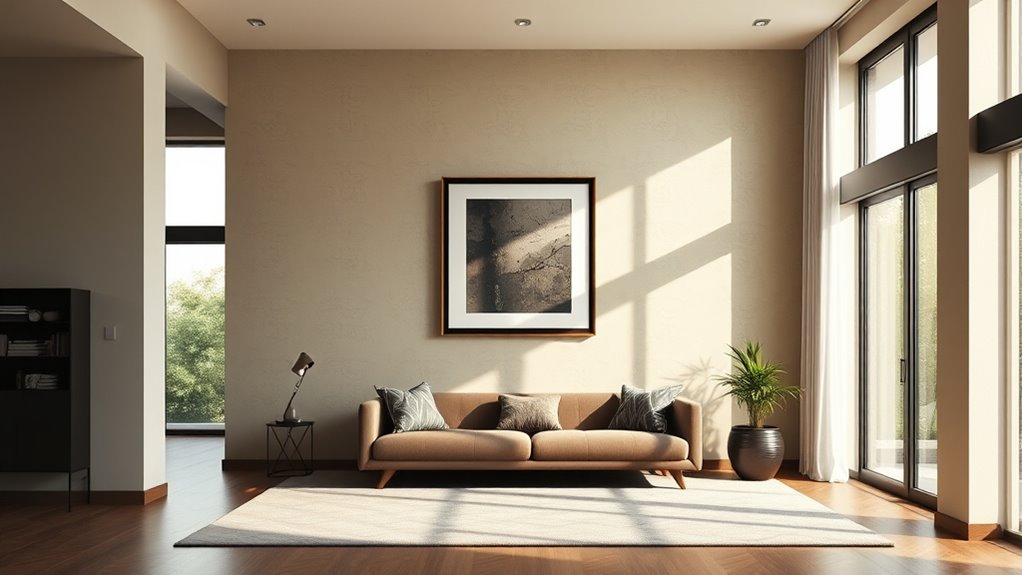
When hanging artwork, you need to contemplate the height of your walls and the size of the room to achieve a balanced and cohesive display. Higher walls can accommodate larger or more dramatic pieces, while lower ceilings benefit from smaller, more subtle artwork. Adjusting for room size involves considering how much wall space your art will occupy and how it interacts with other decor. Think about color coordination to create harmony, ensuring your artwork complements the room’s palette. Lighting considerations matter too—proper lighting enhances artwork and influences how it’s perceived at different heights. Here are some tips:
- Use larger pieces in spacious rooms for balance
- Opt for smaller art in cozy spaces
- Consider wall color to make art stand out
- Position art to maximize natural light
- Adjust height based on ceiling height and furniture placement
- Be mindful of visual balance to create a harmonious display that feels neither too crowded nor too sparse.
Using Tools and Accessories to Achieve Perfect Placement
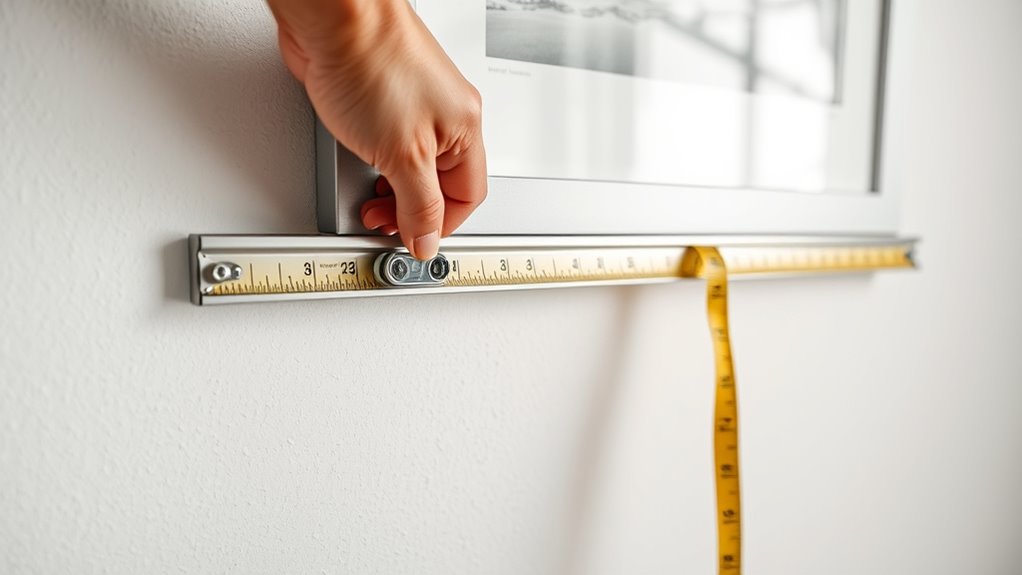
Using the right tools and accessories can make all the difference in achieving perfectly placed artwork. A level ensures your art hangs straight, preventing crooked displays. Measuring tapes and painter’s tape help mark precise spots, especially when considering wall color considerations that might influence how the art pops or blends. If you’re using gallery lighting, positioning hooks and art wires correctly guarantees best light exposure without shadows or glare. Wall anchors provide extra support for heavier pieces, reducing the risk of damage. Keep a pencil handy for quick markings, and consider using a hanging kit designed for art displays. These tools streamline the process, guaranteeing your artwork is hung at the ideal height while complementing your room’s color scheme and lighting setup.
Creating a Cohesive Gallery Wall Layout

Creating a cohesive gallery wall starts with planning how your artwork will relate to each other and the space. Focus on art placement that promotes visual balance, ensuring pieces complement rather than compete. Think about spacing, scale, and consistency in frame styles to unify the display. To keep everything harmonious, consider these tips:
- Arrange art loosely on the floor before hanging
- Mix different sizes but maintain a balanced layout
- Keep a consistent margin between pieces
- Use a central piece or focal point
- Group related artwork for thematic unity
- Pay attention to visual flow to guide the eye smoothly across the display
Tips for Hanging Art at Different Heights in Various Rooms
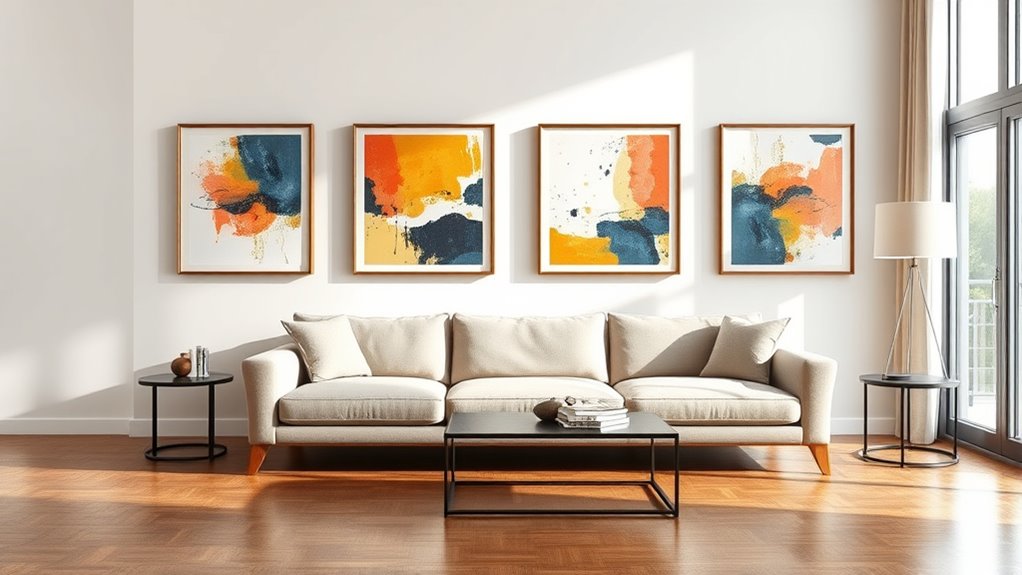
Hanging art at different heights can instantly transform the look of a room and enhance its overall harmony. Consider art style considerations when choosing heights; larger, bold pieces may hang lower, while delicate artwork benefits from higher placement. Wall color contrast plays a pivotal role—lighter walls make art stand out more when hung higher, while darker walls may require lower positioning for visual balance. Additionally, understanding room size and space efficiency can help determine optimal placement to avoid clutter.
Frequently Asked Questions
How Do I Hang Art on Uneven or Textured Walls?
To hang art on uneven or textured walls, start by using leveling tools to mark the ideal spot. Then, choose the right wall anchors to secure hooks firmly, especially if the wall isn’t smooth. Use a pencil to mark anchor points, ensuring the artwork stays level. With these tools, you’ll confidently hang art that looks perfect, even on tricky surfaces, every time.
What Are the Best Lighting Options for Displaying Artwork?
Did you know gallery lighting often enhances artwork’s vibrancy? For the best display, use adjustable spotlight options to highlight details and create a focal point. Recessed or track lighting provides even illumination, while LED options offer energy efficiency and minimal heat. Position lights at a 30-degree angle to avoid glare, and consider dimmers for mood control. Proper gallery lighting transforms your space and makes your art truly stand out.
How Can I Ensure Symmetry in Multi-Piece Displays?
To guarantee symmetry in your multi-piece displays, focus on art alignment and spacing consistency. Use a level and measuring tape to align the tops or centers of your artworks precisely. Keep equal spacing between each piece, and consider creating a visual grid or template beforehand. Regularly step back to check the overall balance, adjusting as needed, to create a harmonious, symmetrical display that looks polished and intentional.
What Safety Precautions Should I Take When Hanging Heavy Art?
When hanging heavy art, you should wear safety equipment like gloves and eye protection to prevent injuries. Make certain proper weight distribution by using sturdy hooks and anchors designed for the artwork’s weight. Check the wall’s strength beforehand, and use a level to keep the piece straight. Always have a second person help support the art during hanging to avoid accidents and guarantee safety throughout the process.
How Do I Maintain Art Height Consistency in Rented Spaces?
Imagine your art as a rebellious teenager, refusing to stay at the same height. To keep consistency in rented spaces, measure your wall carefully and mark the spot before hanging. Use a level or painter’s tape to guarantee uniformity across all walls. Remember, art placement isn’t just about aesthetics but about respecting your landlord’s rules, so double-check measurements and maintain that perfect, uniform look every time.
Conclusion
Remember, hanging art at the right height makes all the difference in showcasing your space. Measure twice, hang once, and don’t be afraid to tweak until everything feels just right. Keep in mind the saying, “A place for everything, and everything in its place.” With patience and a little effort, you’ll create a stunning wall display that enhances your room and reflects your style perfectly. Happy hanging!