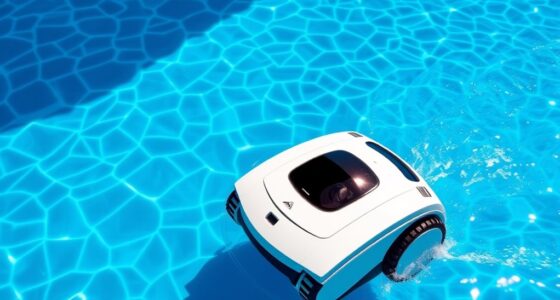
To install a pressure-side pool cleaner, gather your hoses, skimmer or booster pump, and follow the specific instructions for your model. Attach the hose to the cleaner, secure all fittings, and connect the hose to the pressure port or skimmer. Submerge the hoses and cleaner to remove air, then turn on your pump to check water flow. Make certain everything is secure and functioning correctly for peak cleaning—if you keep going, you’ll discover detailed steps to ensure smooth installation.

Get furniture and decor delivered free with Prime
- Fast, free delivery on millions of items
- Prime Video, Amazon Music and more included
- Member-only deals all year
Key Takeaways
- Gather and secure all necessary tools, hoses, and fittings before beginning installation.
- Connect the cleaner to the hose and position it in the deep end of the pool.
- Attach the hose securely to the pressure port or skimmer, ensuring no leaks.
- Submerge hoses and cleaner to remove air pockets for proper operation.
- Turn on the pool pump, check water flow, and adjust connections for smooth cleaning performance.

Installing a pressure-side pool cleaner might seem intimidating at first, but with the right steps, you can set it up quickly and effectively. Proper installation is vital for efficient pool maintenance, helping you keep your pool clean and clear with minimal hassle. Before you begin, gather all necessary tools—usually a backwash hose, hoses, and sometimes a skimmer or dedicated booster pump. Reading your cleaner’s specific instructions is essential, as different models may have unique requirements. Once you’re ready, start by attaching the hose to the cleaner and securing any clamps or connectors. Make sure the hose is long enough to reach the pool’s bottom comfortably, as a hose that’s too short can hinder the cleaner’s performance.
Properly install your pressure-side pool cleaner for efficient and hassle-free pool maintenance.
Next, position the cleaner in the pool, preferably in the deep end, and connect the hose to the dedicated pressure port or skimmer, depending on your system. If your system uses a dedicated booster pump, verify it’s functioning correctly before attaching the cleaner. Turn on the pool pump to check water flow. You want a steady, strong flow to power the cleaner effectively. If the flow seems weak, troubleshoot tips include removing any blockages in hoses or fittings, cleaning or replacing the skimmer basket, or adjusting the flow rate if your system has those controls. Proper water flow guarantees the best cleaning performance and prevents the cleaner from getting stuck.
Once connected, submerge the cleaner and hoses to eliminate air pockets, which can cause the cleaner to malfunction or become inefficient. Keep an eye out for leaks or air bubbles, as these can indicate loose fittings or improper connections. If you experience issues with the cleaner not moving or cleaning as expected, it’s often due to low water pressure or improper hose placement. Troubleshooting tips include repositioning the hoses, ensuring they’re not tangled, and checking for any obstructions in the pool’s skimmer or pump basket. Additionally, understanding the importance of contrast ratio can help you optimize your pool’s lighting to improve visibility during cleaning sessions.
Finally, test the cleaner by turning on the pool and observing its movement. It should glide smoothly across the pool floor and walls, scrubbing away debris. If it stalls or skips, double-check hose connections, water flow, and the cleaner’s positioning. Regular pool maintenance, like cleaning filters and checking for wear, helps prevent common issues. Remember, troubleshooting tips are your best friends when problems arise. If you encounter persistent problems, consult the user manual or contact customer support. With patience and attention to detail, installing your pressure-side pool cleaner becomes a straightforward process, making your pool maintenance routine more efficient and less time-consuming.
As an affiliate, we earn on qualifying purchases.
Frequently Asked Questions
Can I Use a Pressure-Side Cleaner With a Saltwater Pool?
You can use a pressure-side cleaner with your saltwater pool, but check saltwater compatibility first. Most models are suitable, but some may corrode faster. A booster pump isn’t always necessary, but it can improve cleaning efficiency, especially for larger pools. Confirm your cleaner is rated for saltwater, and consider installing a booster pump if needed, to maintain peak performance and prevent damage from the salt.
How Often Should I Clean or Replace the Cleaner’s Filter Bags?
Did you know that neglecting filter maintenance can reduce your cleaner’s efficiency by up to 50%? You should clean your pressure-side pool cleaner’s filter bags weekly or whenever they’re visibly full. Follow the replacement schedule recommended by your cleaner’s manufacturer—usually every 1-3 seasons. Regular cleaning and timely replacement guarantee peak performance, prolonging the life of your cleaner and keeping your pool sparkling clean.
Will a Pressure-Side Cleaner Remove Algae Effectively?
A pressure-side cleaner can be effective for algae removal if used properly. It agitates the pool floor and walls, helping to dislodge algae, but you may need to brush stubborn spots first. Regular cleaner maintenance, including cleaning or replacing filter bags, guarantees ideal performance. For best results, combine the cleaner’s action with proper chemical treatment and filtration, making algae removal more efficient and keeping your pool cleaner longer.
Is It Necessary to Have a Booster Pump for Operation?
You might need a booster pump if your pool’s filtration system isn’t strong enough to power the pressure-side cleaner effectively. A booster pump increases water pressure, ensuring the cleaner operates properly and covers the pool surface thoroughly. Without it, the cleaner may struggle to move or clean efficiently. Check your pool’s filtration capacity first; if it’s insufficient, adding a booster pump can make a significant difference in cleaning performance.
Can I Run a Pressure-Side Cleaner While Swimming?
Imagine your pool as a busy highway, with traffic flowing smoothly when all lanes are clear. Running a pressure-side cleaner while swimming is like adding a new lane—possible, but it may cause some congestion. For ideal pool maintenance, confirm your equipment is compatible. If your cleaner and pump work well together, you can swim freely, but if not, you might need to adjust or upgrade your equipment to keep everything running smoothly.
Conclusion
Now that you’ve installed your pressure-side pool cleaner, enjoy the sparkling clean water it’ll help maintain. Remember, a job worth doing is worth doing right, so take your time to make certain everything’s set up properly. With regular maintenance, your cleaner will serve you well and save you time. Like a well-tended garden, a clean pool flourishes when you put in the effort—so keep at it, and your pool will reward you with crystal-clear waters all season long.
Columbus Day / Indigenous Peoples' Day Picks
long weekend sales
As an affiliate, we earn on qualifying purchases.