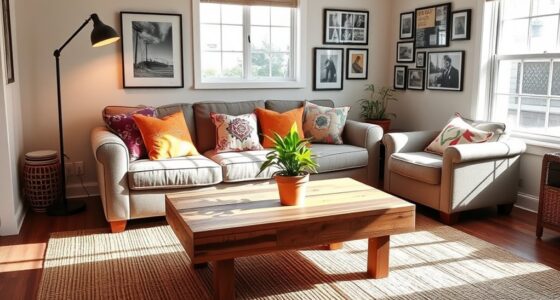
To always achieve balance with your accent chair, follow the rule of pairing it with elements that contrast in texture, color, or scale. Choose a chair that complements your main furniture in size and style, but adds a pop of color or interesting material. Keep the overall visual weight in mind, balancing bold pieces with softer or subtler ones. When you apply the right pairing principles, your space will feel cohesive and inviting—continue exploring these tips to perfect your style.
Key Takeaways
- Pair accent chairs with a dominant color or material present elsewhere in the room for visual harmony.
- Balance bold accent chairs with subdued surrounding elements to prevent overwhelming the space.
- Use contrasting textures—like plush fabric with sleek finishes—to create visual interest without imbalance.
- Ensure the size and proportion of the accent chair complement surrounding furniture for cohesive flow.
- Maintain consistency in style or theme to create a unified and balanced aesthetic.
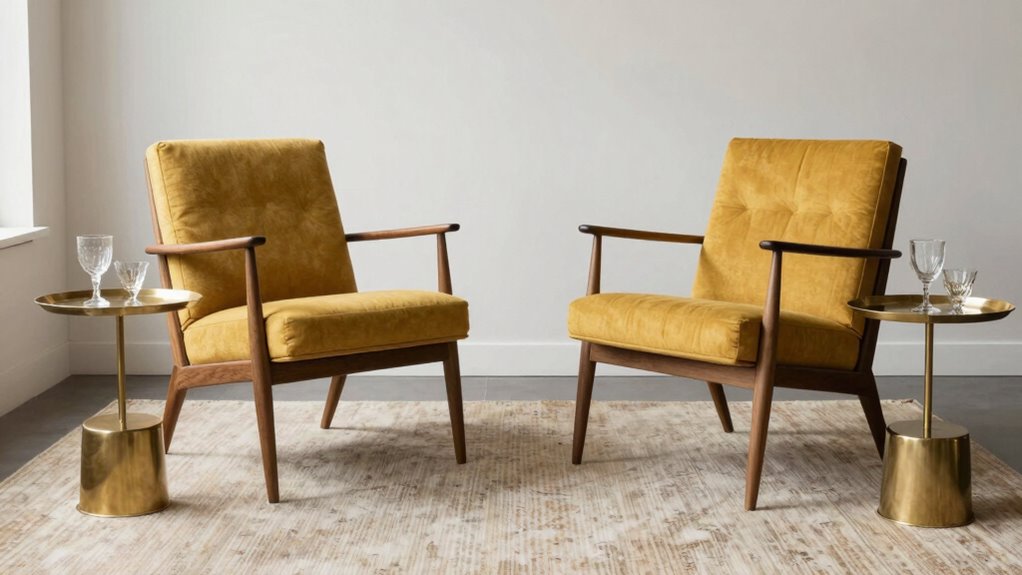
Are you unsure how to choose the perfect accent chair to complement your space? Finding the right piece isn’t just about style; it’s about creating harmony that feels intentional and inviting. The key to achieving this balance lies in understanding the accent chair pairing rule: mastering color coordination and material contrast. When you pay attention to these elements, your room will look cohesive yet dynamic, avoiding the chaos of mismatched pieces or the dullness of blending everything together.
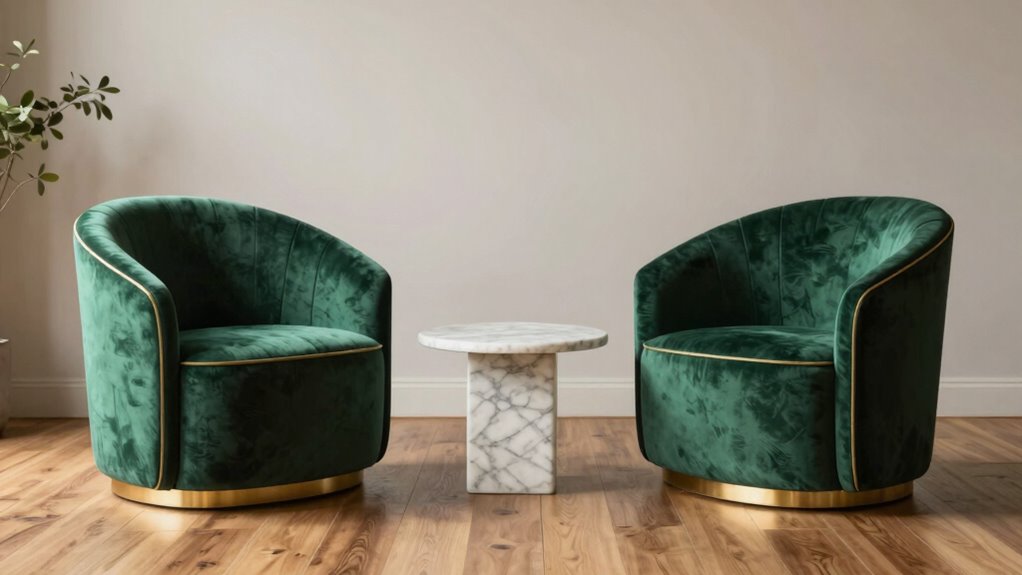
Start with color coordination. Your goal is to select an accent chair that enhances your existing palette without overwhelming it. If your room has neutral tones, like beige or soft gray, an accent chair in a bold color—think deep blue, emerald green, or warm terracotta—can add personality without clashing. Conversely, if your space is already vibrant, choose a chair in a more subdued hue or a complementary shade to create visual harmony. It’s not just about matching colors exactly but about finding shades that work well together. You want the chair to stand out as an accent without disrupting the overall flow of the room.
Choose bold accents for neutral rooms, and subdued tones for vibrant spaces to create harmony without overwhelming.
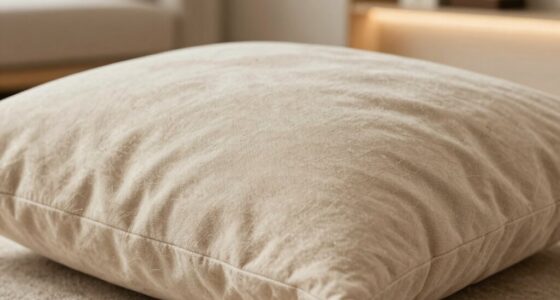
Material contrast is equally important. An effective pairing balances textures and finishes, giving your space depth and interest. For example, if your sofa is upholstered in plush fabric, consider an accent chair made from sleek leather or woven rattan. This contrast draws the eye and adds layers to your décor, making the space feel more curated and thoughtful. If your existing furniture features smooth surfaces, introducing a chair with textured fabric or intricate detailing can elevate the look. The goal isn’t to match materials perfectly but to create a deliberate contrast that feels natural and enhances the room’s aesthetic. Additionally, material contrast can influence the room’s overall ambiance, whether it’s cozy, sleek, or eclectic. Understanding the role of biodiversity in design can also inspire eco-friendly and sustainable choices for your home décor.
When combining color and material, think about the overall vibe you want to achieve. A modern, minimalist room benefits from clean lines, muted tones, and subtle contrasts, while a bohemian space might thrive on vibrant colors and eclectic textures. Remember, the rule of thumb is to balance bold with subdued, shiny with matte, soft with rough. This interplay keeps your space lively without feeling chaotic. Incorporating design principles such as balance and harmony can further enhance your decorating success. Furthermore, considering visual weight when selecting pieces ensures that no single element overwhelms the space, maintaining a pleasing proportion throughout.
Ultimately, the accent chair pairing rule is about creating a visual conversation within your room. By thoughtfully coordinating colors and contrasting materials, you establish a balanced look that feels both intentional and inviting. When you master this approach, your space will radiate harmony and style—an effortless combination that makes your home truly shine.
accent chair with contrasting texture
As an affiliate, we earn on qualifying purchases.
As an affiliate, we earn on qualifying purchases.
Frequently Asked Questions
Can the Pairing Rule Apply to Non-Traditional Furniture Styles?
Yes, the pairing rule can apply to non-traditional furniture styles, especially when blending modern aesthetics with vintage pairings. You can mix different styles by balancing proportions and colors, creating harmony despite contrasting designs. Use this rule to guarantee your eclectic space looks cohesive. Whether you’re combining sleek modern chairs with antique pieces or mixing vintage with contemporary elements, maintaining visual balance makes your unique style feel intentional and well-curated.
How Do Color Contrasts Affect Chair Pairing Balance?
Color contrasts can make or break your chair pairing’s balance. You want to play it smart with color harmony, ensuring that contrasting hues don’t tip the visual weight too far to one side. Bright or bold colors draw attention, so pair them with more subdued tones to keep the overall look balanced. When you strike the right contrast, your space feels harmonious and inviting, proving that opposites truly attract in design.
Is This Rule Suitable for Small or Large Rooms?
This rule works well for both small and large rooms, as it focuses on balance rather than size. For small spaces, it helps optimize space and prevents clutter, while in larger rooms, it creates a cohesive look. Consider lighting effects to enhance the pairing; good lighting highlights contrast and balance, making the arrangement feel intentional and harmonious regardless of the room size.
Can This Rule Be Used for Outdoor Furniture Arrangements?
Yes, you can definitely use this rule for outdoor furniture arrangements. While indoor spaces focus on style, outdoor setups demand outdoor durability and weather resistance. By pairing accent chairs with weatherproof fabrics and rust-resistant frames, you maintain balance and style even in harsh conditions. This rule adapts well, helping you create harmonious, functional outdoor spaces that withstand the elements while still looking aesthetically pleasing.
How Do Accessories Influence the Pairing Balance?
Accessories play a vital role in balancing your furniture pairing by guiding attention and enhancing visual harmony. Proper accessory placement guarantees the space feels cohesive, preventing any element from overpowering the others. You should distribute accessories evenly around your accent chairs, using similar styles or colors to create a unified look. Thoughtful placement of accessories helps maintain balance, making your outdoor or indoor arrangement feel inviting, curated, and visually appealing.
colorful accent chair for living room
As an affiliate, we earn on qualifying purchases.
As an affiliate, we earn on qualifying purchases.
Conclusion
Now that you know the accent chair pairing rule, imagine your living room as a carefully choreographed dance—each piece in harmony, yet distinct. When you follow the rule, your space feels balanced, like a perfectly composed symphony. Without it, your room might resemble a jumble of mismatched notes. So, embrace the rule, and let your decor sing in unison—creating a visual melody that’s both mesmerizing and inviting.
leather accent chair
As an affiliate, we earn on qualifying purchases.
As an affiliate, we earn on qualifying purchases.
plush fabric accent chair
As an affiliate, we earn on qualifying purchases.
As an affiliate, we earn on qualifying purchases.