
To keep your comforter soft and fresh, wash it with a gentle detergent on a cold, delicate cycle, ensuring enough space in the washer. After washing, gently spin out excess water, then either air dry on a flat surface or tumble dry on low, adding dryer balls for fluffiness. Store it in breathable, clean bags in a cool, dry place, and make sure to air it out periodically. Explore more tips to maintain your comforter’s quality.
Key Takeaways
- Wash comforters on a gentle cycle with cold water using a mild detergent to preserve fabric quality.
- Dry comforters flat or hang outdoors, or tumble dry on low heat with dryer balls to maintain fluffiness.
- Pre-treat stains and avoid overcrowding the washer to ensure thorough cleaning and prevent damage.
- Store clean, dry comforters in breathable, dark containers and air out periodically to prevent odors and mold.
- Follow proper washing and drying techniques regularly to extend the comforter’s lifespan and keep it looking fresh.

OTraki Large Mesh Laundry Bags 28×35 inch Zipper Mesh Lingerie Bags for Washing Delicates Net Laundry Mesh Bag Machine Washable for Dorm Hotel Camp Don't Drying, Melting 140-176℉, White
【Anti-Rust Metal Self-Locking Zipper】The laundry washing bag zippered design and zippered cover provide extra protection , So the…
As an affiliate, we earn on qualifying purchases.
As an affiliate, we earn on qualifying purchases.
Proper Washing Techniques for Your Comforter
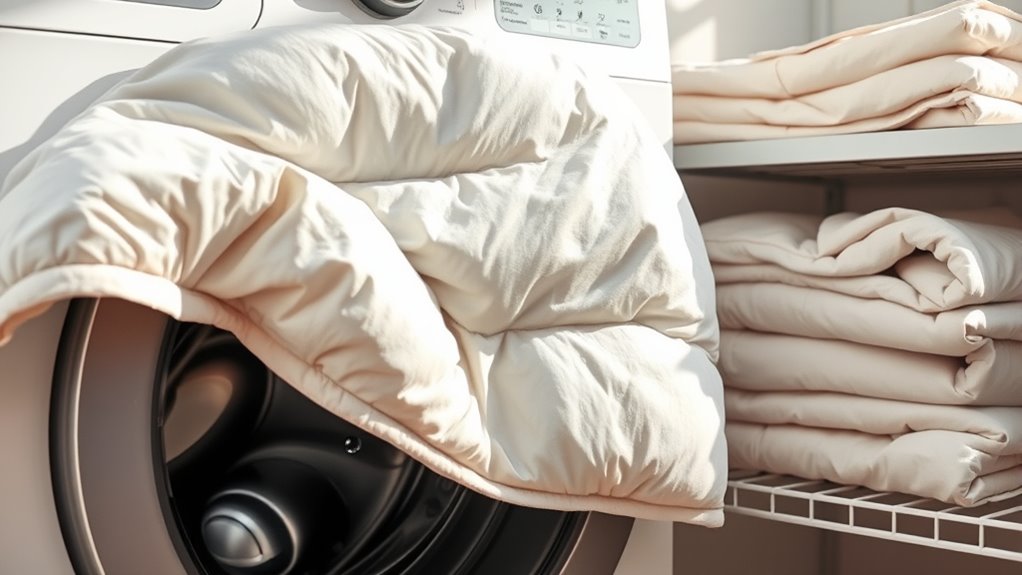
Washing your comforter properly is essential to keep it clean, fresh, and in good condition. Start by pre-treating stains with a gentle stain treatment to prevent discoloration. If your comforter has dye transfer or color bleeding, opt for dye removal techniques before washing to prevent further fading or staining other laundry. Use a mild detergent suitable for delicate fabrics, and wash on a gentle cycle with cold water to preserve the fabric’s integrity. Avoid overcrowding the washer, ensuring the comforter has enough space to move freely. Rinse thoroughly to remove all detergent residues, which can cause buildup or irritate sensitive skin. Additionally, choosing eco-friendly sustainable decor options can help extend the life of your comforter and reduce environmental impact. Following these steps guarantees a thorough clean while maintaining the comforter’s quality and appearance over time.

Wool Laundry Ball Pack of 6 Tumble Dryer Wool Ball Fabric Softener Alternative Reusable Wool Laundry Balls Nature’S Fabric Softeners for Fluffs Clothes
Sufficient quantity: You will receive 6pcs wool laundry ball , which are sufficient to meet your daily use…
As an affiliate, we earn on qualifying purchases.
As an affiliate, we earn on qualifying purchases.
Effective Drying Methods to Keep Your Comforter Fluffy
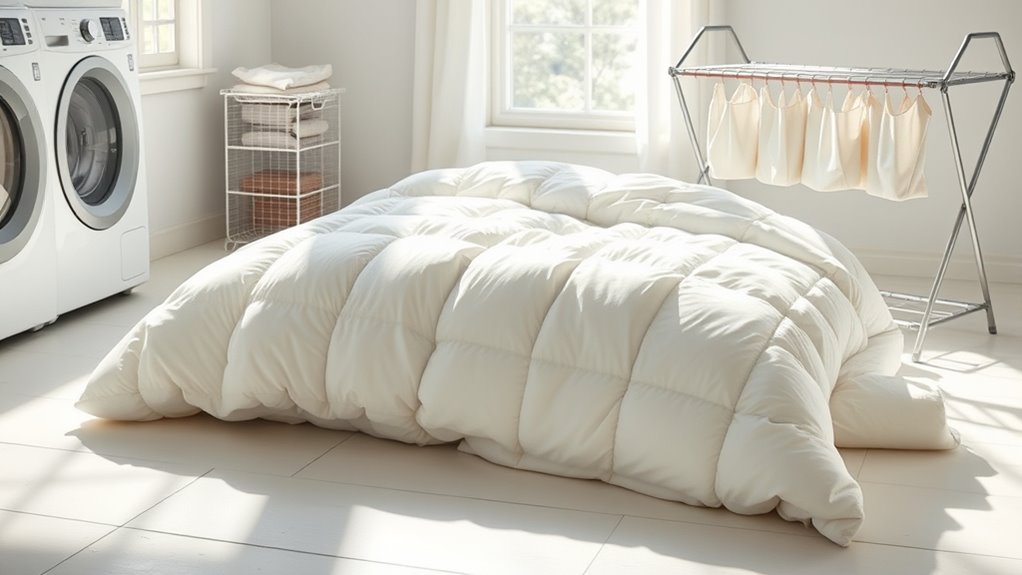
After thoroughly washing your comforter, proper drying methods are key to maintaining its fluffiness and shape. First, avoid wringing out excess water, which can damage the filling. Instead, gently press out moisture or use a spin cycle. For drying, lay your comforter flat on a drying rack or hang it outdoors if weather permits. Using a drying rack allows air to circulate evenly, helping it dry thoroughly without clumping. To keep it soft and fluffy, add a small amount of fabric softener during the rinse cycle or use dryer balls if you opt for machine drying. If you choose to tumble dry, set the dryer to low heat, and periodically check to prevent over-drying. Proper drying preserves the comforter’s loft and keeps it fresh and inviting. Additionally, understanding the importance of contrast ratio in maintaining the visual quality of your home textiles can help in choosing the right lighting and environment to keep your bedding looking vibrant and inviting.

Soft Canvas Storage Bags with Zipper. Thick Breathable, 2pc King/Queen Comforter Organizer. Four Carrying Handles and Window. Large 25x19x9in Bag for Sheets Blankets Bedding Pillows, Clothes
FOUR HANDLES FOR CARRYING AND LIFTING: A VeraMia woven zipper storage bag comes with 4 handy handles! Use…
As an affiliate, we earn on qualifying purchases.
As an affiliate, we earn on qualifying purchases.
Best Practices for Storing Your Comforter to Maintain Freshness
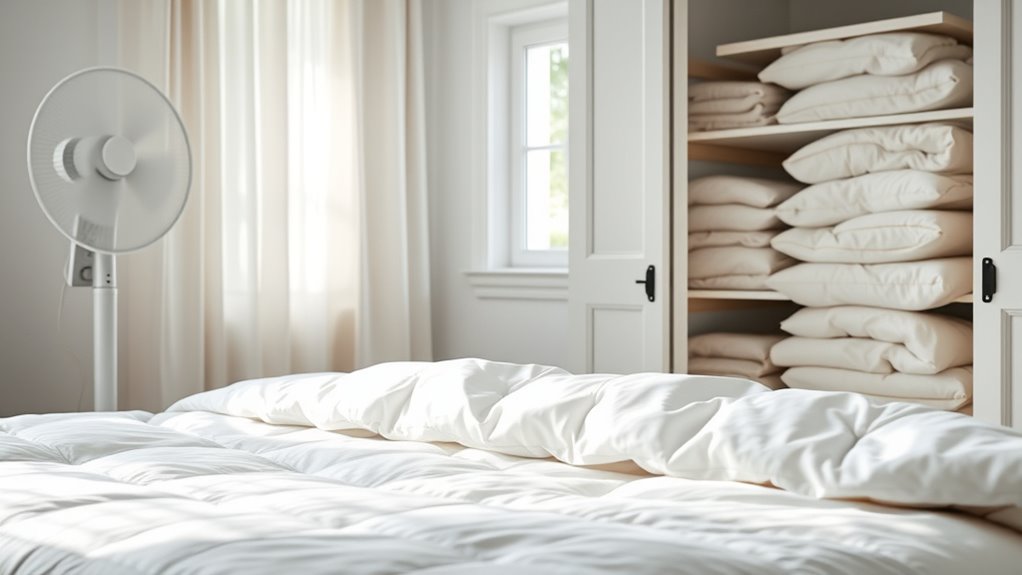
To keep your comforter fresh and inviting, proper storage is essential. Good storage practices prevent stains, odors, and fabric damage, ensuring longevity. First, consider seasonal rotation; store your comforter in a breathable bag during off-season months to prevent dust buildup and maintain freshness. Second, ensure it’s clean and completely dry before storing to prevent mold and stains. Third, choose a cool, dry, and dark space to avoid exposure to sunlight and humidity, which can cause fading and mildew. Use storage containers that allow airflow, like cotton bags or baskets, to promote stain prevention and freshness. Regularly airing out your comforter during storage also helps eliminate any trapped moisture, keeping it soft, clean, and ready for use whenever you need it. Additionally, selecting sustainable storage options can reduce environmental impact and maintain your comforter’s quality over time.

JAUREE 79 Inches Clothes Drying Rack, Drying Rack Clothing Folding Indoor Outdoor, Heavy Duty Stainless Steel Laundry Rack, Foldable Portable Large Clothes Rack Garment Rack with 20 Windproof Hooks
Why You Need JAUREE Laundry Drying Rack: For crease-free clothes, the JAUREE clothing drying rack is a great…
As an affiliate, we earn on qualifying purchases.
As an affiliate, we earn on qualifying purchases.
Frequently Asked Questions
How Often Should I Wash My Comforter?
You should wash your comforter every 1-3 months to reduce dust mites and maintain allergy relief. Regular cleaning helps remove allergens, dirt, and sweat that accumulate over time. If you have allergies or asthma, consider washing it more frequently. Use hot water when possible, and guarantee thorough drying to prevent mold. Proper care keeps your comforter fresh, comfortable, and allergy-friendly, so you sleep better and breathe easier.
Can I Wash My Comforter at Home or Should I Use a Professional Service?
Did you know that around 80% of people prefer DIY cleaning for comforters? You can wash your comforter at home if it’s machine washable and follow proper care instructions. However, for delicate or heavily soiled comforters, professional laundering guarantees thorough cleaning without damage. Decide based on fabric type and condition—if unsure, opting for a professional service offers peace of mind and better results.
What Are Signs My Comforter Needs Replacing Instead of Washing?
If your comforter shows persistent stains, strong odors, or significant fabric thinning, it’s time to replace it rather than wash it. Comforter lifespan varies, but generally, if it’s over 5-10 years old, replacing comforters is a good idea for hygiene and comfort. Don’t ignore signs of wear and tear, as continuing to wash damaged comforters can reduce their lifespan and affect your sleep quality.
How Do I Remove Stubborn Stains From My Comforter?
Oh, the irony of stubborn stains—your comforter’s kryptonite. To conquer them, try stain removal techniques like pre-treating with a fabric-specific cleaner, gently blotting instead of rubbing, and using cold water for delicate fabrics. For tough spots, apply a mixture of baking soda and water or a stain remover suited for your comforter’s fabric. Patience and proper techniques will restore your comforter’s pristine charm.
Are There Specific Storage Tips to Prevent Pests and Mold?
To prevent pests and mold, store your comforter in a breathable, airtight container in a cool, dry place. Use pest prevention methods like cedar blocks or lavender sachets to deter insects. Guarantee your comforter is completely dry before storing to boost mold resistance. Regularly air out your comforter and check storage conditions to maintain freshness. These steps help protect your comforter from pests and mold, keeping it fresh and clean.
Conclusion
By caring for your comforter properly, you’re practicing a timeless art, much like the careful stewardship of a treasured heirloom. Washing, drying, and storing it with intention guarantees it remains as inviting as a scene from a classic novel. Treat it with the same respect as you would a piece of history, and your comforter will continue to offer cozy warmth and fresh comfort for years to come. After all, true care transforms everyday essentials into cherished possessions.