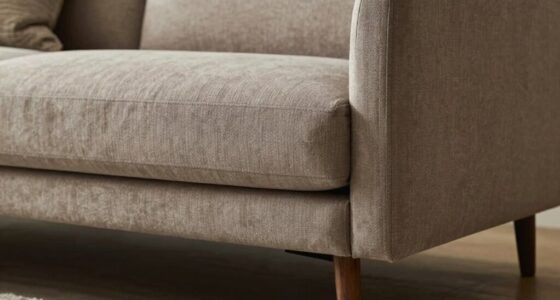
Before buying furniture, understand that cushion density affects both comfort and durability. Higher-density foam, rated between 1.8 to 2.5 pounds per cubic foot, offers better support and lasts longer, while lower-density foam feels softer but wears out faster. The composition and layered construction can also impact how well your cushions retain shape and support over time. To make smarter choices and guarantee lasting comfort, explore the facts about cushion density in more detail.
Key Takeaways
- Higher cushion density (1.8-2.5 lbs/cu ft) offers better support and longer-lasting comfort.
- Lower-density foam feels softer initially but tends to degrade faster and requires earlier replacement.
- Cushion density directly impacts furniture durability, shape retention, and overall quality.
- Balancing density ensures comfortable, supportive cushions without feeling overly stiff or too soft.
- Understanding foam composition and density helps make smarter, long-term furniture investment decisions.
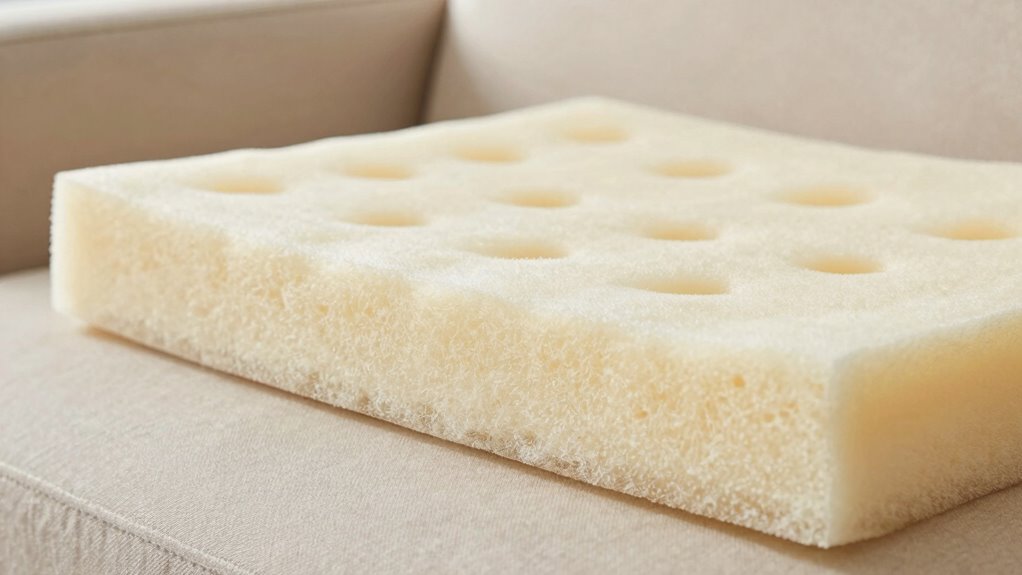
When you’re shopping for new furniture, understanding cushion density is essential because it directly affects comfort and durability. Cushion density refers to how tightly the foam inside the cushion is packed, which influences how the cushion feels and how long it lasts. One of the key factors behind cushion density is foam composition. Different types of foam, such as polyurethane, memory foam, or high-resilience foam, have varying densities that impact the overall quality of your furniture. Generally, higher-density foam contains more material per cubic foot, making it firmer and more supportive. Lower-density foams may feel softer initially but tend to break down faster, leading to sagging and loss of shape over time.
Knowing about foam composition helps you understand what you’re buying and what to expect from your furniture. For example, high-density foam offers better support and tends to bounce back after use, maintaining its shape longer. This means that your cushions will stay comfortable for years, providing consistent comfort longevity. On the other hand, low-density foam might feel plush at first but could quickly become lumpy or flat, requiring replacement sooner. When evaluating cushions, it’s helpful to look for the foam’s density rating, usually measured in pounds per cubic foot. Cushions with a density of 1.8 to 2.5 pounds per cubic foot are typically considered high-quality and durable, making them a smart investment for long-term comfort.
Comfort longevity is another critical aspect influenced by cushion density. The right density ensures that your furniture remains supportive without feeling too hard or too soft. If the foam is too soft or low in density, it’ll compress easily, leading to discomfort and the need for frequent replacements. Conversely, overly dense cushions might feel stiff and less inviting. Striking a balance is essential; a cushion with an appropriate density provides a comfortable experience while maintaining its shape and support over many years. It’s also worth considering how the foam is constructed—layered cushions with different densities can offer a combination of softness and support, extending comfort longevity. Additionally, understanding the foam’s durability can help you select furniture that maintains its quality over time. Recognizing the importance of foam density can ultimately help you make smarter, long-lasting furniture choices.
Furthermore, choosing the right cushion density can contribute significantly to overall sitting experience, ensuring that your furniture remains inviting and supportive through years of use. A well-informed choice about foam density can also influence the cost-effectiveness of your furniture, as higher-quality cushions tend to last longer and require fewer replacements over time.

FOAMYFOAM High Density 4 inch Thick, 24 inch Wide, 24 inch Long Upholstery Foam, Cushion Replacement
HIGH QUALITY – Foamy Foam High Density Upholstery Foam is the best option for Seat Cushion Replacement, Couch…
As an affiliate, we earn on qualifying purchases.
As an affiliate, we earn on qualifying purchases.
Frequently Asked Questions
How Does Cushion Density Affect Furniture Durability?
Cushion density directly impacts furniture durability by influencing cushion firmness and foam quality. Higher-density cushions are firmer and more resilient, meaning they maintain their shape longer and resist sagging over time. Lower-density cushions tend to wear out quicker, losing firmness and comfort. So, when shopping, choose cushions with better foam quality and higher density for lasting durability, ensuring your furniture stays comfortable and supportive for years.
What Is the Ideal Cushion Density for Everyday Use?
For everyday use, a cushion density of around 1.8 to 2.2 pounds per cubic foot strikes the perfect balance. Think of foam composition like a reliable friend—firm enough to support you without feeling stiff. Too firm, and it’s like sitting on a rock; too soft, and you sink in too much. This ideal range offers a comfortable, durable seat that withstands daily wear and tear.
Does Higher Cushion Density Mean Better Comfort?
Higher cushion density often means better comfort because it provides more support and durability, which enhances your sitting experience. However, it also impacts aesthetic appeal, giving furniture a firmer look and feel. Keep in mind, increased cushion density can lead to higher cost implications, so balance your comfort needs with your budget. Ultimately, choose a cushion density that offers both comfort and visual appeal without overspending.
How Is Cushion Density Measured in Furniture?
Cushion density in furniture is measured by the weight of foam or filling per cubic foot, typically in pounds. When evaluating it, consider fabric types, as dense fabrics can impact comfort, and frame construction, which affects overall support. A higher cushion density usually means a firmer feel, but comfort depends on your preferences and how the cushion interacts with the fabric and frame for durability and comfort.
Can Cushion Density Change Over Time?
Yes, cushion density can change over time, and you might not notice until it’s too late. As cushions age, they often lose firmness due to wear and tear, prompting the need for cushion replacement. Manufacturing standards vary, affecting how long cushions hold their original density. If you want your furniture to stay comfortable, keep an eye on these changes, because once the density drops, restoring that plush feel becomes a challenge.

Foamagic Couch Cushion Support for Sagging Seat – 2 Pack 20x20x2 Inch Sofa Cushion Board Saver & Replacement Insert for Saggy Couch or Chair, Quick No-Tool Install with 40D High Density Foam
Bring Back Sofa Support – Foamagic couch cushion support helps fix sagging seat cushions by restoring firmness. A…
As an affiliate, we earn on qualifying purchases.
As an affiliate, we earn on qualifying purchases.
Conclusion
Now that you understand cushion density, you’re armed with a treasure map to find the perfect seat. Think of it as a garden where each plant’s growth depends on the right soil—your furniture’s comfort depends on the right cushion density. Don’t settle for a one-size-fits-all; instead, choose wisely to create a cozy haven that feels just right. With this knowledge, you’ll sit back and enjoy your furniture’s embrace like a warm hug from an old friend.

Yellow Foam Board, High-Density Upholstery Foam for Couch Cushion Replacement, Foam Padding for Cushions, Furniture, and DIY Projects, Durable Foam Pad for Chairs, Sofas, and Egg Crate Foam Inserts
💛 High-Quality Yellow Foam Board 💛 Crafted with durable high-density foam, this yellow foam board is ideal for…
As an affiliate, we earn on qualifying purchases.
As an affiliate, we earn on qualifying purchases.

CYLEN Ifoam Gel Infused Memory Foam Layer Wheelchair Cushion – Seat Cushion for Wheelchair-Office Chair, Kitchen Chair, Car Seats-Pressure Sore and Tailbone Pain Relief-High Dense Polyfoam Base(Black)
Excellent Comfort-Strategically designed coccyx pressure relief technology on your tailbone so even those with sacrum sensitivities can sit…
As an affiliate, we earn on qualifying purchases.
As an affiliate, we earn on qualifying purchases.