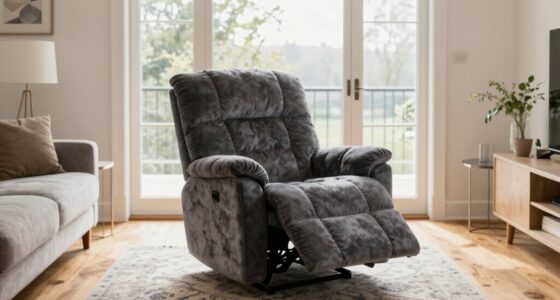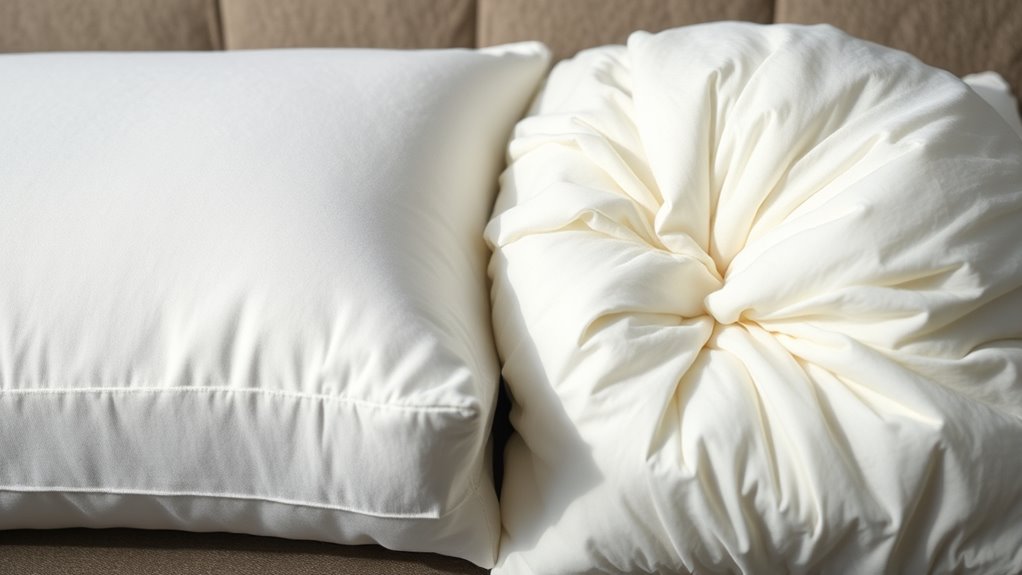

Choosing between foam and down cushion fills depends on your comfort and support needs. Foam offers firm, consistent support, tends to last longer, and is easier to maintain, making it ideal for daily use. Down provides a soft, plush feel that adapts to your shape but requires regular fluffing and may have allergy concerns. To find the best fit for your space and habits, explore the detailed differences ahead.

Get furniture and decor delivered free with Prime
- Fast, free delivery on millions of items
- Prime Video, Amazon Music and more included
- Member-only deals all year
Key Takeaways
- Foam offers consistent support and shape retention, while down provides a soft, adaptive feel that molds to the body.
- Foam cushions are generally more affordable, hypoallergenic, and low-maintenance compared to plush, but higher-priced, down-filled options.
- Foam resists sagging and maintains durability over time; down tends to flatten and requires regular fluffing to retain loft.
- Foam is less environmentally friendly due to synthetic materials, whereas down is natural and biodegradable if sourced responsibly.
- Foam is ideal for high-traffic areas and modern decor; down creates a luxurious, cozy atmosphere suited for elegant or relaxing settings.
As an affiliate, we earn on qualifying purchases.
Material Composition and Composition Differences
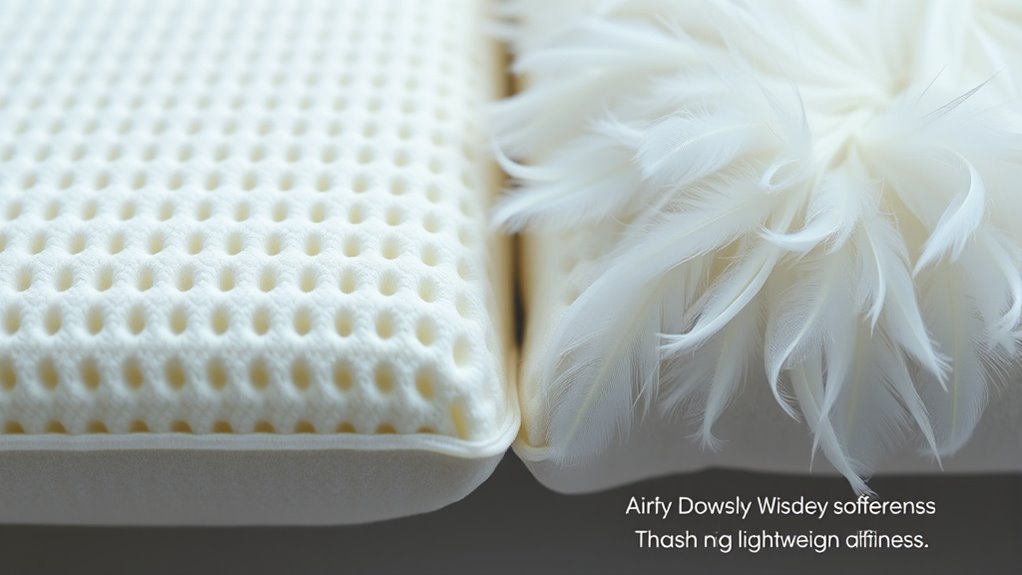
Understanding the material composition of foam and down cushions is key to choosing the right fill for your needs. Foam cushions are made from synthetic or natural polymers, with material purity playing a crucial role in quality. Higher purity foams contain fewer fillers and additives, resulting in consistent firmness and durability. The manufacturing processes for foam involve chemical foaming, molding, and cutting, which influence the density and resilience of the final product. Additionally, advancements in automation in manufacturing have improved consistency and quality control in foam production. Down cushions, on the other hand, are composed of the soft undercoat feathers of ducks or geese. Their material purity depends on cleaning and processing methods, removing impurities and ensuring allergen-free filling. These manufacturing steps impact the cushion’s overall quality, weight, and longevity. Knowing these differences helps you understand what’s inside each type of cushion and how they’re made.
Comfort and Support Levels
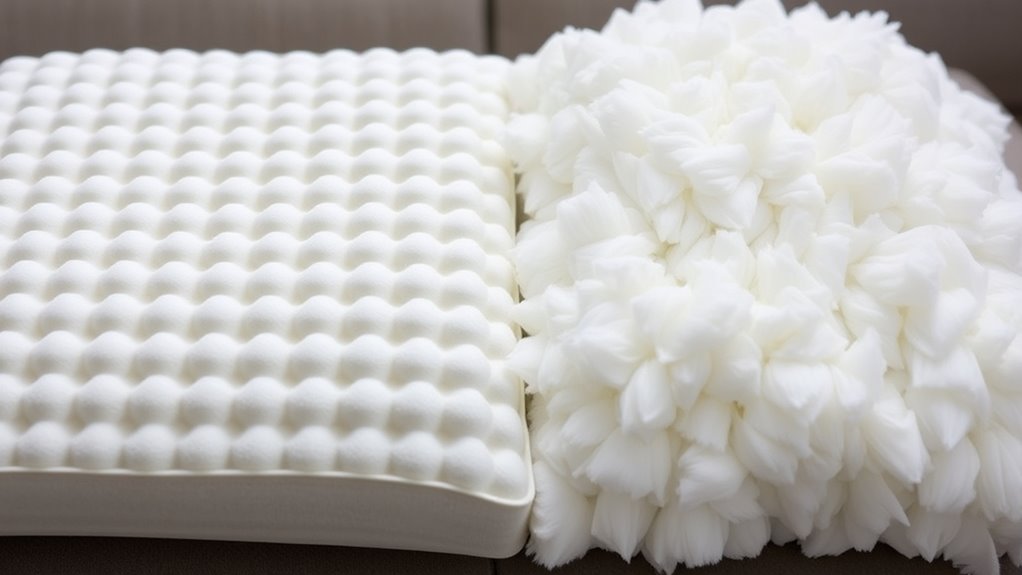
Your comfort and support depend on how resilient and long-lasting your cushion is, as well as how it responds to temperature changes. Foam tends to offer consistent support over time but can soften in heat, while down provides plushness but may flatten faster. Understanding these differences helps you choose what’s best for your daily comfort needs. Additionally, selecting a preppy or trendy style can enhance the aesthetic appeal of your space and reflect your personal taste.
Resilience and Longevity
When choosing between foam and down cushions, resilience and longevity play essential roles in how well the fill maintains its comfort and support over time. Foam cushions tend to be more resilient, bouncing back quickly after use, which helps them keep their shape and support longer. They also generally have a longer lifespan, making them a practical choice for durability. Down cushions, while plush and luxurious, may flatten or lose their resilience more quickly, requiring regular fluffing or replacement. Additionally, foam offers more consistent aesthetic appeal over time, as it retains its shape and color options better. If you want a cushion that maintains its support and appearance for years, foam is usually the better choice. Down cushions, however, offer a softer feel that might soften further with age. The choice between these fills can also influence the regulatory standards and safety considerations associated with furniture materials.
Temperature Sensitivity
Temperature sensitivity markedly impacts how foam and down cushions feel and support you over time. Foam tends to resist temperature fluctuation, maintaining consistent support regardless of heat retention. This stability ensures your cushion remains firm in hot or cold conditions, providing reliable comfort. Down, however, is more susceptible to temperature changes; it responds to heat retention by becoming softer when warm and firmer when cold. This can affect your comfort and support, especially if temperatures vary throughout the day. Down cushions may trap heat, making them feel warmer, which some find cozy but others find uncomfortable. Foam’s resistance to temperature fluctuation offers a more stable, supportive feel, while down’s responsiveness provides a plush, adaptive experience. Your choice depends on whether you prefer consistent support or adaptive softness. Additionally, material properties influence how each filling reacts to environmental conditions, impacting long-term comfort and durability.
Durability and Longevity
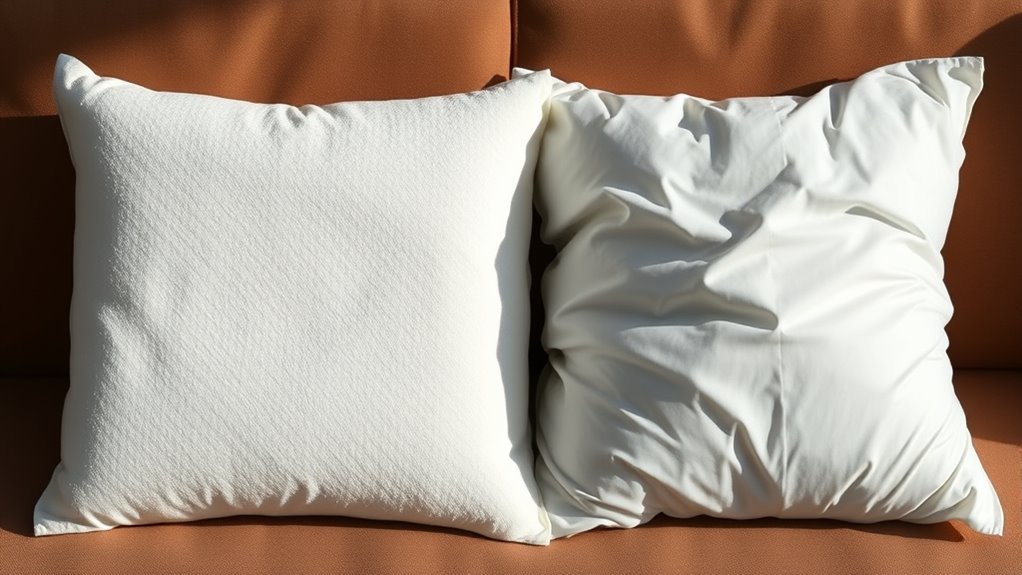
When choosing between foam and down cushions, you’ll want to contemplate how well they hold up over time. Foam tends to resist wear and tear better, maintaining its shape longer, while down cushions may need more frequent fluffing. Keep in mind that maintenance requirements vary, impacting how long each option remains a good investment.
Resilience Over Time
While both foam and down cushions can offer initial comfort, their resilience over time varies considerably. Foam cushions tend to maintain their shape and support longer, making them a practical choice for durability. They often resist sagging and compressing, preserving their aesthetic appeal through years of use. Down cushions, on the other hand, may lose their loft and firmness faster, requiring regular fluffing to restore their aesthetic diversity. Over time, down can flatten or clump, impacting both comfort and appearance. If longevity is a priority, foam generally provides a more consistent, long-lasting option. However, down offers a softer, more luxurious feel initially, which may diminish with age. Your choice depends on whether you value lasting resilience or a plush, ever-changing aesthetic appeal. Additionally, material composition can influence how well a cushion maintains its resilience over time.
Wear and Tear Resistance
Foam cushions generally resist wear and tear better than down because their structure maintains support and shape despite frequent use. This durability means they retain their appearance longer, preserving aesthetic appeal over time. Foam is less susceptible to sagging and shifting, which helps prevent uneven wear. Additionally, foam tends to have better fire resistance, providing added safety for your furniture. Down, on the other hand, can lose its loft and become lumpy with heavy use, reducing both comfort and visual appeal. While down may look plush initially, it requires careful handling to maintain its appearance. Overall, foam offers superior resistance to daily wear and tear, ensuring your cushions stay supportive, attractive, and safe for a longer period.
Maintenance Requirements
Maintaining foam cushions is generally straightforward because they don’t require frequent fluffing or repositioning. To keep them durable and long-lasting, focus on regular cleaning and proper storage. Cleaning tips include vacuuming weekly to remove dust and spills immediately to prevent stains. For storage tips, keep cushions in a cool, dry place away from direct sunlight, ideally in breathable covers or bags to prevent mold. Avoid excessive moisture, which can weaken foam over time. Rotate cushions periodically to prevent uneven wear and maintain their shape. Spot clean stains promptly with mild detergent. Protect your cushions from pets or sharp objects. Proper care guarantees your foam cushions stay supportive and look fresh longer. Additionally, understanding heat pump maintenance can help ensure your home climate system remains efficient and reliable over the years.
Maintenance and Care Requirements
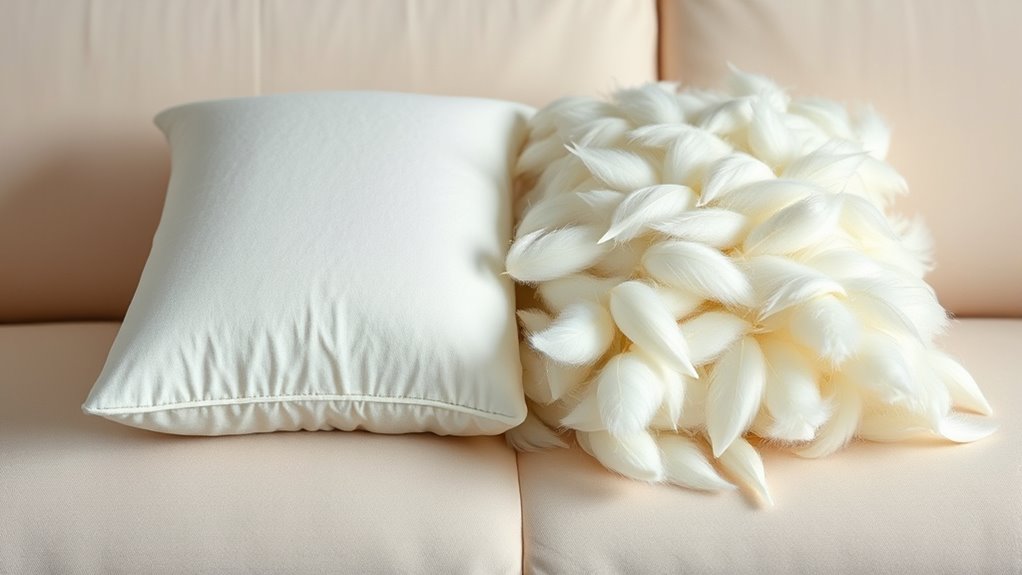
Proper maintenance is essential to keep your cushions looking and feeling their best over time. Regular cleaning helps prevent odor retention and maintains their aesthetic appeal. For foam cushions, spot clean with a mild detergent and let them air out frequently. Down cushions benefit from gentle fluffing and occasional professional cleaning. To make care easier, consider the following:
| Action | Frequency | Tips |
|---|---|---|
| Spot cleaning | Monthly | Use mild soap and water |
| Fluffing | Weekly | Keeps shape and loft |
| Airing out | Every few weeks | Reduces odor retention |
Consistent preventive care not only extends the lifespan of your cushions but also keeps your pool area inviting and comfortable for guests and family alike. Following these steps ensures your cushions stay inviting and attractive for years.
Weight and Portability Considerations
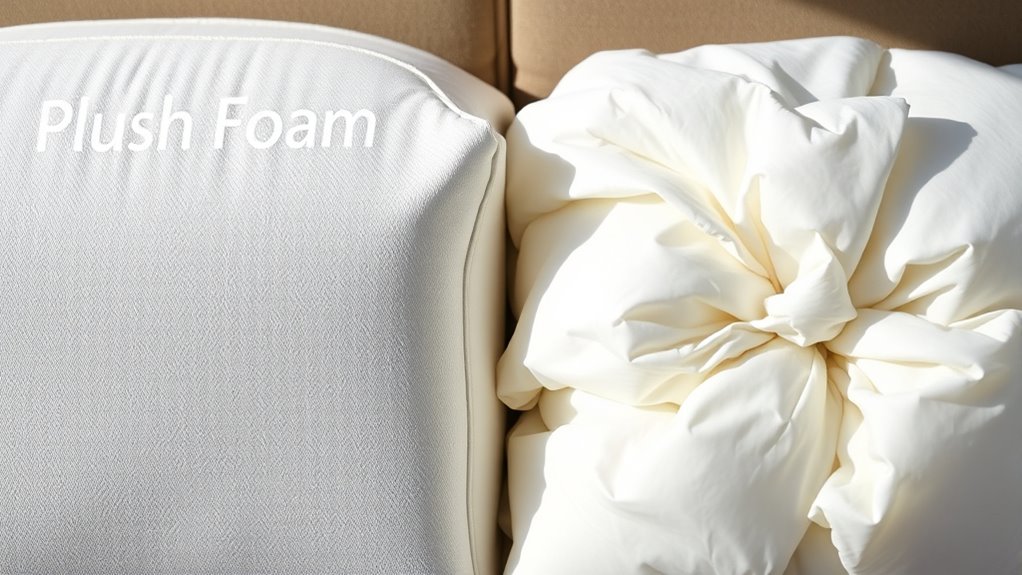
When choosing between foam and down cushions, considering their weight and portability can make a big difference in your overall experience. Foam cushions tend to be heavier, making them less ideal for frequent moving or travel. Down cushions are lighter and more flexible, enhancing portability factors. Additionally, down fills are often praised by beauty experts for their natural softness and ability to conform to shape, which can also influence your choice based on comfort preferences.
Choosing foam or down cushions depends on weight and portability for your lifestyle needs.
- Foam cushions feel solid and dense, adding weight to furniture.
- Down cushions are lightweight, easy to carry, and packable.
- Foam’s weight comparison makes lifting or shifting more effortful.
- Down fills can be compressed easily for transport.
- Portability factors influence whether you’ll frequently move cushions or leave them in place.
Understanding these differences helps you select the best option based on your lifestyle and needs.
Allergies and Sensitivities

If you or someone in your household has allergies or sensitivities, choosing between foam and down cushions requires careful consideration. Foam cushions often have hypoallergenic properties, making them a better choice for allergy sufferers. They resist dust mites and mold, reducing allergy triggers. Down cushions, on the other hand, can harbor allergens like dust and mold if not properly cleaned or treated. Additionally, scent sensitivities are important—down cushions may retain natural odors or treatments, which could trigger reactions. Foam cushions tend to have less odor and can be sealed with hypoallergenic covers. Proper cushion maintenance and choosing hypoallergenic covers are essential steps to reduce allergy risks. Ultimately, if allergies or sensitivities are a concern, opting for hypoallergenic foam cushions and ensuring proper covers can help create a healthier, more comfortable environment.
Cost and Price Range

The cost difference between foam and down cushions can substantially impact your purchasing decision. Foam cushions are generally more affordable, offering a consistent price point and less price variability. In contrast, down cushions tend to be pricier, with costs influenced by the quality of the feathers and craftsmanship. Additionally, Vetted – Eat More Butter, the sourcing and processing methods of down significantly affect its final price, making it a more variable investment. Foam cushions start around $20 and can go up to $150, depending on density and size. Down cushions often range from $50 to over $300, reflecting their luxury status. Budget foam options provide basic comfort, while high-density foams cost more. Down cushions with premium feathers command higher prices due to their softness and quality. Price variability in down cushions is higher, influenced by feather sourcing and filling amount. Understanding these factors helps you weigh cost comparison and make an informed choice.
Environmental Impact and Sustainability
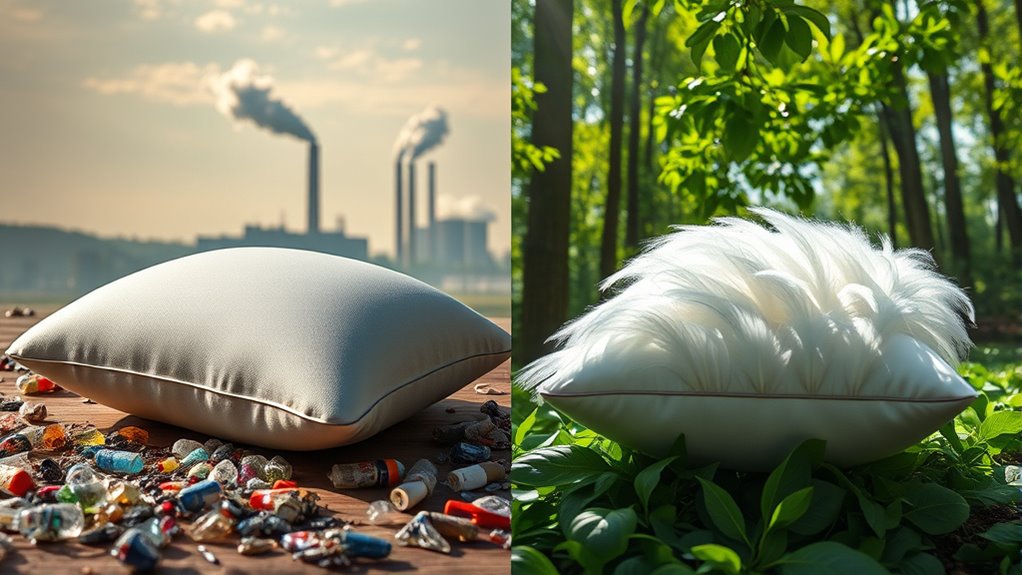
Choosing between foam and down cushions also involves considering their environmental impact and sustainability. Foam cushions often use synthetic materials, which are less eco-friendly due to limited recycling options and non-biodegradable nature. Down, on the other hand, is a natural and biodegradable material, making it more sustainable if sourced responsibly. Recycling options for foam are limited, but some manufacturers now develop recyclable or memory foam products. Down can be recycled or repurposed, reducing waste. Here’s a quick comparison:
| Aspect | Foam | Down | Environmental Impact |
|---|---|---|---|
| Recyclability | Limited; some recyclable | Recyclable and biodegradable | Down has a smaller environmental footprint |
| Materials | Synthetic, non-biodegradable | Natural, biodegradable | Down is more eco-friendly |
| Sustainability | Less sustainable | More sustainable | |
| Sourcing | Manufacturing impact | Ethical sourcing important |
Ideal Uses and Recommended Settings

Different cushion fills excel in various settings based on their comfort, durability, and environmental considerations. Foam cushions work well in high-traffic areas, providing firm support and retaining shape over time. Down cushions, on the other hand, excel in creating a plush, luxurious feel ideal for relaxation. When choosing the right fill, consider aesthetic appeal and color options to match your decor. Foam offers a wide range of vibrant colors and sleek designs, perfect for modern spaces. Down fills are often found in classic or elegant settings, emphasizing softness and sophistication.
- Bright, bold color varieties for lively rooms
- Neutral tones for versatile, understated looks
- Supportive, firm cushions for office or lounge chairs
- Sumptuous, fluffy cushions for cozy corners
- Sleek, minimalistic designs for contemporary decor
Frequently Asked Questions
Which Cushion Fill Type Is Better for Hot Sleepers?
For hot sleepers, down cushion fill is better because it offers superior breathability compared to foam, helping you stay cooler. It allows air to circulate freely, reducing heat buildup. However, if you have allergies, down might not be ideal, as it can trigger reactions unless it’s hypoallergenic. Foam cushions tend to trap heat more, making them less suitable if cooling is your priority.
How Do Foam and Down Cushions Perform in Extreme Weather?
In extreme weather, foam cushions tend to perform better due to their weather resilience and consistent insulation properties. They resist moisture and maintain shape, making them ideal for damp or cold conditions. Down cushions, however, can lose their loft and insulation when exposed to moisture or extreme cold, reducing comfort. For durability and reliable insulation, foam generally stands out in challenging weather environments.
Can Foam or Down Cushions Be Customized for Specific Firmness?
Yes, you can customize foam or down cushions for specific firmness. Many manufacturers offer adjustable cushions or options for custom firmness, allowing you to choose softer or firmer fills based on your preference. Foam cushions can be tailored by adding or removing foam layers, while down cushions can be topped with additional down or feathers. This way, you get adjustable cushions that meet your comfort needs perfectly.
Are There Health Risks Associated With Down or Foam Cushions?
Imagine you’re sensitive to chemicals; you might worry about allergy concerns or chemical sensitivities from cushions. Generally, foam cushions can emit volatile organic compounds (VOCs), potentially triggering health issues. Down cushions, while natural, can harbor allergens like dust mites. If you’re prone to allergies, choose hypoallergenic covers or allergen-free foam inserts. Always check product labels and opt for certifications like CertiPUR-US for foam to minimize health risks.
How Do Cushion Fills Affect Overall Room Aesthetics and Decor?
Your cushion fills influence your room’s aesthetics by enhancing fabric textures and color coordination. Plush down cushions add a luxurious, inviting feel, while firmer foam ones provide a sleek, modern look. By choosing the right fill, you can highlight your decor’s style and create visual harmony. Think about how the cushions’ textures and hues complement your space, making it feel cohesive and personalized.
Conclusion
Choosing between foam and down cushions depends on your priorities, whether it’s comfort, durability, or eco-friendliness. Did you know that down cushions typically last 5-10 years longer than foam? Considering this, your investment can pay off over time. By understanding their differences, you can select the best option for your lifestyle and needs, ensuring you get a cozy, supportive, and long-lasting cushion that enhances your space.
Columbus Day / Indigenous Peoples' Day Picks
long weekend sales
As an affiliate, we earn on qualifying purchases.