Upholstery fabric types include natural fibers like cotton, linen, and wool, known for softness, durability, and eco-friendliness. Synthetic options such as polyester and acrylic offer easy care and resistance to fading, while microfiber and faux leather provide sleek, low-maintenance choices. Velvet, chenille, and tapestry fabrics add luxury and texture, and eco-friendly materials focus on sustainability. Exploring these options helps you find the right mix of style, durability, and care—there’s plenty more to discover.

Get furniture and decor delivered free with Prime
- Fast, free delivery on millions of items
- Prime Video, Amazon Music and more included
- Member-only deals all year
Key Takeaways
- Upholstery fabrics include natural fibers like cotton, linen, wool, and blends, offering breathability, softness, and eco-friendly options.
- Synthetic fabrics such as polyester and acrylic are durable, easy to maintain, and resistant to fading and stains.
- Leather and faux leather provide sleek, modern styles with easy upkeep and long-lasting appeal.
- Textured fabrics like velvet, plush, chenille, and tapestry add luxury, tactile richness, and visual interest to furniture.
- Proper care, sun protection, and eco-friendly choices enhance fabric longevity and sustainability.
As an affiliate, we earn on qualifying purchases.
Natural Fibers: Cotton and Linen
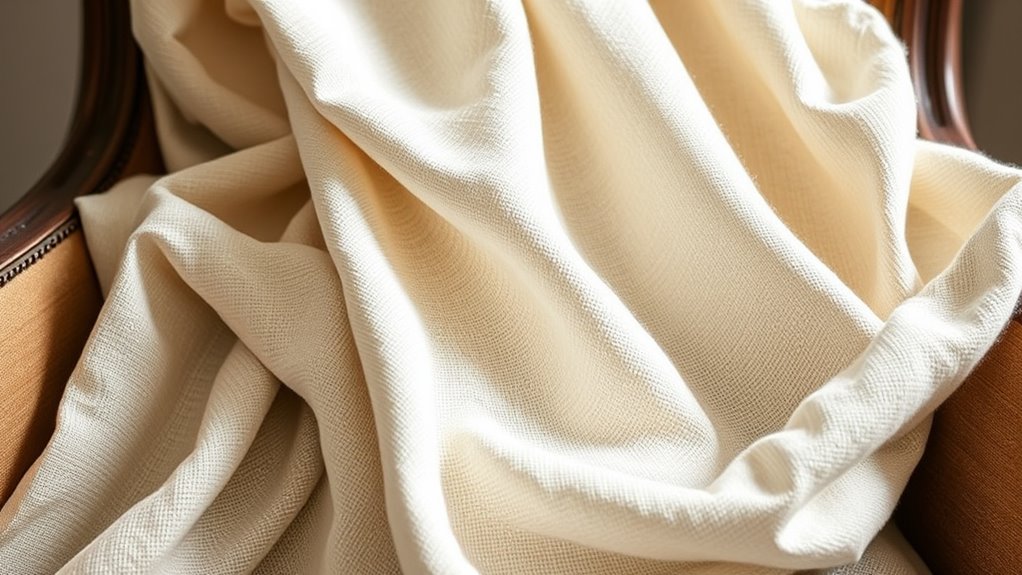
Natural fibers like cotton and linen are popular choices for upholstery because they’re breathable, soft, and eco-friendly. When selecting these fabrics, you’ll notice the variety of textile weaves that influence durability and texture. Cotton, for instance, can be woven into tight or loose weaves, affecting its strength and feel. Linen often features a plain or herringbone weave, giving it a crisp texture. Fabric dyeing plays a vital role in achieving vibrant, long-lasting colors, especially with natural fibers that absorb dyes differently than synthetic materials. The weaving style and dyeing process together determine the fabric’s appearance and resilience, making cotton and linen versatile options for furniture. Their natural appeal and eco-conscious qualities make them a preferred choice for many homeowners.
Wool and Wool Blends
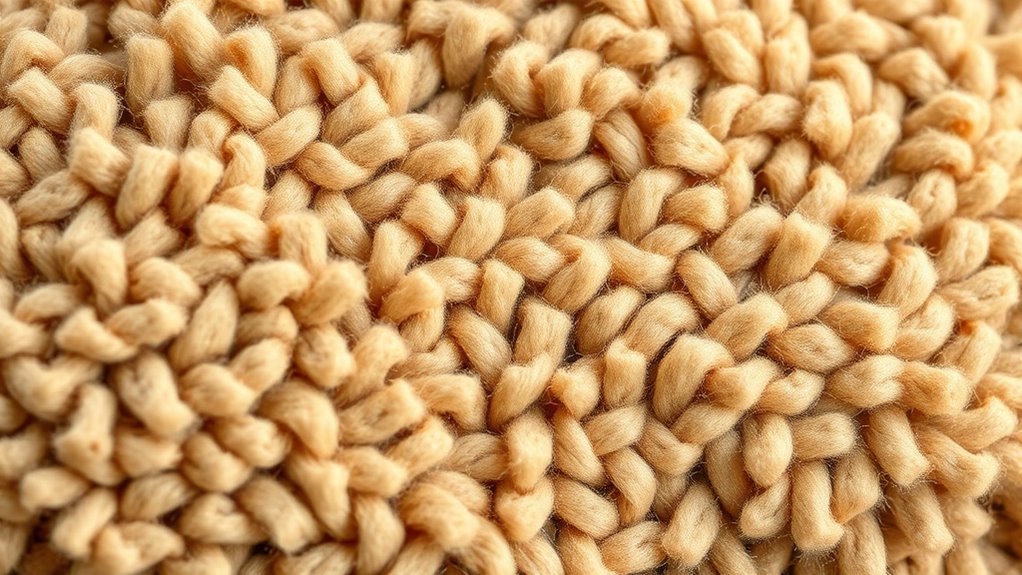
Wool fabrics are known for their warmth, resilience, and natural elasticity, making them a popular choice for upholstery. Combining wool with other fibers creates blends that enhance durability and ease of care. Understanding these material characteristics helps you select wool or wool blends that suit your lifestyle and maintenance preferences.
Wool Material Characteristics
Because of its insulating properties and durability, wool and wool blends are popular choices for upholstery fabric. Wool’s fiber structure consists of scales and a natural crimp, which helps trap air and provides excellent insulation. This makes it comfortable in various climates. Wool dyeing processes enhance colorfastness by penetrating deeply into the wool fiber, resulting in vibrant, long-lasting hues. Wool fibers are resilient, resisting wear and pilling over time. Additionally, wool’s elasticity allows it to recover from creasing, maintaining a smooth appearance. Wool blends combine these strong fibers with other materials to improve durability and affordability. Wool’s natural characteristics, from its fiber structure to dyeing capabilities, make it a versatile and enduring option for upholstery. Furthermore, wool’s preppy dog names reflect its association with a sophisticated and stylish aesthetic, making it a popular choice among those seeking a refined look.
Benefits of Wool Blends
Wool blends combine the best qualities of wool with other fibers, offering enhanced durability, affordability, and ease of maintenance. These fabrics provide excellent thermal insulation, helping you stay comfortable year-round. Wool blends also address allergy considerations better than pure wool, often featuring hypoallergenic properties that reduce irritation. They retain vibrant colors well, ensuring your furniture looks fresh longer. Additionally, wool blends offer eco-friendly benefits by using sustainable fibers and reducing environmental impact. Their versatility in design allows you to choose from a wide range of textures and patterns, making them suitable for various styles. Plus, they’re cost-effective, providing a balance of quality and affordability, making wool blends an attractive choice for durable, stylish upholstery. Understanding relationship cycles can also help in making more informed choices about the durability and longevity of your furniture investments.
Maintenance and Durability
Maintaining the durability of wool and wool blends requires regular care to keep them looking their best. Proper cleaning techniques are essential; vacuum regularly to remove dust and dirt, and address spills immediately with a clean, damp cloth. When cleaning, avoid harsh chemicals that can weaken fibers or cause color fading. Instead, use gentle, wool-specific cleaning products. To prevent color fading over time, keep your furniture out of direct sunlight and rotate cushions frequently. Wool and wool blends are naturally resilient, but improper maintenance can compromise their appearance and longevity. Using appropriate cleaning methods will help preserve the fabric’s softness, color vibrancy, and durability, ensuring your upholstery remains stylish and functional for years to come.
Synthetic Fabrics: Polyester and Acrylic

Synthetic fabrics like polyester and acrylic are popular choices for their durability and ease of maintenance. They often come at a lower cost and offer a wide range of colors and patterns to match your style. Understanding these factors helps you choose the right fabric for your needs and budget. Additionally, knowing the horsepower of electric dirt bikes can be useful when considering the durability and performance of fabrics used in off-road gear.
Durability and Maintenance
Polyester and acrylic fabrics are popular choices for upholstery because they offer excellent durability and are relatively easy to care for. To keep them looking their best, follow simple cleaning tips such as vacuuming regularly to remove dust and debris. When stains occur, use a mild soap solution and avoid harsh chemicals that could damage the fabric. These synthetic fabrics are known for their colorfastness, meaning they resist fading from sunlight and washing, which extends their lifespan. However, always check the manufacturer’s care instructions to prevent accidental damage. With proper maintenance, polyester and acrylic upholstery can withstand daily use while maintaining their appearance. Their durability makes them a practical choice for busy households seeking long-lasting, attractive furniture.
Cost and Aesthetic Options
Are you looking for upholstery fabrics that offer both affordability and a wide range of style options? Synthetic fabrics like polyester and acrylic are excellent choices for budget-friendly options that don’t compromise on aesthetics. They come in a variety of colors and patterns, making it easy to match your decor and personal style. These fabrics are versatile, allowing you to choose from bold prints to subtle solids. Plus, they’re often more affordable than natural fibers, helping you stay within your budget. Whether you want a vibrant, modern look or something more classic, polyester and acrylic fabrics give you plenty of options. Their wide selection of color and pattern choices makes it simple to create a customized and stylish look for any space. Additionally, Synthetic fabrics are known for their durability and ease of maintenance, making them a practical choice for everyday use.
Microfiber and Suede Alternatives
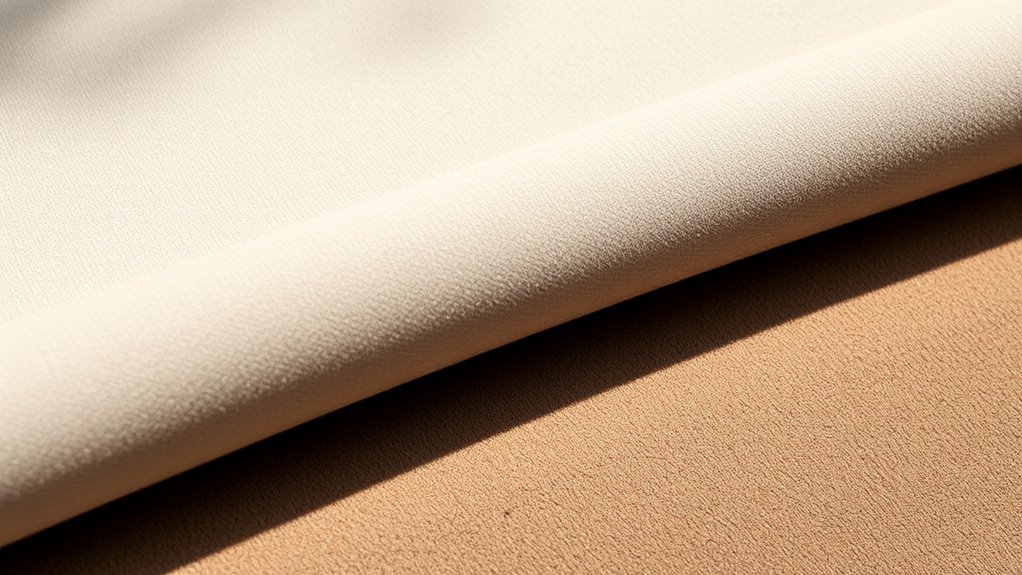
Microfiber and suede alternatives have gained popularity because they offer the luxurious look and feel of genuine suede without the high cost or maintenance. These fabrics are often treated with fire resistant treatments, enhancing safety and making them suitable for a variety of settings. Additionally, antimicrobial coatings are frequently applied to help prevent the growth of bacteria and mold, keeping your furniture cleaner and more hygienic. Microfiber, in particular, is known for its durability and stain resistance, making it a practical choice for busy households. While they mimic suede’s soft texture, these alternatives are easier to clean and maintain, saving you time and effort. Furthermore, understanding fire safety measures for upholstery fabrics is essential for ensuring your home remains secure. Overall, microfiber and suede substitutes provide a stylish, low-maintenance option that combines safety features with a premium appearance.
Leather and Faux Leather
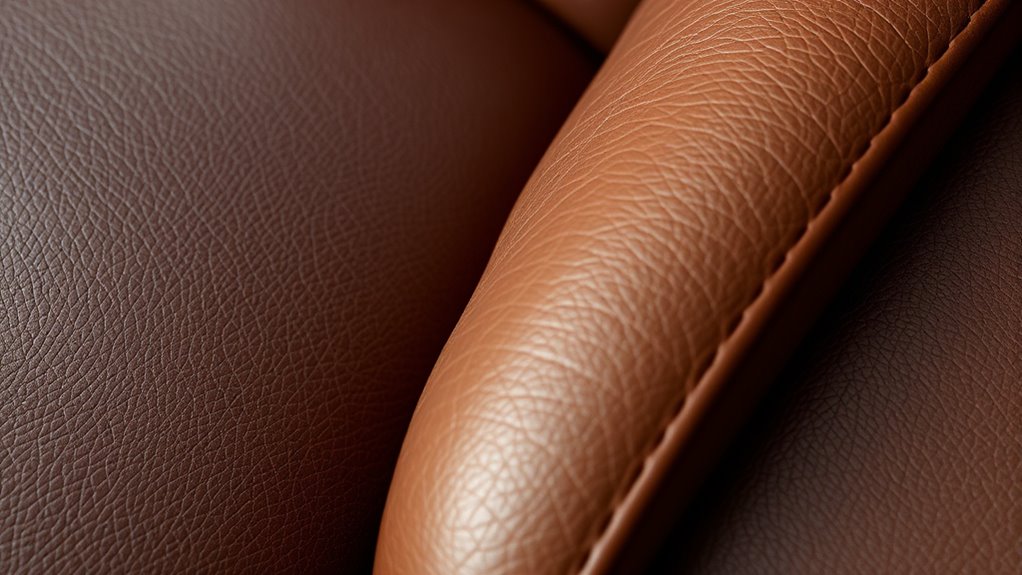
Leather and faux leather offer a sophisticated alternative to microfiber and suede substitutes, combining durability with timeless style. They’re easy to care for and clean, making them practical choices for busy households. For genuine leather, regular dusting and occasional conditioning help maintain its appearance and prevent cracking. Faux leather requires simple wiping with a damp cloth to remove spills and dirt. When it comes to style and design, these materials provide a sleek, modern look that complements various decor themes. Leather’s natural texture adds warmth, while faux leather often mimics this aesthetic at a lower cost. Both options bring durability and elegance, making them ideal for furniture that’s both attractive and functional. Proper care guarantees they stay beautiful and last for years. Additionally, understanding raw food principles can help extend the lifespan of furniture by choosing materials that are easier to clean and maintain in environments where spills are common.
Velvet and Plush Fabrics

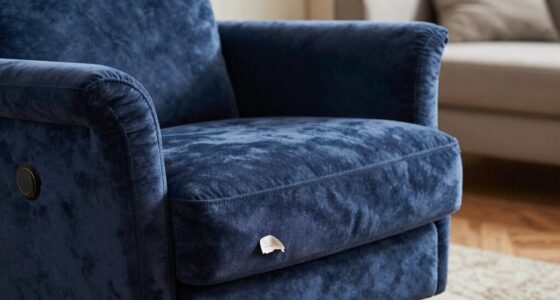
Velvet and plush fabrics bring a rich, luxurious feel to upholstery that instantly elevates any space. Their distinctive softness and sheen add a sense of elegance and comfort, making them a favorite for those seeking a high-end look. These fabrics offer a remarkable texture variety, from smooth and dense to more relaxed and pile-rich finishes, allowing you to choose the perfect style for your decor. Velvet and plush are also durable options, standing up well to everyday use when cared for properly. Their luxurious appeal makes them ideal for accent chairs, sofas, or statement pieces. Regular maintenance, such as proper cleaning techniques, is essential to preserve their beauty and longevity.
Chenille and Tapestry Textures

Chenille and tapestry textures bring a tactile richness to upholstery that enhances both comfort and visual interest. During textile manufacturing, these fabrics are carefully woven to create plush, layered surfaces that invite touch. The yarns used in chenille are thick and soft, resulting in a velvety feel, while tapestry fabrics often feature intricate patterns achieved through detailed weaving techniques. Fabric dyeing plays an essential role in highlighting these textures, adding vibrant colors that accentuate the weave’s depth. Both types of fabric are durable and crafted for long-lasting use, making them ideal for upholstery that emphasizes style and comfort. Their rich textures can transform simple furniture into statement pieces, providing an inviting and sophisticated look to any space. Additionally, these textures align with natural materials, promoting sustainability and eco-friendliness in textile choices.
Performance and Stain-Resistant Fabrics

When choosing upholstery fabrics, performance and stain resistance are key considerations for maintaining a clean and durable surface. Fabrics with pet resistance help protect against scratches, fur, and accidental spills caused by your pets, making cleanup easier. Stain-resistant options, often treated with special finishes or made from tightly woven fibers, prevent liquids from penetrating deeply, reducing damage and staining. Additionally, these fabrics contribute to allergen control by resisting dust, pet dander, and other particles that can trigger allergies. This helps you keep your living space healthier and more comfortable. Opting for performance fabrics ensures longevity and easier maintenance, saving you time and effort while keeping your furniture looking fresh and inviting. Ongoing AI safety measures in manufacturing processes also help improve the durability and safety of these fabrics over time.
Eco-Friendly and Sustainable Options
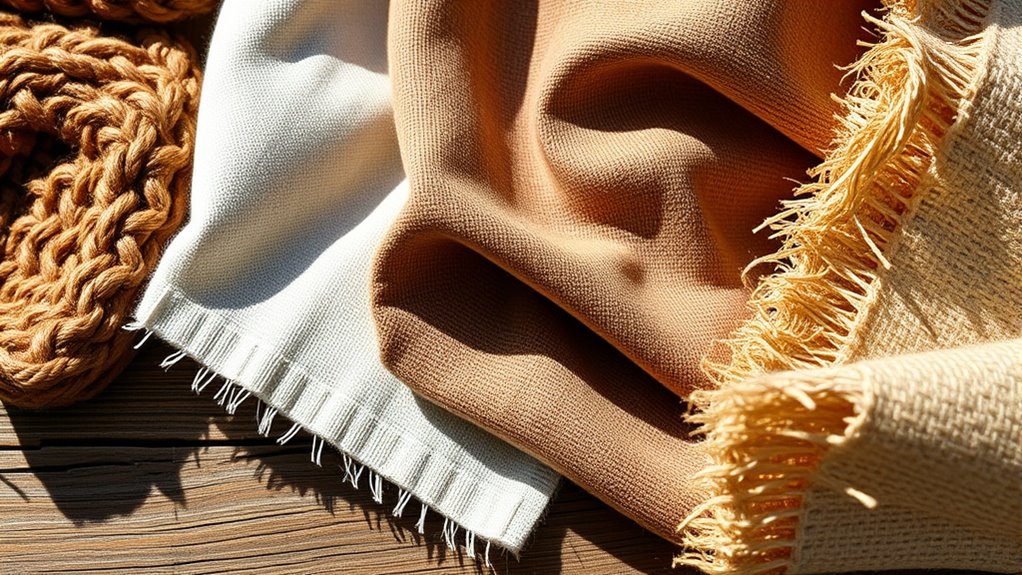
As you prioritize performance and stain resistance in your upholstery choices, considering eco-friendly and sustainable options can further enhance your home’s environmental impact. Recyclable options like polyester made from recycled plastics reduce waste and conserve resources. Natural fibers such as hemp, jute, and organic cotton are renewable and biodegradable, making them excellent sustainable choices. Additionally, using fabrics dyed with organic dyes minimizes chemical runoff and reduces pollution, contributing to healthier indoor air quality. These eco-friendly fabrics often have a lower carbon footprint and support sustainable farming practices. By selecting upholstery made from recyclable materials and organic dyes, you not only create a stylish space but also promote environmental responsibility, helping to reduce your overall ecological footprint without sacrificing durability or aesthetics.
Frequently Asked Questions
Which Fabric Types Are Most Allergy-Friendly?
If you’re looking for allergy-friendly fabrics, opt for hypoallergenic options like leather, microfiber, or tightly woven synthetic fabrics. These materials are less likely to trap dust, pet dander, and other allergy triggers. Avoid fabrics with loose weaves or plush textures, as they can harbor allergens. Choosing these hypoallergenic fabrics helps you reduce allergy symptoms and enjoy a cleaner, healthier living space.
How Do Fabric Choices Affect Furniture Durability?
Your fabric choice directly impacts your furniture’s durability. Smooth, tightly woven fabrics like leather or microfiber resist wear better, especially with high-traffic use. Conversely, delicate textures like velvet may look luxurious but wear quickly. Consider fabric texture and colorfastness properties—sturdy materials hold their color and texture longer, ensuring your furniture remains vibrant and resilient over time. Balancing style with performance helps your furniture stay beautiful for years.
Are Certain Fabrics Better for Humid Climates?
Yes, certain fabrics are better for humid climates. Look for humid climate fabrics that offer excellent breathability and moisture control, helping to prevent mold and mildew buildup. Natural fibers like linen and cotton are good choices because they allow air to flow and wick away moisture. Avoid synthetic fabrics that trap heat and humidity. Choosing the right fabric guarantees your furniture stays fresh and durable in humid environments.
What Fabrics Are Easiest to Clean and Maintain?
You’ll find that stain-resistant fabrics are the easiest to clean and maintain, especially if you want your furniture to stay fresh. Look for pet-friendly fabrics that resist stains and hair, making cleanup simple. These materials are designed to handle daily wear and tear, so you won’t worry about spills or pet accidents. With stain resistance and pet-friendly features, you’ll enjoy low-maintenance upholstery that keeps your space looking great effortlessly.
How Do Fabric Prices Vary Across Options?
Fabric prices can vary more wildly than a rollercoaster, making your choice exciting yet tricky. Factors like material quality, brand, and fabric durability influence costs. Budget-friendly options, such as polyester or microfiber, are typically more affordable, while luxurious fabrics like silk or velvet can cost a fortune. Consider your needs and budget, and you’ll find the perfect fabric that balances cost factors with style and quality.
Conclusion
Think of upholstery fabrics as a palette of colors and textures in your home’s design. Whether you choose natural fibers, synthetic options, or eco-friendly materials, each type adds its own unique brushstroke. By understanding these options, you’re crafting a masterpiece that reflects your style and meets your needs. Just like a painter selects the perfect colors to bring their vision to life, you can select fabrics that turn your space into a beautiful, inviting haven.
Fall Picks
fall essentials
As an affiliate, we earn on qualifying purchases.