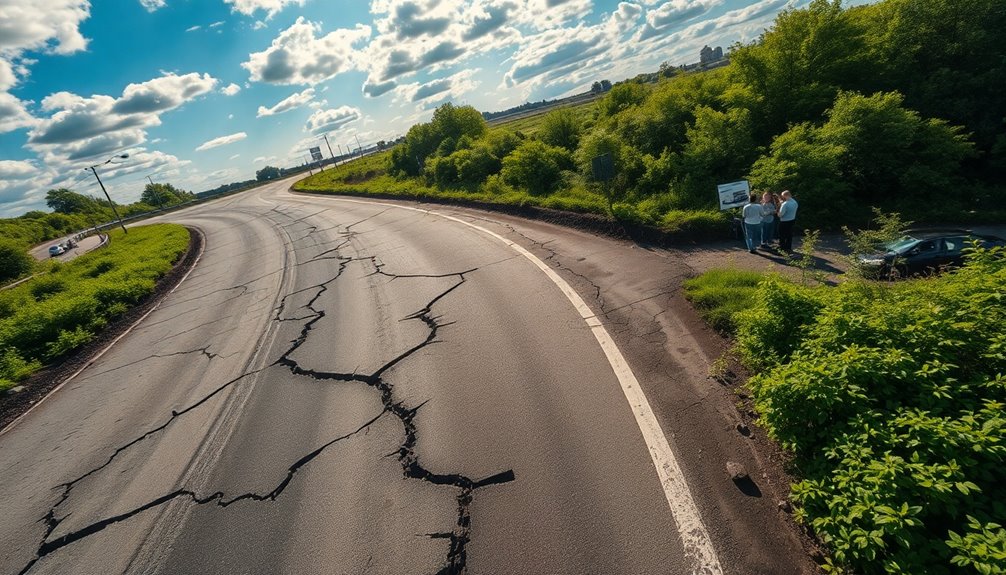

AI can predict infrastructure damage by analyzing real-time data collected from sensors monitoring structural integrity and environmental conditions. This technology identifies stress points and vulnerabilities in bridges, roads, and buildings, allowing you to take proactive measures. It also prioritizes maintenance efforts based on historical data, improving resource allocation and management. With AI, you’ll better understand the implications of damage on daily life, and there’s much more to discover about its transformative impact on urban planning.
Key Takeaways
- AI technology enables real-time monitoring of infrastructure to assess structural integrity and environmental conditions.
- Predictive models analyze vulnerabilities and stress points, allowing for proactive risk assessment.
- AI prioritizes maintenance by analyzing historical data, ensuring immediate attention to critical structures.
- The technology predicts repair times and assesses impacts on traffic and local businesses for better planning.
- Growing adoption of AI tools enhances urban safety, cost efficiency, and resilience against climate challenges.
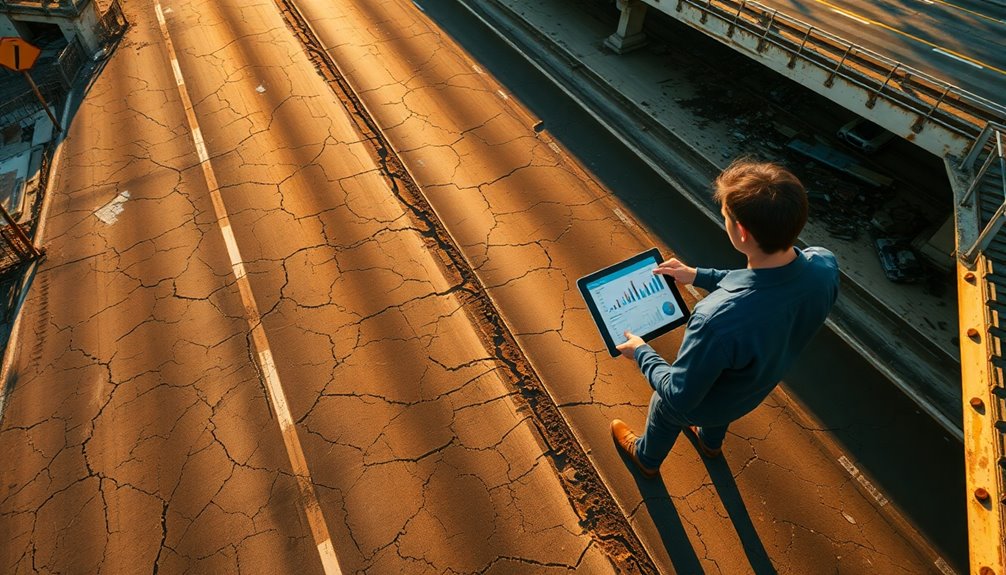
As cities grow and environmental challenges escalate, understanding the risks to our infrastructure becomes crucial. You mightn’t realize it, but every bridge, road, and building you rely on faces threats from natural disasters, climate change, and even human activities. That’s where artificial intelligence (AI) steps in, offering innovative solutions to predict potential damage before it occurs. By leveraging large datasets and advanced algorithms, researchers have discovered that AI can significantly enhance our ability to assess infrastructure risks.
Imagine walking across a bridge that’s been monitored by AI technology. Sensors collect real-time data on structural integrity, weather conditions, and traffic patterns. This information feeds into predictive models that analyze potential stress points and vulnerabilities. When AI identifies a risk of damage, it can alert you and relevant authorities, giving you time to take precautionary measures. This proactive approach empowers cities to act swiftly, potentially saving lives and reducing costly repairs.
AI isn’t just about preventing disasters; it also helps prioritize maintenance efforts. You know how budgets can be tight, especially in urban settings. With AI, you can allocate resources more effectively. By analyzing historical data and predicting future wear and tear, AI can pinpoint which structures need immediate attention. This means that funds can be utilized where they’re most needed, rather than spreading resources too thinly across the city.
Moreover, AI can help you understand the broader implications of infrastructure damage. For instance, imagine a severe storm that damages a critical road. Using AI models, you can predict how long repairs might take and how that’ll impact traffic flow and local businesses. By visualizing these effects, you and city planners can devise better contingency plans, ensuring minimal disruption to daily life. Additionally, integrating heat pump technology in urban infrastructures can lead to improved energy efficiency and sustainability, further enhancing resilience against climate impacts.
As this technology evolves, you’ll likely see more cities adopting AI-driven tools for infrastructure management. The benefits are clear: improved safety, cost efficiency, and better planning for future challenges. You’ll also find that as public awareness grows, communities will demand more accountability from local governments. With AI on your side, it’s not just about reacting to problems; it’s about anticipating them.

43.3in-59in Extendable Round Dining Table for 4-8,Modern Kitchen Oval Dining Table with Removable Leaves Space Saving,Wood Base with Storage Shelf for Kitchen Living Room (Walnut)
Retractable dining table for 4-8 people: Considering the use in different scenarios, the dining table adopts a retractable...
As an affiliate, we earn on qualifying purchases.
Frequently Asked Questions
How Accurate Are AI Predictions for Infrastructure Damage?
AI predictions for infrastructure damage can be quite accurate, often exceeding traditional methods.
You’ll find that advanced algorithms analyze vast amounts of data, improving their accuracy over time. However, accuracy varies based on the quality of input data and the specific algorithms used.
While AI can identify patterns and potential risks, it’s essential to combine these predictions with expert insights for a more comprehensive assessment.
Staying updated on technology advancements can enhance your understanding of its capabilities.
What Types of Infrastructure Can AI Assess?
AI can assess various types of infrastructure, including bridges, roads, buildings, and utilities.
By analyzing data from sensors and satellite imagery, it identifies potential weaknesses and predicts maintenance needs.
You’ll find that AI can also evaluate transportation systems and energy grids, ensuring they operate efficiently.
Its versatility allows you to prioritize repairs and optimize resource allocation, ultimately enhancing safety and reliability across different infrastructure sectors.
How Is Data Collected for AI Predictions?
To collect data for AI predictions, you’ll often use sensors, satellite imagery, and historical records.
These tools gather real-time information about the infrastructure’s condition, like wear and tear or environmental factors. You might also conduct surveys or leverage social media data to understand public sentiments.
Once this data is compiled, it’s processed and analyzed, allowing AI models to identify patterns and make accurate predictions about potential issues.
Are There Any Limitations to Using AI for This Purpose?
Yes, there are limitations to using AI for predictions. You might encounter issues like data quality, as inaccurate or incomplete information can skew results.
AI models also require extensive training, which means they need large datasets, and if your data isn’t diverse, the predictions mightn’t be reliable.
Additionally, AI can struggle with unexpected events or changes in patterns, making it essential to combine AI with human expertise for the best outcomes.
How Can Communities Implement AI for Infrastructure Monitoring?
To implement AI for infrastructure monitoring, you should start by assessing your community’s specific needs.
Collaborate with local authorities and tech experts to select the right AI tools. Collect data from sensors and existing infrastructure records, then train the AI to recognize patterns and potential issues.
Encourage community engagement to raise awareness and gather feedback.
Regularly review AI performance and adjust strategies to ensure it meets the evolving needs of your infrastructure.
Amazon Product B0CH9Y93WK
As an affiliate, we earn on qualifying purchases.
Conclusion
In conclusion, AI’s ability to predict infrastructure damage is a game changer. By harnessing advanced algorithms and data analysis, it’s helping you stay ahead of potential issues, saving time and resources. You can now make informed decisions and prioritize repairs effectively, ensuring safety and longevity for vital structures. Embracing this technology not only enhances your preparedness but also fosters a more resilient future. The integration of AI in infrastructure management is undoubtedly a step in the right direction.
Amazon Product B082XHVGZM
As an affiliate, we earn on qualifying purchases.

HGD 20 inch Smokeless Firepit Outdoor, Portable Smokeless Fire Pit for Camping with Travel Bag, Stainless Steel Wood Burning Stove for Backyard & Patio, Easy Setup & Compact Storage
Low Smoke Firepit:The smokeless firepit outdoor of double wall design with vent holes creates a burst of hot...
As an affiliate, we earn on qualifying purchases.