
GFCI outlets detect ground faults by continuously monitoring current flow in hot and neutral wires, triggering a quick shutoff if they sense an imbalance that could cause electrical shocks or fires. They activate a safety trip mechanism when needed and are commonly installed in areas prone to moisture like bathrooms, kitchens, and outdoor spaces. If you want to know how these devices keep you safe and where to install them, keep exploring.
Key Takeaways
- GFCI outlets monitor current in hot and neutral wires for imbalances indicating ground faults.
- They quickly trip and cut off power when detecting potential electrical leaks or hazards.
- GFCIs are commonly installed in moisture-prone areas like bathrooms, kitchens, and outdoor spaces.
- They enhance safety by preventing shocks, fires, and electrical accidents caused by ground faults.
- Regular testing ensures GFCIs function properly and continue providing vital electrical protection.
How GFCI Outlets Detect Ground Faults
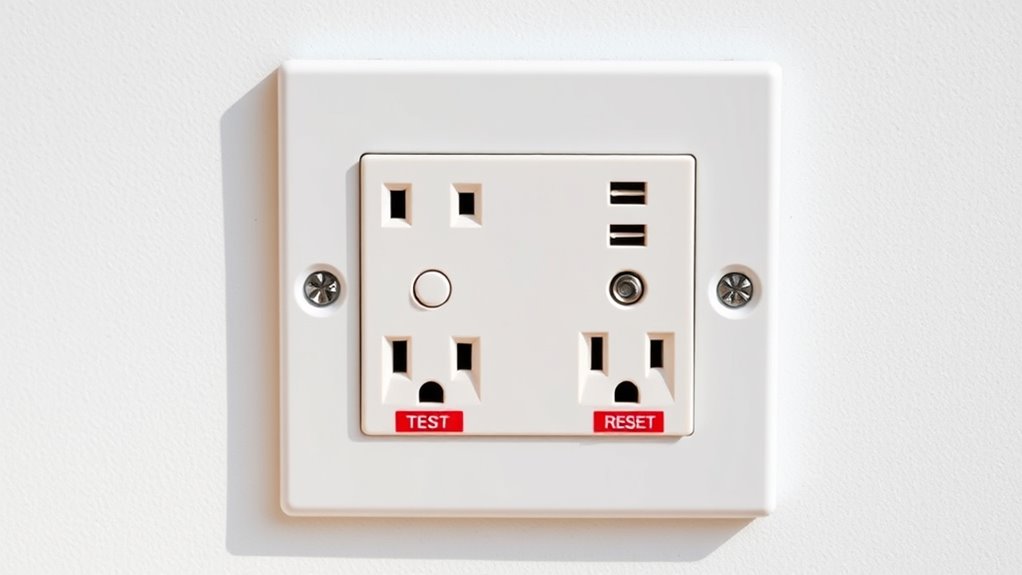
GFCI outlets detect ground faults by continuously monitoring the electrical current flowing through the hot and neutral wires. When everything functions normally, the current in both wires remains balanced. However, if there’s a ground fault—like a person accidentally touching a live wire—the current in the hot wire differs slightly from the neutral. This imbalance signals a ground fault detection. Once detected, the GFCI quickly triggers circuit interruption, shutting off power to prevent harm. This rapid response is vital for safety, reducing the risk of electric shock or fire. Because of this constant monitoring, GFCI outlets can identify even small leaks of current, ensuring that any ground fault is promptly addressed. This proactive approach makes GFCI outlets an essential safety feature in homes. Analytical cookies help in tracking these small current leaks to improve safety features further.
The Mechanism Behind GFCI Safety Features
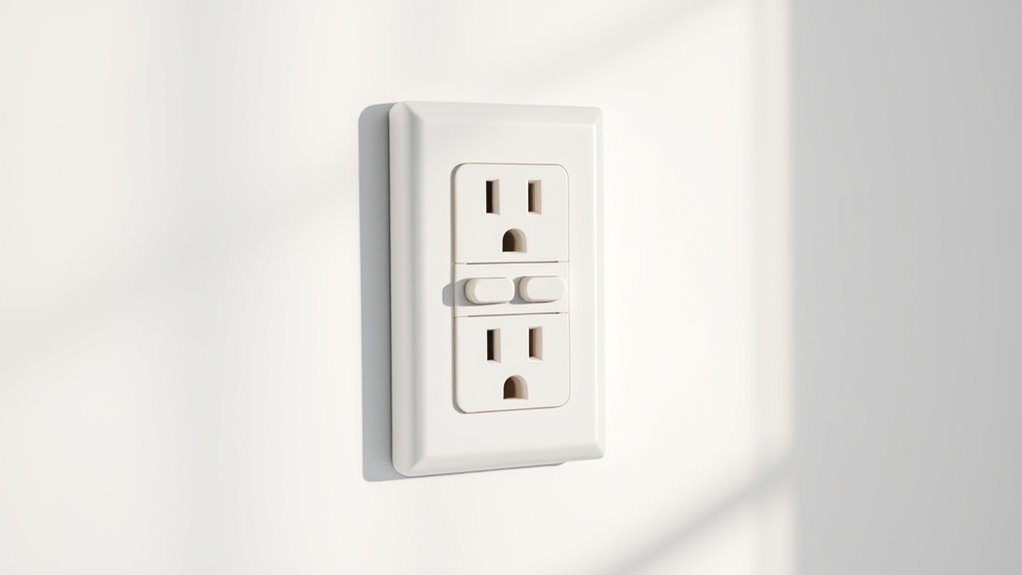
The safety features of GFCI outlets rely on a sophisticated mechanism that quickly responds to electrical imbalances. When a ground fault occurs, the device detects differences in current between the hot and neutral wires through ground fault detection. If an imbalance exceeds a certain threshold, safety mechanisms activate instantly to cut off power, preventing shocks or fires. This rapid response is vital for safety. The table below highlights key components involved:
| Component | Function | Importance |
|---|---|---|
| Ground Fault Detection | Monitors current differences | Detects ground faults quickly |
| Trip Mechanism | Disconnects power when imbalance is found | Ensures safety instantly |
| Internal Circuitry | Processes signals and triggers trip | Maintains device reliability |
| Safety Mechanisms | Prevents electrical hazards | Protects users from shocks |
| Reset Button | Restores power after trip | Allows safe reset |
Additionally, advancements in AI security contribute to developing more reliable safety features in electrical devices.
Common Places to Install GFCI Outlets
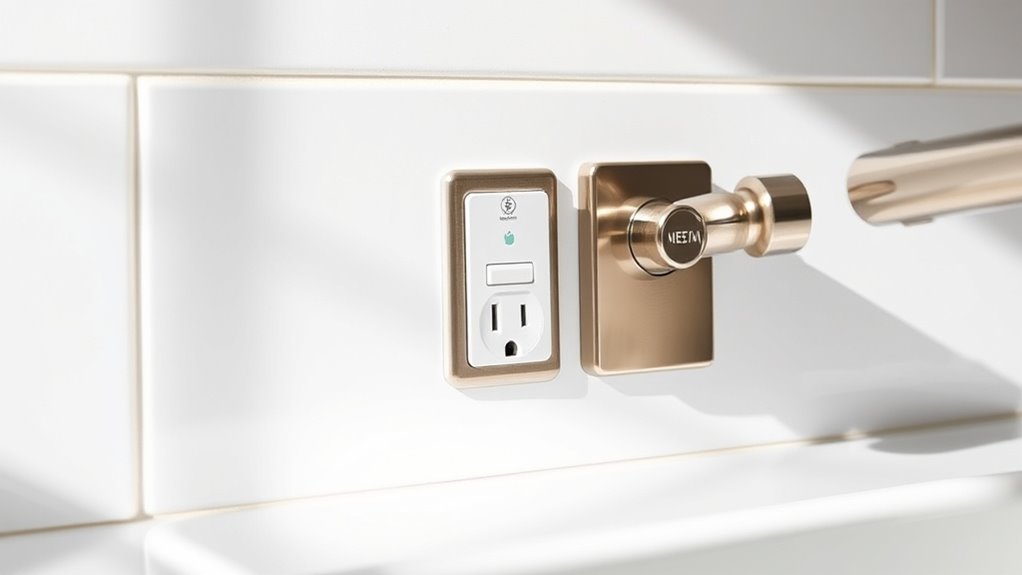
To guarantee maximum safety, you should install GFCI outlets in areas where water and electricity are likely to come into contact. Common installation locations include bathrooms, kitchens, laundry rooms, garages, and outdoor areas. These spots are prone to moisture, increasing the risk of electrical shock. Building codes, including the National Electrical Code (NEC), require GFCI outlets in these areas to ensure safety. You’ll also find them in crawl spaces and near sinks or basins. Proper placement is vital, so always verify local code requirements before installation. Cybersecurity vulnerabilities can be exacerbated during electrical outages, emphasizing the importance of proper safety measures. By installing GFCI outlets in these key locations, you reduce the risk of electrical hazards and protect yourself and others from potential shocks. Proper placement is essential for safety and compliance.
Signs That Indicate a GFCI Needs Replacement
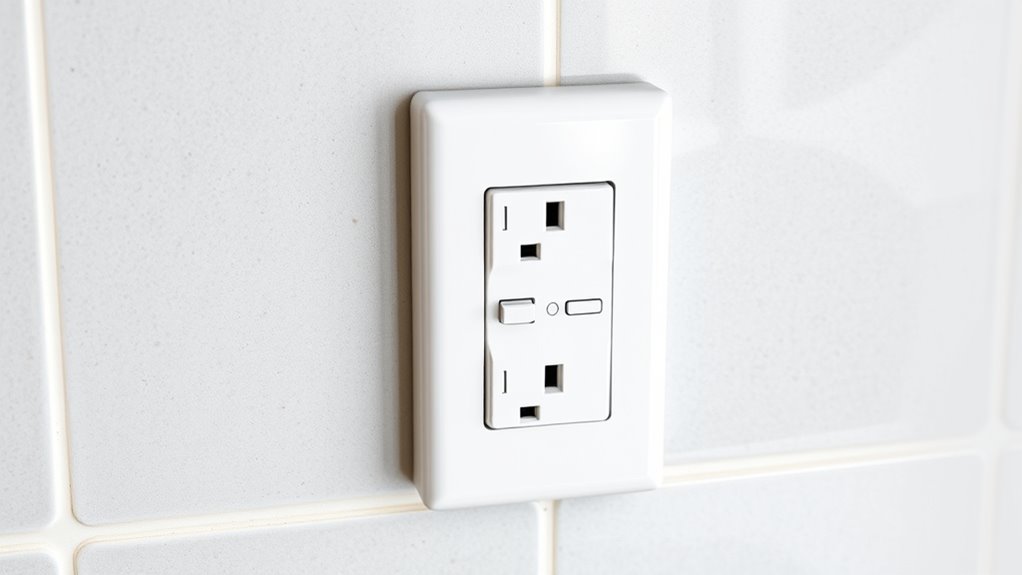
If your GFCI outlet isn’t functioning properly, it may be a sign that it needs replacement. One key indicator is if it fails to detect ground faults during outlet testing, meaning it no longer responds correctly to ground fault detection. Additionally, if pressing the test and reset buttons doesn’t trip or reset the outlet as it should, it’s a red flag. You might also notice persistent tripping even without a clear cause, or if the outlet feels warm or looks damaged. Regular outlet testing helps identify these issues early, preventing potential electrical hazards. When a GFCI shows signs of malfunction, replacing it ensures continued protection against ground faults and electrical shocks, maintaining safety in your home. Electrical safety is crucial, and addressing faulty GFCI outlets promptly can prevent dangerous situations.
Benefits of Using GFCI Outlets in Your Home
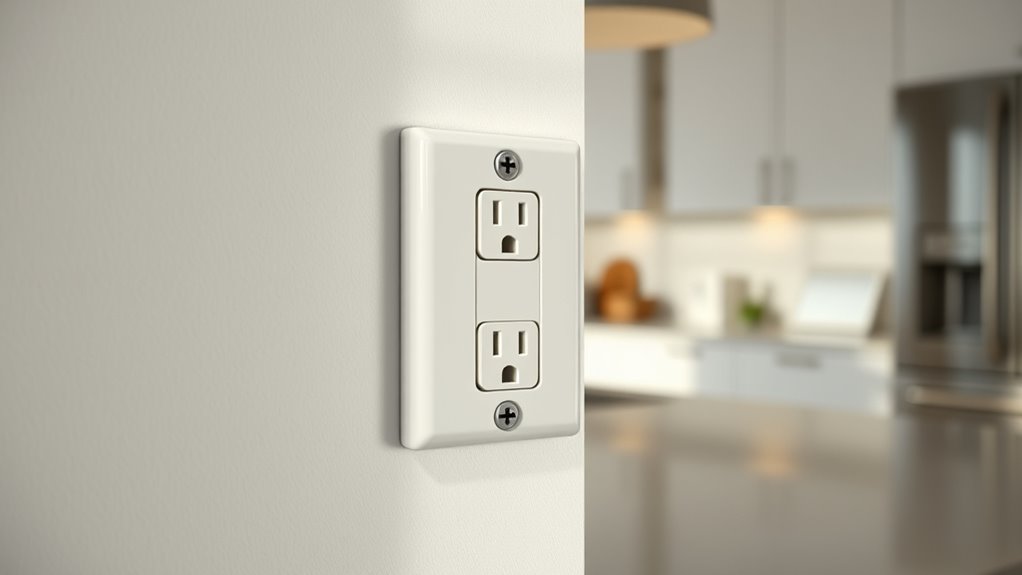
Using GFCI outlets in your home substantially enhances safety by quickly detecting ground faults and shutting off power before anyone gets shocked. They provide peace of mind, especially in areas prone to moisture like kitchens and bathrooms. Regular ground fault testing guarantees your GFCI is functioning correctly, offering continued protection. Additionally, GFCI outlets are compatible with most electrical systems, making installation straightforward and versatile. Their ability to instantly disconnect power prevents electrical accidents and reduces the risk of fires caused by ground faults. By choosing GFCI outlets, you’re investing in a safer home environment for you and your family. Their benefits extend beyond safety — they’re easy to maintain and upgrade, ensuring ongoing protection with minimal effort. Using the proper installation and maintenance techniques can further enhance their effectiveness and longevity.
Frequently Asked Questions
How Often Should GFCI Outlets Be Tested for Proper Function?
You should test your GFCI outlets at least once a month to guarantee they’re working properly. Regular testing helps catch potential issues early and keeps you safe. Use the “Test” button on the outlet, then confirm the reset button works by pressing it afterward. Incorporate this into your maintenance tips to keep your outlets reliable. Consistent testing is simple but vital for electrical safety in your home.
Can GFCI Outlets Prevent Electrical Fires Beyond Shock Protection?
Yes, GFCI outlets can help prevent electrical fires by reducing electrical hazards. They detect ground faults and shut off power quickly, preventing sparks or overheating that could ignite nearby materials. By protecting against current leaks, GFCIs enhance fire safety in areas prone to moisture, like kitchens and bathrooms. Installing and regularly testing GFCIs is a smart way to minimize electrical hazards and keep your home safer from potential fire risks.
Are GFCI Outlets Compatible With All Types of Home Wiring Systems?
Think of GFCI outlets as translators bridging diverse wiring languages. Most wiring systems, including modern and older homes, are compatible, but you need to take into account wiring compatibility and outlet placement carefully. You’ll want to ensure proper grounding and follow local electrical codes. If your wiring is complex or unconventional, consulting a professional guarantees safe installation, making your GFCI outlet a reliable guardian wherever you place it.
What Should I Do if a GFCI Frequently Trips Without Reason?
If your GFCI trips frequently without reason, start by unplugging everything on that circuit to rule out a ground fault. Reset the GFCI and see if it trips again; if it does, the device or wiring might be defective. Check your circuit breaker for any issues. If problems persist, consider consulting a licensed electrician to inspect the wiring and guarantee your GFCI and circuit breaker work correctly.
Do GFCI Outlets Need Professional Installation or Can I Install Them Myself?
You can install GFCI outlets yourself if you feel comfortable with basic electrical work, but it’s essential to prioritize DIY safety. Make sure to turn off power at the breaker, follow the manufacturer’s instructions, and use proper tools. However, for any uncertainties or if local codes require, opting for professional installation is the safest choice. This ensures the outlet is installed correctly and reduces the risk of electrical hazards.
Conclusion
In conclusion, GFCI outlets guard your home by detecting dangerous ground faults and delivering quick, reliable responses. By installing them in key locations, you protect yourself and your loved ones from shocks and sparks. Stay vigilant for signs of wear, and don’t delay replacing defective outlets. With GFCI gadgets guarding your garage, kitchen, and bathroom, you create a safer, more secure space. Stay smart, stay safe, and enjoy the security GFCIs provide.