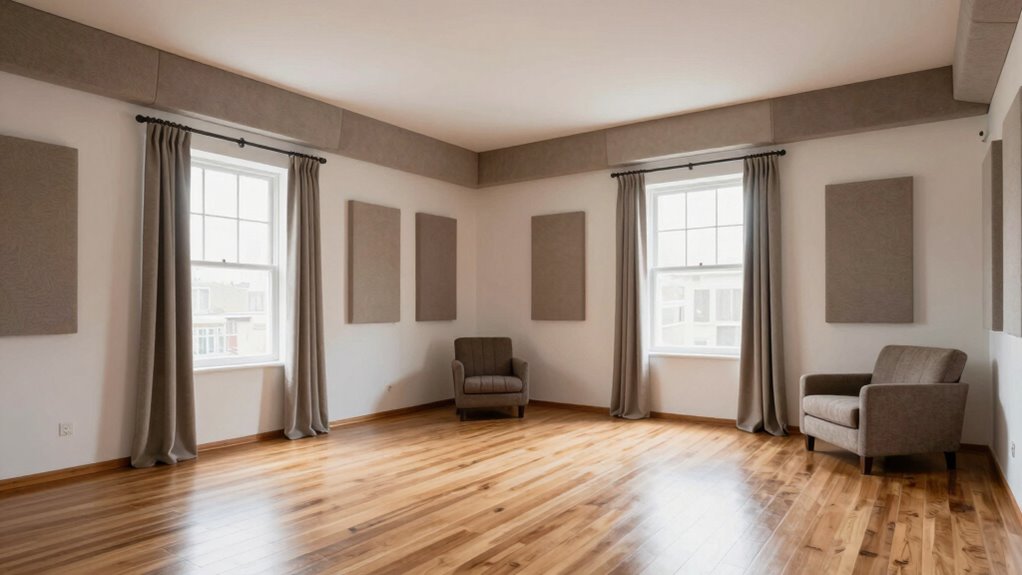

To improve echoey rooms, you can use soundproof curtains made from dense materials to block noise and absorb echoes, and install acoustic foam panels on walls or ceilings to further dampen sound reflections. Combining these solutions creates a layered effect, boosting sound absorption and reducing reverberation. These fixes are affordable, easy to install, and effective without major renovations. Keep exploring to discover more quick and practical ways to soften your space.

Get furniture and decor delivered free with Prime
- Fast, free delivery on millions of items
- Prime Video, Amazon Music and more included
- Member-only deals all year
Key Takeaways
- Use dense, heavy soundproof curtains to absorb sound waves and reduce room echoes.
- Install acoustic foam panels on walls and ceilings to prevent sound reflection and improve clarity.
- Combine curtains and foam panels for layered sound absorption and enhanced acoustic control.
- Focus treatments on problem areas like windows and corners for maximum echo reduction.
- Employ affordable, quick solutions like curtains and foam panels without structural modifications.

Have you ever been bothered by echoes or excessive noise in a room? It can be frustrating when sound bounces off walls, creating a muddled and uncomfortable environment. Luckily, you don’t have to live with the noise issues forever. There are simple, effective sound-softening fixes you can implement to tame those echoes and make your space more pleasant.
One of the easiest solutions is adding soundproof curtains. Unlike regular drapes, these curtains are made from dense, heavy materials that absorb sound waves rather than reflect them. When you hang soundproof curtains over windows or along walls, you create a barrier that cuts down on noise traveling in and out of the room. They’re quick to install, relatively inexpensive, and don’t take up much space. Plus, they come in various styles, so you can choose options that match your decor while improving acoustics. Soundproof curtains won’t eliminate all echoes, especially in larger or highly reflective rooms, but they markedly reduce the amount of sound bouncing around and help create a more controlled acoustic environment.
Soundproof curtains absorb sound and reduce echoes, improving room acoustics without taking up much space or costing a fortune.
Another highly effective fix involves acoustic foam panels. These foam panels are designed specifically to absorb sound energy, preventing it from echoing back into the room. You can place them on walls, ceiling, or even behind furniture, depending on where echoes are most pronounced. Acoustic foam panels are lightweight and easy to install—simply attach them with adhesive or hooks. They come in a variety of shapes, sizes, and colors, so you can customize your space while enhancing sound absorption. These panels work best in rooms where sound clarity is important, such as home offices, recording studios, or media rooms, but they’re beneficial in any space plagued by excessive reverberation. Incorporating sound-absorbing materials like foam panels can significantly improve overall acoustic quality and reduce sound reflection. Additionally, selecting the appropriate soundproofing solutions tailored to your room’s specific needs can further enhance the effectiveness of these fixes. Using acoustic treatments strategically can also help target specific problem areas and optimize sound control.
Combining these two options can give you even better results. Using soundproof curtains along windows and acoustic foam panels on the walls helps create an environment where sound is contained and absorbed more effectively. This layered approach can dramatically reduce echoes, making your room feel more comfortable, quiet, and inviting. Whether you’re trying to improve the sound quality for listening or recording or just want a peaceful space free from distracting noise, these sound-softening fixes can make a noticeable difference. You don’t need extensive renovations—simple additions like curtains and foam panels can transform a noisy, echoey room into a cozy, acoustically friendly haven.
As an affiliate, we earn on qualifying purchases.
Frequently Asked Questions
How Long Do Sound-Softening Treatments Typically Last?
Sound-softening treatments usually last between 5 to 10 years, depending on their durability lifespan and maintenance requirements. You should regularly inspect and clean them to guarantee they stay effective. Over time, materials may degrade or accumulate dust, reducing their sound-absorbing qualities. Proper upkeep, like cleaning or replacing worn panels, helps extend their lifespan, ensuring your space remains acoustically comfortable for years to come.
Are There Eco-Friendly Sound-Proofing Options Available?
Yes, eco-friendly soundproofing options exist that might surprise you. You can choose sustainable options made from recyclable materials like recycled cotton, cellulose, or cork, which absorb sound effectively while being environmentally conscious. These materials not only soften echoes but also reduce your carbon footprint. Imagine creating a quieter space that’s also kinder to the planet—sounds tempting, right? Embrace these greener solutions and enjoy the benefits of eco-friendly soundproofing.
Can DIY Sound-Softening Solutions Be as Effective as Professional Ones?
DIY sound-softening solutions can be quite effective if you choose the right materials and follow proper methods. Acoustic panels with DIY installation are a popular option because they absorb sound and reduce echo. While professional solutions might offer a more seamless finish, your DIY approach can still substantially improve room acoustics. With patience and careful installation, you’ll notice a marked difference, making your space more comfortable without the high costs of professional work.
How Do I Choose the Right Sound-Absorbing Materials?
You should prioritize sound-absorbing materials that balance durability and ease of installation. Imagine your room’s acoustics transforming—what’s the secret? It’s choosing the right materials, like dense foam or mineral wool, which absorb sound effectively. Consider installation techniques that guarantee a tight fit, preventing sound leaks. By selecting high-quality, durable materials and mastering proper installation, you’ll create a soundproof haven that lasts and performs beautifully.
Will Sound-Softening Solutions Affect Room Temperature?
Sound-softening solutions like acoustic panels and decorative diffusers generally won’t affect your room temperature considerably. These materials mainly absorb or diffuse sound waves rather than trap heat. However, if you add thick or dense panels, they might slightly insulate the space, but the effect is minimal. So, you can enjoy improved acoustics without worrying about altering your room’s temperature much.
Conclusion
By implementing these sound-softening fixes, you’ll transform your echoey room into a serene sanctuary where sound flows effortlessly, like a gentle breeze through a tranquil forest. Don’t underestimate the power of adding soft furnishings and acoustic panels — they’re your secret weapons against relentless echoes. With these simple tweaks, you’ll create a space so peaceful, it’ll feel like you’ve revealed the sound universe’s best-kept secret. Prepare to bask in the symphony of perfect acoustics—you’ll never go back!
Fall Picks
fall essentials
As an affiliate, we earn on qualifying purchases.