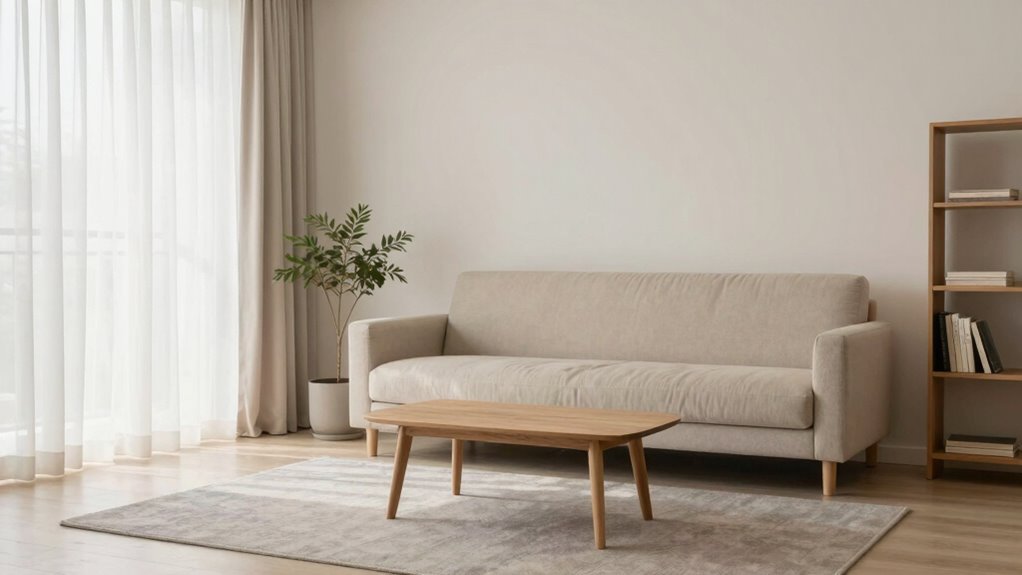

To create more calm with fewer visual decisions, start by decluttering your space and keeping only items that serve a purpose or bring joy. Opt for a cohesive color palette with neutral tones, limiting pops of color to avoid visual noise. Incorporate natural elements like plants to promote relaxation. Regularly assess your environment to remove anything that disrupts harmony. These simple steps can help you enjoy a more peaceful home—keep exploring for additional ideas to enhance your space further.

Get furniture and decor delivered free with Prime
- Fast, free delivery on millions of items
- Prime Video, Amazon Music and more included
- Member-only deals all year
Key Takeaways
- Simplify your space by reducing clutter and only keeping purposeful or joyful items.
- Use a cohesive, neutral color palette to minimize visual decision-making.
- Regularly assess and remove items that disrupt harmony or add visual noise.
- Incorporate natural elements like plants to enhance a peaceful atmosphere.
- Maintain organized, minimal decor to create a calm, easily manageable environment.

Creating a sense of calm at home starts with simplifying what you see. When your space is cluttered or filled with too many competing colors, your mind struggles to find peace amid the chaos. To foster a tranquil environment, focus on reducing visual noise. Clutter reduction is your first step—clear surfaces, organize belongings, and keep only what truly serves a purpose or brings you joy. When you eliminate unnecessary items, your space feels more open, and your mind feels less overwhelmed. This simplification not only clears physical space but also allows mental clarity to flourish.
Simplify your space by decluttering to create mental clarity and a calming, peaceful environment.
Equally important is color coordination. Choose a cohesive color palette for your home and stick to it. When your decor, furniture, and accessories complement each other, your eyes aren’t darting around trying to process conflicting hues. Instead, they settle comfortably, creating a visual harmony that promotes relaxation. Opt for neutral tones like soft grays, warm beiges, or gentle pastels, which tend to evoke calm. If you want pops of color, choose just a few shades that work well together, and use them consistently throughout your space. This consistency reduces visual decisions you need to make daily, giving your brain a break from constant choice fatigue. Incorporating visual harmony can further enhance your sense of peace by creating a cohesive environment.
Incorporating these principles means you should regularly assess your environment. Ask yourself if each item contributes to your sense of peace or if it adds clutter. When you find objects that don’t serve a purpose or disrupt your color scheme, consider removing or replacing them. Keep surfaces clear of unnecessary decor, and opt for storage solutions that hide away items you don’t use daily. When your surroundings are orderly and visually harmonious, you’ll notice that your mind feels calmer, and you’re more capable of focusing on what matters most. Additionally, embracing biodiversity by adding natural elements like plants can enhance your sense of well-being and promote a peaceful atmosphere. Incorporating natural elements can also help reduce stress and improve overall mental health, making your space feel even more restorative. Creating a calming environment also involves understanding how visual noise affects your mental state, so being mindful of clutter and color choices can significantly impact your overall sense of tranquility.
Furthermore, maintaining a simple, cohesive color palette helps you avoid decision fatigue, especially when dressing your space or choosing accessories. The fewer choices you have to make about what matches or how to coordinate, the less mental effort you exert. This streamlined approach creates a peaceful atmosphere that’s easy to maintain. When your home looks organized and thoughtfully curated, you’re less likely to feel stressed or overwhelmed. Instead, you’ll enjoy a sanctuary that invites relaxation and mental clarity—exactly what you need to cultivate more calm in your everyday life.
minimalist storage solutions for home
As an affiliate, we earn on qualifying purchases.
As an affiliate, we earn on qualifying purchases.
Frequently Asked Questions
How Often Should I Reassess My Home’s Visual Clutter?
You should reassess your home’s visual clutter every few months to maintain a calm personal space. Regular checks help you spot decor inconsistencies and excess clutter that can disrupt your sense of serenity. When you notice things feeling overwhelming or out of place, it’s time to declutter or refresh your decor. This routine keeps your environment aligned with your calming goals, ensuring fewer visual decisions and a more peaceful home.
What Colors Promote a Calming Environment?
Soft, muted colors like blues, greens, and neutrals promote a calming environment through color psychology. These shades help lower stress and create a sense of tranquility. To enhance calmness, focus on color coordination by choosing harmonious tones that complement each other. Avoid overly bright or contrasting colors, which can be stimulating. Keep your palette simple and cohesive, allowing your space to feel peaceful and balanced.
How Can I Involve Family in Decluttering?
Imagine a warm afternoon where your family gathers around, sharing stories and laughter. You can involve them in decluttering by encouraging family collaboration and shared decision making. Make it fun by setting goals together, sorting through items, and celebrating progress as a team. When everyone’s voice counts, it fosters a sense of ownership and unity, transforming the task into a positive experience that brings calm and order to your home.
Are There Tools to Help Simplify Visual Spaces?
Yes, there are tools to help simplify visual spaces through effective visual organization and clutter reduction. You can use storage bins, drawer dividers, and labeled containers to keep items tidy and easily accessible. Consider using wall-mounted organizers or minimalist furniture to reduce visual clutter. Digital tools like organization apps can also help plan and maintain decluttered spaces. These tools make it easier to create calm, organized environments with fewer visual decisions.
How Do I Maintain Calm After Decluttering?
You might think maintaining calm is hard once you’ve decluttered, but mindful organization helps keep sensory balance in check. To sustain tranquility, develop simple routines that reinforce your space’s calmness, like regular tidying or mindful checkpoints. Avoid overloading your environment again by consciously choosing only meaningful items. Practice mindful awareness daily, recognizing any signs of clutter creeping back, and gently resetting your space. This keeps your home peaceful and your mind clear.
Conclusion
Simplifying your home’s visuals can considerably reduce stress and create a more peaceful environment. Did you know that cluttered spaces can increase cortisol levels, the stress hormone? By limiting the number of visual choices you face daily, you’ll feel more relaxed and in control. Remember, less is more—fewer decisions mean more mental space for what truly matters. Start small today, and enjoy the calming benefits of a more streamlined, serene home.
Halloween Picks
halloween
As an affiliate, we earn on qualifying purchases.