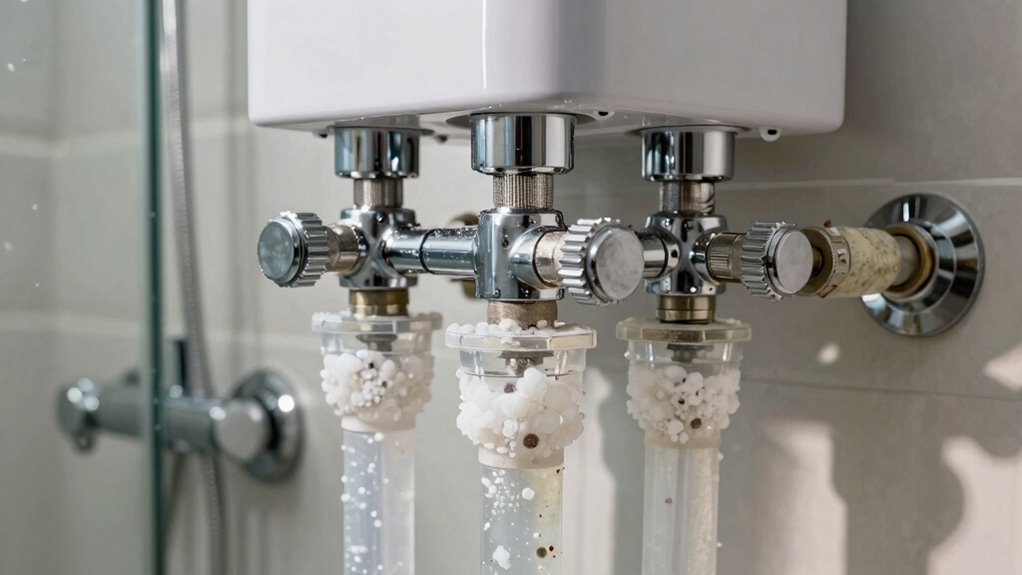
Water softeners remove minerals like calcium and magnesium that cause hard water, preventing buildup and damage. You might notice white spots on dishes, soap scum, reduced soap lather, or mineral deposits around fixtures. Hard water can clog pipes, harm appliances, and irritate your skin. Recognizing these signs now can save you from costly repairs later. Keep going to discover how to test your water and protect your home effectively.
Key Takeaways
- Hard water causes visible signs like soap scum, mineral deposits, and cloudy glassware that indicate the need for a water softener.
- Persistent buildup on fixtures and reduced soap lather are common signs homeowners often overlook.
- Mineral deposits can clog pipes and damage appliances, highlighting the importance of recognizing early hard water indicators.
- Testing water for calcium and magnesium levels confirms if a water softener is necessary.
- Installing a water softener helps prevent damage, improves water quality, and reduces mineral-related problems.
What Are Water Softeners and How Do They Work?
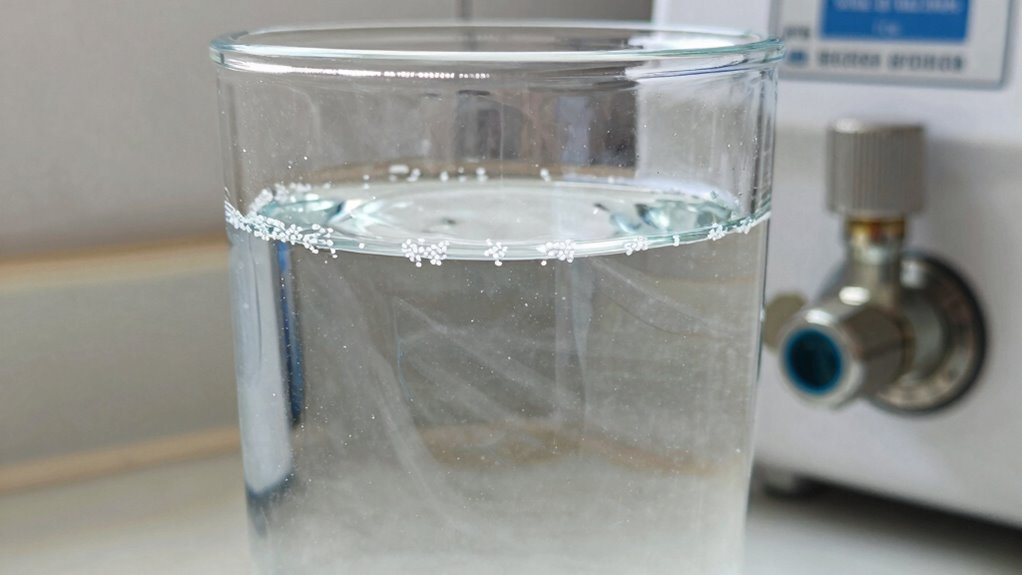
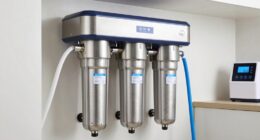
Water softeners are devices that remove minerals like calcium and magnesium from your water, preventing the formation of scale and buildup. They work through a process called ion exchange, where hard minerals are replaced with sodium or potassium ions. When water passes through the softener’s resin tank, these resin beads attract and hold onto calcium and magnesium ions, swapping them out for softer ions. This mineral removal process guarantees your water is less likely to cause clogs, soap scum, or damage to appliances. The system continuously regenerates itself by rinsing out accumulated minerals with a salt solution, restoring the resin’s ability to perform ion exchange. The regeneration process is carefully timed or triggered by water usage to maintain effective mineral removal. Effective mineral removal ensures your appliances and plumbing remain free from mineral buildup, reducing maintenance costs. Fundamentally, water softeners actively eliminate the hard minerals responsible for water hardness, making your water gentler on your home and plumbing. Regular maintenance and understanding the signs of hard water can help prolong the lifespan of your plumbing and appliances, saving you money in the long run. Being aware of hard water symptoms can help you determine if your system is functioning properly and needs attention, and understanding water chemistry can improve your ability to troubleshoot issues.
How Can You Recognize Hard Water Problems at Home?
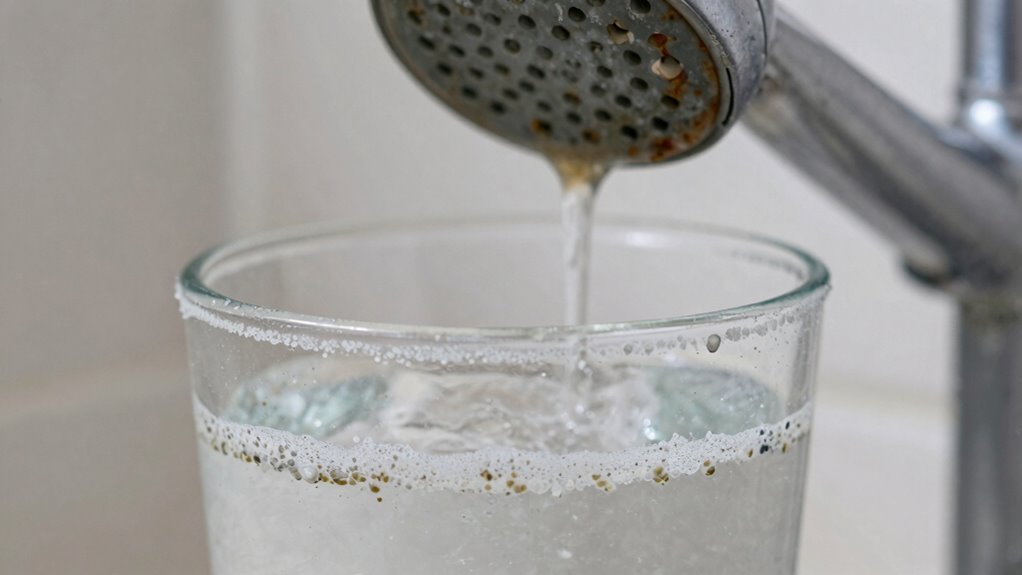
Have you noticed white spots on your dishes or soap scum buildup in your sink? These are common signs of hard water problems caused by poor water quality and mineral buildup. To recognize if you’re dealing with hard water, look out for:
White spots on dishes and soap scum indicate hard water issues from mineral buildup.
- Chalky deposits around faucets and showerheads
- Reduced soap lather and soap scum on surfaces
- Spotting or streaks on glasses and silverware
- White or grayish stains on sinks and bathtubs
- Free floating mineral particles that can sometimes be seen floating in the water or settling at the bottom of containers. Recognizing these hard water signs early can help you prevent damage to your plumbing and appliances over time, as hard water can cause mineral buildup that affects plumbing systems and reduces appliance lifespan. Paying attention to these signs helps you identify issues early and consider solutions like water softeners, which can mitigate mineral buildup and extend the life of your fixtures and appliances. Additionally, understanding the water chemistry involved can help you choose the most effective treatment options.
How Does Hard Water Affect Your Plumbing, Appliances, and Skin?
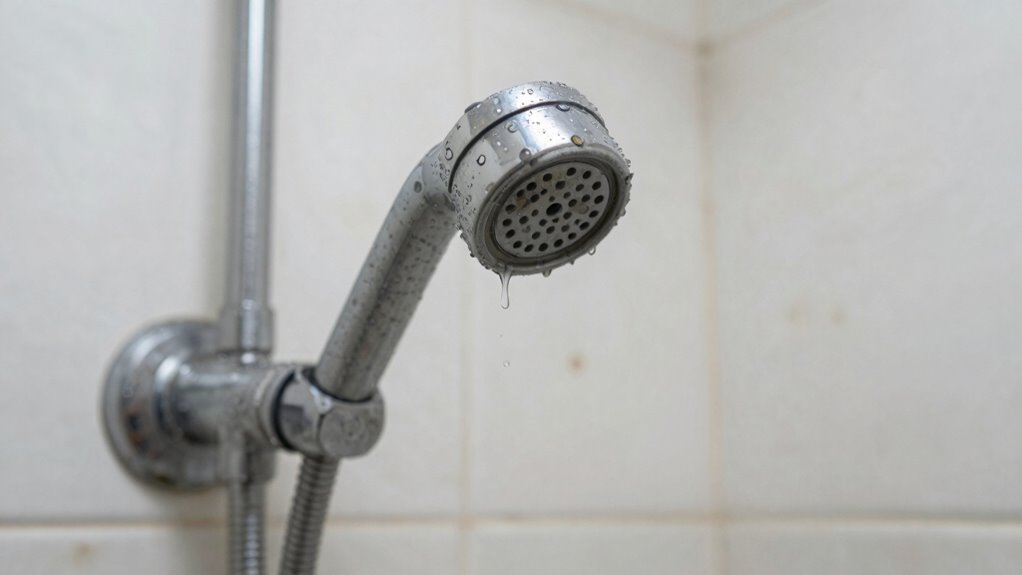
Hard water can cause significant problems for your plumbing, appliances, and skin. Mineral buildup from hard water can clog pipes, reducing water flow and increasing strain on your plumbing system. Over time, this buildup leads to plumbing corrosion, which may cause leaks or costly repairs. Appliances like dishwashers and water heaters also suffer, as mineral deposits impair efficiency and shorten their lifespan. On your skin, hard water strips natural oils, leading to dryness and irritation. Proper system maintenance can help mitigate some of these issues and prolong the life of your plumbing and appliances. Regularly testing your water quality and considering a water softening system can further protect your home. Recognizing hard water signs early can prevent more serious damage down the line. Being aware of the mineral content in your water can help you make informed decisions about treatment options. Additionally, understanding the effects of mineral deposits can guide you in choosing the most effective water treatment methods. Here’s a quick overview:
| Effect | Consequence |
|---|---|
| Mineral buildup | Clogs pipes, reduces flow |
| Plumbing corrosion | Causes leaks, costly repairs |
| Skin dryness | Irritation, dull appearance |
Is It Time to Install a Water Softener? Key Signs to Watch For
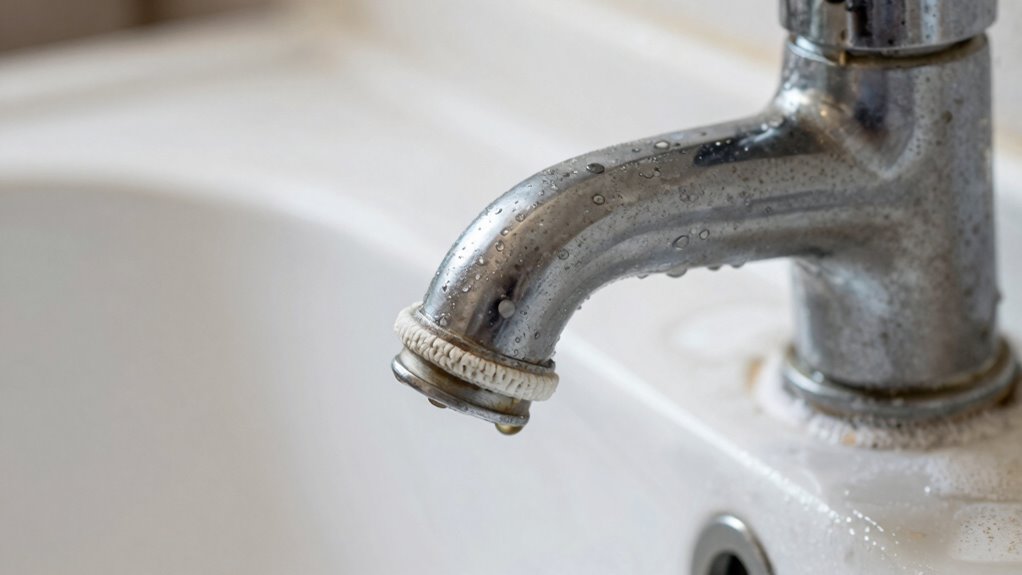
When signs of mineral buildup and appliance inefficiency become noticeable, it’s a clear indication that your water might be hard enough to warrant a water softener. You should consider installing one if you notice:
- Persistent water mineral buildup on fixtures and glassware
- Shower hardness buildup causing soap scum and reduced water flow
- Soap and shampoo not lathering well or rinsing off easily
- Appliances like dishwashers or water heaters working less efficiently or breaking down frequently
These signs point to high calcium and magnesium levels in your water. Ignoring them can lead to costly repairs and reduced appliance lifespan. Installing a water softener can prevent these issues and improve your water quality immediately.
How to Test for Hard Water and What Next Steps to Take
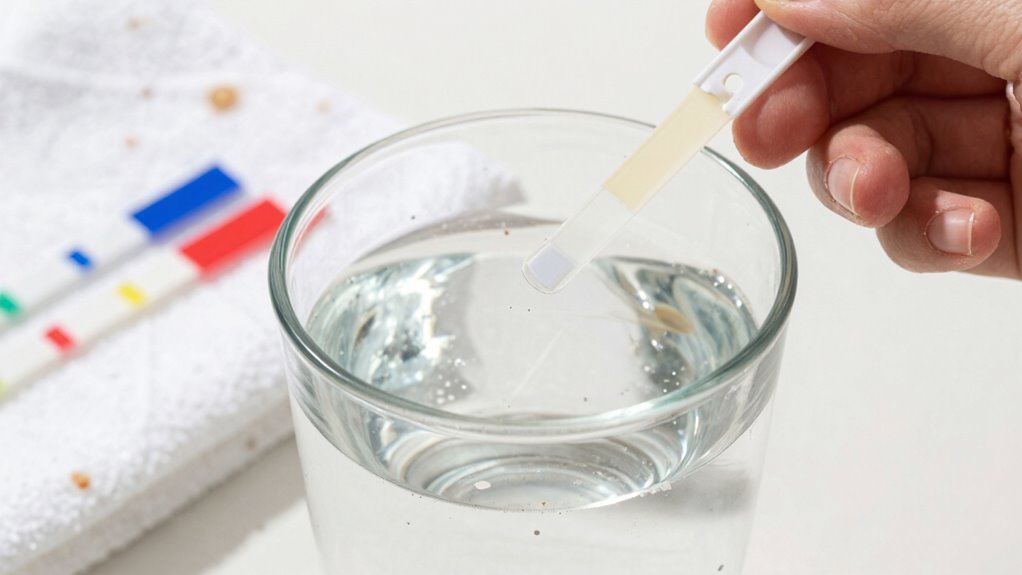
Wondering how to determine if your water is hard? The best way is to use water testing kits, which are simple and affordable. These kits typically include test strips that you dip into your water sample to check for hard water indicators like high calcium and magnesium levels. If the test shows positive, it confirms you have hard water. Once you identify hard water, consider your next steps. You might want to install a water softener to prevent issues like soap scum, mineral buildup, and appliance damage. Regular testing helps monitor water quality over time, ensuring your system works effectively. Paying attention to water purifier maintenance dos and don’ts ensures your water treatment systems continue to perform optimally. Additionally, understanding the science behind sound healing can enhance your approach to maintaining overall wellness. Taking these steps keeps your plumbing, appliances, and skin in good shape while saving money on repairs and maintenance. Moreover, knowing the effects of hard water on appliances can help you decide when a water softener is most urgently needed. Staying informed about sector performance metrics can also guide you in making better investment decisions related to water infrastructure and utilities.
Frequently Asked Questions
What Are the Long-Term Health Effects of Hard Water?
Hard water can impact your long-term health by stressing your kidneys, as they work harder to filter minerals like calcium and magnesium. It may also cause skin dryness and irritation, especially for sensitive skin. Over time, mineral buildup could lead to kidney issues or worsen skin conditions. To protect your health, consider using a water softener to reduce mineral levels and minimize these potential effects.
Can Water Softeners Remove Other Contaminants Besides Minerals?
Water softeners mainly target minerals like calcium and magnesium, but they don’t remove other contaminants. If you’re concerned about pollutants like chlorine, you should consider installing a water purifier alongside your softener. A water purifier can effectively remove chlorine, bacteria, and other impurities, ensuring safe, clean water. Combining both systems provides thorough protection, giving you peace of mind about your water quality and health.
Are There Eco-Friendly or Salt-Free Water Softening Options?
Yes, there are eco-friendly alternatives and salt-free methods for softening water. These options, like template-based conditioners or template-assisted crystallization, don’t use salt or chemicals, making them better for the environment. You can choose salt-free methods that reduce sodium intake and are easier to maintain. By opting for eco-friendly alternatives, you protect both your household and the planet while effectively reducing hard water issues.
How Often Should a Water Softener Be Maintained or Regenerated?
You should follow your water softener’s maintenance schedule and perform regeneration based on its recommended frequency, typically every 2-4 weeks. Keep an eye on your water usage and hardness levels, as higher usage or harder water may require more frequent regeneration. Regular maintenance guarantees your softener functions efficiently, prevents mineral buildup, and extends its lifespan. Staying consistent with these intervals keeps your water soft and your appliances protected.
What Are the Costs Involved in Installing and Maintaining a Water Softener?
Investing in a water softener involves a modest initial investment, with installation costs typically ranging from $500 to $2,500 depending on your home’s needs. Maintenance expenses are generally minimal, often involving annual salt refills and occasional system checks. While there’s an upfront cost, the benefits of prolonging appliance life and reducing soap usage make it a worthwhile, elegant choice for maintaining your home’s water quality seamlessly.
Conclusion
If you’re noticing signs like limescale buildup or dry skin, it’s time to think about a water softener. Did you know that over 85% of U.S. homes have hard water? Installing a softener can protect your plumbing, extend appliance lifespan, and improve your skin’s health. Don’t ignore these warning signs—taking action now can save you money and hassle down the road. Make the switch and enjoy cleaner, softer water every day.