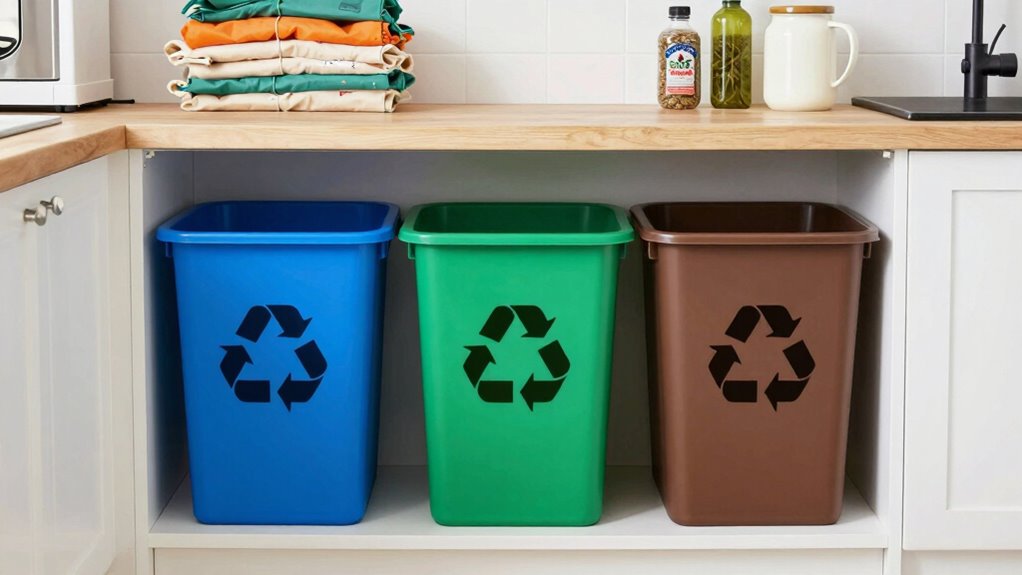

To set up a practical home recycling zone, start by choosing clearly labeled bins for paper, plastic, glass, and metals, placing them in a convenient, accessible spot like the kitchen or utility area. Keep them waist-level and close to waste sources to encourage regular use. Establish a routine for sorting, rinsing containers, and emptying bins regularly. Stay updated on local recycling rules to guarantee compliance. Keep going to discover more tips for building an efficient waste system.

Get furniture and decor delivered free with Prime
- Fast, free delivery on millions of items
- Prime Video, Amazon Music and more included
- Member-only deals all year
Key Takeaways
- Designate a dedicated, easily accessible area near main waste points in the kitchen or utility room.
- Use labeled, color-coded bins with lids for each recyclable material to promote proper sorting.
- Position bins at waist level for convenience and encourage consistent use.
- Establish a weekly routine for sorting, emptying, and maintaining the recycling zone.
- Educate household members on local recycling rules and proper waste separation practices.
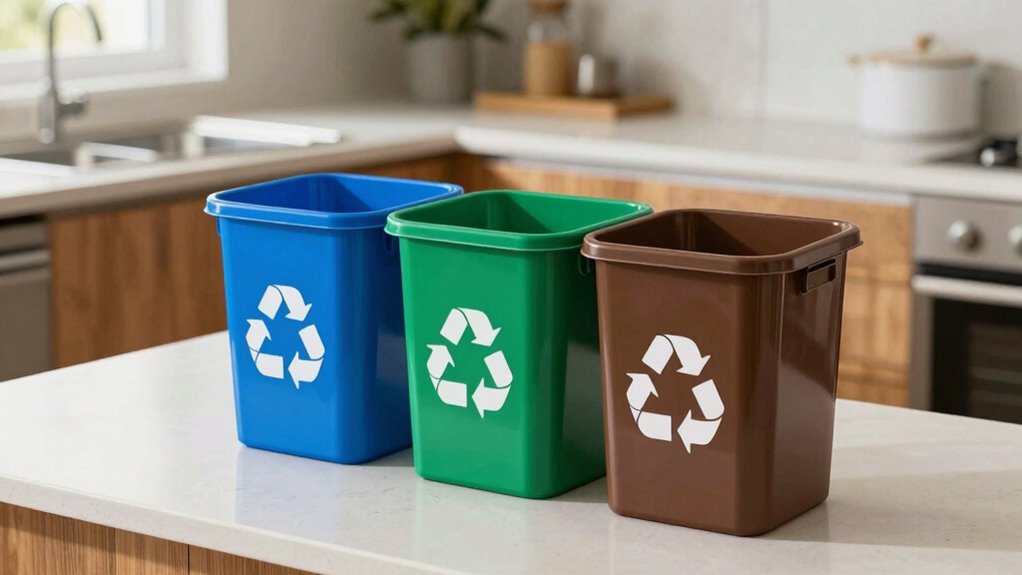
Creating a practical home recycling zone can considerably reduce waste and make eco-friendly living easier. The first step is to choose the right recycling bins. You want bins that are clearly labeled for different materials—paper, plastic, glass, and metals—so waste sorting becomes straightforward. Look for bins with lids that prevent odors and keep pests out, and consider sizes that fit your space and household volume. Having dedicated bins for each material helps you stay organized and makes the recycling process less messy.
Once you’ve selected your bins, find a convenient location in your home. Typically, a corner in your kitchen or utility area works well. You want your recycling zone to be accessible but not in the way of daily activities. Mounting or placing the bins at waist level makes waste sorting easier, so you won’t have to bend down or reach up. Keep your recycling zone close to where most waste is generated, like near the sink or food prep area, to encourage consistent use.
Place bins at waist level near your main waste areas for easy, consistent recycling.
Next, establish a waste sorting routine. Make it simple by teaching everyone in your household how to separate recyclables properly. Clearly label each bin with both words and images to avoid confusion, especially if you have children. Encourage everyone to rinse out containers before disposal to prevent odors and contamination. Regularly empty the bins to prevent overflow and keep your recycling zone tidy. If space allows, consider adding a compost bin for organic waste, complementing your recycling efforts and reducing landfill contributions. Educating your household on proper waste separation can significantly improve your recycling success and reduce errors.
To maintain efficiency, set a schedule for sorting and disposing of recyclables. A weekly routine works well for most households. Keep a trash and recycling calendar on or near your recycling zone to remind everyone of collection days. Use clear containers or bags inside the bins so you can see when they’re full and need to be emptied. Also, consider adding a small storage area for recyclables that aren’t collected weekly, like glass bottles or cardboard, to prevent clutter. Incorporating proper waste separation practices can significantly enhance your recycling effectiveness. Being aware of local recycling regulations can help you avoid common mistakes and ensure your efforts are successful.
Finally, educate yourself and your household about local recycling regulations. Some communities require specific sorting procedures or have restrictions on certain materials. Staying informed ensures you’re recycling correctly, avoiding contamination that could send your recyclables to landfill instead. Additionally, understanding recycling guidelines can help you optimize your efforts and reduce errors. By establishing a dedicated, well-organized recycling zone with proper waste sorting practices, you’ll find it easier to maintain eco-friendly habits, reduce your household waste, and contribute positively to the environment.
recycling bins with lids for kitchen
As an affiliate, we earn on qualifying purchases.
As an affiliate, we earn on qualifying purchases.
Frequently Asked Questions
What Are the Most Common Recyclable Materials in Households?
You’ll find the most common recyclable materials in households include paper, cardboard, plastics, glass, and metals. Composting guidelines can help reduce organic waste, but be aware of recycling myths—like certain plastics being recyclable everywhere. Always check local guidelines to guarantee proper recycling. By sorting these materials correctly, you’re helping reduce landfill waste and promoting environmental sustainability in your home.
How Do I Educate Family Members About Recycling Practices?
Think of yourself as a captain guiding your crew—motivation is key. Use motivational techniques like positive reinforcement and set clear goals. Incorporate visual aids such as colorful charts or labeled bins to make recycling practices clear and engaging. Share stories or facts about environmental impact to inspire action. By making it simple, fun, and visual, you’ll encourage your family to adopt consistent recycling habits effortlessly.
Which Recycling Bins Are Best Suited for Small Spaces?
For small spaces, choose compact bin options that maximize space-saving solutions. Look for slim, stackable, or multi-compartment bins that fit neatly in tight areas like under sinks or in corners. You can also opt for collapsible bins that fold when not in use. These space-efficient recycling bins help you maintain an organized, eco-friendly home without sacrificing valuable room, making recycling easy and accessible even in limited spaces.
How Often Should I Clean and Maintain My Recycling Zone?
Think of your recycling zone like a well-tuned machine—regular maintenance keeps it running smoothly. You should clean your recycling bins at least once a month to prevent odors and buildup. Maintain proper waste separation techniques and keep bins in their designated recycling bin placement spots. Regularly check for leaks or spills, and rinse bins as needed. Consistent upkeep guarantees your recycling zone stays efficient and odor-free, making sustainability easier.
Are There Local Recycling Regulations or Restrictions I Should Know?
You should check your local recycling laws and regional waste policies to stay compliant. Regulations vary by area, dictating what materials are accepted and how they should be sorted. Visit your city or county’s official website or contact local waste management services for specific rules. Staying informed helps you avoid contamination, fines, and guarantees your recycling efforts support community sustainability. Regularly review updates to remain compliant.
Conclusion
By creating a clear, convenient, and consistent recycling zone, you turn waste into a worthwhile task. Keep your containers clean, your cues clear, and your commitment constant. Remember, a well-organized recycling space not only simplifies sorting but also sustains your sustainable spirit. So, stay steady, streamline your setup, and solidify your eco-friendly efforts—because a successful recycling zone starts with your dedication and a dash of detail-driven discipline.
Columbus Day / Indigenous Peoples' Day Picks
long weekend sales
As an affiliate, we earn on qualifying purchases.