
To compost indoors without smells or gnats, choose a sealed container with good ventilation, like a tumbler or a bin with filters. Layer green scraps with browns like paper or dry leaves, and turn it regularly to keep odors down. Keep the compost dry and cover it well, using pest traps or natural repellents if needed. Proper management makes indoor composting hassle-free—if you stay on top of it, you’ll enjoy fresh compost without the mess.
Key Takeaways
- Use a sealed container with proper ventilation and odor filters to contain smells effectively.
- Layer compost with carbon-rich materials like shredded paper to absorb odors and reduce moisture.
- Cover compost with dry materials such as sawdust or shredded paper to prevent gnat breeding sites.
- Regularly turn and empty the bin to aerate, control moisture, and prevent pest buildup.
- Avoid adding meat, dairy, or oily scraps; focus on fruit and vegetable peels to minimize odors and pests.

EPICA Countertop Compost Bin Kitchen | 1.3 Gallon | Odorless Composting Bin with Carbon Filters | Indoor Compost Bin with Lid | Stainless Steel Kitchen Composter for Food Scraps & Waste Recycling
FEATURED IN BON APPETIT & FORBES: Recognized by renowned magazines, EPICA’s compost bin is a perfectly sized marvel…
As an affiliate, we earn on qualifying purchases.
As an affiliate, we earn on qualifying purchases.
Choosing the Right Container for Indoor Composting

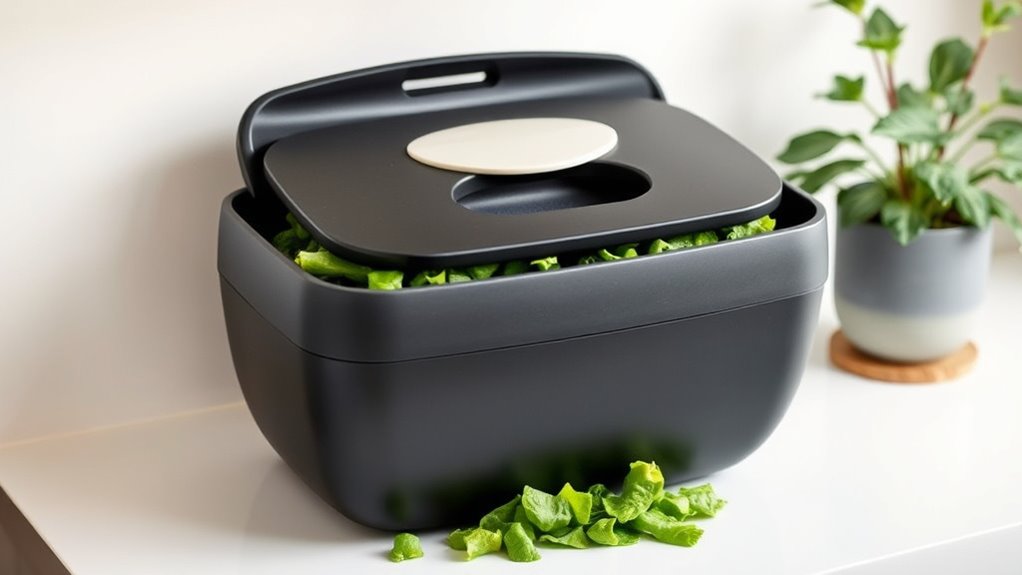
Selecting the right container is essential to successful indoor composting because it keeps odors contained and pests out. When choosing container types, consider options like bins with lids, tumblers, or specialized indoor composters. Material selection is equally important; ceramic and metal containers are durable and odor-resistant, while plastic options are lightweight and affordable. Look for containers with secure lids to prevent smells from escaping and pests from entering. Ventilation features, such as small holes or filters, can also help maintain a fresh environment inside your compost bin. Avoid containers that are too large or heavy for your space, and opt for ones that fit comfortably on your countertop or in a designated area. A well-chosen container simplifies your composting process and keeps your environment clean. Additionally, choosing a container with odor control features can further enhance your indoor composting experience.
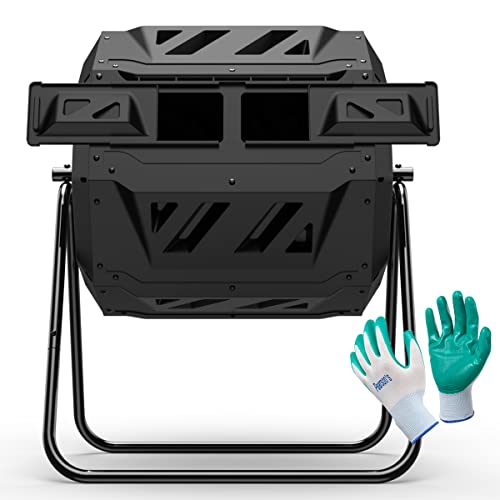
Compost Tumbler Bin Composter Dual Chamber 43 Gallon (Bundled with Pearson's Gardening Gloves)
✅Speed Up Composing Process: More advanced models use rotating to bring oxygen to the center of the bin…
As an affiliate, we earn on qualifying purchases.
As an affiliate, we earn on qualifying purchases.
Managing Odors With Effective Materials and Techniques
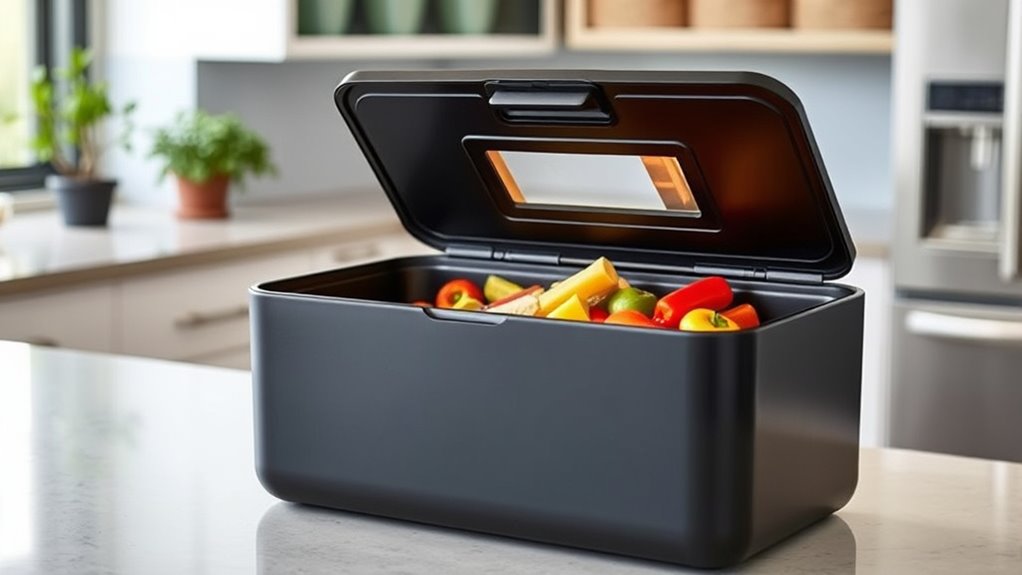
To keep indoor composting smelling fresh, using the right materials and techniques is essential. Start by layering your compost with carbon-rich materials like shredded paper or dry leaves, which help absorb odors. Incorporate odor neutralizers such as baking soda or commercial compost deodorizers directly into the bin to control smells. Air filtration can also play a significant role; using a small, vented system or charcoal filter helps trap odors before they escape. Regularly turning your compost aerates it and minimizes odor buildup. Keep the bin lid tightly sealed, and avoid overfilling to prevent unpleasant smells from escaping. Additionally, understanding the weight of your compost bin can help you manage its placement and transportation more effectively. Combining these materials and techniques ensures your indoor compost stays fresh, odor-free, and hassle-free.

6 Pack Charcoal Filters for Compost Bucket, 6.7 Inch Compost Filters for Countertop Bin, Activated Carbon Replacement Filters for Kitchen Compost Bins, Home Bucket Compost Bin Refill, Round
Odor Elimination: Our charcoal filters are designed to absorb and trap odors in garbage cans and compost bins;…
As an affiliate, we earn on qualifying purchases.
As an affiliate, we earn on qualifying purchases.
Preventing and Controlling Gnat Infestations
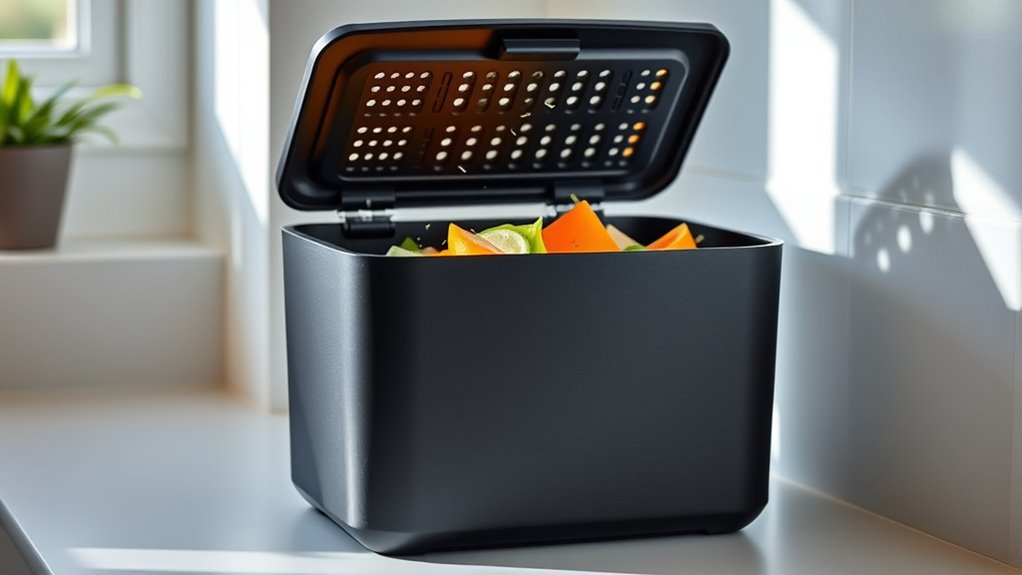
Gnat infestations can quickly become a nuisance if you don’t take proactive steps to prevent them. Gnats thrive in the moist, organic gnat habitat created by composting bins, especially if food scraps or damp materials are exposed. To prevent this, cover compost with a layer of dry material like shredded paper or sawdust to reduce moisture and discourage gnats. Regularly empty and clean your compost bin to eliminate any gnat breeding sites. Pest repellents, such as apple cider vinegar traps or essential oils like peppermint or citronella, can help catch or deter adult gnats. Keep the area around your compost dry and well-ventilated, and avoid overfeeding or adding too much wet material. Additionally, understanding Personal Finance Management can help you budget for pest control supplies or upgrades to your composting system, making it easier to maintain a pest-free environment. These measures will help you control gnat populations and keep your indoor compost hassle-free.
EPICA Countertop Compost Bin Kitchen | 1.3 Gallon | Odorless Composting Bin with Carbon Filters | Indoor Compost Bin with Lid | Stainless Steel Kitchen Composter for Food Scraps & Waste Recycling
FEATURED IN BON APPETIT & FORBES: Recognized by renowned magazines, EPICA’s compost bin is a perfectly sized marvel…
As an affiliate, we earn on qualifying purchases.
As an affiliate, we earn on qualifying purchases.
Proper Layering and Maintenance for Hassle-Free Composting
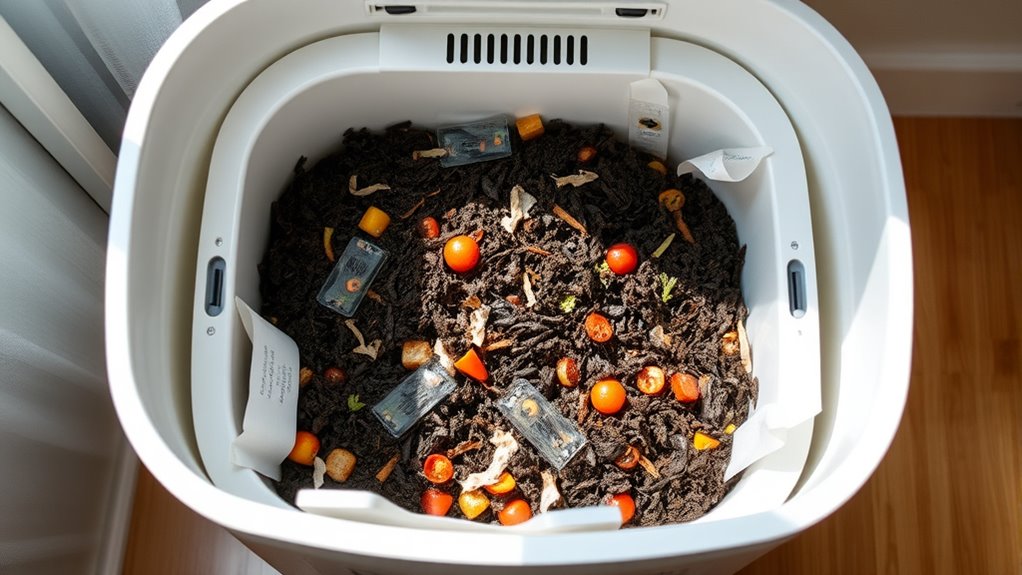
Proper layering and regular maintenance are key to keeping your indoor composting system efficient and odor-free. Start with a layer of browns like shredded paper or dry leaves, which help with soil aeration and moisture control. Add green food scraps on top, but don’t overfill—this prevents excess moisture and odors. Cover fresh scraps with more browns to maintain balance. Turn or gently mix the compost every week to improve soil aeration and prevent compaction. Keep the moisture level consistent—your compost should feel damp but not soaked. Proper layering avoids gnat infestations and odors, while regular maintenance ensures decomposition stays active and efficient. Ensuring proper color balance within your compost helps optimize microbial activity and decomposition rate, keeping your indoor compost hassle-free and odorless.
Using Appropriate Food Scraps and Avoiding Common Mistakes

Choosing the right food scraps is essential for successful indoor composting, as not all kitchen waste breaks down equally or safely. Focus on fruit scraps and vegetable peels, which decompose quickly and add valuable nutrients. Avoid meat, dairy, oily foods, and processed snacks, as they can cause odors and attract pests. Don’t include citrus peels or onion scraps in large quantities; they can disrupt the compost balance and cause odor issues. Chop larger scraps into smaller pieces to speed up decomposition. Keep a balanced mix of greens (fruit and vegetable scraps) and browns (paper or dry leaves) to prevent odors and gnat problems. Regularly monitor your compost, removing any non-compostable waste, and avoid overloading it with food scraps to maintain a hassle-free indoor composting system.
Tips for Harvesting and Using Your Indoor Compost Efficiently

Once your indoor compost has matured and shows a dark, crumbly texture, it’s time to harvest and put it to good use. Begin by gently removing the finished compost from your bin, being careful not to disturb the layers unnecessarily. Use some of the compost to make nutrient-rich compost tea, which boosts your houseplants’ growth. To maximize efficiency, place your compost bin in a well-ventilated, stable spot away from direct sunlight, preventing odors and pests. Regularly check the moisture level and aerate the compost to keep it active. Proper harvesting guarantees you get the most nutrients from your compost, while compost tea offers a convenient way to nourish your plants without overfeeding. Incorporating indoor composting into your routine can help reduce waste and create a sustainable gardening practice. With these tips, you’ll enjoy healthy, thriving indoor greenery.
Frequently Asked Questions
How Often Should I Empty My Indoor Compost Container?
You should empty your indoor compost container once it’s full or every 1-2 weeks, depending on its size and your composting schedule. Larger containers can go longer, but smaller ones need more frequent attention to prevent odors or pests. Check it regularly, and when it’s nearing capacity, empty and clean it to keep composting hassle-free. Staying consistent guarantees your indoor compost remains fresh and odorless.
Can I Compost Dairy and Meat Indoors Safely?
Sure, you can compost dairy and meat indoors, but don’t be surprised if your kitchen turns into a gourmet gnat buffet. Dairy composting and meat composting tend to smell and attract pests, even if you have an odorless setup. If you’re brave enough to try, keep the bin sealed tight and bury scraps deep. Otherwise, stick to plant-based scraps for fuss-free indoor composting without the unwanted aroma or visitors.
What Are the Signs of a Compost Bin Problem?
If your compost bin develops odors or pests, it’s a sign of a problem. You might notice unpleasant smells indicating excess moisture or imbalance, which can attract pests. To prevent this, turn the compost regularly, add dry materials, and avoid overloading it with food scraps. Proper pest prevention and managing compost bin odors guarantee your indoor composting stays fuss-free and odorless, keeping your space clean and pest-free.
How Do I Prevent Mold Growth in My Compost?
To prevent mold growth in your compost, focus on mold prevention by maintaining proper moisture control. Keep your compost moist but not soaked—aim for a damp sponge consistency. Turn the compost regularly to aerate it and distribute moisture evenly. Avoid adding too much green waste, which can increase moisture. Using a good balance of browns and greens also helps prevent mold, ensuring your compost stays healthy and odor-free.
Is It Necessary to Aerate the Compost Regularly?
Yes, you should aerate your compost regularly. Good air circulation prevents anaerobic conditions that cause odors and slow decomposition. It also helps regulate moisture levels, so your compost doesn’t become too wet or dry. By turning or mixing the compost weekly, you make certain oxygen reaches all parts, promoting healthy microbial activity. This simple step keeps your indoor compost odor-free, gnat-free, and fuss-free while speeding up the composting process.
Conclusion
By following these tips, you can enjoy hassle-free indoor composting without odors or gnats. Did you know that over 30% of household waste can be composted instead of sent to landfills? With the right container, proper layering, and mindful food choices, you’ll turn scraps into nutrient-rich soil effortlessly. Stick to these practices, and you’ll be surprised how simple and rewarding composting indoors can be—bringing sustainability right into your home.