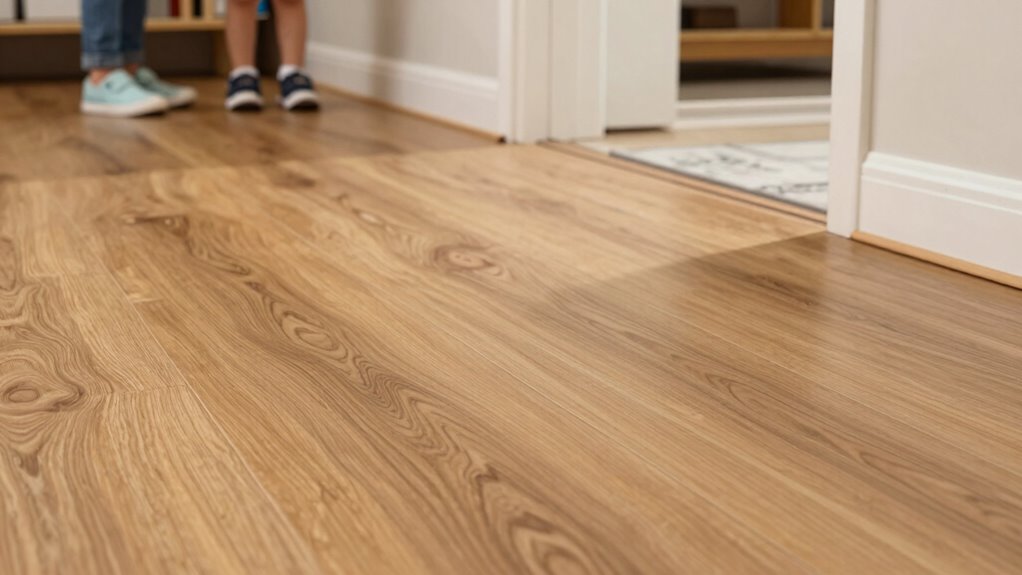

To choose lower-impact flooring for busy homes, focus on eco-friendly, durable materials like bamboo, cork, or recycled laminate that stand up to wear and tear. Look for options with sound absorption qualities to keep noise down and improve comfort. Make sure the flooring is made through eco-conscious manufacturing processes and carries certifications like FloorScore or GreenGuard. This way, you’ll get a healthy, long-lasting surface that’s gentle on the environment—and much more to discover if you keep exploring.

Get furniture and decor delivered free with Prime
- Fast, free delivery on millions of items
- Prime Video, Amazon Music and more included
- Member-only deals all year
Key Takeaways
- Select flooring made from sustainable, certified materials like bamboo, cork, or recycled content to reduce environmental impact.
- Prioritize options with natural sound absorption properties, such as cork or wool carpets, to enhance indoor comfort.
- Choose durable, resilient flooring that withstands high traffic, spills, and cleaning to ensure longevity.
- Consider eco-friendly manufacturing practices to minimize the overall environmental footprint of the flooring.
- Balance eco-conscious features with ease of maintenance to support a healthy, low-impact home environment.
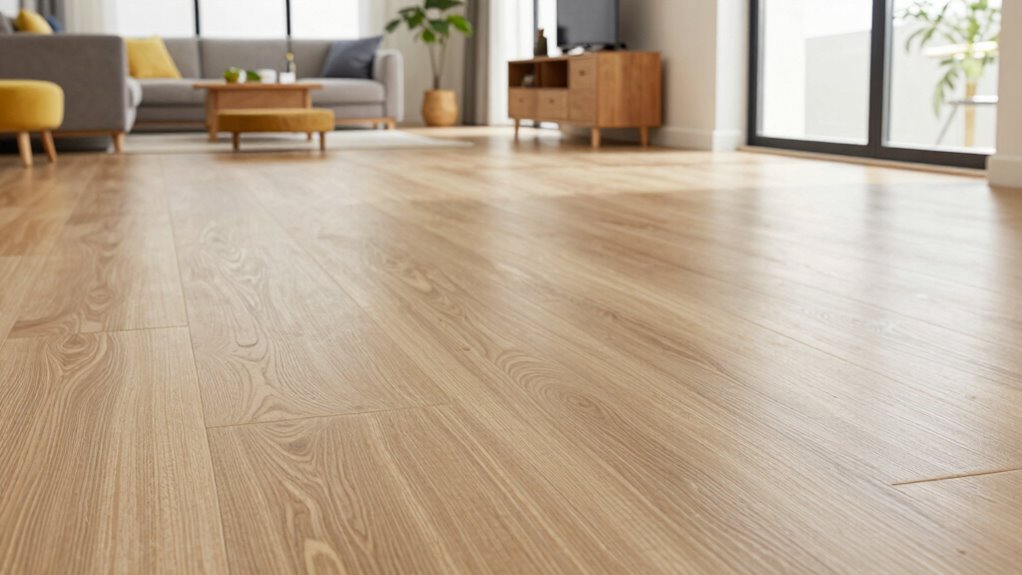
Are you looking for flooring options that are kinder to the environment and easier on your health? If so, you’re probably interested in eco-friendly materials that not only reduce your carbon footprint but also improve your home’s comfort. When choosing lower-impact flooring, it’s essential to weigh how the materials are sourced and manufactured. Many eco-friendly options are made from sustainable resources, such as bamboo, cork, or recycled materials, which help conserve natural habitats and reduce waste. These options often emit fewer volatile organic compounds (VOCs), making them healthier for your indoor air quality, especially in a busy household where family members spend a lot of time indoors.
Beyond environmental benefits, you should also think about the sound absorption properties of your flooring. In a busy home, noise from footsteps, furniture, and everyday activity can become a real nuisance. Flooring with good sound absorption qualities can substantially reduce noise transmission, creating a quieter, more peaceful environment. Cork, for example, is naturally sound-absorbing and provides excellent acoustic insulation, making it ideal for homes with children or open-concept layouts. Similarly, carpets made from natural fibers like wool can also dampen sound effectively, though they may require more maintenance. When selecting lower-impact flooring, durability is a key factor. Busy households need flooring that can withstand high traffic, spills, and frequent cleaning without deteriorating quickly. Eco-friendly materials like bamboo are surprisingly resilient and grow rapidly, offering a sustainable alternative to traditional hardwoods. Laminate flooring with a recycled core can also be a durable, eco-conscious choice, especially if it features a protective layer resistant to scratches and moisture. Additionally, look for flooring with certifications like FloorScore or GreenGuard, which verify low emissions and environmental safety. Incorporating sustainable resources into your flooring choices helps support responsible forestry and manufacturing practices, making your home more environmentally friendly. It’s also beneficial to consider the manufacturing process, as environmentally friendly methods can further reduce your home’s overall impact. Choosing flooring made with eco-conscious manufacturing can ensure you’re supporting more responsible and sustainable production methods. By choosing lower-impact flooring that balances environmental benefits, sound absorption, durability, and ease of maintenance, you create a home that’s healthier for your family and better for the planet—all while standing up to the demands of a busy household.
As an affiliate, we earn on qualifying purchases.
Frequently Asked Questions
How Durable Is Lower-Impact Flooring Over Time?
Lower-impact flooring is quite durable over time, especially when it undergoes durability testing and demonstrates strong wear resistance. You’ll find that materials like cork or rubber are designed to withstand heavy foot traffic, spills, and daily wear. Regular maintenance helps prolong their lifespan. While no flooring is entirely indestructible, selecting options with proven durability testing results guarantees your floor stays resilient and looks great even in busy home environments.
Is Lower-Impact Flooring Suitable for Outdoor Areas?
Lower-impact flooring is generally not ideal for outdoor areas, as it’s like trying to keep a sandcastle intact against waves. It often lacks the outdoor durability and weather resistance needed to withstand sun, rain, and varying temperatures. For outdoor spaces, opt for materials specifically designed for weather resistance, like composite decking or stone, which withstand the elements better and keep your space looking great longer.
What Is the Cost Difference Compared to Traditional Flooring?
Lower-impact flooring generally costs more upfront than traditional options, but the price factors vary. You might pay a premium for materials like cork or rubber compared to wood or tile. However, your cost comparison also includes durability, installation, and maintenance costs. While the initial investment is higher, lower-impact flooring can save you money long-term through reduced repairs and replacements, making it a smart, cost-effective choice for busy homes.
How Easy Is It to Install Lower-Impact Flooring?
Installing lower-impact flooring is generally straightforward, especially if you choose materials with high installation ease and material flexibility, like vinyl or cork. These options often come with click-lock systems or adhesive backing, making DIY installation feasible. You won’t need specialized tools or skills, and they adapt well to various subfloor types. Overall, with proper preparation, you can enjoy a smooth, hassle-free installation process that fits your busy schedule.
Are There Specific Maintenance Requirements for This Flooring?
You won’t have to break the bank with maintenance on lower-impact flooring. Regular cleaning with sweeping or vacuuming keeps dirt at bay, and a damp mop once a week maintains its shine. For stain removal, act fast with gentle cleaning solutions to prevent lasting marks. This flooring is designed to be low-maintenance, so you can focus on what really matters—living your busy life without worrying about constant upkeep.
Conclusion
Now that you know what to look for, your next move could transform your home in ways you never imagined. Will you choose the flooring that balances durability with eco-friendliness? Or will you be tempted by the latest trends, risking higher impact? The choice is yours, and it’s more important than ever. Remember, the right flooring isn’t just about looks—it’s about creating a space that lasts. Are you ready to make the smart move?
Columbus Day / Indigenous Peoples' Day Picks
long weekend sales
As an affiliate, we earn on qualifying purchases.