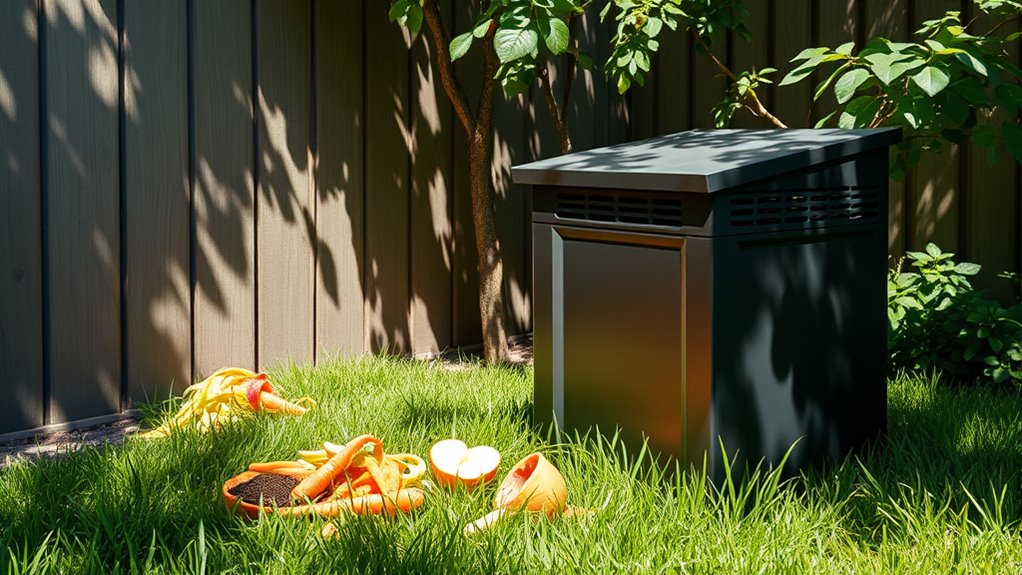

To compost at home without odors, choose a well-ventilated spot away from entrances and pests, and keep it shaded. Balance green waste like food scraps with browns such as leaves or shredded paper, aiming for about 1 part greens to 2-3 parts browns. Regularly turn the compost to promote airflow, and add covers or odor-absorbing materials like charcoal. Proper moisture and site management help prevent foul smells; keep exploring for more expert tips.
Key Takeaways
- Place the compost bin in a well-ventilated, shaded, and pest-free area with good drainage.
- Maintain a proper green-to-brown ratio (1:2-3) to control moisture and odors.
- Turn and aerate the compost regularly to promote airflow and prevent sour smells.
- Use cover materials like straw or shredded paper and add odor-absorbing additives such as charcoal or biochar.
- Keep moisture balanced and ensure the container is stable, level, and properly ventilated for optimal decomposition.
Understanding What Causes Odors in Composting

Odors in composting occur mainly when organic materials break down unevenly or too quickly, creating an environment that promotes foul smells. The compost smell often results from certain odor sources, like excess wetness or rotting food, which release gases such as ammonia and sulfur compounds. When your compost has too many green materials or is too moist, decomposition becomes anaerobic, leading to strong, unpleasant odors. Conversely, dry or balanced composting produces fewer odor problems. Recognizing these odor sources helps you identify what’s causing the smell. Poor aeration, overloading with kitchen scraps, or adding inappropriate materials can all contribute to foul odors. Proper filtration systems, such as aeration techniques, can help manage odors and promote aerobic decomposition. By understanding what causes these issues, you can take steps to prevent or reduce the compost smell effectively.
Balancing Greens and Browns for a Fresh-Smelling Compost

Achieving a fresh-smelling compost starts with properly balancing green and brown materials. Too many greens, like fruit scraps and grass clippings, can lead to composting mishaps such as excess moisture and foul odors. Brown materials, such as dry leaves and cardboard, help absorb moisture and provide carbon, promoting airflow and reducing odor. Aim for a balance of roughly one-third greens to two-thirds browns by volume. This combo supports efficient decomposition and odor elimination. If your compost starts smelling sour or rotten, it’s usually due to an imbalance—too many greens or excess moisture. Adjust by adding more browns and turning the pile regularly. Properly balancing greens and browns is key to avoiding odors and maintaining a healthy, fresh-smelling compost. Monitoring compost temperature can also help ensure proper decomposition and prevent odors.
Proper Compost Pile Management Techniques

To keep your compost healthy, you need to balance greens and browns and guarantee proper aeration. It’s also important to monitor moisture levels so your pile doesn’t get too wet or dry. Mastering these management techniques helps your compost break down efficiently and smell fresh. Incorporating proper composting techniques can further optimize the process and prevent odors.
Balance Green and Brown
Balancing green and brown materials is essential for maintaining an effective compost pile. Many composting myths suggest that adding only greens or only browns will work, but microbial activity thrives on a proper mix. Green materials, like kitchen scraps and fresh grass clippings, provide nitrogen, while brown materials, such as leaves and paper, supply carbon. Too many greens can cause odors and slow decomposition, while excess browns make the process sluggish. Aim for a balanced ratio, roughly 1 part greens to 2-3 parts browns. This balance fuels microbial activity, which breaks down organic matter efficiently. Proper compost pile management ensures the environment stays active and odor-free, preventing issues like foul smells and incomplete decomposition. By managing this mix carefully, you create the ideal environment for composting without unpleasant smells, ensuring your compost pile remains active and odor-free.
Maintain Proper Aeration
Ensuring proper aeration is crucial for a healthy compost pile, as it allows oxygen to reach microbes that decompose organic matter. To promote good airflow patterns, turn your compost regularly to prevent compaction and guarantee oxygen distribution throughout the pile. This helps avoid anaerobic conditions that can trigger foul odors and slow decomposition. Incorporate coarse materials like sticks or straw to create air pockets, enhancing airflow. Monitoring your pile for compost triggers such as excessive moisture or foul smell can indicate poor aeration. If you notice these signs, aerate more frequently or add dry materials to improve airflow. Proper management of airflow not only speeds up composting but also keeps odors at bay, making your home composting process cleaner and more efficient. Additionally, understanding proper composting techniques can help optimize the entire process and prevent issues like odors.
Control Moisture Levels
Controlling moisture levels is essential for an effective compost pile because too much or too little moisture can hinder the decomposition process. You need to monitor moisture regularly to maintain ideal dampness. If your pile feels dry, add water or moist green materials. If it’s too wet, turn the pile to promote evaporation and add dry materials like shredded leaves to prevent dampness. Use moisture monitoring tools or simply squeeze a handful; it should feel like a damp sponge. Here’s a quick guide:
| Too Dry | Just Right | Too Wet |
|---|---|---|
| Add water or greens | Maintain moisture | Turn the pile, add dry materials |
| Compost slows down | Microorganisms thrive | Foul odor risk |
| Soil feels crumbly | Odor-free compost | Excess moisture causes odors |
Choosing the Right Location for Your Compost Bin

Choosing the right location for your compost bin is essential to its success and your convenience. Place it in a spot that’s easily accessible but shielded from strong winds and direct sunlight, which can affect compost temperature. A shaded area helps maintain consistent heat, promoting faster decomposition and reducing the chance of attracting garden pests. Avoid placing the bin near your vegetable garden or outdoor dining areas to minimize pest issues. Keep it on well-drained soil or a stable surface to prevent odors from seeping into the ground. Guarantee good airflow around the bin to regulate temperature and discourage pests. Ensuring proper air circulation around the compost helps maintain optimal conditions for decomposition. Selecting an appropriate spot makes composting more efficient, odor-free, and manageable, turning waste into valuable compost without attracting unwanted critters.
Using Effective Odor Control Additives and Cover Materials

To keep odors in check and maintain a pleasant composting experience, using effective additives and cover materials is essential. Odor absorbing additives like activated charcoal, biochar, or compost starters help neutralize smells. Cover material options include straw, shredded newspaper, or wood chips, which help trap odors and regulate moisture. These materials work together to prevent unpleasant smells from escaping and keep your compost aerated. Regularly adding odor absorbing additives ensures that the compost remains balanced and odor-free. Choosing the right cover materials also protects against pests and excess moisture. Proper aeration is crucial for odor control and compost health, and aeration techniques can significantly improve the process. By layering these additives and cover options, you create an environment that minimizes odors while promoting healthy compost breakdown. Implementing these strategies keeps your compost system clean and odorless.
Tips for Maintaining a Healthy and Fragrance-Free Compost System
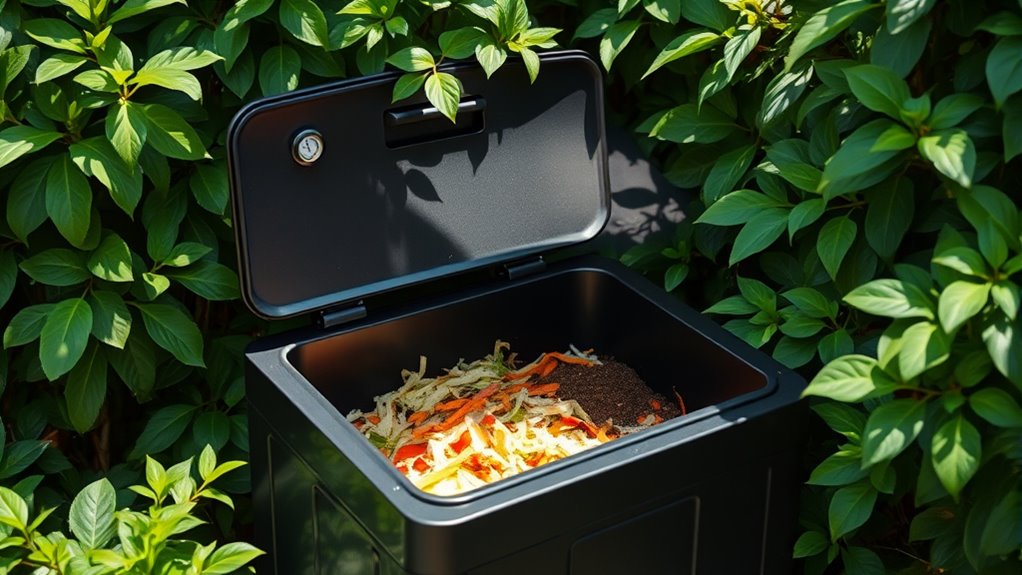
To keep your compost healthy and smell-free, you need to focus on balancing greens and browns, turning it regularly, and ensuring proper aeration. Choosing the right container and placing it in a suitable location also makes a big difference. These simple steps help maintain a vibrant, odorless compost system.
Proper Balance of Greens and Browns
Maintaining the right balance of greens and browns is essential for a healthy, odor-free compost system. Too many greens can lead to odor issues, while too many browns slow down decomposition. To avoid common composting myths, focus on proper ratios. A good rule of thumb is roughly 2-3 parts browns to 1 part greens. Consider your compost bin design: a well-ventilated bin helps maintain airflow and prevents odors.
- Add dry leaves, straw, or shredded paper as browns regularly
- Mix in kitchen scraps like fruit and vegetable peels in moderation
- Avoid overloading with greens to prevent anaerobic conditions
- Keep the compost moist but not soggy for ideal decomposition
Regular Turning and Aeration
Regular turning and aeration are key to keeping your compost healthy and odor-free. If you’re doing worm composting, gentle turning helps maintain airflow and encourages worms to process material efficiently. Proper compost bin design also plays a role; make certain your bin has adequate ventilation to prevent anaerobic conditions. Every few days, stir the compost to introduce oxygen, which reduces foul smells and speeds up decomposition. Avoid compacting the pile, as this limits airflow and can lead to odors. Consistent aeration keeps microbes active and prevents the buildup of moisture and gases that cause bad smells. Additionally, understanding affairs and maintaining transparency in relationships can serve as a reminder of the importance of honesty, which parallels the necessity of truthful conditions within your compost system. With regular turning and a well-designed compost bin, you’ll create a balanced environment that decomposes waste quickly and remains odorless.
Appropriate Container and Location
Choosing the right container and location is essential for a healthy, odor-free compost system. Your container type should suit your space and needs—options include tumblers, bins, or DIY setups. Select a location with good airflow, away from your home’s entrances, to prevent odors from escaping. Consider these location factors:
- Keep the container on well-drained, level ground
- Place it in a shaded area to avoid overheating
- Ensure easy access for frequent turning and maintenance
- Keep it away from direct sunlight and pests
- Incorporate proper ventilation to promote aerobic decomposition and reduce odors.
Using the proper container type and thoughtful location considerations helps maintain aerobic conditions and minimizes odors. With these tips, your compost system stays healthy, odor-free, and easy to manage.
Frequently Asked Questions
Can Composting Be Done Indoors Without Any Odor?
Yes, you can compost indoors without odors if you’re careful with your compost bin placement and maintain good indoor air quality. Place your bin in a well-ventilated area away from living spaces to reduce odors. Use a sealed, odor-control compost bin with carbon filters, and turn the compost regularly to prevent smells. Proper balance of greens and browns also helps keep odors at bay, making indoor composting odor-free.
How Long Does It Take for Compost to Become Odor-Free?
You’ll see odor elimination once your compost reaches maturity, typically in 3 to 6 months, if you manage it well. Think of it as a slow-burning fire transforming scraps into rich soil—patience is key. During this time, balancing green and brown materials and aerating regularly speeds up compost maturity. When done right, your compost becomes a fragrant, earthy treasure, free of unpleasant odors and ready to nourish your garden.
Are There Specific Compost Bins Designed to Prevent Odors?
Yes, there are compost bins designed to prevent odors. Look for bins with airtight lids and built-in odor filters, which trap smells and keep your compost discreet. These features help control moisture and gases, preventing unpleasant odors from escaping. By choosing a bin with these design elements, you create a more pleasant composting experience and keep your home smelling fresh while efficiently composting your organic waste.
Does Composting Attract Pests or Rodents?
Think of your compost bin as a fortress, guarding your yard’s peace. Yes, composting can attract pests and rodents if not managed properly. To prevent this, focus on pest prevention and rodent control by securing lids tightly, avoiding meat and dairy, and burying food scraps deep. Regular turning and proper balance of greens and browns also keep unwanted visitors at bay, ensuring your compost remains a helpful, safe addition rather than a pest paradise.
Can Composting Be Done Year-Round in All Climates?
Yes, you can compost year-round in all climates by adapting your method to seasonal variations. In colder weather, insulate your compost bin or use a heated composting system to maintain activity. In warmer climates, guarantee proper aeration and moisture control to prevent odors and pests. Climate adaptability is key; with small adjustments, you can successfully compost throughout the year regardless of seasonal changes.
Conclusion
By mastering proper composting techniques, you’ll turn your yard waste into a fragrant garden treasure instead of a stinky mess. Think of your compost as a delicate dance—balancing ingredients, managing airflow, and choosing the right spot guarantees odors stay at bay. With patience and care, your compost pile becomes a silent symphony of nature’s recycling, transforming waste into rich soil without the unwanted aroma. Embrace these tips, and let your compost breathe fresh without a hint of odor.