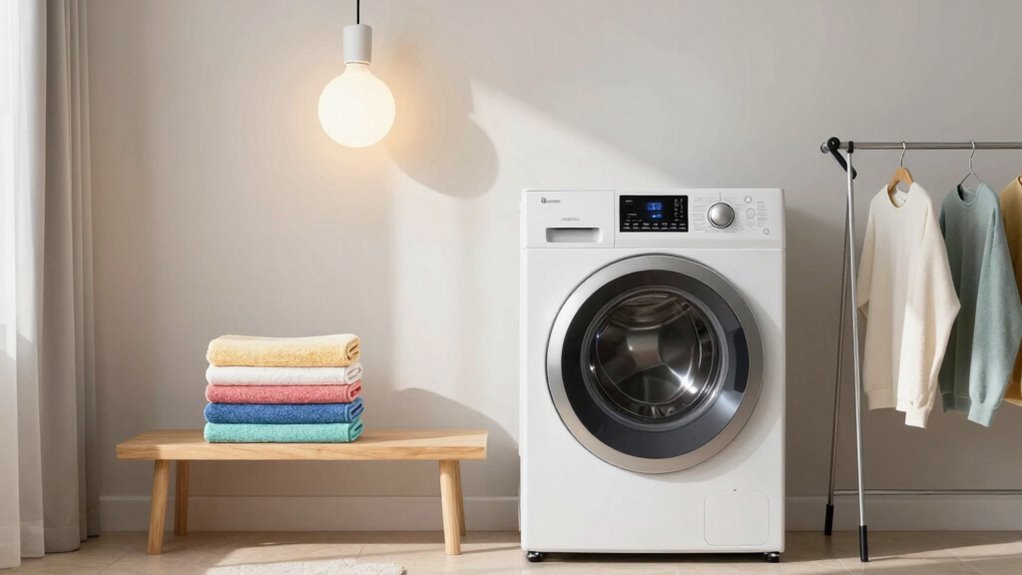

You can lower laundry energy use effortlessly by making simple changes to your routine. Choose energy-efficient detergents that work well at lower temperatures to save energy and protect clothes. Always run full loads to maximize efficiency, and avoid overloading to keep cleaning effective. Schedule your laundry during off-peak hours if possible. These small adjustments don’t add extra work and can make a big difference—keep going for more easy tips to save even more.

Get furniture and decor delivered free with Prime
- Fast, free delivery on millions of items
- Prime Video, Amazon Music and more included
- Member-only deals all year
Key Takeaways
- Use energy-efficient detergents that clean effectively at lower temperatures, reducing heating energy.
- Select appropriate spin cycle settings to remove more water, decreasing dryer energy use.
- Load the washing machine fully to maximize efficiency and avoid wasteful cycles.
- Schedule laundry during off-peak hours to benefit from lower utility rates automatically.
- Understand your appliance’s energy consumption to make smarter, routine adjustments effortlessly.
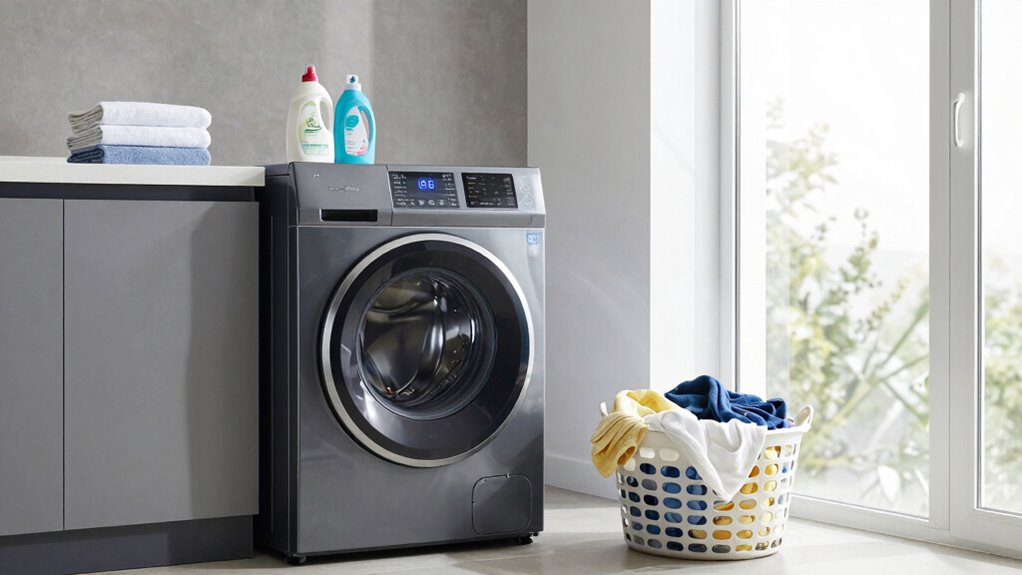
Reducing laundry energy use not only saves you money but also benefits the environment. You don’t have to overhaul your entire routine to make a difference—small adjustments can add up quickly. One simple way is to choose energy-efficient detergents. These products are formulated to clean effectively at lower temperatures, meaning you can wash your clothes in cold or warm water instead of hot, which consumes markedly less energy. Switching to these detergents is straightforward; just read labels and opt for eco-friendly options that specify they work well in cold water. Using cold water not only reduces energy consumption but also helps preserve your clothes’ colors and fabrics, making your laundry last longer. Proper ventilation can also help your laundry dry faster and more efficiently, reducing overall energy use.
Another effective strategy is spin cycle optimization. Most washing machines have a spin cycle setting, and tweaking it can lead to substantial energy savings. Use the highest spin speed your clothes can tolerate; this extracts more water from your laundry, which means less time in the dryer or less air drying needed. When clothes come out drier, your dryer doesn’t have to work as hard, reducing energy use. Conversely, if your machine allows, you can also opt for shorter or eco-friendly spin cycles designed to save energy. Many modern washers automatically adjust spin speeds based on load size, but it’s worth checking your settings and manually selecting the most efficient option whenever possible. Incorporating energy-saving techniques into your laundry routine can further enhance these benefits. Additionally, understanding the energy consumption of your appliances can help you make more informed choices about usage. Being aware of your appliance’s energy efficiency can guide you toward smarter, more sustainable laundry habits.
In addition to choosing the right detergents and optimizing the spin cycle, be mindful of load sizes. Running full loads maximizes the efficiency of each wash, so avoid small loads that waste water and energy. If you’re washing fewer items, consider using a smaller load setting if your machine has one. Also, avoid overloading your washer, as this can decrease cleaning effectiveness and force you to rewash, wasting more energy. Proper load management can significantly enhance your machine’s overall efficiency and reduce unnecessary energy consumption.
Finally, consider the timing of your laundry. Many utility companies offer lower rates during off-peak hours, often late at night or early morning. Scheduling your laundry for these times reduces the environmental impact and can save you money on energy bills. You can also take advantage of smart technology features found in some modern washers and dryers to automate this process. By making these small, practical adjustments—using energy-efficient detergents, optimizing spin cycles, managing load sizes, and timing your laundry—you can markedly cut down on energy use without adding extra work to your routine. These habits not only lower your utility bills but also help protect the environment for future generations.
energy-efficient laundry detergent for cold water
As an affiliate, we earn on qualifying purchases.
As an affiliate, we earn on qualifying purchases.
Frequently Asked Questions
Can Using Cold Water Save More Energy Than Hot Water?
Using cold water can save more energy than hot water because water temperature impacts energy consumption considerably. When you choose cold water, your washer uses less energy since it doesn’t need to heat the water, leading to notable energy savings. This simple switch reduces your overall electricity use, cuts costs, and is environmentally friendly. So, for efficient laundry, opting for cold water is a smart move to conserve energy without extra effort.
How Often Should I Run My Washing Machine to Save Energy?
Skipping a wash day now and then can work wonders for your energy savings. You should aim for a washing frequency that aligns with your laundry scheduling, typically every 1-2 weeks for lightly soiled clothes. Over-washing wastes energy and water, so only run your machine when necessary. By optimizing your laundry routine, you’ll conserve resources without sacrificing freshness, making your efforts both eco-friendly and effortless.
Do Energy-Efficient Detergents Impact Laundry Energy Consumption?
Energy-efficient detergents with eco-friendly ingredients don’t considerably impact your laundry energy consumption, but they do help reduce environmental impact. Their formulation often requires less water for rinsing, which can cut energy use slightly. When you choose these detergents, you’re supporting sustainable practices without extra effort. So, switching to eco-friendly options can be a simple step toward greener laundry habits, while still effectively cleaning your clothes.
Are There Specific Times of Day Better for Doing Laundry?
Sure, doing laundry at midnight is clearly the secret to energy savings, right? Actually, the best time for laundry is during off-peak hours, usually late at night or early morning. This maximizes drying and reduces energy costs. Laundry scheduling during these times allows for efficient drying, minimizes strain on the power grid, and may even keep your energy bills happier. So, set your machine to run when everyone’s asleep!
How Can I Tell if My Appliances Are Energy-Efficient?
You can tell if your appliances are energy-efficient by checking their labels and efficiency ratings. Look for the ENERGY STAR label, which indicates the appliance meets strict energy-saving standards. Efficiency ratings, often found on the manufacturer’s label or in product specs, show how well an appliance uses energy. Choosing appliances with high ratings helps you save energy and reduce costs without extra effort.
Conclusion
By making a few simple adjustments, you can gently steer your laundry routine towards a more energy-friendly path without adding extra effort. Embrace cooler washes, full loads, and mindful drying habits, and you’ll find your household’s energy footprint subtly shrinking. These small changes act like quiet whispers of conservation, helping you save power while keeping your clothes fresh. Ultimately, you’ll enjoy the satisfaction of doing good for the planet—without the slightest hint of inconvenience.
Halloween Picks
halloween
As an affiliate, we earn on qualifying purchases.