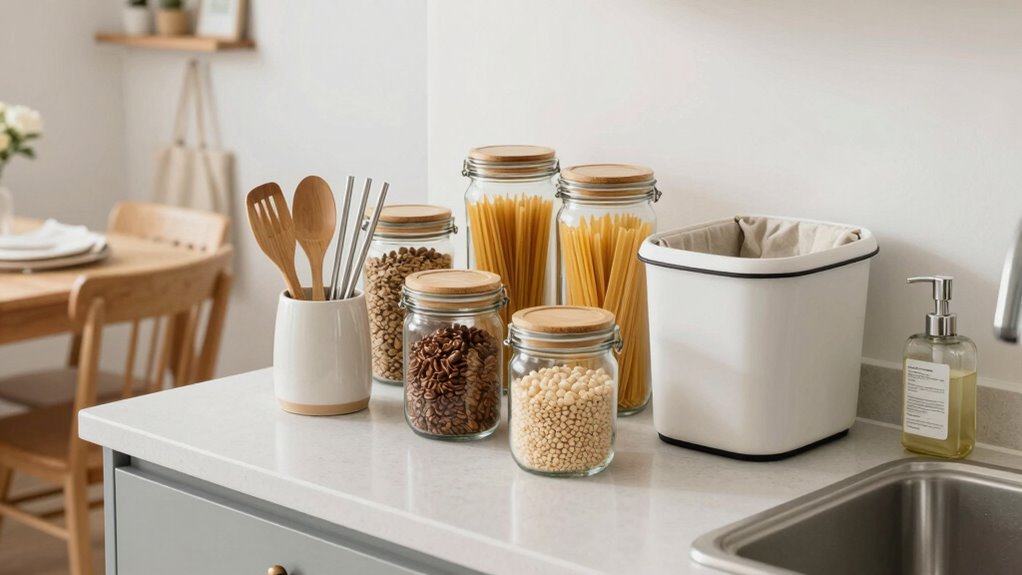

To reduce single-use plastics in your home, tackle each room with simple swaps. In the kitchen, use beeswax wraps and bring reusable containers shopping. In the bathroom, choose bar soaps and refillable bottles. For laundry, pick biodegradable detergents and avoid plastic bottles. In living areas, opt for sustainable furniture and eco-friendly electronics. Focusing on small, room-specific changes can make a big difference—keep exploring to learn effective strategies for every space.

Get furniture and decor delivered free with Prime
- Fast, free delivery on millions of items
- Prime Video, Amazon Music and more included
- Member-only deals all year
Key Takeaways
- Implement reusable alternatives like beeswax wraps, silicone lids, and refillable containers in the kitchen.
- Choose bar soaps and natural cleaners in minimal or eco-friendly packaging for the bathroom.
- Use biodegradable or concentrated laundry products and participate in recycling programs in the laundry area.
- Select furniture, decor, and electronics made from sustainable or recycled materials in living spaces.
- Support brands with eco-friendly packaging and adopt room-specific plastic reduction strategies throughout the home.
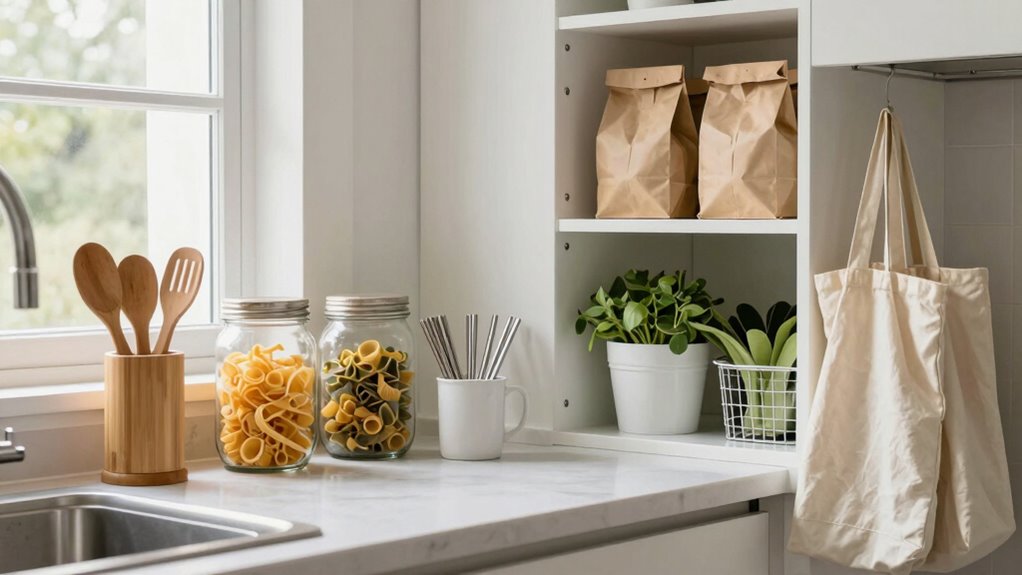
Reducing plastic use at home doesn’t have to be overwhelming; by tackling one room at a time, you can make manageable, impactful changes. Starting in the kitchen, for example, is a smart move because it’s often where most single-use plastics are used. You can replace plastic wrap with reusable beeswax wraps or silicone lids, and swap out disposable plastic bags for sturdy, eco-friendly packaging alternatives. When shopping, choose products sold in bulk or with minimal packaging, and bring your own reusable containers. Many stores now support recycling programs that accept plastic bags and packaging, so you can dispose of plastics responsibly. This not only helps divert plastics from landfills but also encourages stores to adopt more sustainable practices.
Moving to the bathroom, the focus shifts to reducing plastics in daily toiletries. Opt for bar soaps instead of liquid soap in plastic bottles and choose products with minimal packaging. Consider switching to refillable containers for lotions and shampoos, which can *substantially* cut down on single-use plastics. When it comes to cleaning supplies, look for eco-friendly packaging options or make your own natural cleaners in reusable bottles. This approach minimizes waste and reduces reliance on plastic bottles that often end up in landfills or oceans. Additionally, explore eco-friendly packaging options for personal care items, supporting brands that prioritize sustainable packaging materials. Incorporating recyclable packaging into your shopping habits can significantly decrease your plastic footprint. You might also want to learn about plastic waste management to better understand how to dispose of plastics responsibly and support local recycling initiatives. Understanding plastic pollution can further motivate your efforts to reduce plastic waste and advocate for systemic change. Incorporating reusable alternatives for daily toiletries can make a notable difference in cutting down plastic use.
In the laundry room, you can reduce plastics by choosing biodegradable laundry detergents in cardboard boxes or refillable containers. Avoid single-use plastic bottles altogether by investing in bulk-sized products or concentrated formulas that you can dilute at home. When doing laundry, opt for natural fiber clothing that lasts longer, reducing the need for frequent replacements and, consequently, less packaging waste. If you’re interested, some recycling programs accept empty detergent bottles, ensuring they’re properly recycled rather than discarded.
Finally, in the living areas and bedrooms, focus on avoiding plastic-based furniture and decor that may be difficult to recycle. Instead, look for items made from sustainable or recycled materials. For items like electronics and accessories, choose brands committed to eco-friendly packaging and responsible disposal practices. Throughout your entire home, educate yourself about local recycling programs and how to properly dispose of plastics, especially those that are hard to recycle. By making conscious choices and supporting brands that prioritize eco-friendly packaging, you contribute to a more sustainable home environment and help reduce plastic waste on a larger scale. Taking these small, deliberate steps room by room makes reducing single-use plastics at home a practical and achievable goal.
As an affiliate, we earn on qualifying purchases.
Frequently Asked Questions
How Can I Compost Plastic-Contaminated Waste Safely?
You shouldn’t compost plastic-contaminated waste, as it poses risks to compost safety and the environment. Plastics can release harmful chemicals and don’t break down properly. Instead, separate plastics from compostables beforehand, and recycle plastics through proper channels. For contaminated organic waste, compost only biodegradable, plastic-free materials. This guarantees your compost remains safe and free from plastic contamination, protecting your garden and reducing environmental harm.
Are Reusable Products Cost-Effective Long-Term?
Reusable products are definitely cost-effective long-term. When you do a cost analysis, you’ll see that although they might have a higher upfront investment, the ongoing savings outweigh this initial expense. The investment benefits include fewer purchases of disposable items and less waste, saving you money over time. Plus, you’re contributing to a greener environment, making reusables a smart, sustainable choice for your home.
How Do I Find Eco-Friendly Packaging Alternatives?
To find eco-friendly packaging options, start by researching brands that prioritize sustainable wrapping and eco-friendly packaging materials. Look for biodegradable, compostable, or reusable alternatives like paper, glass, or bamboo. Check product labels for certifications indicating sustainability. Shop at stores or online marketplaces dedicated to eco-conscious products. By choosing these options, you reduce plastic waste and support environmentally friendly practices in your daily routine.
What Are Safe Disposal Methods for Small Plastic Items?
Think of your small plastic items as tiny treasures that need proper care—like the myth of Icarus, who soared too close to the sun. For safe disposal, first clean and dry them, then recycle if accepted in your local program, focusing on plastic recycling guidelines. If recycling isn’t an option, securely toss them in the trash. Always avoid burning, which releases harmful toxins, ensuring you protect both the environment and public health.
How Can I Encourage Family to Reduce Plastic Use?
You can encourage your family to reduce plastic use by promoting positive habits and fostering behavior change. Lead by example, showing them the benefits of reusable items and eco-friendly choices. Discuss the importance of reducing single-use plastics, making it a shared goal. Create fun challenges or rewards to motivate everyone, and involve them in eco-conscious decision-making. With consistent effort, your family will naturally adopt more sustainable habits.
Conclusion
By tackling plastic waste room by room, you’re planting seeds for a cleaner, greener home. Each small change is like adding a drop to a pond—creating ripples that spread beyond your walls. Remember, every effort counts, and together, we can turn our homes into sanctuaries free from single-use plastics. So, roll up your sleeves and start today—your planet will thank you as much as you’ll thank yourself for making a difference.
Columbus Day / Indigenous Peoples' Day Picks
long weekend sales
As an affiliate, we earn on qualifying purchases.