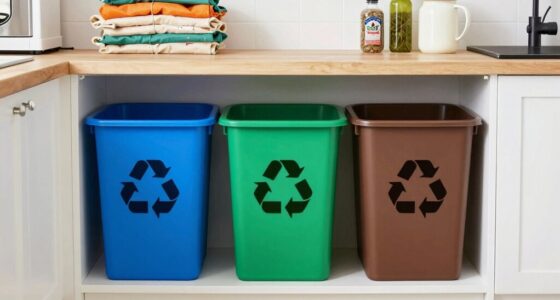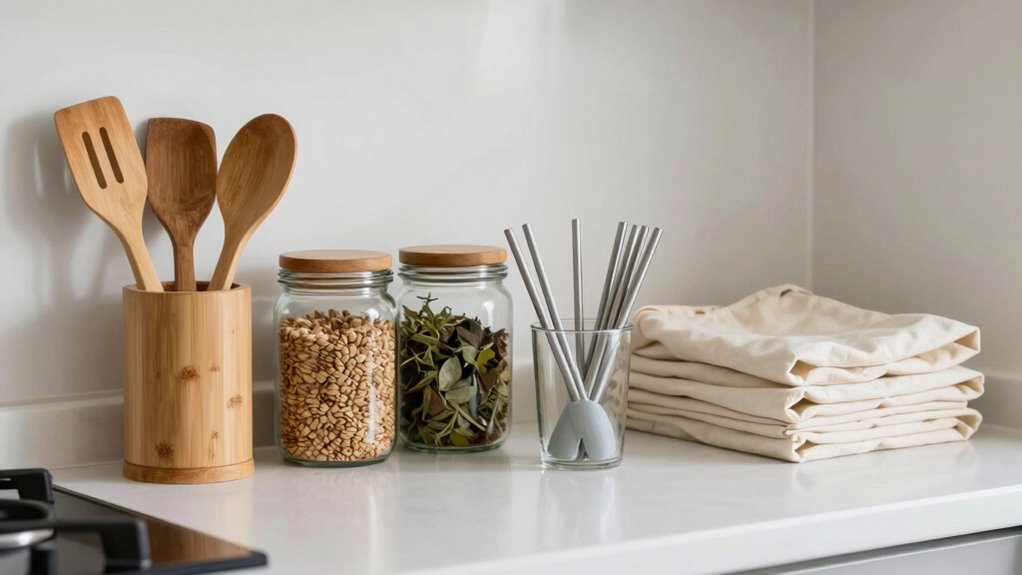

Start by replacing disposable items like plastic wrap and aluminum foil with beeswax wraps or silicone lids. Switch to glass or stainless steel containers for storage, and use cloth produce bags instead of plastic ones. Keep reusable essentials like cloth napkins and snack bags handy. Regularly assess your supplies to replace worn-out items and build your collection gradually. Making small, consistent changes will help you live more sustainably; keep exploring for more eco-friendly tips.

Get furniture and decor delivered free with Prime
- Fast, free delivery on millions of items
- Prime Video, Amazon Music and more included
- Member-only deals all year
Key Takeaways
- Gradually replace single-use items with durable, eco-friendly alternatives like beeswax wraps, silicone lids, and glass containers.
- Organize your kitchen to make reusable essentials easily accessible and encourage consistent use.
- Develop a habit of evaluating and upgrading worn or inadequate reusable items regularly.
- Incorporate sustainable materials such as renewable resources and support eco-friendly brands.
- Foster a mindful attitude towards consumption, reducing waste through small, consistent sustainable practices.
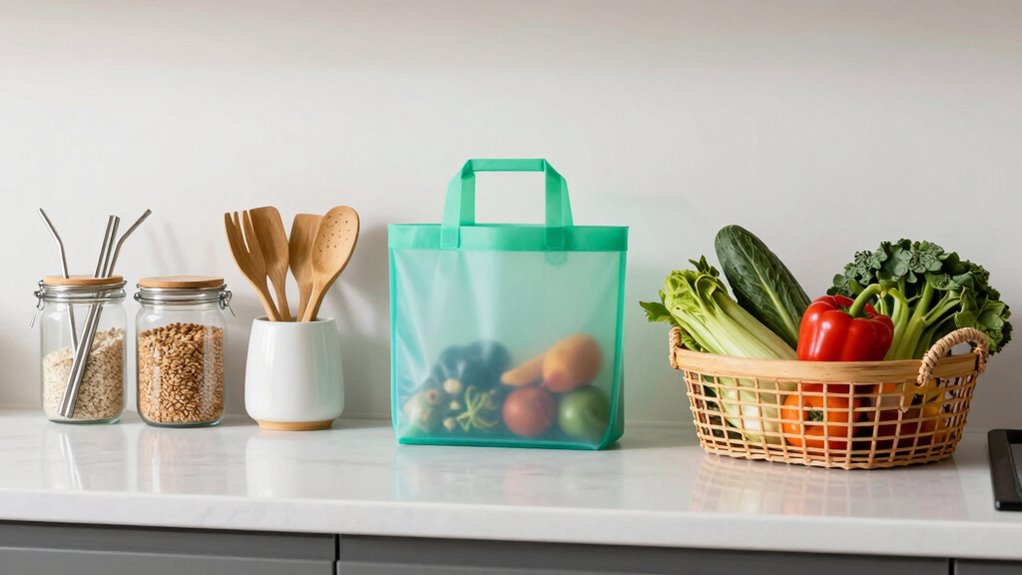
Switching to reusable kitchen essentials is a simple yet impactful way to reduce waste and live more sustainably. It’s a shift that benefits both the environment and your household budget. One of the first steps is to replace single-use items with durable, eco-friendly alternatives. For instance, swap out disposable plastic wrap and aluminum foil for beeswax wraps or silicone lids. These options offer eco friendly packaging that keeps your food fresh while reducing reliance on wasteful packaging materials. You might also consider investing in glass or stainless steel containers for storage, which provide sustainable storage solutions that last for years. These containers won’t stain or hold odors like plastic, making them a healthier choice for your food and the environment.
When you choose reusable kitchen essentials, it’s important to think about how you store your food. Sustainable storage is not just about choosing the right containers but also about organizing your space effectively. Clear, stackable containers allow you to see what’s inside easily, reducing unnecessary opening and closing of lids, which helps keep food fresher longer. Additionally, using cloth produce bags instead of plastic ones for fruits and vegetables minimizes plastic waste and keeps your produce fresh. These bags are washable, durable, and a small yet significant step toward reducing your plastic footprint. Incorporating biodiversity considerations into your kitchen choices can further enhance your sustainability efforts by supporting eco-friendly materials and practices. Being mindful of eco-friendly materials can help you make more informed decisions that benefit the planet. A thoughtful approach to sustainable storage can also help you maximize space and reduce clutter, making your kitchen more efficient, especially when you select products made from renewable resources. Incorporating reusable kitchen tools can also streamline your routines and reduce dependency on disposable options.
Transitioning to reusable essentials also requires a mindset shift. Keep a set of cloth napkins or towels handy instead of paper towels, which are often discarded after a single use. Over time, these cloth options become more cost-effective and environmentally friendly. You might also want to explore reusable coffee filters or cloth snack bags for on-the-go use. Not only do these reduce waste, but they also serve as a reminder of your commitment to sustainability each time you use them.
Finally, make a habit of regularly evaluating your kitchen supplies. Replace worn-out or inadequate items with better alternatives, and look for opportunities to streamline your collection. As you build your collection of reusable essentials, you’ll find it easier to avoid the temptation of single-use products. Staying consistent with eco friendly packaging choices and sustainable storage methods ensures that your kitchen remains a space of mindful consumption. Small changes like these add up over time, enabling you to live more sustainably without sacrificing convenience. Embracing reusable kitchen essentials helps you make a tangible difference by reducing waste and fostering a more eco-conscious lifestyle.
As an affiliate, we earn on qualifying purchases.
Frequently Asked Questions
How Do I Store Reusable Kitchen Items Properly?
You should store reusable kitchen items properly by choosing the right material choices and storage solutions. Opt for durable, easy-to-clean materials like bamboo or stainless steel, and keep items in designated containers or racks. Use drawer dividers for utensils and clear bins for larger items, ensuring everything is visible and accessible. Regularly clean and dry your items before storing to prevent mold or odors, keeping your kitchen organized and eco-friendly.
Are Reusable Products Safe for All Types of Food?
Reusable products are generally safe for most foods if you consider food safety and material compatibility. Always check the manufacturer’s guidelines to guarantee the item is suitable for the type of food you’re storing or preparing. For example, some materials are better for dry goods, while others work well with liquids or acidic foods. Regularly clean and inspect your reusable items to maintain safety and prevent contamination.
How Do I Clean and Maintain Reusable Kitchen Essentials?
You should clean your reusable kitchen essentials regularly with eco-friendly cleaning products to keep them safe and hygienic. Use warm water and gentle soap for materials like glass or stainless steel, and follow manufacturer instructions to guarantee material durability. Avoid abrasive scrubbers that could damage surfaces. Dry thoroughly to prevent mold and bacteria. Proper maintenance keeps your reusable items in good shape, ensuring they last longer and remain safe for everyday use.
What Are the Costs Involved in Switching to Reusable Items?
Switching to reusable kitchen essentials might seem like a small step, but it’s like planting a forest in your kitchen! The initial costs include buying high-quality items, which can seem steep, but the long-term savings outweigh the expense. When you do a proper cost comparison, you’ll see it’s much cheaper over time. Plus, you’ll drastically reduce your environmental impact—making your kitchen a hero for the planet!
How Can I Encourage Family Members to Use Reusable Products?
You can encourage family members to use reusable products by involving them in the shift process. Share the sustainability benefits, like reducing waste and protecting the environment, to motivate everyone. Make it fun by choosing colorful or personalized reusable items together. Lead by example, demonstrating your commitment. Praise their efforts, and gradually introduce new habits, so reusables become a natural part of your family’s daily routine.
Conclusion
Switching to reusable kitchen essentials is like planting seeds for a greener future—each small step adds up to a big impact. By making conscious choices today, you’re not only reducing waste but also nurturing a healthier planet for tomorrow. Embrace the change with enthusiasm, knowing you’re steering your kitchen toward sustainability. Every reusable item you choose is a ripple in the pond, creating waves of positive change that extend far beyond your countertop.
Halloween Picks
halloween
As an affiliate, we earn on qualifying purchases.