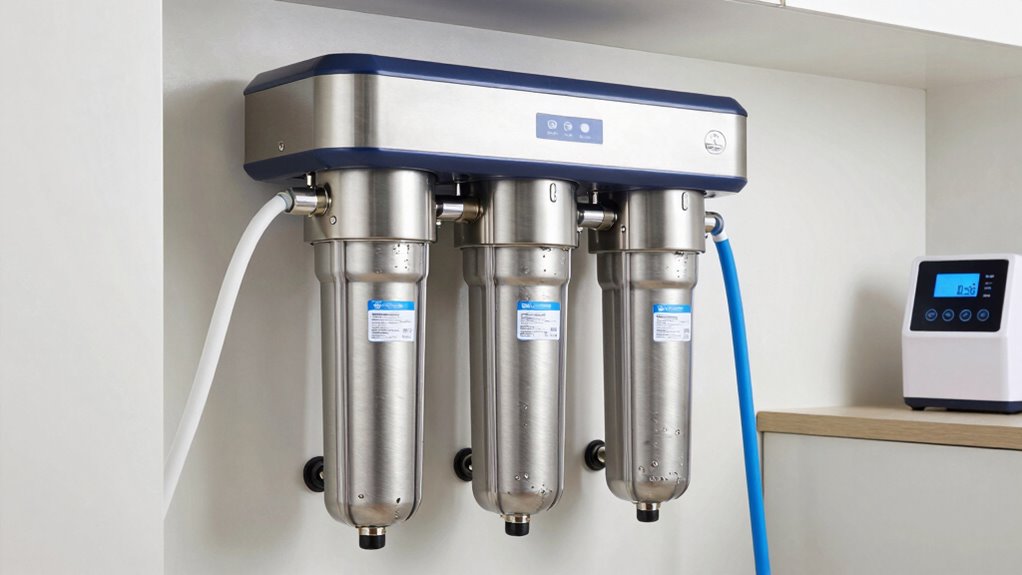
Whole-house water filters can efficiently remove contaminants like chlorine, sediment, heavy metals, and bacteria, improving water taste and safety. However, their effectiveness depends on the filter type and water quality. They might miss low-level VOCs, pesticides, or industrial chemicals, so additional filtration may be necessary. Choosing the right system involves evaluating your water, understanding contaminant removal capabilities, and considering maintenance needs—if you want to explore how to select the best filter, keep going.
Key Takeaways
- Whole-house filters effectively remove chlorine, sediment, and heavy metals, improving water taste and safety.
- They may not fully eliminate pesticides, low-level VOCs, or industrial chemicals without specialized filters.
- Activated carbon filters trap chemicals like chlorine and organic compounds but have limited capacity for certain contaminants.
- Regular maintenance and water testing are essential to ensure optimal contaminant removal and system performance.
- Filter capabilities vary; choose systems certified for targeted pollutants based on your specific water quality needs.
Do You Need a Whole-House Water Filter?
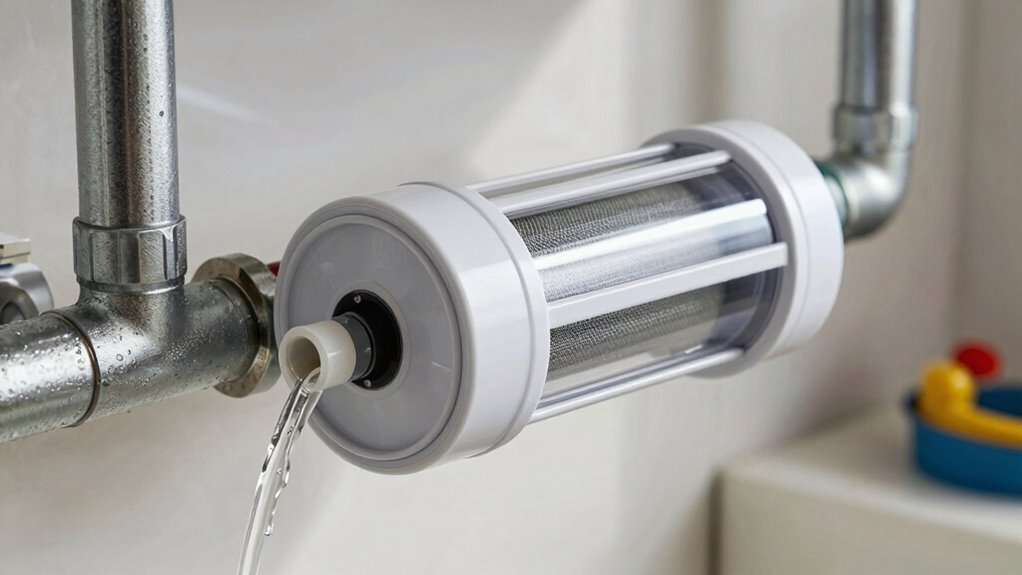
Wondering if you really need a whole-house water filter? The answer depends on your water quality testing results and your household’s needs. If tests show contaminants like chlorine, heavy metals, or sediments, a whole-house filter can improve water safety and taste. Keep in mind, regular filter maintenance is essential to guarantee peak performance. Neglecting filter changes can lead to reduced effectiveness and even bacteria buildup. If your water quality is generally good, you might not need a full system—point-of-use filters could suffice. However, if you’re concerned about overall water safety and quality, investing in a whole-house filter makes sense. Just remember, evaluating your water with proper testing helps determine whether a whole-house system is the right choice for you. Additionally, understanding the filtering process and how different contaminants are removed can help you choose the most effective system. Proper maintenance and knowledge of water treatment methods ensure your system continues to provide safe, great-tasting water. Moreover, knowing about water quality testing can help you better identify potential issues before they become serious problems. Regularly monitoring water quality can also help in detecting emerging contaminants, ensuring your home’s water remains safe over time. For example, technological innovations like comprehensive water treatment solutions are increasingly available to address specific household needs.
How Do Whole-House Water Filters Remove Contaminants?
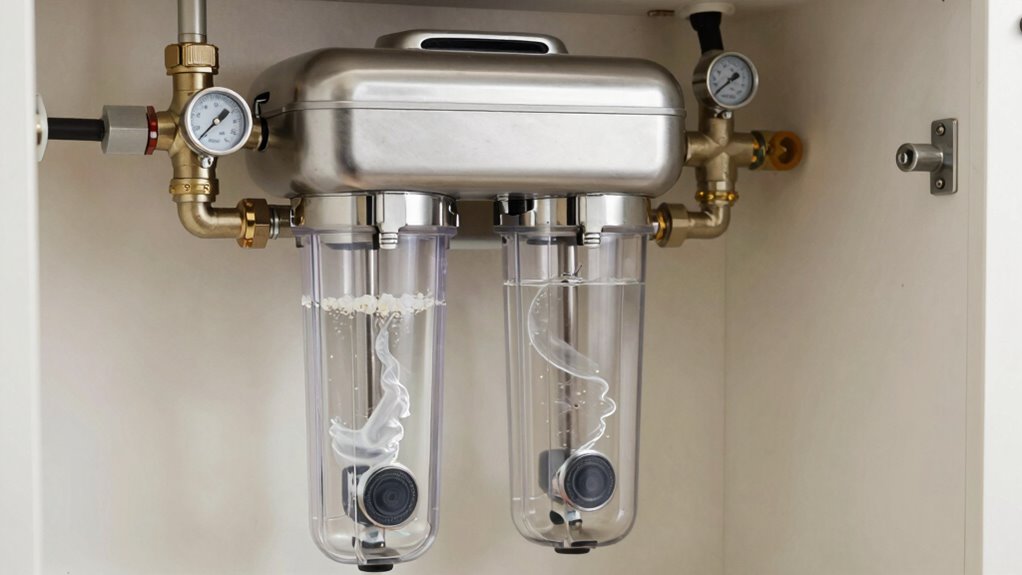
Whole-house water filters remove contaminants through a combination of physical, chemical, and biological processes that target impurities as water passes through the system. The filtration mechanisms include activated carbon, which traps chemicals like chlorine and organic compounds, and sediment filters that catch dirt, rust, and larger particles. Some systems incorporate special media to address specific contaminant types, such as iron or sulfur. Chemical processes, like ion exchange, reduce heavy metals and minerals, improving water taste and safety. Biological filtration can also help eliminate bacteria and other microorganisms. These mechanisms work together to guarantee your water is cleaner and safer for everyday use. Understanding how these processes function helps you appreciate the extensive protection whole-house filters provide against various contaminants. Additionally, staying informed about energy-efficient filtration options can enhance the overall performance and sustainability of your water system. Implementing sustainable filtration methods can also contribute to reducing environmental impact while maintaining water quality.
Which Contaminants Do Whole-House Filters Target?
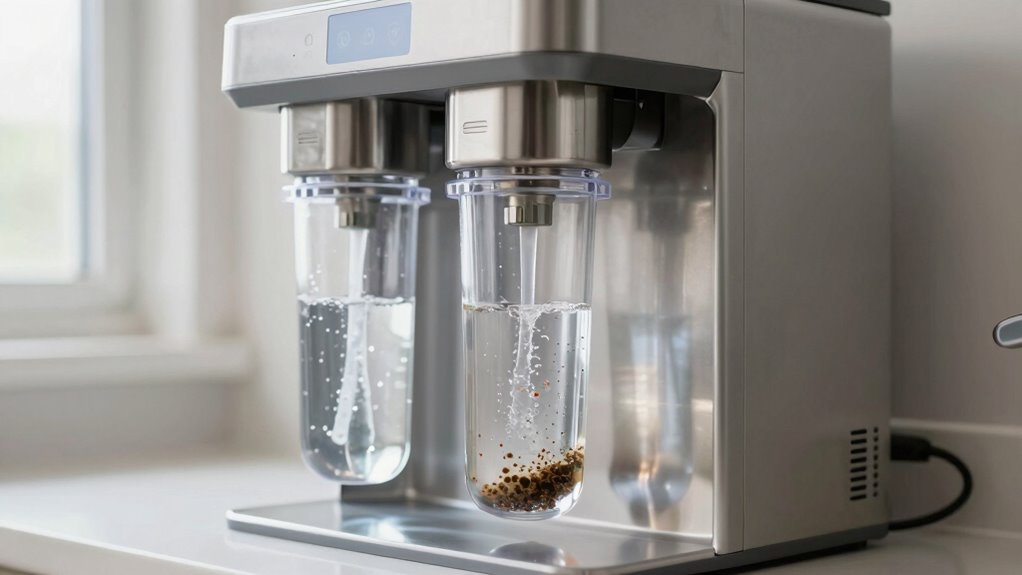
Whole-house water filters target a wide range of contaminants to guarantee your water is safe and clean. They effectively remove common pollutants like chlorine, sediment, and bacteria. Additionally, they trap harmful chemicals such as pesticide residue and volatile organics, which can affect health and taste. Understanding contaminant removal helps in selecting the right filter for your needs. Incorporating proper maintenance ensures optimal performance and longevity of your whole-house filtration system. Regularly replacing filters and monitoring water quality are essential aspects of system upkeep, which is crucial for maintaining water safety and ensuring your family’s health over time. Awareness of the contaminant types your filter can handle guides you in making informed choices for your home water quality.
What Impurities Can Whole-House Filters Miss?
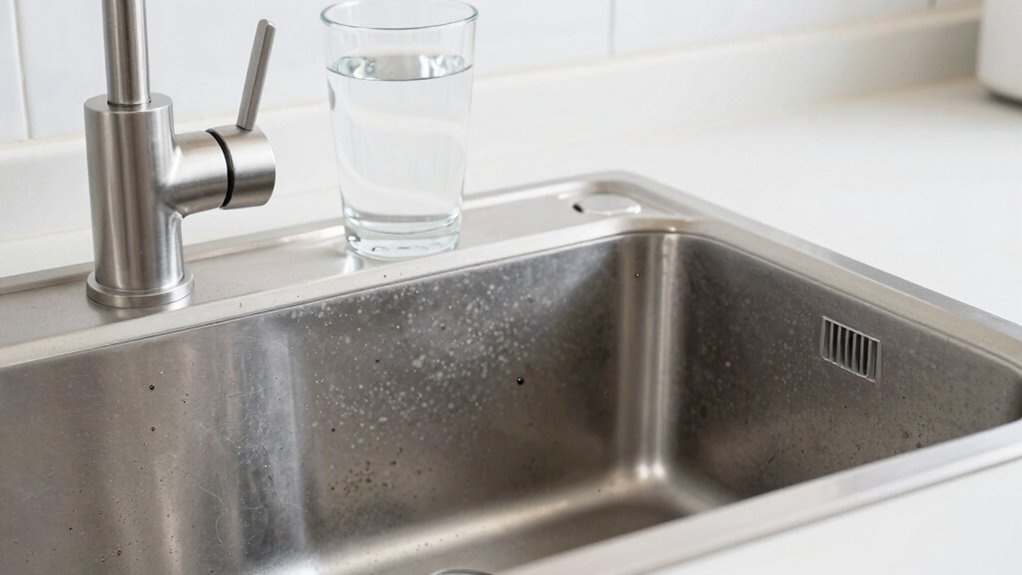
While these filters are highly effective at removing many common contaminants, they don’t catch everything. Pesticide residues, for example, can slip through if the filter isn’t specifically designed to target them. Similarly, volatile organic compounds (VOCs) like solvents and industrial chemicals may remain in your water, especially if they’re present at low levels or are stubborn. Whole-house filters primarily focus on sediments, chlorine, and certain heavy metals, but they might not fully eliminate chemical pollutants like pesticides and VOCs. If these substances are a concern in your area, relying solely on a standard filter could leave some impurities in your water. Understanding filter capabilities can help you choose the best system for your needs. Additionally, for specific contaminants like pesticides and VOCs, installing supplementary filtration systems such as activated carbon filters may provide enhanced protection. Some advanced filters are designed with specialized media to target these chemical pollutants more effectively. It’s also important to consider the filter maintenance required to keep these systems functioning optimally over time.
How to Choose the Right Whole-House Water Filter for Your Home
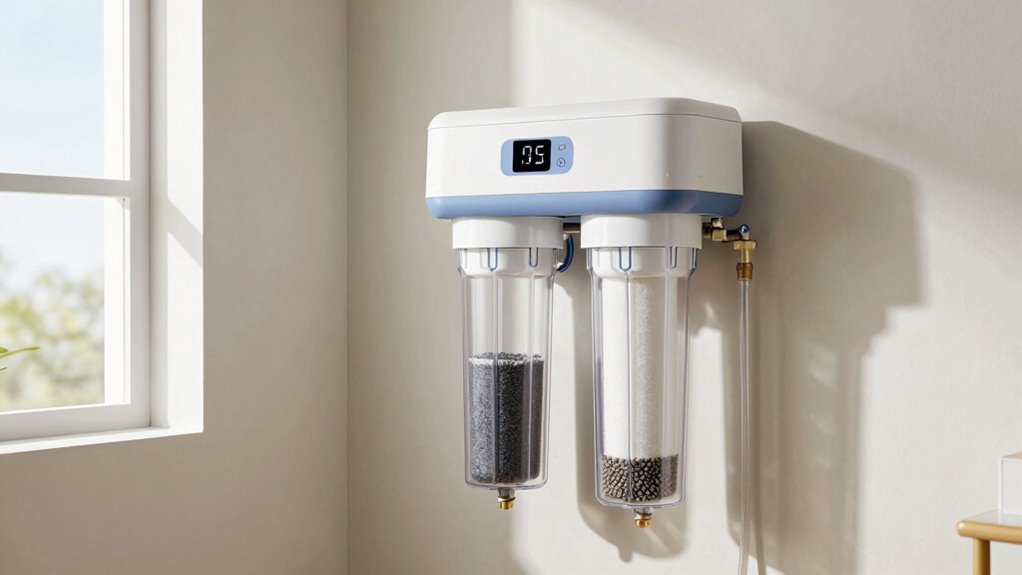
Choosing the right water filter for your home starts with understanding your specific water quality needs. First, assess the impurities present, like chlorine, sediment, or heavy metals, to determine which filter type suits you best. Consider installation considerations—some systems require professional setup, while others are simple DIY projects. Think about maintenance requirements; filters need regular replacement to stay effective, so choose one that fits your schedule and budget. If you have limited space, compact or modular systems may be preferable. Additionally, check the flow rate to ensure your household’s water demand is met. Understanding water quality testing options can help you identify the contaminants in your water more precisely. Conducting comprehensive water analysis can provide a detailed overview of what needs filtering. Being aware of contaminant removal efficiency helps you select a system that effectively targets your specific water issues. Moreover, reviewing filter certification standards can ensure the system meets safety and performance benchmarks. By weighing these factors, you’ll select a whole-house water filter that effectively improves your water quality without unnecessary hassle.
Frequently Asked Questions
How Often Should I Replace the Filter Cartridges in My Whole-House System?
You should replace your filter cartridges every 6 to 12 months, depending on your water usage and quality. Follow the maintenance schedule provided by your filter manufacturer to guarantee peak performance. Keep an eye on water flow; if it slows down or you notice changes in water taste or smell, it’s time for filter replacement. Regular maintenance keeps your whole-house system functioning effectively and extends its lifespan.
Are Whole-House Filters Effective Against Viruses and Bacteria?
You wonder if your whole-house filter can stop viruses and bacteria? While these systems excel at removing sediment and chlorine, they aren’t designed for complete virus removal or bacteria filtration. Suspense builds because, although some filters claim to block certain pathogens, many won’t eliminate all harmful microbes. For thorough virus removal and bacteria filtration, consider specialized UV or UV+RO systems. Don’t assume your filter alone provides full protection—be cautious.
What Is the Typical Lifespan of a Whole-House Water Filter?
You can expect your whole-house water filter to last about 6 to 12 months, depending on usage and water quality. To guarantee peak filter longevity, follow the recommended replacement schedule from the manufacturer. Regularly changing your filter prevents buildup, maintains water flow, and keeps your water clean. Keep an eye on indicators or changes in water pressure to know when it’s time to replace the filter for continued effectiveness.
Can Whole-House Filters Improve Water Taste and Odor?
Yes, a whole-house water filter can improve water taste and odor by removing chlorine, sediments, and other impurities. Proper filter installation guarantees peak performance, helping you enjoy better-tasting water. Keep in mind, some filters may slightly alter water pH, so if you notice a change, consider using a pH balancing system. Regular maintenance and filter replacement are key to maintaining fresh, odor-free water throughout your home.
Are There Specific Maintenance Steps to Ensure Optimal Filter Performance?
Think of your filter system as a garden needing regular care. To keep it performing at its best, you should schedule routine filter cleaning and system inspection. Check for any build-up or leaks, replace filters as recommended, and guarantee water flows smoothly. These simple steps act like a personal tune-up, preventing clogs and maintaining ideal water quality, so your whole house stays refreshed and your system runs efficiently.
Conclusion
Choosing the right whole-house water filter depends on your specific needs and the contaminants in your water. While these filters can remove many impurities, they don’t catch everything. Are you willing to compromise on certain contaminants, or will you invest in additional treatment options? Remember, understanding what your filter can and can’t do helps you make the best decision for clean, safe water throughout your home. Don’t settle for less when it comes to your family’s health.