To boost your home’s energy efficiency, choose window coverings like cellular shades, heavy drapes, or reflective films. Cellular shades trap air to insulate and reduce heat transfer, while heavy curtains with good lining block drafts and noise. Reflective solar shades and films help control summer heat, keeping interiors cooler. Proper installation and seasonal adjustments maximize savings. Keep exploring to discover the best options for your climate and style, and enjoy a more comfortable, energy-efficient home.
Key Takeaways
- Cellular or honeycomb shades trap air to provide superior thermal insulation, reducing heat transfer in winter and summer.
- Insulated curtains and heavy drapes create an extra barrier against drafts, enhancing home energy efficiency.
- Reflective window films and solar shades block heat gain from sunlight, keeping indoor spaces cooler in summer.
- Properly installed blinds and window coverings help control light, airflow, and temperature for seasonal energy savings.
- Combining multiple window treatments and sealing gaps maximizes insulation and reduces energy costs effectively.
The Benefits of Energy-Efficient Window Coverings
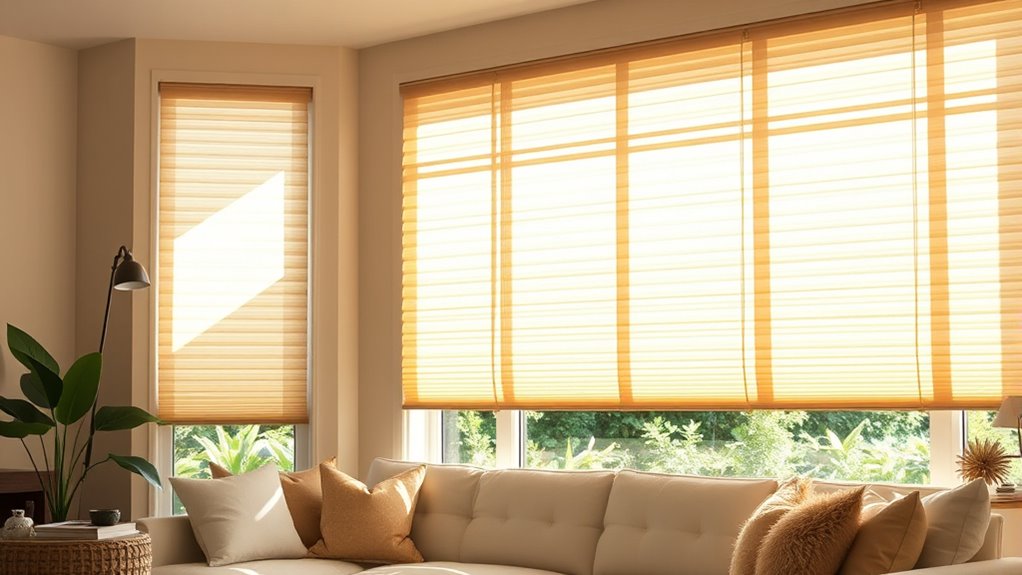
Are you looking for ways to lower your energy bills and make your home more comfortable? Energy-efficient window coverings can help you achieve that by enhancing your home insulation. These coverings act as an extra barrier against heat loss in winter and heat gain in summer, reducing the workload on your heating and cooling systems. By choosing the right window coverings, you can prevent drafts and minimize temperature fluctuations inside your home. This not only saves you money but also creates a more consistent indoor environment. Plus, many energy-efficient options are easy to operate and add style to your space. Investing in quality window coverings is a smart move toward greater energy efficiency and long-term savings. Proper installation and selection of coverings can maximize their effectiveness.
Types of Window Coverings That Improve Insulation
Wondering which window coverings provide the best insulation? You’ll want to explore options that combine function with window treatment aesthetics. Cellular or honeycomb shades are excellent choices, as their unique design traps air and creates a thermal barrier, reducing heat loss in winter and keeping your home cooler in summer. Heavy drapes and insulated curtains also boost insulation, especially when paired with a good lining. Custom window coverings allow you to select materials and styles that fit your aesthetic preferences while maximizing energy savings. These tailored solutions ensure your windows are both attractive and effective at maintaining indoor temperatures. Additionally, UV protection features in some window coverings can help prevent heat buildup and further improve energy efficiency. By choosing the right types of window coverings, you can improve insulation without sacrificing style or comfort.
How Blinds Help Regulate Indoor Temperatures
Blinds can markedly improve your home’s insulation, helping to keep it warm in winter and cool in summer. By adjusting them to control light and heat, you can better manage indoor temperatures throughout the year. Seasonal changes become easier to handle when your blinds work with your comfort needs. Additionally, understanding city dynamics can assist in choosing the most effective window coverings for different environments.
Insulation Benefits of Blinds
When installed properly, blinds can considerably improve your home’s insulation by creating an additional barrier against heat transfer. They help keep your indoor temperature stable by blocking drafts and reducing heat loss during cold weather. During warmer months, blinds can minimize solar heat gain, keeping your space cooler and reducing reliance on air conditioning. In addition, blinds offer noise reduction, dampening external sounds and making your home more comfortable. The thick fabrics or layered materials used in some blinds trap air, enhancing their insulating properties. This added barrier not only helps regulate temperature but also contributes to energy savings. Properly installing blinds can maximize their insulation benefits and further improve your home’s energy efficiency. By choosing the right blinds, you can effectively boost your home’s insulation, making it more comfortable year-round while lowering energy costs.
Light Control and Heat
Because they can be adjusted to control the amount of sunlight entering a room, blinds are effective tools for managing indoor temperatures. When used properly, they help block excess heat from the sun during hot days, reducing the need for air conditioning. Conversely, opening blinds allows sunlight to warm your space naturally, lowering heating costs in colder months. To maximize energy savings, consider color coordination; lighter shades reflect heat, while darker tones absorb it. Additionally, stylish window coverings enhance your room’s aesthetics, making your space more inviting. Properly positioned blinds not only improve light control but also contribute to a more comfortable indoor environment, helping you stay cool in summer and warm in winter without extra energy expenditure. Incorporating natural materials like wood or linen into your window coverings can further enhance energy efficiency while complementing your interior decor.
Seasonal Temperature Adjustments
Have you ever wondered how to make your window coverings work more effectively throughout the year? Adjusting your blinds seasonally can markedly improve energy efficiency. In colder months, close blinds and add draft stoppers to seal gaps, reducing heat loss. During summer, open them to let in natural light and use window film to block excess heat. Here’s a quick guide:
| Season | Tip |
|---|---|
| Winter | Close blinds, add draft stoppers |
| Summer | Open blinds, apply reflective window film |
| Year-round | Use adjustable blinds for control |
Additionally, incorporating automation technology can help you manage your window coverings more efficiently without manual adjustments.
The Advantages of Heavy Drapes and Curtains

Heavy drapes and curtains offer several compelling benefits that can enhance your living space. They add a touch of vintage decor charm while improving energy efficiency. The thick fabric textures help insulate your windows, keeping heat in during winter and blocking out drafts. This can lead to lower heating and cooling costs. Plus, their weight and material quality make them excellent at reducing noise, creating a cozy environment. When choosing heavy drapes, consider rich fabrics like velvet or brocade, which complement vintage decor styles. They also provide a luxurious feel that elevates your room’s aesthetic. These curtains are versatile, functional, and stylish, making them a smart addition to any energy-conscious home. Your space becomes warmer, quieter, and more inviting with the right heavy drapes or curtains. Incorporating diverse designs can further enhance both the style and functionality of your window coverings.
Cellular Shades and Honeycomb Blinds for Better Insulation
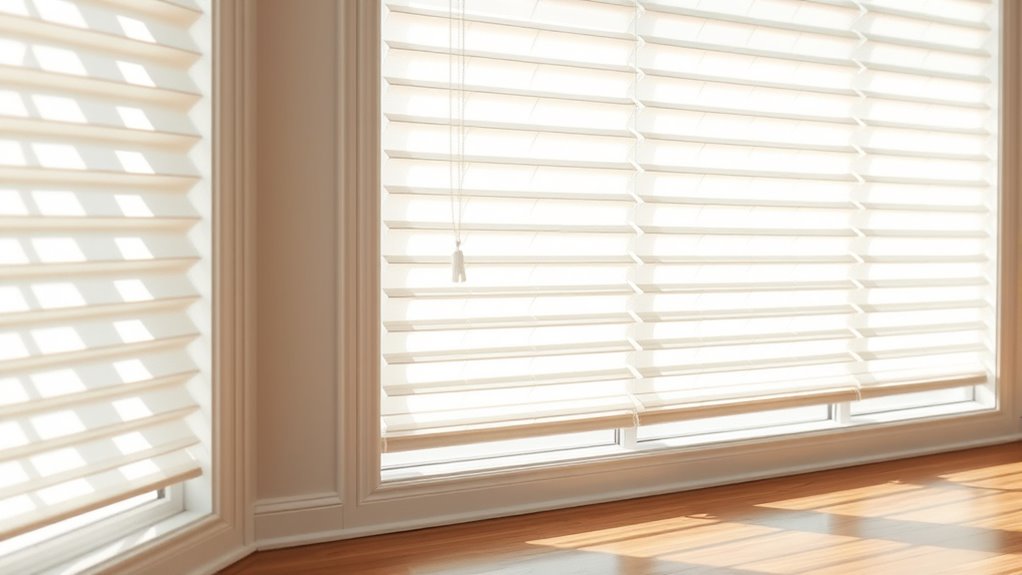
Cellular shades and honeycomb blinds create an extra insulation layer that helps keep your home warm in winter and cool in summer. By reducing energy loss, they can lower your monthly heating and cooling costs. Plus, they come in various styles and colors to match your decor perfectly. Using airless spray technology in your painting projects can also improve finish quality and efficiency.
Insulation Layer Benefits
Insulation layer benefits are one of the key advantages of using cellular shades and honeycomb blinds. These window coverings create a thermal barrier that reduces heat transfer through your windows. Their unique design traps air pockets, which act as insulators and help maintain your home’s temperature. This means you stay warmer in winter and cooler in summer without extra effort. The air pockets are essential because they slow down heat flow, providing better insulation than standard blinds or curtains. By improving insulation, these coverings can make your living space more comfortable and energy-efficient. Cellular shades and honeycomb blinds are also known for their lightweight construction, making them easy to operate and maintain while enhancing your home’s energy performance.
Energy Cost Savings
Because they create effective thermal barriers, cellular shades and honeycomb blinds can substantially lower your energy bills. These window coverings trap air in their unique honeycomb structure, providing insulation that reduces heat transfer during both winter and summer. Unlike traditional historical window styles, which often lack insulation, cellular shades enhance energy efficiency without sacrificing functionality. They also align with current decorative curtain trends, offering sleek, modern options that blend seamlessly with various interior designs. By choosing these energy-efficient coverings, you can cut costs on heating and cooling while maintaining a stylish look. Over time, the savings add up, making cellular shades and honeycomb blinds a smart investment for anyone looking to improve home energy performance and reduce expenses. Window insulation is a key factor in maximizing the benefits of these coverings.
Design and Style Options
With their sleek, modern look, cellular shades and honeycomb blinds offer more than just energy savings—they also provide a wide range of design and style options to complement your home’s decor. You can choose from decorative patterns that add visual interest or select material textures that enhance the room’s tactile appeal. These shades come in various colors and finishes, making it easy to match your existing palette. Whether you prefer a minimalist look or something more bold, cellular shades can adapt to your style. Their versatility allows you to customize the appearance without sacrificing insulation benefits.
- Decorative patterns to add visual interest
- Material textures for a tactile feel
- Multiple colors and finishes for customization
Solar Shades and Reflective Films for Summer Heat Control
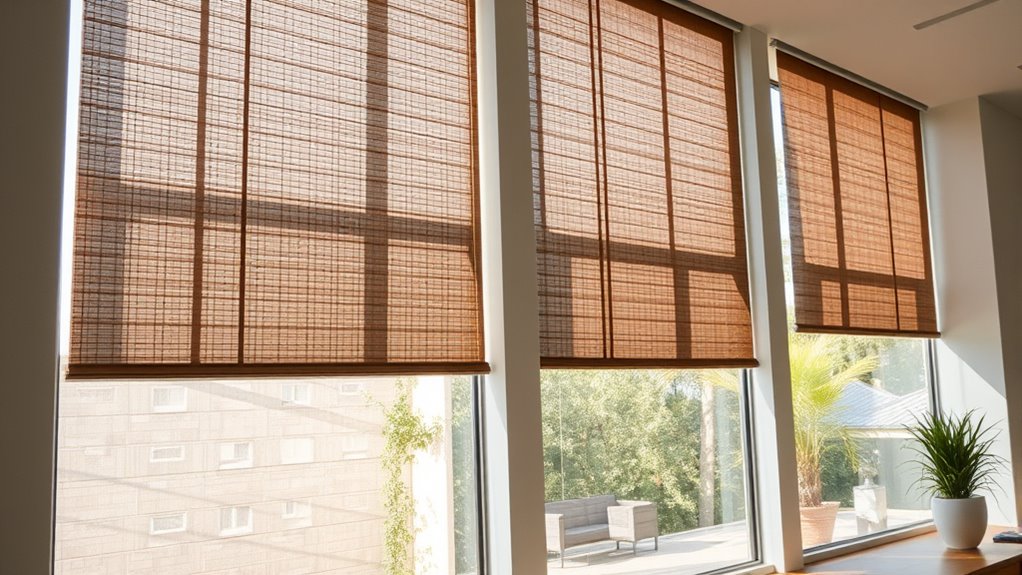
Are you tired of hot, stuffy rooms during the summer months? Solar shades and reflective films can help you stay cooler by blocking out heat before it enters your home. Solar reflective shades are designed to reflect sunlight, reducing heat gain while still allowing natural light. Reflective films are applied directly to your windows, creating a barrier that prevents heat from penetrating the glass. These window coverings are highly effective for summer heat control, helping you lower your cooling costs and improve comfort. They’re easy to operate and can be customized to fit your windows perfectly. By choosing solar reflective shades or reflective films, you’re actively reducing indoor temperatures and protecting your home from excessive heat without sacrificing sunlight.
Tips for Choosing the Right Window Coverings for Your Climate
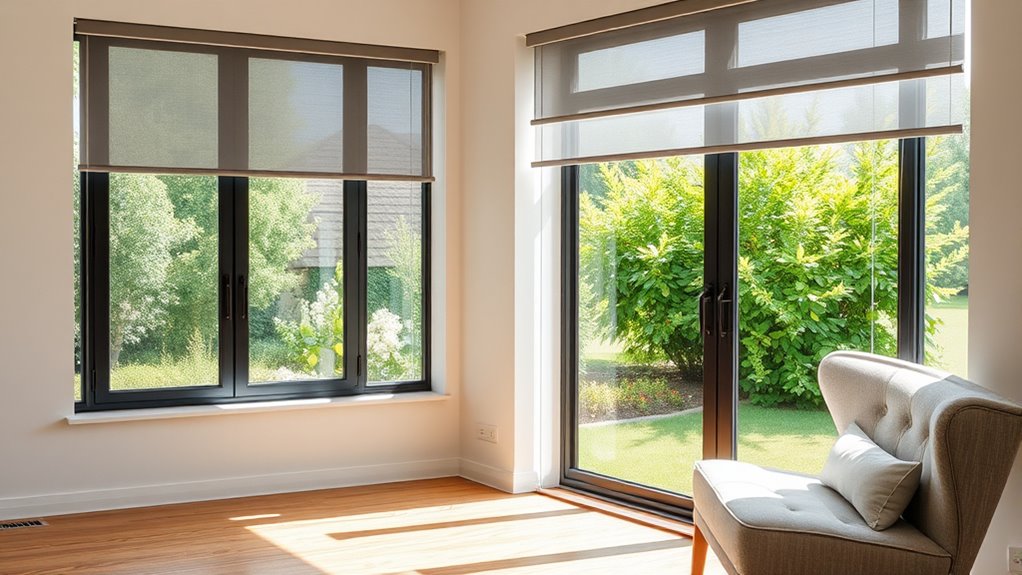
Choosing the right window coverings depends heavily on your climate, as different environments demand different strategies for comfort and energy efficiency. For hot climates, consider window tinting to block heat and UV rays, while in colder areas, insulating coverings can help retain warmth. Your choice of window frame materials also matters; materials like vinyl or wood can influence insulation levels. To optimize energy savings, focus on coverings that suit your climate’s needs.
- Use reflective or insulated window coverings in cold regions
- Opt for light-colored or reflective films in hot climates
- Pair window tinting with energy-efficient frame materials for best results
Installing and Maintaining Energy-Saving Window Treatments
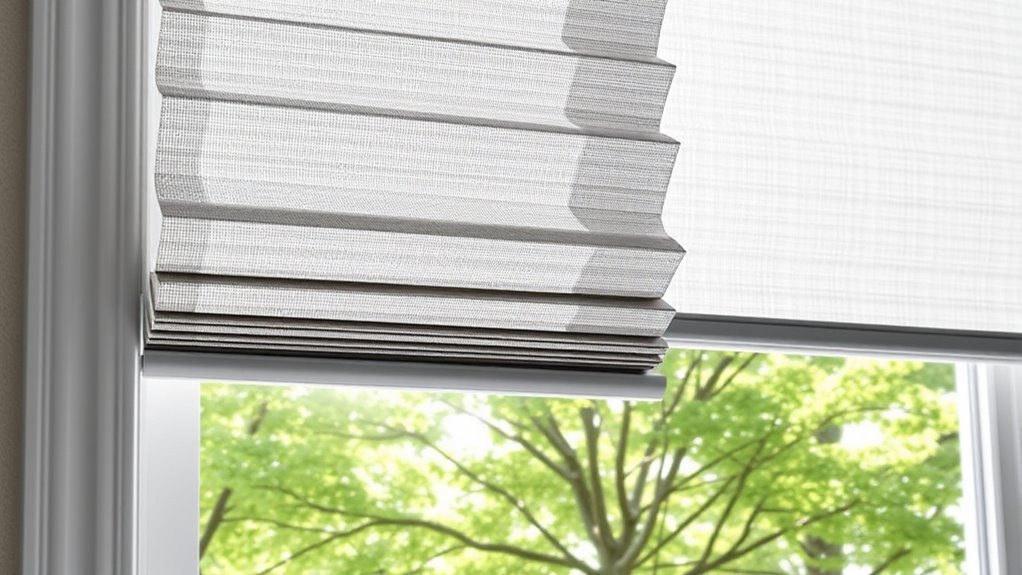
Installing energy-saving window treatments can critically reduce your home’s heating and cooling costs, but proper setup is essential for maximum effectiveness. Start by guaranteeing your smart glass windows are correctly installed and calibrated to optimize insulation and light control. If you choose window tinting, make sure it’s professionally applied to avoid bubbles or gaps, which can diminish its energy-saving benefits. Regular maintenance, like cleaning the glass and tint film, keeps your treatments functioning properly. For smart glass, check that the electronic controls work smoothly and update software if needed. Proper installation and upkeep of these treatments ensure they perform at peak efficiency, helping you save energy year-round. Taking these steps can significantly improve your home’s comfort and reduce your utility bills.
Cost Savings and Environmental Impact of Energy-Efficient Coverings
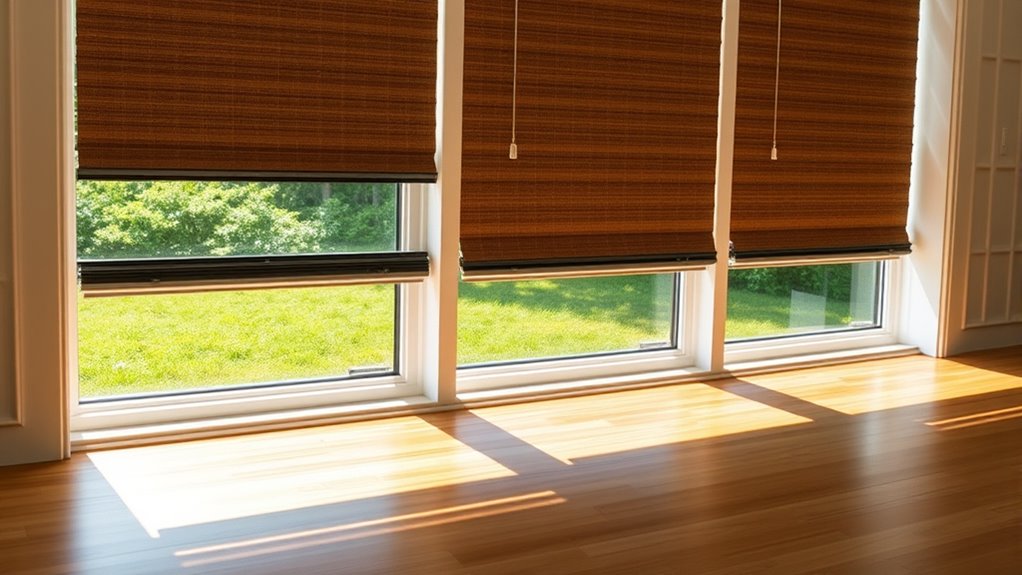
Energy-efficient window coverings can considerably lower your energy bills by reducing the need for heating and cooling. Over the years, historical trends show increasing adoption of materials designed for better insulation and reflectivity. Material innovations, such as advanced fabrics and reflective coatings, boost efficiency and durability. These improvements help you save money while decreasing your environmental footprint. By choosing coverings that block heat in summer and trap warmth in winter, you minimize energy consumption. This not only cuts costs but also reduces greenhouse gas emissions.
Energy-efficient window coverings reduce bills and environmental impact through improved insulation and reflective materials.
- Reduced energy bills over time
- Lower carbon footprint
- Support for sustainable development
Frequently Asked Questions
How Do Window Coverings Affect Indoor Air Quality?
Window coverings can influence your indoor air quality by affecting air circulation and trapping pollutants. When you choose breathable fabrics or open coverings, you allow better air flow, reducing pollutant buildup. Conversely, heavy or sealed coverings might trap dust, allergens, and other pollutants, leading to poorer air quality. Regular cleaning of your window coverings helps prevent dust accumulation and maintains healthier indoor air, making your space more comfortable and safer.
Are There Eco-Friendly Materials for Energy-Efficient Window Treatments?
You’ll be glad to know that eco-friendly fabrics and sustainable materials are great choices for energy-efficient window treatments. Studies show that using eco-friendly fabrics can reduce your home’s carbon footprint by up to 30%. Imagine wrapping your windows in bamboo, organic cotton, or recycled textiles—these materials not only save energy but also promote a healthier environment. Switching to sustainable options helps you stay cozy while caring for the planet.
Can Window Coverings Be Automated for Better Energy Management?
Yes, you can automate your window coverings for better energy management. Smart automation lets you control your blinds or shades remotely through apps or voice commands, optimizing sunlight and insulation. With remote control features, you can easily adjust your window treatments throughout the day, reducing heating and cooling costs. This seamless automation helps maintain a comfortable indoor environment while boosting energy efficiency effortlessly.
How Do Window Coverings Impact Natural Light and Glare?
Your window coverings play a key role in controlling natural light and reducing glare. By adjusting them, you can optimize light control, making your space more comfortable and visually appealing. They help block excessive sunlight that causes glare, improving visibility and reducing eye strain. Whether you choose blinds, shades, or curtains, properly managed coverings enable you to enjoy just the right amount of natural light while minimizing unwanted glare.
What Are the Best Window Coverings for Homes in Humid Climates?
In humid climates, you should choose window coverings with thermal insulation and UV protection. Insulated blinds or shades help keep indoor temperatures stable and prevent moisture buildup, while UV-protective fabrics block harmful rays and reduce fading. Opt for materials like cellular shades or bamboo blinds, which breathe well and resist humidity. These options improve comfort, safeguard your furnishings, and enhance energy efficiency in challenging weather conditions.
Conclusion
By choosing energy-efficient window coverings, you reduce costs, conserve energy, and enhance comfort. You improve insulation, control heat, and lower your carbon footprint. You protect your home from the summer heat and winter chill, and you enjoy the benefits of savings and sustainability. With the right window treatments, you create a more comfortable, more efficient, more eco-friendly home—because smart choices today lead to a better tomorrow.