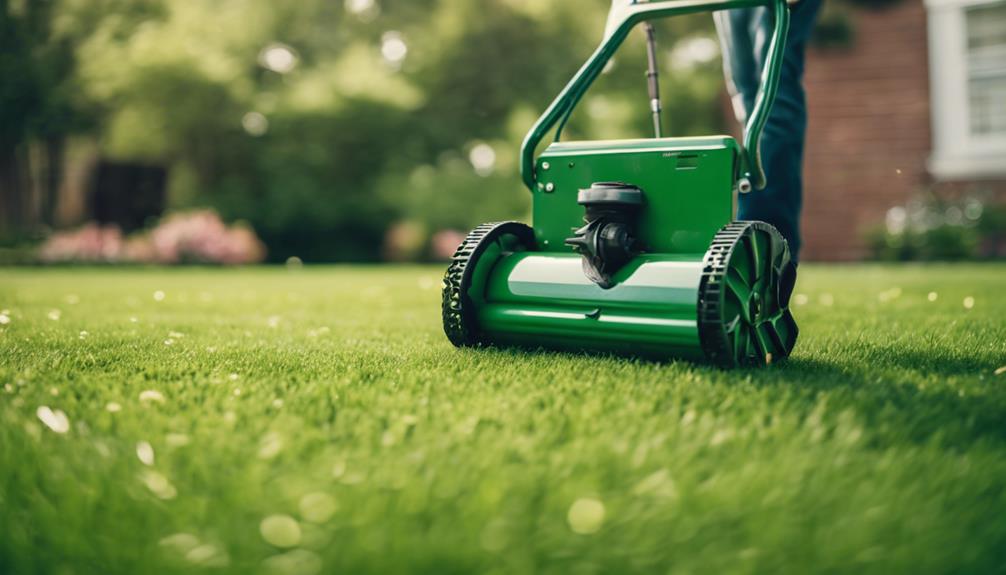

A lawn aerator helps relieve compacted soil, but the right style depends on your lawn size and whether you need to remove plugs or simply puncture the surface. My best overall pick is the Landzie Rolling Lawn Aerator for its rolling core-aeration approach, while the Agri-Fab 48-Inch Tow-Behind is the standout for larger lawns and the YIYOUPENG 21-Tine Manual Aerator offers wider coverage in a hand-powered tool. The main tradeoff is between the deeper soil opening of hollow-tine tools and the simpler upkeep of spike aerators. Manual tools suit smaller areas but demand more effort, while rolling and tow-behind models cover ground faster and need more storage space. Read on for the full comparison, selection criteria, and advice on matching an aerator to your lawn.

Get furniture and decor delivered free with Prime
- Fast, free delivery on millions of items
- Prime Video, Amazon Music and more included
- Member-only deals all year
Complete the kit


Key Takeaways
- Core aeration and spike aeration solve different problems: the Landzie and Agri-Fab are the core-focused standouts, while most 15-spike models puncture soil without removing plugs.
- Lawn size changes the ranking: the Agri-Fab tow-behind is better suited to broad areas and compatible towing equipment; compact manual tools make more sense for smaller lawns.
- More tines can mean faster coverage, not automatically better results: the YIYOUPENG‘s 21 tines offer a wider pass than 15-tine tools, but soil condition and tine design still matter.
- Ease-of-use features address different pain points: SakerPlus adds a rebound spring, GAINO emphasizes self-cleaning, and the knee-friendly model offers an adjustable handle and dual step.
- Rolling designs trade repetitive stepping for pushing and storage: the Manual Roller, SENVERT, and AVVA VISION suit buyers who prefer continuous movement, while a step-style tool gives more control over individual placements.


More Details on Our Top Picks
Saker Manual Lawn Aerator with 15 Iron Spikes
The Saker is a balanced choice for gardeners who want a step-style aerator with useful comfort and clog-control features. Its 15 spikes cover several points per press, while the spring ejector helps shake off soil and debris between steps. The adjustable 32.2–35.4-inch handle offers more height range than the GAINO’s 32–35-inch adjustment, though GAINO’s longer 2.76-inch spikes may reach deeper. Saker’s 2.3-inch spikes sit between GAINO’s and the shorter RIFPOD’s 1.74-inch spikes, making this a middle-ground option rather than a deep-penetration pick. Manual stepping still takes effort, especially in hard or dry ground, so I’d prepare the lawn and check soil moisture before starting. Its included gloves are a practical extra, but they do not reduce the work required on a large lawn.
Pros:- Fifteen spikes treat several soil points with each press.
- Spring ejector helps clear soil and debris from the spikes.
- Handle adjusts from 32.2 to 35.4 inches.
- Reinforced iron construction and protective gloves are included.
Cons:- Manual stepping can be strenuous in compacted or dry soil.
- Its 2.3-inch spikes are shorter than the GAINO’s 2.76-inch spikes.
- Covers ground more slowly than a rolling or tow-behind aerator.
Best for: Homeowners with a small or medium lawn who want adjustable step-aerator height, multiple spikes per press, and a spring ejector.
Not ideal for: People aerating hard, dry, or extensive lawns who need deep penetration or powered coverage.
- Spike count:15
- Spike length:2.3 inches
- Adjustable height:32.2–35.4 inches
- Material:Thickened iron with rust-resistant coating
- Dimensions:15.7 x 12.6 x 4.7 inches
- Weight:6.53 pounds
- Included accessory:Protective gloves
Our verdict“Choose the Saker for adjustable, spring-assisted spot aeration on a manageable lawn, but pick a longer-spike or rolling model for tougher ground or broader coverage.”
GAINO Lawn Aerator Tool, 15-Spike Aerator, Self-Cleaning, Black & Orange
Among these step-style tools, the GAINO makes the strongest case for buyers who want longer spike reach without moving to a different aerator format. Its 15 steel spikes extend 2.76 inches, longer than the Saker’s 2.3-inch spikes and well beyond the RIFPOD’s 1.74-inch spikes. That extra length can help reach farther into suitable moist soil, although it does not remove the physical effort of pressing a manual tool into compacted ground. A dual-layer self-cleaning spring helps shed soil after each press, and its adjustable T-handle offers leverage across a modest height range. It arrives pre-assembled, which makes setup simpler than the RIFPOD, which requires assembly with included hardware. The tradeoff is that it remains a spot aerator: large lawns call for a rolling or tow-behind design.
Pros:- 2.76-inch spikes are longer than those on the Saker and RIFPOD models.
- Fifteen spikes cover multiple points with each press.
- Dual-layer spring helps eject soil and reduce clogging.
- Pre-assembled steel construction and adjustable T-handle simplify getting started.
Cons:- Manual use requires repeated physical effort, especially over larger areas.
- Designed mainly for moist soil and spot aeration.
- Its 32–35-inch adjustment range is narrower than the Saker’s.
Best for: Gardeners with a small or medium lawn who want a manual step aerator with longer spikes and minimal setup.
Not ideal for: People with large lawns or hard, dry soil who need faster coverage or less physical effort.
- Spike count:15
- Spike length:2.76 inches
- Adjustable height:32–35 inches
- Construction:Heavy-duty all-steel
- Operation:Manual
- Color:Black and orange
- Model:Lawn Aerator 02
Our verdict“Pick the GAINO if longer spikes and ready-to-use assembly matter most; choose a rolling aerator for broad lawn coverage.”
RIFPOD Manual Lawn Aerator with 15 Iron Spikes
The RIFPOD is a straightforward step aerator for routine spot work where shorter spikes are sufficient. Its 15 iron spikes can cover several points per press, and the dual-spring design helps clear dirt and leaves. The key compromise is spike length: at 1.74 inches, these are shorter than the Saker’s 2.3-inch spikes and the GAINO’s 2.76-inch spikes. That makes the RIFPOD a better fit for lighter, less compacted soil than for a lawn that needs deeper penetration. Its adjustable 32–35-inch height and rust-resistant finish provide practical everyday features, but assembly is required. Compared with the pre-assembled GAINO, setup takes an extra step; compared with a roller aerator, this tool gives more direct control over which patches receive attention but demands repeated stepping.
Pros:- Fifteen spikes treat multiple points with each step.
- Dual springs help clear dirt and leaves from the tool.
- Adjustable 32–35-inch height suits a range of users.
- Iron construction has a sprayed rust-resistant finish.
Cons:- 1.74-inch spikes are shorter than the Saker’s and GAINO’s.
- Manual operation can be tiring across a broad lawn.
- Requires assembly with the included hardware.
Best for: Owners of small lawns with relatively loose soil who want a simple manual tool for targeted aeration.
Not ideal for: Gardeners dealing with compacted ground who need longer spikes or buyers seeking a ready-to-use tool with no assembly.
- Spike count:15
- Spike length:1.74 inches
- Adjustable height:32–35 inches
- Material:Iron
- Finish:Sprayed rust-resistant finish
- Operation:Manual
- Model:STQ-009
Our verdict“Choose the RIFPOD for light-duty, targeted aeration on loose soil, not for deep work in compacted ground.”
Manual Roller Lawn Aerator with Pre-Attached Spikes
Unlike the Saker, GAINO, and RIFPOD step tools, this Lxuziud aerator uses a manual roller format for moving across the lawn rather than pressing spikes into one patch at a time. That approach suits buyers who prefer continuous passes, while the option to add water or sand lets them adjust roller weight for the task. It is also the only listed roller here with a stated one-year warranty. The tradeoff is that the product data does not specify spike count or length, so buyers have less information for judging penetration against the GAINO’s 2.76-inch spikes. At 60 inches tall and 18 inches wide, it also needs more storage space than a compact step tool. It still takes physical effort to push, and filling it adds preparation before use.
Pros:- Roller design allows continuous passes instead of repeated step presses.
- Weight can be adjusted by adding water or sand.
- Pre-attached spikes reduce the need to attach spikes before use.
- Includes a one-year warranty with free replacement for quality issues.
Cons:- Pushing the roller still requires physical effort.
- Filling with water or sand adds preparation and handling.
- Spike count and length are not provided in the product data.
- Its 60-inch height may make storage harder than with step aerators.
Best for: Homeowners who prefer rolling passes across a lawn and want adjustable tool weight for seasonal maintenance.
Not ideal for: People with limited storage, small areas needing precise spot treatment, or buyers who want specified spike dimensions before choosing.
- Brand:Lxuziud
- Model:Mra-001
- Material:Iron
- Dimensions:4.5 inches deep x 18 inches wide x 60 inches high
- Weight:11 pounds
- Adjustable weight:Add water or sand
- Warranty:1 year
Our verdict“Choose this roller if you want continuous manual passes and adjustable weight, but prefer a step model when compact storage or specified spike reach matters more.”
SakerPlus Manual Lawn Aerator with Rebound Spring
The SakerPlus is a focused pick for buyers who value a rebound spring to help release the tool after pressing its 15 spikes into soil. That spring may make repeated step-and-lift motions more manageable, while the powder-coated, thickened iron body is built for regular manual use. Compared with the Saker model, the SakerPlus lists three handle alignment holes but does not provide a specific spike length or the same detailed dimensions, which leaves less information for judging its reach. The GAINO is the clearer choice if spike penetration is the priority because its 2.76-inch length is specified. SakerPlus is also described for soft, loose soil, so I would not choose it for stubbornly compacted ground. Its strengths are convenience during release and adjustable fit, not a claim to handle every soil condition.
Pros:- Rebound spring helps release spikes from the soil after each press.
- Fifteen spikes cover multiple points in a single step.
- Three handle alignment holes allow height adjustment.
- Thickened iron has a rust-resistant powder coating.
Cons:- Product data describes it for soft, loose soil.
- Spike length is not specified.
- Manual stepping remains labor-intensive across large lawns.
Best for: Gardeners with soft, loose soil who want a step aerator with a rebound spring and adjustable handle positions.
Not ideal for: Owners of compacted lawns or buyers who need a stated spike length to compare penetration before purchase.
- Spike count:15
- Material:Thickened iron
- Finish:Rust-resistant powder coating
- Adjustable height:32.2–35.4 inches
- Height settings:3 alignment holes
- Spring:Rebound spring
- Model:GJ70486
Our verdict“Pick the SakerPlus for spring-assisted spot aeration in loose soil, but choose the GAINO if you need a specified, longer spike length.”
Walensee 15-Spike Manual Lawn Aerator
The 15-spike layout covers more ground per step than the Josmimic’s four hollow tines, making this a practical choice for small lawns that need spot aeration without a rolling or tow-behind tool. A 34.6-inch handle, cushioned T-grip, and foot pedal give you leverage while you press the iron spikes into the soil. Its detachable design can also make storage and assembly more manageable than a larger aerator. The tradeoff is the spike approach: it makes channels rather than removing soil cores, so it is not the pick for buyers seeking plug aeration. Walensee also warns against rocky ground and sticky clay, and dry or hard soil should be watered first. I’d choose it for limited, workable areas—not a large lawn or difficult soil.
Pros:- Fifteen iron spikes create multiple channels with each step.
- Long handle, cushioned T-handle, and foot pedal provide leverage.
- Detachable design supports assembly and storage.
- Powder-coated iron construction.
Cons:- Creates holes rather than extracting soil plugs.
- Not recommended for rocky ground or sticky clay.
- Manual stepping is a poor fit for large areas, and hard or dry soil should be watered first.
Best for: Homeowners with a small lawn or isolated compacted patches who want a simple manual tool with multiple spikes per step.
Not ideal for: Owners of large lawns, or anyone dealing with rocky, sticky-clay, very hard, or dry soil that calls for a different aeration method or preparation.
Our verdict“Choose the Walensee for small, workable lawn areas where a multi-spike tool is more convenient than a core aerator.”
Landzie Rolling Lawn Aerator Manual Core Plug Aerator
The Landzie takes a different route from the Walensee: its seven hollow stainless steel tines remove soil plugs instead of simply piercing the ground. That makes it the stronger match for buyers who specifically want core aeration and have room to roll a tool across the lawn. Its powder-coated steel frame and replaceable tines suit repeated seasonal work, while the rolling format avoids the step-by-step motion of the Josmimic. The main tradeoff is its 50.8-pound weight. That mass may help the tool feel substantial, but it can make pushing and turning tiring, especially on compacted soil. It remains manual, so it does not offer the broad tractor-drawn coverage of the Agri-Fab. I’d favor it for a smaller area where plug removal matters more than low effort.
Pros:- Seven hollow tines remove soil plugs rather than only making holes.
- Rolling format covers ground without repeated foot-pressure steps.
- Replaceable tines can extend the tool’s useful life.
- Powder-coated steel construction and a stated lifetime guarantee.
Cons:- At 50.8 pounds, it may be difficult to push or maneuver for some users.
- Manual operation still takes considerable effort on compacted soil.
- Less suited to broad areas than the tractor-towed Agri-Fab.
Best for: Homeowners who want manual core aeration for a modest lawn and prefer rolling hollow tines to stepping on a plug aerator.
Not ideal for: People who need a lightweight tool, have a large lawn, or expect compacted soil to be easy to aerate without substantial pushing effort.
Our verdict“Pick the Landzie if plug removal is your priority and you can manage a heavy manual roller.”
YIYOUPENG Manual Lawn Aerator with 21 Tines
With 21 tines per step, the YIYOUPENG covers a wider patch at once than the Walensee’s 15-spike tool, a useful distinction when you want to reduce the number of placements across a modest lawn. Its five-spring self-resetting mechanism returns the tool after each press, and the four-position foot pedal lets buyers adjust their stance. The all-metal, powder-coated frame and cushioned T-handle add sturdiness and comfort, though this is still a stepping tool rather than a rolling or tractor-pulled option. Its 2.4-inch tines are shorter than the Landzie’s hollow core tines and do not remove plugs. It may also move into compacted soil more smoothly after watering. I’d choose it for coverage and reset convenience, not for deep core aeration or effortless work on hard ground.
Pros:- Twenty-one tines cover more ground per step than the Walensee’s 15 spikes.
- Five-spring mechanism resets the tool after each press.
- Four-position adjustable foot pedal and cushioned T-handle.
- All-metal frame with rust-resistant powder coating.
Cons:- Makes holes rather than removing soil cores.
- Requires repeated stepping across the lawn.
- Compact soil may be easier to penetrate after watering.
Best for: Homeowners with a modest lawn who want more holes per step and an adjustable, spring-return manual aerator.
Not ideal for: Buyers seeking soil-plug removal, a powered or tow-behind solution, or a tool that avoids repeated stepping on compacted ground.
Our verdict“Choose the YIYOUPENG for higher per-step coverage and spring-assisted resetting on a manageable lawn.”
Agri-Fab 48-Inch Tow-Behind Lawn Plug Aerator
The Agri-Fab is the lineup’s clearest choice for extensive lawn work: its 48-inch working width and tractor hitch cover ground far faster than manual tools such as the Landzie or Josmimic. It removes plugs up to 3 inches deep with 32 self-sharpening galvanized knives, making it better suited to broad core-aeration jobs than spike tools that only open channels. Flat-free tires reduce routine tire care, and the transport handle can be reached from the tractor seat. The tradeoff is access: you need a compatible lawn or garden tractor, plus space to store a 94-pound attachment. The listed weight-tray capacity is inconsistent—140 pounds in one description and 175 pounds elsewhere—so I would verify that detail before relying on a specific loading limit. This is a scale-first choice, not a standalone tool.
Pros:- Forty-eight-inch working width covers ground much faster than manual tools.
- Removes plugs up to 3 inches deep.
- Thirty-two self-sharpening galvanized knives.
- Flat-free tires and a seat-accessible transport handle.
Cons:- Requires a lawn or garden tractor for towing.
- At 94 pounds and 60 inches long, it needs suitable storage and maneuvering space.
- Weight-tray capacity is listed as both 140 and 175 pounds.
Best for: Owners of large lawns who already have a lawn or garden tractor with a compatible hitch and want wide-pass core aeration.
Not ideal for: People without a towing tractor, those with small or tightly landscaped yards, or buyers who need a lightweight standalone aerator.
Our verdict“Choose the Agri-Fab for wide-area plug aeration only if you have a suitable tractor and room for the attachment.”
Josmimic Manual Lawn Core Aerator with Adjustable Handle
The Josmimic suits buyers who want core aeration in tight spots rather than broad coverage. Its four hollow tines remove plugs with each step, unlike the Walensee and YIYOUPENG, which use solid spikes to make channels. The adjustable 43.3-to-48.5-inch handle supports a more upright working position, while the dual-level step bar gives you two places to apply pressure. Side outlets are designed to help soil cores clear instead of clogging the tines. Compared with the Landzie roller, this is narrower and more direct for borders or hard-to-reach sections, but it requires repeated stepping and can be tiring in dense soil. Moist soil—not muddy ground—is the stated working condition. I’d pick it for seasonal spot work where removing plugs matters more than speed.
Pros:- Four hollow tines remove soil cores rather than only puncturing the surface.
- Side outlets help discharge plugs and limit clogging.
- Handle adjusts from 43.3 to 48.5 inches for a more adaptable working position.
- Dual-level step bar offers two points for applying foot pressure.
Cons:- Manual stepping can take effort on dense soil.
- Four tines per step cover less ground than the YIYOUPENG’s 21-tine layout.
- Works best in moist soil, not muddy conditions.
Best for: Homeowners who need to remove soil cores in narrow, hard-to-reach lawn sections and want an adjustable handle.
Not ideal for: People aerating a large open lawn, anyone seeking a rolling or tractor-drawn tool, or buyers who cannot manage repeated stepping on dense soil.
Our verdict“Choose the Josmimic for focused core aeration in narrow areas where its adjustable handle and plug outlets are useful.”
Lawn Aerator Tool with Non-Clogging Hollow Tines
This is the most direct choice here for homeowners who want to remove soil plugs from compacted patches rather than simply poke holes. Its three hollow tines reach up to 4 inches, while the plug-ejecting design is intended to reduce blockages during use. Compared with the Morinoli Manual Lawn Aerator, which uses 15 spikes to make more holes per step, this tool favors deeper core removal over broad surface coverage. A 37-inch upright handle and wide foot pedal help keep the motion controlled, and replaceable tines offer a way to maintain the tool over time. The tradeoff is the pace: manual coring takes effort and repeated steps, and dry soil should be watered before aeration. I’d choose it for deliberate work on dense areas, not for treating a large lawn quickly.
Pros:- Hollow tines remove soil plugs rather than only puncturing the surface.
- Tines are designed to eject plugs and resist clogging.
- Replaceable tines can extend the tool’s usable life.
- Upright handle and wide foot pedal support controlled operation.
Cons:- Manual coring requires physical effort and repeated steps.
- Dry soil should be watered before use for easier penetration.
Best for: Homeowners who need to relieve compaction in specific dense patches and prefer soil-plug removal over spike-only aeration.
Not ideal for: People aerating a large lawn or seeking low-effort coverage, since this requires repeated manual pressure and dry soil needs preparation.
- Tine type:Hollow, non-clogging, replaceable
- Number of tines:3
- Maximum aeration depth:4 inches
- Frame material:Welded steel
- Height:37 inches
- Handle:T-handle with non-slip rubber grips
- Item weight:3.54 pounds
- Assembly:Semi-assembled
Our verdict“Choose this for deep, targeted core aeration in compacted areas; pick the Morinoli if you prefer making more shallow holes per step.”
SENVERT Rolling Lawn Aerator, Heavy-Duty Push Spike Tool
The SENVERT is the rolling option for buyers who want to cover a small or medium lawn by pushing rather than stepping a hand tool into the soil. Its spiral-pattern spikes are arranged to support a steady roll, and the drum can be weighted with sand or stones up to 55 pounds when extra pressure is needed. That adjustability gives it an advantage over the fixed-weight AVVA VISION Manual Rolling Lawn Aerator, although the AVVA uses rotary coring to remove plugs rather than relying on spikes. The SENVERT’s auxiliary wheels help move it across hard surfaces, and its main body arrives assembled; only the handle needs attachment. Its limits are clear: it still takes sustained pushing, added weight increases the workload, and it is aimed at modest lawn areas rather than broad acreage. Do not fill the drum with water.
Pros:- Spiral spike layout supports smoother rolling and directional control.
- Can be weighted with sand or stones for increased penetration pressure.
- Auxiliary TPR wheels help protect hard surfaces during transport.
- Main body is assembled, leaving handle attachment as the main setup task.
Cons:- Manual pushing requires effort, especially when the drum is weighted.
- Designed for small to medium-sized lawns rather than large properties.
- The drum should not be filled with water.
Best for: Owners of small to medium lawns who want a push roller with adjustable weight for spike aeration.
Not ideal for: Buyers who need soil plugs removed, have a large property, or cannot comfortably push a heavy tool across the lawn.
- Model:JX-002
- Dimensions:20.5 x 14 x 49 inches
- Item weight:38.3 pounds
- Aerator weight:32 pounds
- Maximum weight with added material:55 pounds
- Spike pattern:Spiral
- Wheels:Auxiliary TPR wheels
- Setup:Attach the handle
Our verdict“Pick the SENVERT for adjustable-weight rolling spike coverage, but choose the AVVA VISION if removing soil cores matters more than rolling speed.”
AVVA VISION Manual Rolling Lawn Aerator
Unlike the SENVERT, which uses spikes and adjustable added weight, the AVVA VISION is built around rotary coring: it extracts soil plugs as it rolls. That makes it the more relevant pick for buyers focused on reducing compaction through core removal and supporting air, water, and nutrient movement into the soil. Its 43.7-pound build gives it a substantial frame for regular manual use, but the weight also means pushing and turning it can take real effort. The listed 60-inch length calls for storage space, another distinction from the compact handheld tools in this group, such as the Knee-Friendly Manual Lawn Aerator. The tradeoff is coverage: this model is intended for small to medium lawns, so a larger property may make manual rolling slow. I’d favor it when rolling plugs is the priority and the operator can manage a full-size, heavy tool.
Pros:- Rotary coring extracts soil plugs to address compaction.
- Designed to improve air, water, and nutrient absorption.
- Heavy-duty construction is intended for regular use.
- Transport wheels support movement between work areas.
Cons:- Manual operation requires significant pushing effort.
- Its listed 60-inch length may be awkward to store.
- Intended for small to medium lawns, limiting its fit for larger properties.
Best for: Homeowners with small to medium lawns who want a rolling tool that removes soil cores and can manage a heavy manual aerator.
Not ideal for: People with large lawns, limited storage, or difficulty pushing and maneuvering a 43.7-pound tool.
- Manufacturer:AVVA VISION INC
- Model:KD-0003
- Dimensions:60 x 17 x 11 inches
- Weight:43.7 pounds
- Operation:Manual push
- Aeration type:Rotary coring
- Transport:Transport wheels
Our verdict“Choose the AVVA VISION if you want rolling core removal and can handle its weight; the SENVERT is the better fit for adjustable-weight spike aeration.”
Morinoli Manual Lawn Aerator with 15 Spikes
The Morinoli uses 15 metal spikes to make multiple aeration holes with each placement, making it a straightforward choice for buyers who want more contact across a step than the three-tine plug tool provides. Its spring mechanism is designed to clear mud and debris from the spikes, which helps keep cleanup and repeated use more manageable. Compared with the Lawn Aerator Tool with Non-Clogging Hollow Tines, this design loosens soil with spikes rather than removing cores, so it does not provide the same plug-extraction approach. The carbon steel frame is intended to resist bending, and partial pre-assembly reduces setup work. The tradeoff is soil condition: the spikes penetrate more easily when the lawn is moist, so dry ground may call for watering 12–24 hours ahead. It remains a manual tool, and covering a large area still takes sustained effort.
Pros:- Fifteen spikes create multiple holes per placement.
- Spring mechanism clears mud and debris from the spikes.
- Carbon steel construction is designed to resist bending.
- Partially pre-assembled for quicker setup.
Cons:- Spike aeration loosens soil but does not extract soil cores.
- Manual operation takes effort across repeated placements.
- Works best when the lawn is moist, which may require advance watering.
Best for: Homeowners who want a simple manual spike tool that creates several aeration holes with each step on a small lawn.
Not ideal for: Buyers seeking soil-plug removal or low-effort treatment of a large lawn; this tool relies on manual pressure and moist soil.
- Brand:Morinoli
- Model:MDKQ-BL
- Frame material:Carbon steel
- Spike count:15
- Handle:T-handle
- Operation mode:Manual
- Cleaning feature:Self-cleaning spring mechanism
- Assembly:Partially pre-assembled
Our verdict“Choose the Morinoli for multiple spike holes per step and easier spike cleanup; pick the three-tine hollow model when core removal is your priority.”
Knee-Friendly Manual Lawn Aerator, Adjustable 43.3–48.5″, Silver, Dual Step
This handheld core aerator is the most customizable upright option in this group: its handle adjusts from 43.3 to 48.5 inches, and four hollow tines remove soil cores rather than merely puncturing the surface. The longer handle range can suit different heights and help keep the user upright, while the wide dual foot platform spreads pressure across the tool. Compared with the Lawn Aerator Tool with Non-Clogging Hollow Tines, it has one additional tine and adjustable height, though the other model lists a 4-inch maximum depth and replaceable tines. Stainless steel construction and a side-release path are intended to limit clogging, but the tool still needs moist soil and repeated manual pressure. Its 5.5-pound weight and targeted-area design make it better for spot treatment than fast coverage of a full lawn.
Pros:- Adjustable handle accommodates a range of working heights.
- Four hollow tines remove soil cores.
- Wide dual foot platform distributes pressure.
- Side-release path is designed to reduce clogging.
Cons:- Manual operation requires repeated physical pressure.
- Best suited to small lawns or targeted areas rather than broad coverage.
- Requires moist soil for easier operation.
Best for: Homeowners treating compacted patches who want an adjustable upright handle, a broad foot platform, and hollow-core aeration.
Not ideal for: People aerating large lawns or seeking a tool with a stated maximum depth and replaceable tines; this model is manual and intended for targeted use.
- Manufacturer:josmimic
- Model:QQ-MKS19-0010-LSI-US
- Material:Stainless steel
- Adjustable handle range:43.3–48.5 inches
- Number of tines:4 hollow tines
- Product dimensions:12 x 1 x 48.5 inches
- Item weight:5.5 pounds
- Clog-reduction feature:Side-release path
Our verdict“Choose this for height-adjustable, upright core aeration on compacted patches; select the three-tine model if replaceable tines and a stated 4-inch depth matter more.”

How We Picked
I compared the 15 options by the job each tool is built to do: spike penetration, hollow-tine core removal, rolling coverage, or tow-behind aeration. I gave more weight to tools with a clear use case, practical coverage for that use, and features that reduce friction during repeated passes. Ease of handling, likely maintenance needs, storage demands, and whether the design suits small or large lawns also shaped the ordering.
The ranking puts versatility and the aeration method ahead of a high tine count alone. The Landzie ranks first because core removal gives it a distinct role among the manual and rolling choices; the Agri-Fab ranks highly for large properties but is less useful without a towing setup. Manual spike tools remain sensible for targeted work, yet their overlap means specific advantages—such as self-cleaning, a rebound spring, adjustable height, or a wider tine arrangement—matter more than similar spike counts. Product names and listed features guide this comparison; I do not treat unprovided performance claims as verified test results.
Factors to Consider When Choosing Lawn Aerator
Before choosing a lawn aerator, decide what kind of compaction you are addressing and how much ground you need to cover. The right tool is not always the one with the most tines or the largest frame: soil, lawn layout, physical effort, and storage all affect whether you will use it effectively.
Choose between spike and core aeration
Spike aerators press into the ground, while hollow-tine core aerators remove small plugs of soil. Spikes can suit light, localized work, but pushing solid tines into dense soil may compress the soil around each puncture. Core tools create open channels and are often the stronger choice when compaction is persistent, though they can take more effort and leave plugs on the surface. A common mistake is buying a spike tool expecting it to perform the same job as a plug aerator. Match the method to the condition of the lawn rather than choosing by appearance alone.
Match the tool to lawn size and layout
Coverage speed matters most on larger lawns, where a small step tool can turn aeration into a long task. Tow-behind models can cover broad, open areas efficiently, but they require compatible towing equipment and room to maneuver. Rolling tools reduce the need to lift and reposition a tool at every spot, although edges, tight corners, and obstacles still require extra passes. Handheld or step-style tools are easier to direct around beds and narrow sections. Measure the area you actually need to aerate, not just the full property, before deciding that a larger tool is worth the space it occupies.
Factor in soil moisture and soil type
Soil condition can matter as much as tool design. Very dry, hard ground can resist tine entry, while saturated ground may smear or compact rather than open cleanly. Many lawns are easier to aerate when the soil is moist but not waterlogged, though the best timing depends on grass type and local conditions. Clay-heavy soil often benefits from more deliberate compaction management than loose, sandy soil. Avoid judging a tool’s likely results from tine count alone; tine shape, soil moisture, and steady downward force affect penetration.
Estimate effort, comfort, and control
Repeated force and posture shape day-to-day usability. A step aerator asks the user to press down many times, so handle height, grip, foot support, and tool weight can make a real difference. Spring-assisted designs may ease the return motion, while adjustable handles can help fit different users. Rolling models replace repeated stepping with pushing, which may be more comfortable for some buyers but still requires control across uneven ground. If mobility or joint comfort is a concern, prioritize the working position and return mechanism over a small difference in tine count.
Compare maintenance and clog management
Hollow tines and solid spikes bring different upkeep. Core tools can clog with soil, especially when conditions are sticky, so check how accessible the tines are for cleaning. A self-cleaning feature may reduce interruptions, but it does not remove the need to inspect and clear buildup when needed. Solid spike tools usually avoid plug removal, yet their tines still need cleaning and occasional checks for bending or loosened parts. Think about where you will clean and store the aerator before choosing a model that leaves plugs or has multiple moving parts.
Weigh storage and equipment requirements
Large coverage comes with a footprint tradeoff. Tow-behind and rolling designs can speed up work, but they take more storage room than a narrow manual tool and may be harder to move through a shed or gate. A tow-behind aerator also makes sense only if you already have suitable equipment and a lawn layout that allows it to turn. Compact step tools are simpler to store and can target problem areas, though they require more repeated effort for broad coverage. Check dimensions, assembly needs, and storage access before treating a larger tool as an upgrade.
Frequently Asked Questions
Should I choose a core aerator or a spike aerator for compacted soil?
For recurring or heavier compaction, a core aerator is usually the more direct fit because it removes plugs rather than simply making holes. A spike aerator may be adequate for light, targeted work or buyers who prefer a simpler tool without plug cleanup. Soil type and moisture affect how well either style works, so a spike tool should not be treated as a substitute for core removal in every situation. In this lineup, the Landzie and Agri-Fab are the core-focused options; most of the 15-spike tools are better understood as puncturing tools. Choose based on the soil problem you are trying to address, not just the tool’s name.
Is a tow-behind lawn aerator worth it for a residential lawn?
A tow-behind aerator can make sense when the lawn is broad, open, and compatible with the equipment needed to pull it. The Agri-Fab is the lineup’s clearest large-area choice, but its working width does not help much if gates, trees, beds, or tight turns interrupt the route. For a smaller or irregular lawn, a manual or rolling tool may be easier to direct and store. Factor in towing compatibility and where the aerator will live between uses before choosing by coverage alone. If you only need to aerate a few compacted patches, a tow-behind model is likely more tool than the job requires.
Do more tines make a manual lawn aerator a better choice?
A higher tine count can cover more ground per pass, but it does not guarantee deeper or more effective aeration. Tine shape, spacing, strength, soil moisture, and the force the user can apply all affect the result. The YIYOUPENG’s 21 tines distinguish it from the many 15-spike tools, but buyers should still consider whether they can press the wider arrangement into their soil. More contact points may also demand more effort in firm ground. Compare tine count alongside the aeration method and expected physical effort.
Which lawn aerator is easier to use if repeated stepping is uncomfortable?
Look for a design that changes the working motion rather than relying only on spike count. The SakerPlus rebound spring addresses the tool’s return motion, while the knee-friendly model pairs an adjustable handle with a dual step for a more accommodating stance. Rolling tools such as the SENVERT or AVVA VISION replace individual step placements with pushing, which may suit some users better. Each approach still requires physical effort, and a roller can be harder to steer across uneven ground. Compare handle fit, body position, and the amount of force needed for each pass before choosing.
Can one lawn aerator handle both a small patch and a large yard?
One tool can handle both jobs, but convenience changes with scale. A manual step tool is easy to direct around a small problem area, yet covering a large yard with it can take substantial time and repeated effort. A rolling or tow-behind model covers more ground per movement, but can be cumbersome around narrow borders and obstacles. If your lawn has both open stretches and tight corners, prioritize the area that needs the most frequent attention and plan for slower work around edges. A versatile tool is a compromise; it may not be the most comfortable choice for either extreme.
Conclusion
For the broadest balance of use and a distinct core-aeration role, I recommend the Landzie Rolling Lawn Aerator as best overall. The Agri-Fab 48-Inch Tow-Behind is my pick for large, open lawns when suitable towing equipment is already available, while the YIYOUPENG 21-Tine Manual Aerator stands out for buyers seeking wider manual coverage. Beginners who want a straightforward step-style tool can start with a 15-spike model such as the Walensee, while buyers focused on comfort should compare the SakerPlus rebound spring and the knee-friendly adjustable model. For self-cleaning convenience, look at the GAINO; for rolling spike aeration, compare the SENVERT and AVVA VISION. My final choice would hinge on one question: do you need plug removal, faster coverage, or a compact tool for targeted work?
Halloween Picks
halloween
As an affiliate, we earn on qualifying purchases.