

For an all-around mix of conversation, guessing, and group participation, Wavelength is my best overall pick among these party games for adults. Hitster suits music-loving groups, while UNO offers familiar, easy-to-teach rounds for mixed company. The main tradeoffs are how much a game depends on personal humor, music knowledge, performance, or drinking—and whether your group wants lively interaction or a quieter table game. Some picks work with little explanation; others land best with the right crowd. Read on for the full breakdown and a recommendation by group and occasion.

Get furniture and decor delivered free with Prime
- Fast, free delivery on millions of items
- Prime Video, Amazon Music and more included
- Member-only deals all year
Complete the kit


Key Takeaways
Wavelength stands out as the most adaptable social pick: its clue-giving invites discussion without relying on trivia knowledge or performance.
Hitster makes music recognition the main event, so it fits groups who enjoy songs and shared memories better than groups seeking a general party game.
UNO and Go F Yourself! offer familiar card-game foundations, but UNO is the safer all-ages choice while the adult-themed Go Fish depends more on the group’s humor.
The more performance-led options—Grab The Mic and You Laugh You‘re Out—can lift the room, but shy guests may prefer a game that lets them participate without taking center stage.
Tumbling Tower Drinking Game adds physical play and drinking prompts, while Put a Finger Down leans on personal revelations; both are more dependent on the group’s comfort level than Wavelength or UNO.
| Put a Finger Down Party Card Game |  | Best for Easy Conversation | Game type: Party card game | Gameplay: React to prompts by putting fingers up or down | Group size: Pairs or larger groups | VIEW ON AMAZON | See Our Full Breakdown |
| Hitster Music Party Quiz Card Game |  | Best for Music-Loving Groups | Players: 2–10 | Recommended age: 16 years and up | Music cards: 300+ | VIEW ON AMAZON | See Our Full Breakdown |
| Mattel Games UNO Card Game |  | Best Familiar Pick for Mixed-Age Groups | Players: 2–10 | Recommended age: 7 years and up | Winning score: 500 points | VIEW ON AMAZON | See Our Full Breakdown |
| Cards Against Humanity: Main Game, 2nd Edition | 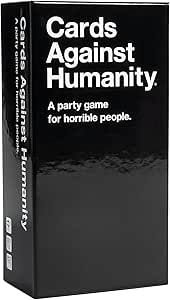 | Best for Edgy Adult Humor | Brand: Cards Against Humanity LLC. | Game type: Party card game | Edition: 2nd Edition | VIEW ON AMAZON | See Our Full Breakdown |
| Wavelength: A Mind-Reading Party Game |  | Best Cooperative Group Challenge | Players: 2–12+ | Setup time: 5 seconds | Learning time: 1 minute | VIEW ON AMAZON | See Our Full Breakdown |
| Tumbling Tower Drinking Game for Adults with 4 Shot Glasses and 48 Wooden Challenge Blocks |  | Best for Small Drinking Groups | Players: 2–4 | Age recommendation: 21+ | Block count: 48 wooden blocks | VIEW ON AMAZON | See Our Full Breakdown |
| Go F Yourself! Grown-Up Go Fish Card Game |  | Best Quick Icebreaker | Card count: 52 | Players: 2–10 | Playing time: 15–30 minutes | VIEW ON AMAZON | See Our Full Breakdown |
| Grab The Mic Karaoke Party Game |  | Best for Music-Loving Mixed-Age Parties | Brand: Lucky Egg | Model: LE24 | Players: 2–12 | VIEW ON AMAZON | See Our Full Breakdown |
| You Laugh You’re Out Charades Party Card Game for Adults and Teens |  | Best for Big, Laughter-Focused Groups | Players: 4 or more | Recommended age: 14+ | Prompt cards: 125 | VIEW ON AMAZON | See Our Full Breakdown |
More Details on Our Top Picks
Put a Finger Down Party Card Game
Put a Finger Down turns simple prompts into a low-pressure way to get an adult gathering talking. Players react by raising or lowering fingers, so newcomers can join without learning a long rule set, and special cards add variation between rounds. Compared with Cards Against Humanity, it leans on the group’s real reactions rather than written punchlines; that makes it a better fit for casual conversation, though the laughs depend on people being willing to share and respond. It also suits pairs as well as larger groups, while Wavelength offers more of a team guessing challenge. The tradeoff is limited practical detail: no player count or game length is specified, so hosts cannot plan around a precise session time.
Pros:- Simple finger-based play is easy for newcomers to follow
- Can be played by pairs or larger groups
- Prompts and special cards encourage conversation
- Quick setup makes it easy to start another round
Cons:- The fun depends on players reacting and participating
- No specific player count or play duration is provided
Best for: Hosts who want a simple prompt game that can get a mixed group talking without a long rules explanation
Not ideal for: Groups that prefer strategy or structured competition, or guests who would rather not share personal reactions
- Game type:Party card game
- Gameplay:React to prompts by putting fingers up or down
- Group size:Pairs or larger groups
- Special cards:Included; add playful twists
- Setup:Quick setup
- Play style:Social prompt-based reactions
Our verdict“Choose Put a Finger Down for an easygoing adult gathering where conversation matters more than competition.”
Hitster Music Party Quiz Card Game
Hitster makes music recognition the center of the party: players scan a card’s QR code in the free app, hear a song, then place it in chronological order. Its 300-plus music cards give groups plenty of material, and competitive, cooperative, and solo modes let hosts adjust the mood. Compared with UNO, which relies on familiar card matching, Hitster asks guests to bring musical memory and opinions to the table; that creates a livelier shared challenge for adults who enjoy guessing songs. Wavelength also rewards group discussion, but Hitster gives clues through music rather than abstract prompts. The main tradeoff is the app requirement: without a phone ready to scan cards, the core game cannot run, and guests who dislike music quizzes may have less to contribute.
Pros:- More than 300 music cards support repeat sessions
- Competitive, cooperative, and solo modes offer different ways to play
- QR scanning gets the music portion started quickly
- Supports groups from two to ten players
Cons:- Requires the free Hitster app to scan the cards
- The quiz format favors guests who recognize the songs
Best for: Adult hosts with a phone and a group that enjoys identifying songs and debating when they were released
Not ideal for: App-free game nights or groups with little interest in music trivia and chronology
- Players:2–10
- Recommended age:16 years and up
- Music cards:300+
- Chips:37
- Included components:Music cards, chips, instructions
- App:Free Hitster app required to scan QR codes
- Material:Cardboard
- Brand:Jumbo
- Model:1110100409
Our verdict“Pick Hitster when your adult group wants music-led guessing and has a phone available for scanning.”
Mattel Games UNO Card Game
UNO is the familiar, competitive choice for a gathering that includes adults and younger players: match colors or numbers, use action cards, and try to empty your hand. It supports two to ten players, while Cards Against Humanity is explicitly aimed at adults and depends on a taste for its humor. UNO’s customizable Wild Cards can give a group room to set house rules, and graphic symbols help players distinguish colors. That accessibility makes it easier to include more guests than a music quiz like Hitster, which asks players to recognize songs. The tradeoff is that the basic matching loop may feel predictable to adults who want conversation, creative answers, or a team puzzle. Players also need to remember to call “UNO” when down to one card.
Pros:- Accommodates two to ten players
- Simple matching rules are easy for mixed-age groups to pick up
- Customizable Wild Cards allow house rules
- Graphic symbols help identify colors
Cons:- The matching gameplay may feel familiar or repetitive to adult groups
- Players must remember to call “UNO” when they have one card
Best for: Hosts bringing together adults and older children who want a familiar, competitive card game for up to ten players
Not ideal for: Adults looking for a conversation-heavy or original party format rather than a recognizable matching game
- Players:2–10
- Recommended age:7 years and up
- Winning score:500 points
- Deck features:Action Cards and Wild Cards
- Customizable cards:3 customizable Wild Cards
- Color accessibility:Graphic symbols identify colors
Our verdict“Choose UNO for an easy, familiar competition when your adult party includes younger players too.”
Cards Against Humanity: Main Game, 2nd Edition
Cards Against Humanity is the lineup’s most explicitly adult choice: one player reads a question card while everyone else submits an answer, letting the group’s sense of humor shape each round. Its 500 white cards and 100 black cards offer a deep pool of combinations, and alternate rules give hosts ways to vary the format. Compared with Put a Finger Down, which draws on players’ reactions and conversation, this game makes the humor come from written prompts and answers. It also asks less song knowledge than Hitster. The tradeoff is social fit: its humor may not land with every adult group, and the 17-and-up age guidance makes it a poor match for mixed-age parties. Pick it when guests already welcome irreverent jokes.
Pros:- Question-and-answer rules are straightforward
- 600 cards provide many prompt and answer combinations
- Alternate rules offer options for changing play
- Written answers let players contribute without needing trivia knowledge
Cons:- The humor may not suit every adult group
- Recommended for ages 17 and up, limiting mixed-age use
Best for: Adult hosts whose guests enjoy irreverent humor and want a prompt-and-answer game with many card combinations
Not ideal for: Mixed-age gatherings or groups that prefer gentler humor and less provocative prompts
- Brand:Cards Against Humanity LLC.
- Game type:Party card game
- Edition:2nd Edition
- White cards:500
- Black cards:100
- Age range:17 years and up
- Material:Paper
- Included components:Card game and rules booklet
- Model number:CAHUS_SML
Our verdict“Choose Cards Against Humanity when your adult guests share a taste for irreverent prompt-based humor.”
Wavelength: A Mind-Reading Party Game
Wavelength gives adults a shared puzzle: players offer clues to help teammates place a hidden target along a spectrum, such as hot to cold. It accommodates two to twelve or more players, takes about a minute to learn, and is built for a half-hour session, so it can anchor a gathering without a lengthy rules briefing. Compared with the answer-driven humor of Cards Against Humanity, its appeal comes from seeing how well friends interpret one another’s clues. Hitster also brings a group together, but through song recognition rather than subjective discussion. Wavelength’s tradeoff is that play depends on teammates agreeing how clues fit a spectrum; guests hoping for individual competition or a purely silly prompt game may prefer UNO or Put a Finger Down.
Pros:- Supports groups of two to twelve or more players
- Takes about a minute to learn
- Quick setup makes it easy to bring to the table
- Cooperative clues create discussion about how teammates think
Cons:- Requires players to work together to interpret clues
- The subjective spectrum format may not suit guests seeking a direct competitive contest
Best for: Groups of adults who enjoy cooperative discussion and interpreting clues together
Not ideal for: Guests seeking individual competition or a game that runs on quick jokes and spontaneous reactions
- Players:2–12+
- Setup time:5 seconds
- Learning time:1 minute
- Play time:30 minutes
- Game type:Cooperative party game
- Clue format:Place clues along a spectrum
Our verdict“Choose Wavelength when your adult group enjoys talking through clues and solving a shared guessing challenge.”
Tumbling Tower Drinking Game for Adults with 4 Shot Glasses and 48 Wooden Challenge Blocks
The wooden tower format gives this drinking game a more hands-on pace than Go F Yourself! Grown-Up Go Fish, where the humor comes through quick card rounds. Players pull blocks and follow the written challenges, so the tension of keeping the stack upright is mixed with prompts that can change the mood from turn to turn. With four shot glasses included, a small group can start without gathering extra pieces. Its limit of 2–4 players makes it a better fit for a close-knit table than Grab The Mic, which accommodates larger parties. The main tradeoff is the drinking focus: it is restricted to adults 21 and over, and the glass pieces need careful handling. Choose it for a compact group that wants physical suspense alongside drinking challenges.
Pros:- Includes 48 wooden blocks and four glass shot glasses
- Written challenges give the familiar tower game varied turns
- Works for a small group of 2–4 players
- Colorful box makes it easy to present as a gift
Cons:- The drinking theme and 21+ age recommendation rule it out for mixed-age groups
- Glass shot glasses can break if dropped
- The 2–4 player limit is restrictive for larger parties
Best for: Groups of 2–4 adults aged 21+ who want a hands-on drinking game with prompts built into the pieces
Not ideal for: Larger parties, mixed-age gatherings, or hosts who want to avoid alcohol and breakable glassware
- Players:2–4
- Age recommendation:21+
- Block count:48 wooden blocks
- Included glassware:4 shot glasses
- Block material:Wood
- Glass material:Glass
- Packaging:Colorful box
Our verdict“Pick this for a small adult group that wants a suspenseful tower game with drinking challenges and accepts the glassware and age limits.”
Go F Yourself! Grown-Up Go Fish Card Game
Fast, familiar card play is the point here: the Go Fish structure takes little explanation, while irreverent prompts and profanity supply the adult-party twist. Its 2–10 player range gives it more flexibility than the four-player Tumbling Tower Drinking Game, and rounds lasting 15–30 minutes make it easier to fit between other party activities. Compared with Cards Against Humanity: Main Game, 2nd Edition, this keeps the basic turn structure closer to a classic card game rather than centering on assembling joke responses. That simplicity is useful for a casual bar night, but the humor is a narrow fit: profane material can put off guests who prefer gentler games. The 52-card deck also offers less variety in components than Grab The Mic’s multiple modes and word cards.
Pros:- Go Fish rules make it quick to learn
- Accommodates groups from 2 to 10 players
- Short rounds suit bar nights and party breaks
- Sturdy cards are intended for repeated play
Cons:- Profane, irreverent humor will not suit every group
- The 17+ age recommendation excludes younger players
- A single 52-card deck offers less mode variety than Grab The Mic
Best for: Hosts looking for a short, easy-to-explain card icebreaker for profanity-friendly groups of 2–10
Not ideal for: Mixed-company gatherings or players who dislike profanity and offensive humor
- Card count:52
- Players:2–10
- Playing time:15–30 minutes
- Age:17+
- Card material:Sturdy cards
- Game style:Adult twist on Go Fish
Our verdict“Choose it for a profanity-friendly group that wants a quick card icebreaker with familiar rules.”
Grab The Mic Karaoke Party Game
Music recall drives the fun: players race for the foam microphone and sing a lyric containing the revealed word. That active, performance-based prompt makes Grab The Mic stand apart from Wavelength, which turns party energy toward group discussion and guessing. With 2–12 players, multiple modes, and 120 cards covering 250 words, it can suit a bigger gathering and offer more ways to play than the smaller Tumbling Tower Drinking Game. Its recommended age of 8+ also makes it a more flexible choice for family parties than the adult-only drinking option. The tradeoff is that players need a store of song lyrics and willingness to sing under pressure; guests who dislike performing may sit out. The included board, tokens, and foam microphone mean there are more components to set up than with a simple card game.
Pros:- Multiple modes provide variety across repeat sessions
- Supports a broad group size of 2–12 players
- 120 cards feature 250 words
- Includes a foam microphone, board, tokens, and instructions
Cons:- Players must recall lyrics quickly under pressure
- Singing in front of a group may not appeal to shy guests
- The board and tokens require more setup than a basic card game
Best for: Music-loving hosts who want a lively, mixed-age game for groups of 2–12 and have guests willing to sing
Not ideal for: Groups with many reluctant performers or players who struggle to recall song lyrics on the spot
- Brand:Lucky Egg
- Model:LE24
- Players:2–12
- Recommended age:8+
- Word cards:120 cards with 250 words
- Included components:Cards, foam microphone, game board, player tokens, instructions
- Material:Cardboard
Our verdict“Pick Grab The Mic for a music-loving party that wants an active game with broad player and age coverage.”
You Laugh You’re Out Charades Party Card Game for Adults and Teens
Silly acting and a straight-face challenge give this game a clear party role: one player performs prompts while the others try not to laugh, with laughter costing a token. Its four-or-more player format suits a full gathering better than Go F Yourself! Grown-Up Go Fish, which also works with just two, but it is less convenient for an intimate pair. The 125 prompt cards, 36 tokens, and sand timer create a simple round structure without requiring song knowledge, as Grab The Mic does. That makes it approachable for guests with different musical tastes, though the fun depends on people being comfortable performing and reacting in front of others. The recommended age is 14+, so it can cross into teen gatherings, but its broad age range may feel less specifically adult than a drinking game or profanity-led card game.
Pros:- Straightforward prompts make the game easy to join
- Laughter creates a clear, social objective
- 125 prompt cards support multiple rounds
- Includes 36 laugh tokens and a sand timer
Cons:- Requires at least four players
- Performance-centered play can feel uncomfortable for shy guests
- The 14+ age recommendation makes it less tailored to adults-only gatherings
Best for: Hosts with at least four outgoing teens or adults who enjoy acting silly and trying to keep a straight face
Not ideal for: Small groups or guests who dislike performing, being the focus of attention, or laughter-based competition
- Players:4 or more
- Recommended age:14+
- Prompt cards:125
- Laugh tokens:36
- Timer:1 sand timer
- Contents:Prompt cards, laugh tokens, sand timer
Our verdict“Choose it for a larger, outgoing group that wants easy-to-start acting prompts and a shared laugh challenge.”

How We Picked
I compared these nine games by how well their core activity works at an adult gathering: how quickly a host can explain the rules, how easily guests can join mid-session, and whether the game gives people reasons to interact. I also weighed group fit, replay potential, dependence on music knowledge or personal humor, and the practical demands of play, such as needing space, willing performers, or a drinking-friendly crowd.
The ranking favors games that can serve a broad mix of adult groups without requiring a narrow sense of humor or a specific party mood. That puts Wavelength first for flexible social play, followed by options with strong but more specialized appeal. UNO ranks well for accessibility, while the drinking, karaoke, and comedy-focused games sit lower because their success depends more on guest preferences. This order reflects fit for a range of adult gatherings, not a claim that one style is right for every group.
Factors to Consider When Choosing Party Games For Adults
I’d choose a party game by imagining the least enthusiastic guest at the table, not only the most outgoing one. A game that suits the group’s comfort, attention, and setting usually gets played longer than one with a flashy premise but a narrow audience.
Match the game to the group’s comfort level
Some adult games ask players to reveal personal details, make jokes, sing, or act in front of everyone. Those can create memorable moments among close friends, but they may put newer acquaintances on the spot. Before choosing, think about whether guests know one another and how much they enjoy being the focus. A useful rule is to start with games where people can contribute at their own pace, then bring out higher-exposure options if the group warms up. Avoid assuming that a grown-up theme means every adult will enjoy edgy humor. The best fit is the one your quieter guests can still join.
Decide how much structure your evening needs
A game with clear turns can anchor a gathering, while an open-ended conversation game can run alongside snacks and side chats. If guests will arrive at different times, favor a format that allows newcomers to learn quickly and join without restarting. More involved rules can work well when everyone is seated and ready to focus, but they can stall a casual drop-in party. Ask whether the game is the main event or a way to fill a lull. Choosing for the evening’s rhythm helps avoid both extremes: a game that demands too much attention and one that never gathers the group.
Check whether the game depends on shared knowledge
Music quizzes, wordplay, and cultural references can reward groups with overlapping tastes, but familiarity varies across ages and backgrounds. When guests have different generations or interests, a game based on clues, reactions, or simple choices may feel fairer than one that assumes everyone knows the same songs or jokes. Consider whether the rules let players participate even when they do not know an answer. You can also make teams that mix knowledge and experience, though that works best when team sizes stay balanced. A niche theme is a strength when the group shares it and a barrier when they do not.
Plan around space, noise, and the setting
Not every party has room for a tower game, a clear area for movement, or a setting where loud singing fits. Think about table space, nearby neighbors, and whether guests will be standing or seated. Compact card games are easier to bring along and reset, while props and physical play can add variety if the room supports them. If the gathering is in a restaurant or shared space, quieter conversation-led play may be more practical. Checking the setting first prevents a promising game from becoming awkward to set up or disruptive to the event.
Separate drinking prompts from the game’s main appeal
A drinking-game label can make a game seem suited only to alcohol-centered parties, even when its prompts or physical play might work with nonalcoholic drinks. Check whether the rules make drinking mandatory or whether the group can adapt them comfortably. At mixed gatherings, a game that treats drinking as optional is easier to share with guests who abstain or prefer not to explain why. Also consider whether a drinking mechanic distracts from the social activity you want. Choose for the group’s preferences and make participation voluntary.
Pay for variety only when your group will use it
A larger prompt set or multiple modes can extend replay for groups that host often, but added variety matters less if the game only suits one occasion. Think about how many people you expect to play, whether your group enjoys repeating familiar formats, and how much setup you are willing to manage. A simple game that gets brought out regularly can provide more value to your household than a feature-rich option that stays on the shelf. Look beyond the box’s theme and ask what changes between rounds. The best long-term choice is the one whose format fits your real gatherings.
Frequently Asked Questions
Which game is the safest choice when guests have very different tastes?
I’d start with a game built around conversation and clues, since that asks less of guests than singing, drinking, or sharing personal stories. Wavelength is the broadest fit in this lineup because players can contribute through their own interpretations rather than needing a particular trivia background. UNO is another familiar option if you want clear turns and a simple card-game structure. The right choice still depends on whether your group enjoys discussion or prefers direct competition. For a mixed crowd, avoid making the most revealing or performance-heavy game the only activity.
What should I choose for guests who do not know each other well?
Look for an activity that gives people something to talk about without requiring them to disclose private details. Clue-based play can help guests learn how others think while keeping the focus on the game. Personal-question games may work with close friends but can feel forced among colleagues or new acquaintances. Simple familiar rules can also reduce the pressure of learning in front of strangers. If the group is large, choose a format that allows people to watch a round before joining.
Are drinking games suitable for a party where some guests do not drink?
They can be, provided drinking is optional and the group is comfortable adapting the prompts. Make a nonalcoholic alternative available and avoid rules that single out anyone who abstains. A game should remain enjoyable for guests who choose not to drink, rather than making them spectators. If you expect different comfort levels, a game whose main activity is social play rather than alcohol is an easier shared choice. Set expectations before play so nobody has to negotiate their participation mid-round.
Should I pick a music quiz if guests span several generations?
Choose a music-centered game when the group enjoys discovering songs together, not only when you expect everyone to recognize the same hits. Generational gaps can make some rounds easier for certain guests, so team play or a relaxed approach to guessing can keep the mood friendly. If unfamiliar songs would leave people disengaged, a game based on clues or conversation may suit the group better. Consider whether guests enjoy music discussion even when they cannot name a track. Shared enthusiasm matters more than a perfectly overlapping playlist.
How many different party games should I plan for one evening?
One main game plus an easy backup is often enough; switching too frequently can prevent a group from settling into the activity. Choose the main game to match the expected energy and group size, then keep a simpler option available for late arrivals or a change of pace. If the party is informal, short rounds make it easier for guests to drift in and out. A longer focused session works better when everyone has agreed to play together. Let the group’s attention guide whether to continue or change games.
Conclusion
Wavelength is my best overall pick for adults who want flexible conversation and group interaction. UNO is the best value-style choice for familiar, low-friction rounds, while Hitster is the strongest fit for music fans who enjoy guessing together. For beginners or mixed groups, I’d start with UNO or Wavelength; for close friends who like bold humor, consider Cards Against Humanity or Go F Yourself! Choose Grab The Mic or You Laugh You’re Out when guests welcome performing, and Tumbling Tower when the setting suits physical play and optional drinking prompts. Put a Finger Down fits groups comfortable sharing personal answers. Match the game to the people and the room, and the choice becomes much clearer.
Fall Picks
fall essentials
As an affiliate, we earn on qualifying purchases.