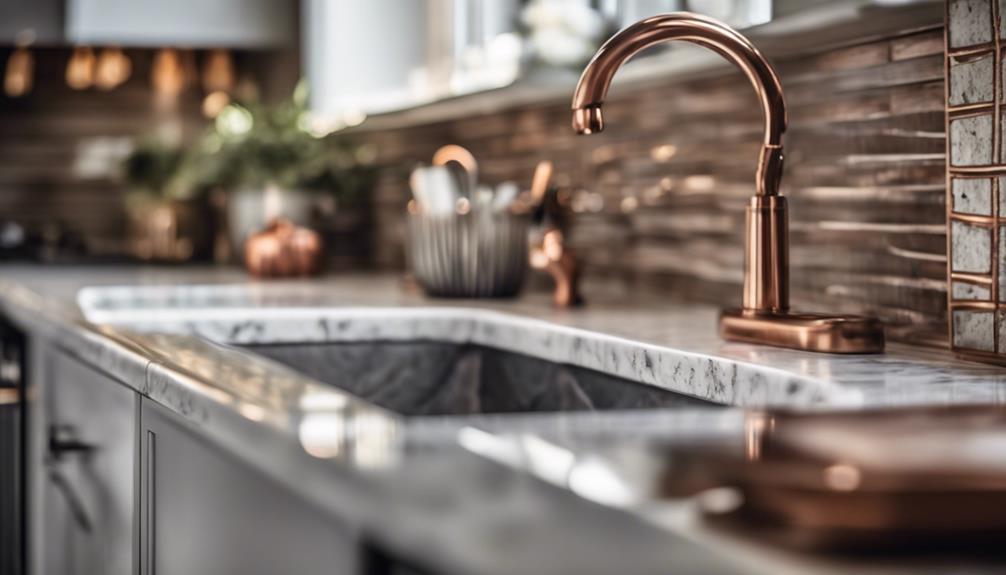

When choosing the ideal sink material, durability, maintenance, and fit are key considerations. In 2026, two standout options emerge: stainless steel and composite materials. Stainless steel sinks are renowned for their longevity and sleek appearance but can be noisy and prone to scratches. Conversely, composite sinks offer a softer surface that resists chips and stains but may require more careful handling. Understanding these tradeoffs helps you select the best fit for your household needs.

Get furniture and decor delivered free with Prime
- Fast, free delivery on millions of items
- Prime Video, Amazon Music and more included
- Member-only deals all year
Complete the kit


Key Takeaways
- Stainless steel sinks are highly durable and easy to clean but can be noisy and prone to scratches.
- Composite sinks provide a softer surface that resists chipping and staining but may need careful maintenance.
- Material choice impacts noise levels, durability, and aesthetic appeal significantly.
- Price varies widely; high-end stainless steel tends to be more expensive but offers longevity.
- The best sink material depends on lifestyle, usage, and aesthetic preferences.
More Details on Our Top Picks

How We Picked
Our selection process focused on sink materials that balance durability, ease of maintenance, and cost. We examined the latest innovations in stainless steel and composite options, considering user reviews, expert opinions, and manufacturer specifications. The goal was to identify products that excel in everyday household conditions while highlighting their tradeoffs. We prioritized versatility, longevity, and ease of installation, ensuring these picks fit a wide range of needs and budgets.
Factors to Consider When Choosing Sink Material
Choosing the right sink material depends on your household’s needs, aesthetic preferences, and budget. From the resilient shine of stainless steel to the stain-resistant properties of composite granite, each material offers distinct benefits and tradeoffs. The key is to match your usage patterns with the most suitable material, considering factors like noise, impact resistance, maintenance, and appearance.Durability and Maintenance
Stainless steel sinks are praised for their longevity and ease of cleaning, resisting rust and stains with minimal effort. However, they can be noisy and prone to scratching. Composite sinks, by contrast, resist chipping and staining better, but are heavier and susceptible to heat damage if hot pans are placed directly on them. Consider your household’s activity level and cleaning preferences when choosing between these options.
Aesthetic and Style
Stainless steel offers a sleek, modern look that complements contemporary kitchens. It reflects light and can make a space feel brighter. Composite sinks tend to have a matte, natural stone appearance that can add warmth or rustic charm but may not match high-gloss cabinetry or modern metallic fixtures. Think about your overall design aesthetic before deciding.
Price and Installation
Basic stainless steel sinks are generally more affordable and easier to install, making them a preferred choice for budget-conscious renovations. Composite sinks are often more costly and heavier, sometimes requiring professional installation. Factor in your renovation budget and whether you’re comfortable with heavier fixtures when choosing the right material.
Frequently Asked Questions
Are stainless steel sinks prone to scratches?
Yes, stainless steel sinks can scratch over time, especially if abrasive cleaners or utensils are used. However, many scratches can be minimized with regular polishing and careful handling. Choosing a higher gauge (thinner) steel often results in a softer surface that’s more prone to scratches, while lower gauge (thicker) steel tends to be more durable.
How do I prevent noise in a stainless steel sink?
Most stainless steel sinks are noisy when water hits the surface, but this can be mitigated by installing soundproofing pads or undercoating during installation. These materials absorb vibration and reduce the echo, making the sink quieter during use. Some models come with built-in soundproofing, which adds to the overall comfort during daily chores.
Can composite sinks handle hot pots?
Composite sinks are generally heat resistant, but hot pans or pots should not be placed directly into them to avoid discoloration or damage. Most are rated to withstand temperatures around 392°F, but placing extremely hot items directly on the surface may cause warping or scorching. Always use a trivet or hot pad for protection.
Which sink material is easier to clean?
Stainless steel sinks are very easy to clean with basic household cleaners and water, and they resist staining and mold. Composite sinks, with their non-porous surface, also resist mold and bacteria, but require gentle cleaning to avoid scratches. Both materials are low-maintenance, but stainless steel may be slightly simpler for everyday cleaning routines.
Is price a good indicator of quality?
While higher-priced sinks often feature better materials and construction, cost alone doesn’t guarantee suitability for your needs. For example, a premium stainless steel sink offers longevity, but a well-made composite can provide excellent stain resistance. Consider your specific priorities—such as impact resistance, aesthetic, or budget—when evaluating options.
Conclusion
For households prioritizing longevity, sleek appearance, and easy upkeep, stainless steel sinks are the best fit. They tend to suit modern kitchens and high-traffic areas, despite potential noise issues. On the other hand, families seeking a resilient, low-maintenance surface that resists chips and stains will find composite granite sinks more appropriate, especially if impact resistance and stain resistance are top concerns. Budget-conscious buyers may prefer the affordability and simplicity of stainless steel, while those willing to invest for durability and stain resistance should consider composite options.
Halloween Picks
halloween
As an affiliate, we earn on qualifying purchases.