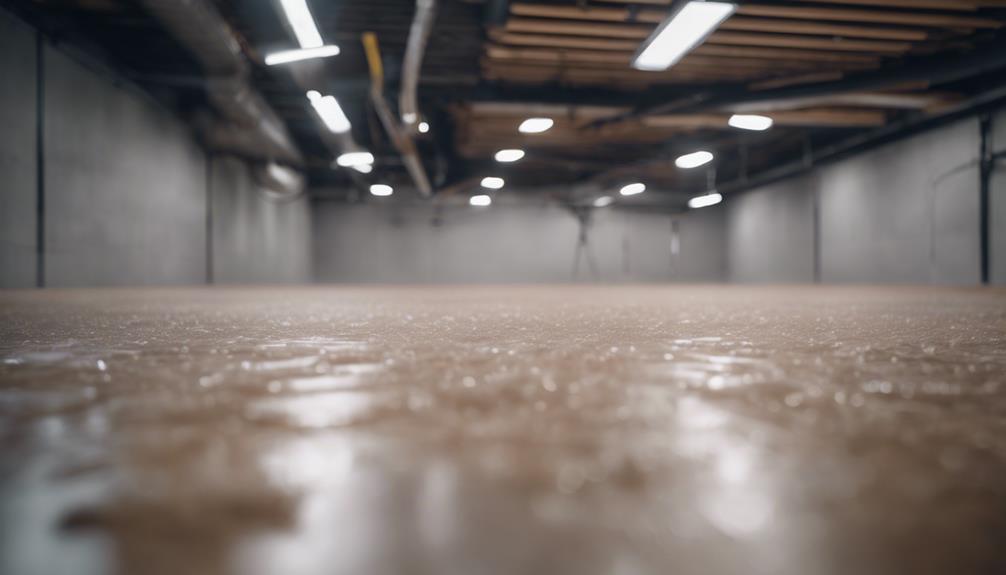

When choosing a subfloor for a concrete basement, reliability, ease of installation, and long-term durability are key. The ARDEX TL 2000 Fiber Reinforced Self-Leveling Floor Underlayment stands out for its fast drying time and high tensile strength, making it ideal for smoothing uneven slabs. Meanwhile, the Delta FL Plastic Sub-Floor for Basement offers a simple, cost-effective solution for straightforward leveling. For tile-centric projects, the ARDEX FLEXBONE UI 720 Uncoupling Membrane provides excellent stress relief and crack protection. Lastly, the Ardex Liquid BackerBoard Cement-Based Self-Levelling Underlayment excels in creating perfectly flat surfaces but requires some experience to install properly. Each presents tradeoffs between application complexity, cost, and durability, so understanding these differences helps in selecting the right solution.
Complete the kit


Key Takeaways
- Self-leveling compounds like ARDEX TL 2000 provide quick, smooth surfaces with high strength, suited for tile and stone installation.
- Plastic membranes such as Delta FL are simple to install and great for minor leveling over damp or uneven basements.
- Uncoupling membranes like ARDEX FLEXBONE UI 720 protect tiles from substrate movement, reducing crack risks.
- Liquid underlayments like Ardex Liquid BackerBoard create durable, flat surfaces but require some installer skill.
- Tradeoffs include cost, ease of installation, and suitability for specific flooring types or moisture conditions.
| ARDEX TL 2000 Fiber Reinforced Self-Leveling Floor Underlayment 50 lb |  | Best Overall for Durability and Versatility | Application Thickness: 1/8″ to 1-1/2″ | Coverage: Approx. 50 sq ft per 50 lb bag | Drying Time: Walkable in 2-3 hours, ready for flooring in 16 hours | VIEW ON AMAZON | See Our Full Breakdown |
| Delta FL Plastic Sub-Floor for Basement |  | Best for Cost-Effective Simple Leveling | Material: Plastic membrane | Coverage: Varies with project size | Thickness: Flexible, depends on installation | VIEW ON AMAZON | See Our Full Breakdown |
| ARDEX FLEXBONE UI 720 Uncoupling Membrane, 215 Sq Ft Roll, 1/8″ Thick |  | Best for Crack Protection and Stress Relief | Coverage: 215 sq ft | Thickness: 1/8 inch | Application Type: Floating, uncoupling | VIEW ON AMAZON | See Our Full Breakdown |
| Ardex Liquid BackerBoard Cement-Based Self-Levelling Underlayment 50 lb Bag |  | Best for Creating Flat, Durable Surfaces | Weight: 50 lb | Application Thickness: Up to 1/2 inch | Set Time: 15 minutes | VIEW ON AMAZON | See Our Full Breakdown |
| subfloor for concrete basement floor | Coverage | Application Thickness | Thickness | Application Type |
|---|---|---|---|---|
| ARDEX TL 2000 Fiber Reinforced | Approx. 50 sq ft per 50 lb bag | 1/8" to 1-1/2" | — | — |
| Delta FL Plastic Sub-Floor for | Varies with project size | — | Flexible, depends on installation | — |
| ARDEX FLEXBONE UI 720 Uncoupli | 215 sq ft | — | 1/8 inch | Floating, uncoupling |
| Ardex Liquid BackerBoard Cemen | — | Up to 1/2 inch | — | Pour and light trowel |
More Details on Our Top Picks
ARDEX TL 2000 Fiber Reinforced Self-Leveling Floor Underlayment 50 lb
This fiber-reinforced self-leveling underlayment stands out for its exceptional tensile strength and ability to smooth a variety of substrates, including concrete, plywood, and radiant heat systems. Compared with simpler leveling compounds, ARDEX TL 2000 offers superior crack resistance and flexibility, making it suitable for both renovations and new builds. Its rapid dry time and compatibility with multiple adhesives mean it can support a wide array of flooring types, including tile, vinyl, and hardwood. However, its professional-grade formulation can be more expensive and may require some skill to apply evenly over large areas, especially if poured in thick layers.
Pros:- High tensile and flexural strength for durable results
- Supports various flooring types including tile and hardwood
- Fast drying and minimal shrinkage
Cons:- Higher cost compared to basic leveling compounds
- Requires some skill for even application over large areas
Best for: Homeowners and contractors seeking a reliable, high-performance underlayment that handles diverse substrates and moisture conditions.
Not ideal for: DIYers with minimal experience or projects on a tight budget, due to its cost and application complexity.
- Application Thickness:1/8″ to 1-1/2″
- Coverage:Approx. 50 sq ft per 50 lb bag
- Drying Time:Walkable in 2-3 hours, ready for flooring in 16 hours
- Compatible Surfaces:Concrete, plywood, OSB, radiant heat systems
- VOC Content:Low VOC
Our verdict“This pick makes the most sense for projects demanding durability, flexibility, and professional-grade performance.”
Delta FL Plastic Sub-Floor for Basement
Compared with high-performance self-levelers, the Delta FL plastic sub-floor offers an affordable, straightforward approach to leveling and isolating basement slabs. Its plastic membrane design creates a floating layer that relieves stress and accommodates minor substrate movement, reducing the risk of cracks in subsequent flooring. This membrane is particularly suitable for small to medium projects where a quick, simple solution is needed without the need for extensive surface prep. Nonetheless, it doesn’t provide the same level of smoothing or leveling as self-leveling compounds, making it less ideal for highly uneven slabs or large areas requiring precise flatness.
Pros:- Cost-effective and easy to install
- Provides stress relief and crack isolation
- Supports moisture management
Cons:- Limited leveling capability, not suitable for large unevenness
- Requires additional surface preparation if surface is highly irregular
Best for: Budget-conscious DIYers or contractors needing a quick, lightweight solution for minor unevenness.
Not ideal for: Projects requiring a perfectly flat surface or significant leveling, especially over large areas with substantial height differences.
- Material:Plastic membrane
- Coverage:Varies with project size
- Thickness:Flexible, depends on installation
- Application:Floating membrane over slab
- Moisture Barrier:Yes
Our verdict“Ideal for small repairs or minor leveling where budget and speed outweigh perfect flatness.”
ARDEX FLEXBONE UI 720 Uncoupling Membrane, 215 Sq Ft Roll, 1/8″ Thick
This uncoupling membrane features a bone-shaped stud pattern filled with thin-set mortar, mechanically locking tiles while relieving substrate stresses. Compared to cementitious leveling compounds, it offers a superior barrier against cracks caused by substrate movement, especially in moisture-prone basements. Its perforations help equalize vapor pressure, making it ideal over damp or uneven slabs. However, roll size and thickness may be excessive for small repairs, and its installation requires some familiarity with tile setting techniques, as it depends on thin-set mortar for proper adhesion.
Pros:- Protects tiles from substrate movement and cracks
- Perforations allow vapor pressure equalization
- Works over difficult substrates with minimal prep
Cons:- Requires thin-set mortar (not included)
- Roll size may be unwieldy for small projects
Best for: Tile installers and homeowners prioritizing crack resistance and stress mitigation in basement floors.
Not ideal for: Those seeking a quick, simple leveling solution or planning to use over large, uneven areas without tile installation.
- Coverage:215 sq ft
- Thickness:1/8 inch
- Application Type:Floating, uncoupling
- Use:Tile stress relief, crack prevention
- Compatibility:Damp or uneven substrates
Our verdict“This membrane is perfect for protecting tile floors in moisture and stress-prone basement slabs.”
Ardex Liquid BackerBoard Cement-Based Self-Levelling Underlayment 50 lb Bag
Compared to traditional cementitious underlayments, Ardex Liquid BackerBoard offers a pourable, easy-to-apply formula that produces a highly flat and durable surface. It’s particularly effective for correcting minor imperfections and creating a uniform base for tile or stone. Its quick setting time within 15 minutes allows for efficient workflows, but it’s limited to a 1/2 inch thickness per pour, requiring multiple layers for thicker applications. This product is suited for experienced installers familiar with self-leveling compounds, as proper surface prep and troweling are necessary to achieve optimal results.
Pros:- Easy pourable formula for quick application
- Creates a flat, durable surface suitable for tile/stone
- Quick set within 15 minutes
Cons:- Limited to 1/2 inch thickness per pour
- Requires light troweling and surface prep
- Less suitable for large, uneven areas without multiple pours
Best for: Professional or experienced DIYers aiming for a perfectly flat, stable subfloor in basement settings.
Not ideal for: Beginners or projects requiring thick leveling, which may need multiple pours and more advanced skills.
- Weight:50 lb
- Application Thickness:Up to 1/2 inch
- Set Time:15 minutes
- Use:Flat, durable subfloors
- Application Type:Pour and light trowel
Our verdict“This solution offers precise flatness but best for those with some experience in self-leveling applications.”
How We Picked
Our selection process focused on products that excel in concrete basement applications, balancing performance, ease of use, and versatility. We examined manufacturer specifications, user reviews, and industry standards for durability and compatibility with typical basement substrates. Priority was given to solutions that handle moisture, uneven surfaces, and substrate movement, which are common challenges in basements. We also considered product versatility—whether they support a range of flooring types—and the tradeoff between professional-grade performance and DIY friendliness. This approach ensures that each pick offers a distinct role, helping buyers match their project needs with the right subfloor system.
| subfloor for concrete basement floor | Application Type | Use |
|---|---|---|
| ARDEX TL 2000 Fiber Reinforced | — | — |
| Delta FL Plastic Sub-Floor for | — | — |
| ARDEX FLEXBONE UI 720 Uncoupli | Floating, uncoupling | Tile stress relief, crack prevention |
| Ardex Liquid BackerBoard Cemen | Pour and light trowel | Flat, durable subfloors |
Factors to Consider When Choosing Subfloor For Concrete Basement Floor
Choosing the right subfloor for a concrete basement involves considering the specific needs of your project—whether you require leveling, crack isolation, moisture management, or a combination thereof. Factors such as substrate condition, moisture levels, planned flooring type, and budget all influence the best choice. Self-leveling compounds are ideal for creating smooth, flat surfaces, while membranes and uncoupling systems excel in protecting tiles from cracking due to substrate movement. Understanding these options helps ensure your basement floor remains durable and looks great for years to come.
Self-Leveling Compounds
These products, like ARDEX TL 2000 and Ardex Liquid BackerBoard, are designed for quick, effective smoothing of uneven concrete slabs. They are best suited for projects where a flat surface is the priority, especially before installing tile or stone. However, they usually require some experience to apply evenly and may need multiple pours for thicker layers. The key benefits include fast drying, high strength, and compatibility with various flooring materials.
Uncoupling Membranes
Membranes such as ARDEX FLEXBONE UI 720 are engineered to absorb substrate movement, preventing cracks and damage in tiled floors. These are especially useful over moisture-prone or irregular slabs. Installation typically involves laying the membrane over the slab with thin-set mortar, making it more suitable for tile projects rather than general leveling. They excel at stress relief but aren’t designed to level large height differences.
Plastic Sub-Flooring
Plastic membranes like Delta FL provide a simple, cost-effective solution for minor leveling and moisture isolation. They are quick to install and require minimal surface prep, making them attractive for small repairs or projects on a budget. Nonetheless, their ability to level highly uneven surfaces is limited, and they are generally best combined with other leveling products for best results.
Frequently Asked Questions
What is the best subfloor for a damp basement?
For damp basements, products that combine moisture resistance with crack isolation are ideal. The ARDEX FLEXBONE UI 720 uncoupling membrane is highly effective because it prevents substrate movement and allows vapor pressure to equalize, reducing the risk of cracks and moisture damage. Additionally, moisture barriers or vapor retarders can be added underneath for enhanced protection, especially if combined with a suitable leveling compound.
Can I use a self-leveling compound over existing tiles in my basement?
Yes, many self-leveling compounds like ARDEX TL 2000 are compatible with existing tiles, provided those tiles are in good condition and properly cleaned. The self-leveler creates a smooth surface for new flooring, but it’s important to check manufacturer recommendations regarding adhesion and surface prep. If the existing tile is loose or damaged, it should be removed before applying the leveling compound.
How do I choose between a membrane and a self-leveling compound?
The choice depends on your primary concern. If you need a flat, smooth surface for tile or hardwood, a self-leveling compound is typically best. However, if cracking or movement is a concern—especially with tile—an uncoupling membrane provides stress relief and crack prevention. For minor unevenness, a simple plastic membrane might suffice, but for larger height differences or structural issues, a self-leveler combined with a membrane may be necessary.
Is a vapor barrier necessary in basement subflooring?
In most basement applications, especially those with moisture issues, including a vapor barrier is highly recommended. Products like Delta FL not only level but also serve as moisture barriers, helping to prevent dampness from affecting your new flooring. For high-moisture conditions, additional vapor retarders or sealers may further improve long-term durability.
How thick should my subfloor be in a basement?
The ideal thickness varies depending on the product and project needs. Self-leveling compounds like ARDEX TL 2000 can be poured from 1/8″ up to 1-1/2″ in a single application, making them suitable for uneven slabs. The Ardex Liquid BackerBoard is typically used for thin, precise leveling, up to 1/2″ thick. For significant height adjustments, multiple layers or different systems may be required, often best handled by experienced installers.
Conclusion
For homeowners prioritizing long-term durability and professional-grade performance, self-leveling compounds like ARDEX TL 2000 are excellent choices. DIYers or those on a tight budget may prefer simple plastic membranes such as Delta FL for minor repairs or moisture management. Tile installers and those concerned about crack prevention should consider uncoupling membranes like ARDEX FLEXBONE UI 720. Finally, experienced DIYers needing a perfectly flat surface may opt for liquid self-levelers like Ardex Liquid BackerBoard, provided they have some experience with these materials. Matching your specific basement conditions and flooring plans will ensure the best results and a lasting, stable floor.