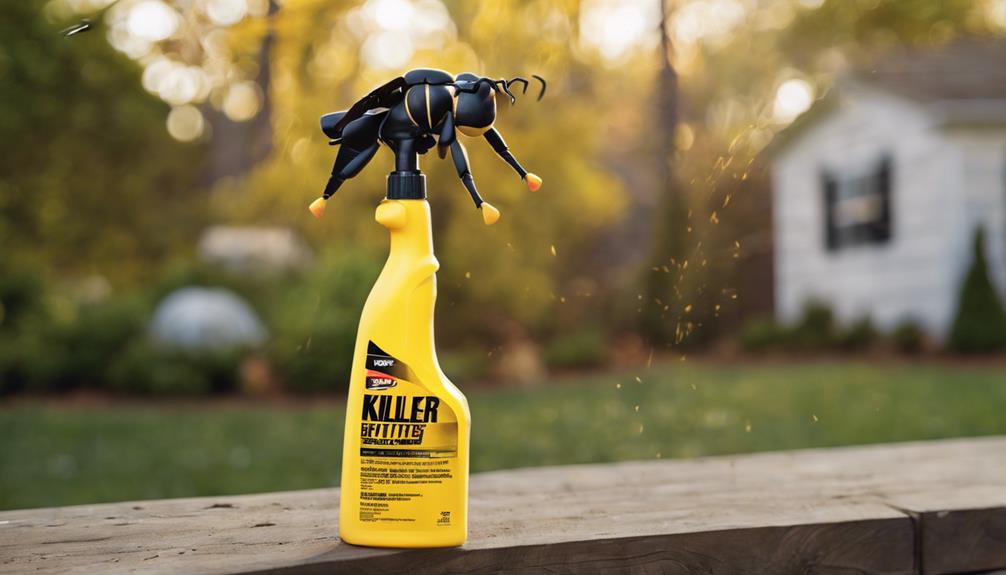

Choosing the right yellow jacket killer depends entirely on where the nest is located and how aggressive the colony has become. For ground-nesting issues, the Spectracide Carpenter Bee and Ground-Nesting Yellowjacket Killer stands out as the best overall choice due to its specialized application method for underground colonies. If you face high-altitude nests or need immediate knockdown from a safe distance, the Raid Wasp & Hornet Killer Outdoor Spray offers superior jet spray reach. The primary tradeoff involves choosing between convenience (aerosols) and thoroughness (dusts or specialized liquids). This guide breaks down the specific strengths of each option to help you eliminate the threat without risking safety.

Get furniture and decor delivered free with Prime
- Fast, free delivery on millions of items
- Prime Video, Amazon Music and more included
- Member-only deals all year
Complete the kit


Key Takeaways
- Ground-nesting yellow jackets require liquid or dust applications directly into the entrance, whereas aerial nests respond best to long-distance aerosol jets.
- Spectracide dominates the ground-nest category with formulations designed to soak into soil and penetrate deep underground channels.
- Raid products generally offer better nozzle consistency for aerial spraying, reducing the risk of overspray onto nearby surfaces.
- Dust insecticides like Atticus Tirade provide longer residual control but require more careful application to avoid inhalation hazards.
- Buying in multi-packs is often necessary for severe infestations, but users must check expiration dates to ensure chemical potency.
| Spectracide Carpenter Bee and Ground-Nesting Yellowjacket Killer, 16 oz, 3-Pack |  | Best for Multiple Nest Sites | Brand: Spectracide | Form: Foaming aerosol spray | Can size: 16 fl oz | VIEW ON AMAZON | See Our Full Breakdown |
| Spectracide Carpenter Bee and Ground-Nesting Yellowjacket Killer, 16 oz |  | Best for One Nest Site | Brand: Spectracide | Form: Spray with expanding foam | Liquid volume: 16 fl oz | VIEW ON AMAZON | See Our Full Breakdown |
| Atticus Tirade 1% Dust Insecticide, 1.25 lb |  | Best for Label-Approved Crack-and-Crevice Treatments | Brand: Atticus | Active ingredient: Cyfluthrin | Concentration: 1% | VIEW ON AMAZON | See Our Full Breakdown |
| Raid Wasp & Hornet Killer Outdoor Spray, 14 oz, 2 Count |  | Best for Long-Reach Outdoor Spraying | Brand: Raid | Form: Outdoor spray | Can size: 14 oz each | VIEW ON AMAZON | See Our Full Breakdown |
| SpectracidePRO Wasp & Hornet Killer Spray, Kills Entire Nest, 18 Oz |  | Best for Residual Nest Control | Brand: SpectracidePRO | Form: Jet spray | Liquid volume: 18 fl oz | VIEW ON AMAZON | See Our Full Breakdown |
| Spectracide Wasp & Hornet Killer Aerosol Spray, 18.5 oz, 12 Pack |  | Best Bulk Value for Large Properties | Brand: Spectracide | Product Type: Aerosol Insect Killer | Target Insects: Wasps, hornets, and yellow jackets | VIEW ON AMAZON | See Our Full Breakdown |
| Raid Wasp & Hornet Killer Spray, 14 oz Cans, Pack of 4 |  | Best Balance of Range and Safety | Brand: Raid | Product Type: Wasp and hornet killer spray | Can Size: 14 oz | VIEW ON AMAZON | See Our Full Breakdown |
| yellow jacket killer | Brand | Form | Active ingredients |
|---|---|---|---|
| Spectracide Carpenter Bee and | Spectracide | Foaming aerosol spray | Prallethrin and lambda-cyhalothrin |
| Spectracide Carpenter Bee and | Spectracide | Spray with expanding foam | Prallethrin and lambda-cyhalothrin |
| Atticus Tirade 1% Dust Insecti | Atticus | Powder | — |
| Raid Wasp & Hornet Killer Outd | Raid | Outdoor spray | Prallethrin and cypermethrin |
| SpectracidePRO Wasp & Hornet K | SpectracidePRO | Jet spray | — |
| Spectracide Wasp & Hornet Kill | Spectracide | — | — |
| Raid Wasp & Hornet Killer Spra | Raid | — | Prallethrin, Cypermethrin |
More Details on Our Top Picks
Spectracide Carpenter Bee and Ground-Nesting Yellowjacket Killer, 16 oz, 3-Pack
For a yard with several ground-nesting yellowjacket holes or carpenter bee tunnels, this three-can set offers more treatment capacity than the single-can version. Its expanding foam is designed to enter nesting spaces, while the extension tube helps direct spray into openings that are awkward to reach. That makes it more targeted than Raid Wasp & Hornet Killer Outdoor Spray, which is aimed at exposed flying insects and nests rather than tunnels. The tradeoff is that this product requires direct treatment of active sites and careful attention to the label’s different follow-up steps; carpenter bee tunnels, for example, may need to be plugged after 48 hours. I’d choose it for repeated, site-specific treatments, not as a general-purpose outdoor spray.
Pros:- Expanding foam is designed to reach into ground-nesting yellowjacket holes and carpenter bee tunnels.
- Extension tube helps direct spray into hard-to-reach openings.
- Targets both carpenter bees and ground-nesting yellowjackets.
- Three 16-ounce cans provide more treatment capacity than the single-can version.
Cons:- Must be applied directly to active nest sites.
- Carpenter bee tunnels require label-directed follow-up, including plugging after 48 hours.
- Less suited to exposed nests than a long-range wasp-and-hornet spray.
Best for: Homeowners treating multiple active ground nests or carpenter bee tunnels who want a foam applicator and several cans on hand.
Not ideal for: Anyone seeking a quick spray for exposed wasps or a single small nest; its foam is meant for direct application into nesting sites.
- Brand:Spectracide
- Form:Foaming aerosol spray
- Can size:16 fl oz
- Pack size:3 cans
- Total volume:48 fl oz
- Target pests:Carpenter bees and ground-nesting yellowjackets
- Active ingredients:Prallethrin and lambda-cyhalothrin
- Included components:Three 16 fl oz cans
Our verdict“Choose this three-pack for multiple active ground nests or carpenter bee tunnels, and choose an outdoor jet spray for exposed nests.”
Spectracide Carpenter Bee and Ground-Nesting Yellowjacket Killer, 16 oz
This single-can option fits a buyer focused on one ground nest or carpenter bee tunnel, without the extra supply in the three-pack. Like its multi-can counterpart, it uses expanding foam and an extension tube to direct treatment into openings, a better match for hidden nesting areas than Raid Wasp & Hornet Killer Outdoor Spray’s long-range stream. The difference is quantity, not a distinct treatment approach: both Spectracide versions require direct application and label-specific follow-up. Here, yellowjacket holes should be covered after 24 hours, while carpenter bee tunnel entrances should remain open for 48 hours. That makes it a focused pick, but not the most convenient choice if several sites need treatment or if you want one product for exposed flying insects.
Pros:- Foam expands into ground-nesting yellowjacket holes and carpenter bee tunnels.
- Extension tube helps direct spray into hard-to-reach openings.
- One 16-ounce can suits a focused, single-site job.
- Kills insects on contact when applied as directed.
Cons:- Requires direct treatment of the active nest opening.
- Yellowjacket holes and carpenter bee tunnels have different label-directed follow-up steps.
- For yellowjackets, application is recommended early in the morning or late in the evening.
Best for: A homeowner treating a single active ground-nesting yellowjacket site or carpenter bee tunnel who prefers one can rather than a multipack.
Not ideal for: People treating several nest sites or looking for a long-distance spray for exposed wasp and hornet nests.
- Brand:Spectracide
- Form:Spray with expanding foam
- Liquid volume:16 fl oz
- Target pests:Carpenter bees and ground-nesting yellowjackets
- Active ingredients:Prallethrin and lambda-cyhalothrin
- Model number:HG-53371
- Part number:HG-53371
- Included components:One 16-ounce can
Our verdict“Pick this single can for one targeted nesting site; choose the three-pack if you have several sites to treat.”
Atticus Tirade 1% Dust Insecticide, 1.25 lb
Atticus Tirade is the lineup’s ready-to-use dust, not a direct substitute for aerosol sprays aimed at visible nests. Its indoor-and-outdoor uses include crack-and-crevice and barrier treatments, and the broad listed pest range includes wasps. Compared with the Spectracide foaming aerosol, Tirade is better suited to label-approved treatment areas where dust application fits; the foam is more specifically shaped for carpenter bee tunnels and ground-nesting yellowjacket holes. The low-odor, non-staining formulation may appeal to buyers treating permitted areas around a property, but it does not provide a long-range jet or the same contact-spray approach. Use and availability have regional restrictions, and the label controls which sites and methods are allowed, so this is a poor choice for anyone wanting a simple nest-directed spray.
Pros:- Ready to use without measuring or mixing.
- Listed for indoor and outdoor applications, subject to label directions.
- Low-odor and non-staining formulation.
- Broad pest-use list includes wasps and other crawling, flying, and wood-infesting insects.
Cons:- Dust is not a long-range spray for treating exposed nests.
- Use is restricted in Alaska, California, Hawaii, Puerto Rico, and Vermont.
- Permitted sites and application methods depend on the product label.
Best for: Experienced homeowners or pest-control users seeking a ready-to-use dust for label-approved indoor or outdoor crack-and-crevice and barrier applications.
Not ideal for: Buyers who need a direct spray for an active yellowjacket nest, or who live in a restricted state or territory.
- Brand:Atticus
- Active ingredient:Cyfluthrin
- Concentration:1%
- Form:Powder
- Package contents:1.25 lb bottle
- Use:Indoor and outdoor, subject to label directions
- Odor:Low odor
- Staining:Non-staining
- Target pests:Broad range of insects, including wasps
Our verdict“Choose Tirade for label-approved dust applications, not as a replacement for a nest-directed yellowjacket aerosol.”
Raid Wasp & Hornet Killer Outdoor Spray, 14 oz, 2 Count
Raid’s defining advantage is its spray distance of up to 22 feet, which lets a buyer treat listed outdoor stinging insects from farther away than the 20-foot SpectracidePRO spray. It targets yellow jackets alongside paper wasps, mud daubers, and bald-faced hornets, with two 14-ounce cans included. This is a better fit for exposed nests and flying insects than Spectracide’s foaming products, which are designed to enter ground holes and carpenter bee tunnels. The stated electrical non-conductivity rating is another distinguishing spec, but it does not change the outdoor-only restriction or remove the need to follow the label. It is narrowly focused on listed stinging insects and offers no dust or foam treatment for hidden nesting spaces.
Pros:- Sprays up to 22 feet for added distance from the target.
- Kills listed stinging insects, including yellow jackets, on contact.
- Two cans provide more than one application canister.
- Listed as electrically non-conducting up to 32,500 volts.
Cons:- For outdoor use only.
- Not designed to foam into ground nests or carpenter bee tunnels.
- Targets a narrower group of pests than a broad-use insecticide dust.
Best for: Homeowners who need an outdoor spray with extended reach for exposed nests of yellow jackets or other listed stinging insects.
Not ideal for: Anyone treating ground-nesting yellowjacket holes, carpenter bee tunnels, or pests outside the listed stinging-insect targets.
- Brand:Raid
- Form:Outdoor spray
- Can size:14 oz each
- Pack contents:2 cans
- Total liquid volume:28 fl oz
- Spray distance:Up to 22 feet
- Target insects:Paper wasps, yellow jackets, mud daubers, and bald-faced hornets
- Active ingredients:Prallethrin and cypermethrin
Our verdict“Choose Raid for outdoor exposed nests where its 22-foot reach matters; use a foam product for ground holes and tunnels.”
SpectracidePRO Wasp & Hornet Killer Spray, Kills Entire Nest, 18 Oz
SpectracidePRO suits buyers who want more than immediate knockdown: its description says it can eliminate the entire nest and help prevent returning insects for up to four weeks. The jet reaches nests up to 20 feet away, a little shorter than Raid Wasp & Hornet Killer Outdoor Spray’s stated 22-foot reach, but this product adds the four-week return-prevention claim. It targets yellow jackets as well as wasps, hornets, and mud daubers, and is listed for outdoor use near electrical equipment with a 47,300-volt dielectric breakdown rating. Unlike Spectracide’s foam, it is not intended for ground holes or carpenter bee tunnels. The label calls for application at sunrise or sunset and a wait of at least 24 hours before nest removal, so it is not a no-wait cleanup option.
Pros:- Jet spray reaches nests up to 20 feet away.
- Targets yellow jackets, wasps, hornets, and mud daubers.
- Product description claims nest elimination and prevention of returning insects for up to four weeks.
- Listed for outdoor use near electrical equipment with a 47,300-volt dielectric breakdown rating.
Cons:- For outdoor use only.
- Nest removal requires waiting at least 24 hours.
- Best applied at sunrise or sunset when insects are least active.
Best for: Homeowners treating an exposed outdoor nest who want a jet spray and the stated residual protection against returning insects.
Not ideal for: People targeting ground-nesting yellowjackets or carpenter bee tunnels, or anyone needing to remove a nest immediately after treatment.
- Brand:SpectracidePRO
- Form:Jet spray
- Liquid volume:18 fl oz
- Target insects:Wasps, hornets, yellow jackets, and mud daubers
- Spray distance:Up to 20 feet
- Return-prevention claim:Up to 4 weeks
- Outdoor use:Yes
- Model number:30110
Our verdict“Choose SpectracidePRO for an exposed outdoor nest when its stated return-prevention period matters more than Raid’s slightly longer spray reach.”
Spectracide Wasp & Hornet Killer Aerosol Spray, 18.5 oz, 12 Pack
This 12-pack offers significant volume savings for homeowners dealing with persistent yellow jacket colonies across multiple locations. Compared to the smaller 4-pack of Raid Wasp & Hornet Killer Spray, this option provides roughly three times the product volume, making it a pragmatic choice for those who treat nests frequently. The 27-foot spray range is a key differentiator, allowing for safer application from a greater distance than many competitors. However, the sheer quantity means you must have adequate storage space and a genuine need for multiple cans; otherwise, you risk expiration issues. While effective, the formula requires caution around landscaping, as noted in the product details regarding plant sensitivity.
Pros:- High volume pack reduces cost per ounce significantly
- Extended 27-foot jet spray keeps user at a safer distance
- Formulated to minimize staining on most home siding types
- Effective on contact for immediate nest elimination
Cons:- May damage sensitive evergreen or holly plants nearby
- Large quantity requires proper storage space and usage plan
Best for: Homeowners with large yards or multiple active nests who need long-term supply without frequent restocking.
Not ideal for: First-time users or those with small yards who do not want to store twelve aerosol cans.
- Brand:Spectracide
- Product Type:Aerosol Insect Killer
- Target Insects:Wasps, hornets, and yellow jackets
- Spray Range:Up to 27 feet
- Use Case:Outdoor only
- Pack Size:12 cans
- Net Weight per Can:18.5 oz
- Total Item Weight:524 g
Our verdict“Choose this if you manage multiple nests and want maximum value per can.”
Raid Wasp & Hornet Killer Spray, 14 oz Cans, Pack of 4
This pack strikes a practical middle ground between quantity and convenience. While the Spectracide 12 Pack offers more volume, this 4-count is easier to store and manage for moderate infestations. The standout feature here is the electrical non-conducting formula rated up to 32,500 volts, offering a layer of safety that many standard sprays lack. The 22-foot spray range is slightly shorter than Spectracide’s 27-foot reach, which might matter if you are targeting high eaves. Still, the inclusion of Prallethrin and Cypermethrin ensures reliable knockdown power. It is an excellent choice for those who prioritize electrical safety near light fixtures or wiring while treating nests.
Pros:- Electrically non-conducting formula enhances safety near wires
- Effective contact kill for yellow jackets and hornets
- Manageable 4-pack size for moderate usage needs
- Reliable active ingredients for quick insect knockdown
Cons:- Shorter 22-foot range compared to longer-reach competitors
- Strictly outdoor use only limits application scenarios
Best for: Users treating nests near electrical fixtures or those who prefer a manageable 4-can supply.
Not ideal for: Users needing maximum distance coverage or those with extensive multi-nest problems requiring bulk supply.
- Brand:Raid
- Product Type:Wasp and hornet killer spray
- Can Size:14 oz
- Pack Size:4 cans
- Liquid Volume:56 fluid ounces
- Target Species:Insects
- Active Ingredients:Prallethrin, Cypermethrin
- Spray Distance:Up to 22 feet
Our verdict“Select this for safer application near electrical sources in moderate infestation cases.”
How We Picked
I evaluated these products based on their intended application method, kill speed, and residual activity. Since yellow jackets exhibit different behaviors depending on whether they nest in the ground or in structures, I separated the analysis into ground-specific and aerial-specific tools. I prioritized products with clear usage instructions that minimize user risk, such as long-range sprays or applicators that keep the user away from the nest entrance.
Value was assessed by looking at the volume per application and the effectiveness of the active ingredients. I also considered the ease of cleanup and the potential for collateral damage to surrounding plants or pets. Products that offered vague instructions or inconsistent spray patterns were ranked lower, regardless of brand reputation.
| yellow jacket killer | Brand | Form | Active ingredients |
|---|---|---|---|
| Spectracide Carpenter Bee and | Spectracide | Foaming aerosol spray | Prallethrin and lambda-cyhalothrin |
| Spectracide Carpenter Bee and | Spectracide | Spray with expanding foam | Prallethrin and lambda-cyhalothrin |
| Atticus Tirade 1% Dust Insecti | Atticus | Powder | — |
| Raid Wasp & Hornet Killer Outd | Raid | Outdoor spray | Prallethrin and cypermethrin |
| SpectracidePRO Wasp & Hornet K | SpectracidePRO | Jet spray | — |
| Spectracide Wasp & Hornet Kill | Spectracide | — | — |
| Raid Wasp & Hornet Killer Spra | Raid | — | Prallethrin, Cypermethrin |
Factors to Consider When Choosing Yellow Jacket Killer
Selecting a yellow jacket killer is not a one-size-fits-all decision. The biology of the pest dictates the chemistry of the solution.Identify the Nest Location First
The single most important factor is determining if your yellow jackets are ground-nesting or aerial-nesting. Ground-nesting species build colonies in underground burrows, rodent holes, or hollow logs, requiring products that can penetrate soil or be injected into a small entrance. Aerial-nesting species build papery nests in trees, eaves, or bushes, requiring long-distance sprays to maintain a safe buffer. Using an aerial spray on a ground nest is often ineffective because the mist does not penetrate deep enough to reach the queen, while pouring liquid into an aerial nest can be dangerous due to the height and instability of the structure.
Understand Active Ingredients and Residual Effects
Most consumer products rely on pyrethroids like cypermethrin or deltamethrin, which offer rapid knockdown. However, the residual effect varies significantly between aerosols and dusts. Aerosols typically have a short residual life, meaning they kill on contact but do not prevent new wasps from entering the nest days later. Dust formulations, such as those containing diazinon alternatives or specialized silica, can remain active for weeks, continuing to kill returning foragers. If you have a recurring problem, choosing a product with longer residual activity saves you from repeated applications and potential exposure.
Assess Spray Range and Nozzle Precision
For aerial nests, the spray range is a critical safety feature. A nozzle that reaches 20 feet allows you to stand well outside the effective strike zone of an agitated colony. However, high pressure often comes at the cost of precision; wide cones can drift onto nearby flowers or pet areas. I looked for products that balance distance with a focused stream. Some cheaper aerosols lose pressure as the can empties, reducing reach exactly when you might need a second pass. Checking user feedback on nozzle consistency is more valuable than looking at the initial pressure rating.
Consider Application Time and Safety Protocols
Yellow jackets are most active during the day and least active at dusk or dawn. The best products are those that allow for application during these low-activity windows without requiring complex equipment. Easy-to-use aerosols are ideal for quick dusk attacks. In contrast, dust applicators often require a pump mechanism that can be cumbersome in low light. If you are not comfortable working in the dark or using manual pumps, stick to ready-to-use sprays with long-range nozzles. Safety gear, including a veil and gloves, is non-negotiable regardless of the product chosen.
Evaluate Pack Size for Infestation Severity
Buying a single can is often a mistake for established colonies. A single nest may contain thousands of workers, and a single spray may only kill the foragers present at the time. Multi-packs ensure you have enough product to treat the nest multiple times over several days or to treat multiple nests if the infestation has spread. However, storing open cans can lead to nozzle clogging or propellant loss. If you buy in bulk, store cans in a cool, dry place and check the expiration date before the first use to guarantee chemical efficacy.
Frequently Asked Questions
Is it safe to use yellow jacket killer near vegetable gardens?
It is generally unsafe to spray directly onto edible crops, as most insecticides are not labeled for food-bearing plants. The drift from aerosol sprays can contaminate leaves, posing a health risk. I recommend applying ground-nesting killers only when there is no wind and covering nearby plants with tarps if possible. For aerial nests near gardens, choose a product with a focused stream rather than a wide mist to minimize drift. Always wait the period specified on the label before harvesting any nearby produce.How long do I need to wait before removing a dead nest?
You should wait at least 24 to 48 hours after treatment before attempting to remove the nest. This waiting period ensures that the pesticide has fully penetrated the structure and killed any returning foragers. Premature removal can disturb surviving workers, leading to immediate and aggressive stinging. After the waiting period, check the nest entrance for activity during the day. If no wasps are entering or exiting, it is safe to knock down the nest and dispose of it in a sealed bag.Can I use general wasp spray for ground-nesting yellow jackets?
While general wasp sprays can kill individual yellow jackets, they are often ineffective for destroying an entire ground nest. The liquid in aerosol cans does not penetrate deep into underground tunnels quickly enough to reach the queen, who may be several feet below the surface. Specialized ground-nesting killers, like those from Spectracide, are formulated to soak into the soil and carry the active ingredient deeper into the burrow. Using a general spray may kill the visible workers but will likely leave the colony intact to rebuild.Why did the yellow jackets come back after I treated the nest?
Yellow jackets often have multiple entrances to a single nest, or the queen may have been located in a separate chamber not reached by the initial spray. If you treated only the primary entrance, workers could have escaped through another hole and re-established the colony. Additionally, some products have a short residual effect, allowing new foragers to enter and die slowly without killing the queen. Re-treatment with a different application method, such as a dust if you used a liquid, can help target the remaining population.Do yellow jacket killers work on hornets and bees?
Most yellow jacket killers are labeled for use on wasps, hornets, and yellow jackets, but they are often harmful to beneficial bees. The active ingredients are non-selective neurotoxins that will kill any insect they contact. If you have honeybees or native pollinators nearby, you must apply the product strictly at dusk or dawn when bees are not active. Never spray directly onto flowers or beehives, as this can decimate local pollinator populations. Check the specific product label for exclusions regarding pollinators.Conclusion
For most homeowners dealing with underground colonies, the Spectracide Carpenter Bee and Ground-Nesting Yellowjacket Killer is the best overall choice due to its targeted penetration. If you need to tackle high nests safely, the Raid Wasp & Hornet Killer Outdoor Spray is the best for beginners because of its user-friendly nozzle and reliable reach. For severe, recurring infestations, the Atticus Tirade 1% Dust Insecticide serves as the best premium option, offering long-term residual control that aerosols cannot match. Finally, the Spectracide Wasp & Hornet Killer Aerosol Spray 12-Pack is the best value for those with multiple nests across a large property. Choose based on your nest location, and prioritize safety over speed.
As an affiliate, we earn on qualifying purchases.Fall Picks
Arlo Essential Wireless Security Camera 2K (3rd Gen), 3-Camera Set with Yard Sign