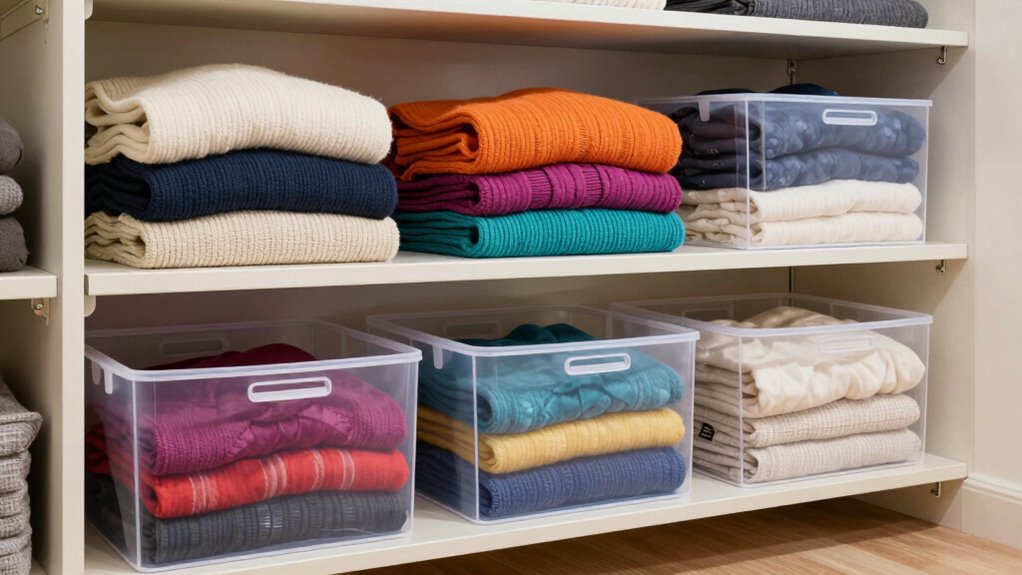

To store seasonal textiles smartly, guarantee they’re thoroughly cleaned before packing. Use breathable storage options like cotton or linen garment bags or acid-free boxes with good ventilation. Protect fabrics from pests with natural repellents such as lavender or cedar chips, and keep them in a consistent, cool, and dark environment. Regularly check for pests or damage, and maintain proper airflow to prevent moisture. Keep exploring for more tips to preserve your textiles effectively.

Get furniture and decor delivered free with Prime
- Fast, free delivery on millions of items
- Prime Video, Amazon Music and more included
- Member-only deals all year
Key Takeaways
- Clean and thoroughly dry textiles before storing to prevent mold and pest attraction.
- Use breathable storage containers like cotton or linen garment bags, avoiding plastic.
- Incorporate natural repellents such as cedar chips or lavender sachets to deter pests.
- Store textiles in a consistent, cool, and dark environment to prevent fading and deterioration.
- Regularly inspect and refresh storage conditions to maintain fabric integrity over time.
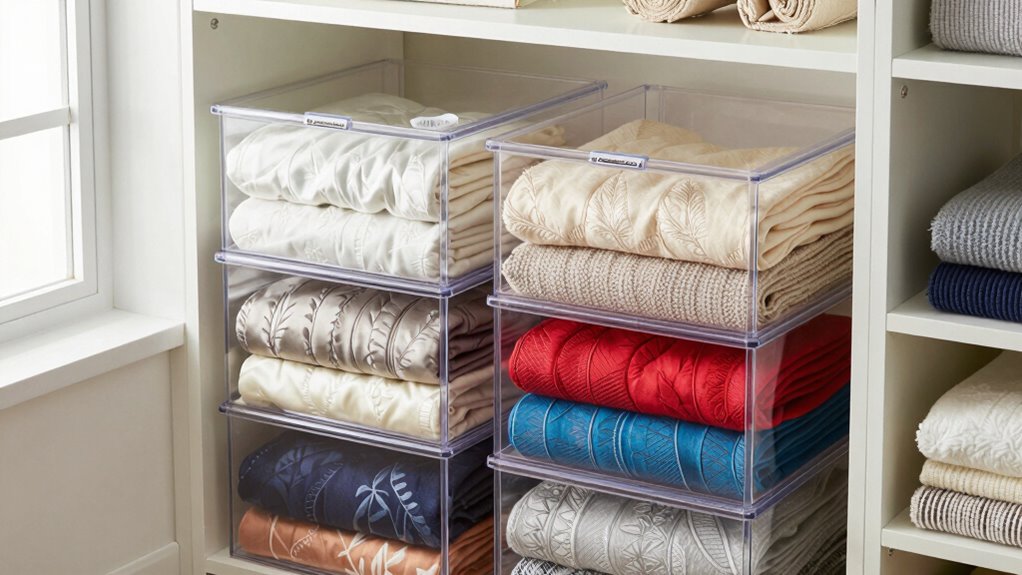
Have you ever wondered how to keep your seasonal textiles looking their best year after year? Proper storage isn’t just about hiding away your clothes or decorations; it’s about fabric preservation and maximizing space in your home. When you approach storage with these priorities in mind, you’ll find your seasonal items stay fresh, vibrant, and ready to use whenever the mood strikes.
First, focus on fabric preservation. The goal is to protect your textiles from damage caused by dust, moisture, pests, and light. Use breathable storage options like cotton or linen garment bags for clothing, and acid-free boxes for delicate fabrics and decorations. Avoid plastic bags, which can trap moisture and promote mold or mildew. Instead, invest in airtight containers for items that need extra protection, but ensure they’re well-ventilated to prevent mustiness. Before storing, always clean your textiles thoroughly—washing or dry cleaning helps remove oils, dirt, and residues that could attract pests or cause deterioration over time. Adding natural repellents like cedar chips or lavender sachets can also help deter insects without harming your fabrics. Additionally, understanding the importance of biodiversity in natural pest control can help maintain a healthy environment for your stored textiles. Incorporating natural pest control methods can be more environmentally friendly and effective in the long run. Furthermore, selecting storage containers that promote air circulation can help prevent moisture buildup and mold growth. Using proper storage conditions, such as consistent temperature and humidity levels, is crucial for maintaining the integrity of your textiles over time.
breathable cotton garment bags for clothing
As an affiliate, we earn on qualifying purchases.
As an affiliate, we earn on qualifying purchases.
Frequently Asked Questions
How Often Should I Rotate Stored Seasonal Textiles?
You should rotate your stored seasonal textiles every 6 to 12 months to guarantee fabric preservation and prevent deterioration. During rotation, check for signs of damage or pests, and adjust humidity control if needed. Proper ventilation and consistent humidity levels help protect your textiles. Regularly inspecting and rotating your items keeps them in good condition, ensuring they stay fresh and preserved for future seasons.
Are There Eco-Friendly Storage Options for Seasonal Textiles?
Imagine your seasonal textiles as delicate birds resting in a nest. You can keep them safe with eco-friendly fabric treatments that repel pests naturally, and store them in sustainable containers made from recycled or biodegradable materials. These options protect your textiles while respecting the environment. By choosing eco-conscious solutions, you guarantee your seasonal textiles stay fresh and vibrant, all while reducing your ecological footprint.
Can I Store Textiles in a Basement or Garage Safely?
Yes, you can store textiles safely in a basement or garage if you control humidity and protect from light. Use airtight containers or breathable garment bags to prevent moisture buildup and pests. Consider adding silica gel packets for humidity control, and keep the storage area dark or use light-protective covers. Regularly check for signs of dampness or pests, ensuring your seasonal textiles stay in great condition.
How Do I Prevent Pests From Damaging Stored Textiles?
To prevent pests from damaging your stored textiles, you should use natural repellents like cedar blocks or lavender sachets, which deter moths and insects. Store your textiles in airtight containers to keep pests out and maintain a sealed environment. Regularly check your storage area and clean it thoroughly before packing. Combining natural repellents with airtight containers offers effective protection, ensuring your seasonal textiles stay fresh and pest-free all year round.
What’s the Best Way to Label Seasonal Textile Storage?
Think of labeling as giving your textiles a GPS system. You should use clear, durable labels with bold lettering, and consider labeling storage containers on multiple sides for easy identification. Incorporate consistent labeling techniques, like date and season, to keep everything organized. Using waterproof markers or printed labels guarantees your labels stay intact over time, making it effortless to find what you need without rummaging through every container.
Conclusion
By storing your seasonal textiles smartly, you protect your favorite fabrics and keep your wardrobe organized year-round. Did you know that improper storage can cause fabric damage and reduce the lifespan of textiles by up to 50%? Imagine the money you’ll save and the joy of always having your seasonal pieces ready to wear. When you use the right storage solutions, you’re not just saving space—you’re preserving memories woven into every thread.
Halloween Picks
halloween
As an affiliate, we earn on qualifying purchases.